Pakistan
Investigating the murder of an investigative journalist
Published
3 years agoon
By
Popular TV anchorperson and journalist Arshad Sharif, who was living in self-exile owing to threats to his life and a number of court cases registered against him in Pakistan — with one involving allegations of sedition — was killed in Nairobi, Kenya on Sunday night.
This is the only “fact” we all know other than the official version of Kenyan police that the slain journalist became the victim of “mistaken identity.” It is just the beginning of the investigation into the brutal murder of an investigative journalist in a country where journalism has never been easy, particularly for those who go into the depths of news stories, putting their lives at stake.
The government has now constituted a nine-member commission, comprising three senior officials each from the premier intelligence agencies, including the Inter-Services Intelligence (ISI), Intelligence Bureau (IB), and the Federal Investigation Agency (FIA), who will fly to Nairobi to interview the Kenyan police officers who have “regretfully” claimed to have killed Arshad Sharif in a “mistaken identity” shooting. Ascertaining whether what Kenyan cops are saying is based on facts or not is going to be a test for Pakistani investigators.
It may not be easy for our sleuths to unearth a possible coverup, especially under the alleged “notorious” reputation of the Kenyan police which, according to a source who had served in Nairobi, has recently been given the power of “extrajudicial killings” — something similar to power once given to Karachi police in 1995-96.
Now, whether it was a case of “mistaken or known identity” or it was it a “fake encounter” or a “targeted killing,” is the first thing the Pakistani investigators need to look into other than the case history of the late Arshad Sharif and why he left Pakistan and under what circumstances he chose Kenya as his final destination.
The official version of the Kenyan police that it was a case of “mistaken identity,” had already cast doubts as they keep interpreting their own position like in most of the cases of “fake encounters.” So, I wonder how much they would cooperate with the Pakistani “Joint Investigation Team,” (JIT) and what other limited sources would be available to them for counter-checking.
It is highly unlikely the crime scene is still cordoned off or sealed, given the Kenyan police’s reputation. Nobody knows if Kenyans have secured the murder weapon as well as the spent shell casings as evidence after the shooting.
The most important factor in this case that could set the tone of the investigation is the statement of the late Arshad Sharif’s cousin, who was not only among the two surviving members but could also narrate the eyewitness account.
However, he was the one whom Arshad is believed to have been in touch with and he also mentioned his name in the travelling documents and was likely staying with him. Thus, his statement would be quite revealing.
Secondly, he would also be facing serious security threats, particularly in a place like Nairobi, known for all kinds of infamous activities by drug smugglers as well underworld networks in alleged connivance with police and law enforcement agencies.
A former Pakistani diplomat, who served in Kenya for many years, disclosed to this scribe on the condition of anonymity that the place was known for all kinds of illegal and dangerous activities and wondered if Pakistani investigators would be able to get the real story out of the Kenyans. “I am not sure if they had even conducted the postmortem of the body or not. Recently they have upgraded their police and also given them new weapons. But, can’t say it’s a case of mistaken identity or premeditated,” the former high commissioner said.
With all kinds of speculative stories in the mainstream and social media in the era of the mad “race for ratings”, real questions are missing in regard to investigation and there is every chance of a “coverup,” as the Nairobi police have that kind of reputation.
One of the retired police officials, who had a personal experience of the Kenyan police’s questionable track record, doubted they would be of any help to the Pakistani investigation team. “I had a firsthand experience when I went there in regard to the murder of one of my relatives and got very little cooperation despite being their counterpart,” he said.
Nairobi was among the worst cities with high crime rates.
Other questions which immediately come to my mind in this case and need to be looked at are:
Q 1: Where are Arshad’s mobile phones as the data would be key to starting the investigation? Are they with the police or in his cousin’s custody? Besides, all his travelling documents and other records also need to be found.
Q 2: Are all those police officials, who allegedly killed Arshad Sharif, in the custody of Kenyan law enforcement agencies?
Q 3: Which Kenyan agency is investigating the case as the police, in this case, are already a party?
Q 4: Has the autopsy been conducted and if so, what are its findings?
Q 5: When did Arshad Sharif reach Nairobi and what was his plan? Was it just to visit a first cousin or friends or was he there to stay for long if not for good? The answer to this question could be found with the help of his cousin.
Q 6: Did he leave UAE voluntarily or was declared a persona non-grata at the request of Pakistani authorities?
Q 7: Who booked [and some other journalists critical of the present government] and filed cases against him including a sedition case leaving him with no other option but to leave the country?
Q 8: Why did the management of a private TV channel, for which Arshad had been anchoring a top-rated talk show for many years, ask him to leave?
Pakistan is among the three most dangerous countries in the world for journalists and investigative journalism in particular. You need to dig out stories of the wrongdoings of the rulers and other relevant players at great risk to life. In the past also, such investigative reporters came under attack, faced threats, disappeared, and at times killed.
Those who in the past were attacked for their work include Umer Cheema, Ahmad Noorani, the late Saleem Shahzad, Asad Toor, Matiullah Jan and even Kamran Khan. Journalists like Hamid Mir also come under attack for their work.
In the last few months Arshad Sharif, Sabir Shakir, and Arif Hameed Bhatti had also left the country. Bhatti later returned to Pakistan. Similarly, anchorperson Imran Riaz Khan also faced pressure and lost his job with different channels. He too has a huge following on his YouTube channel.
This is for the first time in Pakistan’s history that a journalist had been killed while in self-exile or living abroad due to a threat to his life. The other case is that of a Pakistani journalist settled in the US, Ms Nafisa Shah’s husband and a well-known writer and researcher Javed Bhutto. She has been fighting a lone legal battle against the suspected killer for the last two years.
Journalism is a profession based upon a commitment to principles of honesty, fairness, credibility, and respect for truth. Now, whether you are working for print, electronic, or digital media, every journalist needs to follow these essential principles.
With Arshad Sharif’s murder, the country has lost a bold, straightforward, and courageous journalist, who stood to his commitment and belief whether one agrees with his views or not. He investigated a number of stories which made headlines.
Will the story of an investigative journalist be investigated in a free and fair manner and the report made public? Wait and see.

You may like
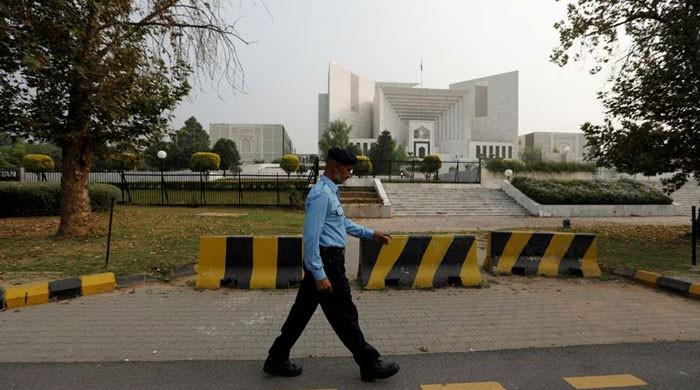
In a unanimous verdict, a five-member bench of the Supreme Court on Monday declared civilians’ trials in military courts null and void as it admitted the petitions challenging the trial of civilians involved in the May 9 riots triggered by the arrest of Pakistan Tehreek-e-Insaf (PTI) chief Imran Khan in a corruption case.
The five-member apex court bench — headed by Justice Ijaz Ul Ahsan, and comprising Justice Munib Akhtar, Justice Yahya Afridi, Justice Sayyed Mazahar Ali Akbar Naqvi and Justice Ayesha Malik — heard the petitions filed by the PTI chief and others on Monday.
The larger bench in its short verdict ordered that 102 accused arrested under the Army Act be tried in the criminal court and ruled that the trial of any civilian if held in military court has been declared null and void.
The apex court had reserved the verdict earlier today after Attorney General of Pakistan (AGP) Mansoor Usman Awan completed his arguments centred around the domain and scope of the military courts to try the civilians under the Army Act.
At the outset of the hearing today, petitioner lawyer Salman Akram Raja told the bench that trials of civilians already commenced before the top court’s verdict in the matter.
Responding to this, Justice Ahsan said the method of conducting proceedings of the case would be settled after Attorney General of Pakistan (AGP) Mansoor Usman Awan completed his arguments.
Presenting his arguments, the AGP said he would explain to the court why a constitutional amendment was necessary to form military courts in 2015 to try the terrorists.
Responding to Justice Ahsan’s query, AGP Awan said the accused who were tried in military courts were local as well as foreign nationals.
He said the accused would be tried under Section 2 (1) (D) of the Official Secrets Act and a trial under the Army Act would fulfill all the requirements of a criminal case.
“The trial of the May 9 accused will be held in line with the procedure of a criminal court,” the AGP said.
The AGP said the 21st Amendment was passed because the terrorists did not fall in the ambit of the Army Act.
“Amendment was necessary for the trial of terrorists [then] why amendment not required for the civilians? At the time of the 21st constitutional amendment, did the accused attack the army or installations?” inquired Justice Ahsan.
AGP Awan replied that the 21st Amendment included a provision to try accused involved in attacking restricted areas.
“How do civilians come under the ambit of the Army Act?” Justice Ahsan asked the AGP.
Justice Malik asked AGP Awan to explain what does Article 8 of the Constitution say. “According to Article 8, legislation against fundamental rights cannot be sustained,” the AGP responded.
Justice Malik observed that the Army Act was enacted to establish discipline in the forces. “How can the law of discipline in the armed forces be applied to civilians?” she inquired.
The AGP responded by saying that discipline of the forces is an internal matter while obstructing armed forces from discharging duties is a separate issue.
He said any person facing the charges under the Army Act can be tried in military courts.
“The laws you [AGP] are referring to are related to army discipline,” Justice Ahsan said.
Justice Malik inquired whether the provision of fundamental rights be left to the will of Parliament.
“The Constitution ensures the provision of fundamental rights at all costs,” she added.
If the court opened this door then even a traffic signal violator will be deprived of his fundamental rights, Justice Malik said.
The AGP told the bench that court-martial is not an established court under Article 175 of the Constitution.
At which, Justice Ahsan said court martials are not under Article 175 but are courts established under the Constitution and Law.
After hearing the arguments, the bench reserved the verdict on the petitions.
A day earlier, the federal government informed the apex court that the military trials of civilians had already commenced.
After concluding the hearing, Justice Ahsan hinted at issuing a short order on the petitions.
The government told the court about the development related to trials in the military court in a miscellaneous application following orders of the top court on August 3, highlighting that at least 102 people were taken into custody due to their involvement in the attacks on military installations and establishments.
Suspects express confidence in mly courts
The same day, expressing their “faith and confidence” in military authorities, nine of the May 9 suspects — who are currently in army’s custody — moved the Supreme Court, seeking an order for their trial in the military court be proceeded and concluded expeditiously to “meet the ends of justice”.
Nine out of more than 100 suspects, who were in the army’s custody, filed their petitions in the apex court via an advocate-on-record.
The May 9 riots were triggered almost across the country after former prime minister Imran Khan’s — who was removed from office via a vote of no confidence in April last year — arrest in the £190 million settlement case. Hundreds of PTI workers and senior leaders were put behind bars for their involvement in violence and attacks on military installations.
Last hearing
In response to the move by the then-government and military to try the May 9 protestors in military courts, PTI Chairman Imran Khan, former chief justice Jawwad S Khawaja, lawyer Aitzaz Ahsan, and five civil society members, including Pakistan Institute of Labour Education and Research (Piler) Executive Director Karamat Ali, requested the apex court to declare the military trials “unconstitutional”.
The initial hearings were marred by objections on the bench formation and recusals by the judges. Eventually, the six-member bench heard the petitions.
However, in the last hearing on August 3, the then-chief justice Umar Ata Bandial said the apex court would stop the country’s army from resorting to any unconstitutional moves while hearing the pleas challenging the trial of civilians in military courts.
A six-member bench, led by the CJP and comprising Justice Ijaz Ul Ahsan, Justice Munib Akhtar, Justice Yahya Afridi, Justice Sayyed Mazahar Ali Akbar Naqvi, and Justice Ayesha Malik, heard the case.
In the last hearing, the case was adjourned indefinitely after the Attorney General for Pakistan (AGP) Mansoor Usman Awan assured the then CJP that the military trials would not proceed without informing the apex court.
Pakistan
Sea conditions ‘very high’ as Cyclone Tej moves towards northwestward
Published
2 years agoon
By
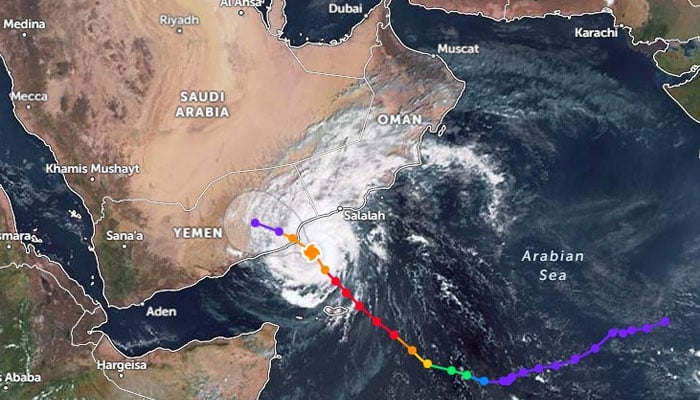
An Extremely Severe Cyclonic Storm (ESCS) named “Tej”, which has been brewing in the southwest Arabian Sea for the past few days, has continued to move northwestward toward the Arabian Peninsula’s coast.
According to the Pakistan Meteorological Department (PMD), over the past 12 hours, Cyclone Tej has been moving in a northwestward direction and is now “centred around latitude 14.4 N & longitude 53.2 °E”.
The update, which was issued today (Monday) at 10:00am (PST), also revealed that the brewing cyclone is situated “about 300km southwest of Salalah (Oman), 220km southeast of Al Ghaydah (Yemen) and 1520km southwest of Gwadar (Pakistan)”.
Additionally, the cyclone’s maximum sustained surface winds are between 150-160km/h, with gusts reaching 180km/h.
Moreover, sea conditions are currently very high, with maximum wave heights of 35ft around the system centre, according to the Met Office.
The system is expected to continue moving in a northwest direction and is likely to cross the Yemen coast, near Al Ghaydah by midnight as a very severe cyclonic storm (VSCS) with winds packing speeds of 120-130km/h and gusts reaching 150km/h.
However, it is important to note that there will be no impact on any of Pakistan’s coastal areas from this system.
According to PMD’s Daily Forecast, the weather is expected to remain dry for the next few days in most districts of Sindh, one of the coastal provinces of Pakistan.
Meanwhile, strong winds and thundershowers are likely to occur in and around some parts of Balochistan today, but dry weather is expected for the next few days.
Pakistan
PCB ‘dismisses’ objections over players support for Palestinians
Published
2 years agoon
By
LAHORE: Pakistan’s cricket team, which is currently busy participating in the ICC Men’s T20 Cricket World Cup, has shown their firm support and shared their prayers for all Palestinians suffering at the hands of Israel.
However, there have been many questions raised by Indian fans and cricket experts on the players’ constant support for Palestine asking ICC — the governing body of the game — whether such moves were allowed in the tournament.
According to sources, the Pakistan Cricket Board (PCB) rejected the objections over players’ conduct saying: “The team’s expression of solidarity was a personal decision.”
Pakistan’s national team on Wednesday, posted a picture of the Palestinian flag on their individual X, formerly known as Twitter, accounts to show that they stand in solidarity with Palestine and that they are praying for the people suffering there including children.
☮️ ☮️ ☮️ ☮️ pic.twitter.com/r8E31Jsfya
— Shadab Khan (@76Shadabkhan) October 18, 2023
— Haris Rauf (@HarisRauf14) October 18, 2023
🤲🤲🤲🤲 pic.twitter.com/2hH4Gjmyhn
— Muhammad Nawaz (@mnawaz94) October 18, 2023
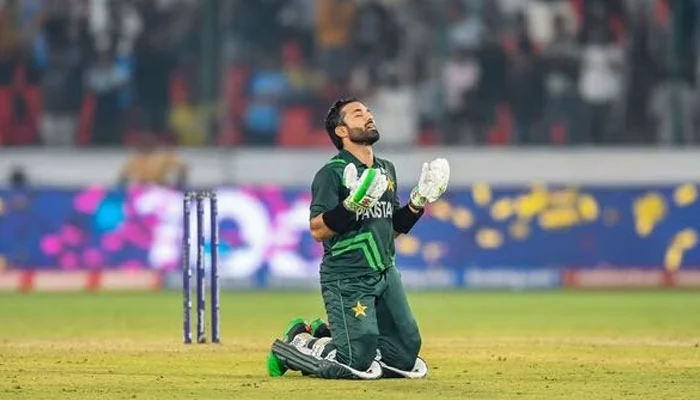
Prior to this Pakistan’s wicket-keeper batsman, Mohammad Rizwan, dedicated the team’s victory over Sri Lanka to his “brothers and sisters in Gaza”.
This was for our brothers and sisters in Gaza. 🤲🏼
— Muhammad Rizwan (@iMRizwanPak) October 11, 2023
Happy to contribute in the win. Credits to the whole team and especially Abdullah Shafique and Hassan Ali for making it easier.
Extremely grateful to the people of Hyderabad for the amazing hospitality and support throughout.
Meanwhile, Indian fans and cricket experts used the team’s support for Palestine to create controversies, claiming that the national team had violated ICC rules.
Sources from PCB added that the team is “allowed to express whatever they wanted to,” and that the players “did not violate any code of conduct by the ICC or PCB”.
The Health Ministry in Gaza reports that at least 3,061 Palestinians have died and over 13,750 more have been injured as a result of Israel’s shelling.
Pakistan has categorically condemned the Israeli atrocities and called for an immediate cessation of the bombardment, which has not even spared hospitals or schools, in solidarity with its Palestinian brothers and sisters.
Even Pakistani cricket legends who are not participating in the team anymore showed their support for Palestine.
🤲🏻🤲🏻 pic.twitter.com/8i20CX2Hka
— Kamran Akmal (@KamiAkmal23) October 18, 2023
#FreePalestine pic.twitter.com/IHC74YsxQH
— Zia Ul Haq (@zuh_leftarmfast) October 18, 2023
Moreover, Pakistan is set to face Australia tomorrow (Friday) in M Chinnaswamy Stadium, Bengaluru after a few days of rest.
Supreme Court annuls trials of civilians in military courts
Sea conditions ‘very high’ as Cyclone Tej moves towards northwestward
IMF condition: ECC set to green light gas tariff hike today
Barwaan Khiladi: Kinza Hashmi discusses her role as Alia
Snap launches tools for parents to monitor teens’ contacts
WATCH: Pakistani traveller deported from Dubai for damaging plane mid-air
Learn First | How to Create Amazon Seller Account in Pakistan – Step by Step
Sajjad Jani Funny Mushaira | Funny Poetry On Cars🚗 | Funny Videos | Sajjad Jani Official Team