Connect with us

Pakistan

Karachi shipbuilders waiting for tide that lifts their boats higher

Published

on

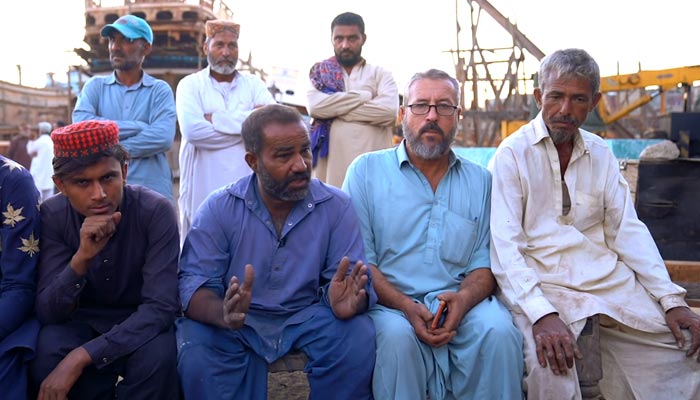
Muhammad Khan, a resident of Machar Colony — a coastal town tied to the shipbuilding industry for a long time — was only 15 when he joined the boatyard, where new seafaring vessels are built from keel to the mast and old ones, including modern-day launches, are brought in for all kinds of repairs.

“Shipbuilding is a craft as old as Hazrat Noah (AS),” he tells Geo.tv, “Our elders chose this profession many decades ago and we are following in their footsteps.”

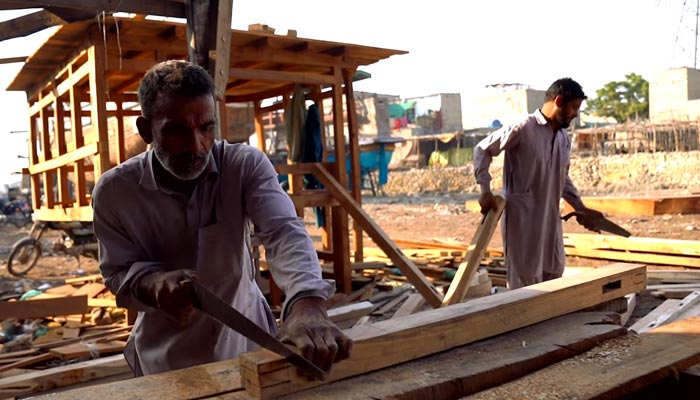
A variety of seafaring vessels are constructed at this boatyard. These include ships, boats, launches, and even fishing trawlers. However, almost everything involved in getting these ships up from the ground and into the sea is done by hand.

“We are deeply disappointed in the government for not providing the requisite facilities to shipbuilders, even the injured workers. Because of this, many skilled workers have given up on their craft and taken up new lines of work,” laments Khan.

According to him, this business is not even registered due to which the workers have to face problems.

However, Karachi’s boatbuilders take all these challenges in stride and do not let themselves be daunted by the vagaries of the times.

Boatmakers working on seafaring vessels in Karachi. — Facebook screengrab/Geo Digital

The unmatched skill of these artisans is reflected in the fact that while shipbuilding across the world is done with the help of boat-building plans (blueprints), Karachi’s boatbuilders do not rely on them.

Aoun Ali, another shipwright in the colony, says he was merely 14 when he joined his father in this profession. Despite having a BSc in Mathematics, Aoun chose to follow in his forefathers’ footsteps to make a career out of boat building.

At first, he would make regular boat-building plans. “However, now the skill has improved beyond architecture and engineering. Shipbuilding is second nature to us now and we no longer need blueprints to do it,” he says proudly.

The picture shows boats standing at a boatyard in Karachi. — Facebook screengrab/Geo Digital
The picture shows boats standing at a boatyard in Karachi. — Facebook screengrab/Geo Digital 

That is not to say the shipbuilders have entirely discarded the use of blueprints. Aoun says that if any official organisation commissions any work, the builders use plans. “For instance,” he adds, “we prepared boats for Karachi Port, which we worked on using boat-building plans given to us by the institution. It’s just that our shipbuilders are not dependent on maps and can do their work skillfully without having to use too.”

Speaking on the matter of the types of wood used in the process, Aoun informs Geo.tv that initially Burma teak wood from Burma was used in shipbuilding.

“However, after it became expensive, we began to use pine wood from Malaysia. When that too became too costly, we began to import wood from Congo for the hull of the ship, and local wood for its structure.”

For all their skills, the shipbuilders do not shy away from admitting that the real challenge in the whole process is wood cutting, which is the most crucial and dangerous part of the profession.

Karachi shipbuilders waiting for tide that lifts their boats higher

Manzoor Ahmed, another worker in the Colony, has spent a large part of his youth chopping wood in the yard. He says that the first time he saw the cutting of wood, he was stunned and wondered how he would handle the wood’s weight. “But when a person sets his mind to a task,” he chuckles, “Allah gives him the courage.”

He says that when the wood breaks, like a bare sword it can hit any part of the body. “But after years of experience, we are not afraid anymore.”

However, Manzoor highlights how the rising inflation has affected the livelihood of these builders. “In my early days, I worked as a helper for Rs600 a week … now the labourers are paid Rs6,000 a week in the boatyard,” he reflects.

However, shipbuilding is merely one aspect of their job. At the end of the day, the sea is everything to these shipbuilders: friend, comrade, and enemy. As soon as the water level rises, these shipbuilders push their creations into the ocean, hoping that God will protect them and their handiwork.
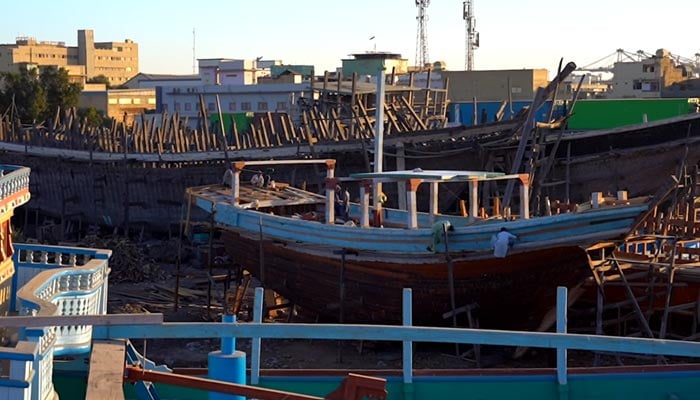
The picture shows boats being built at a boatyard in Karachi. — Facebook screengrab/Geo Digital
The picture shows boats being built at a boatyard in Karachi. — Facebook screengrab/Geo Digital 

After the launches are ready, they are brought to the shore with the help of cranes. From here, Javed Hashmi and his team take over. A crew of 20 to 25 people works to launch the ships into the ocean.

Hashmi too has been associated with this work since his childhood. His lifelong experience as a seaman allows him to deeply understand the immensity as well as the profundity of the ocean.

“The seawater rises on the first and fifteenth days of the moon,” he informs Geo.tv.

“As soon as the water rises,” Hashmi continues, “crew members lower the ship into the sea with the help of a crane and greased planks, which are slid under the vessel while it is still on the shore. Then it is handed over to the sea with the help of two boats.”

Hashmi says that he and his entire crew wait for the water to rise and pray that the ship does not hit the seabed. If the water level is low, the ships get stuck in the seabed and it takes many months to get them out.

The story of these beach-dwelling boatbuilders, carving their living out of the finest of the seaworthy woods, while keeping their ears to the breezy whispers of the whimsical as well as the dreadful ocean, reads like a romance, but in this tale, Adam’s son is not waiting for the descent of a fairy, but for the ascent of the sea.
Continue Reading
Click to comment

Leave a Reply

Your email address will not be published. Required fields are marked *

Business

Supreme Court annuls trials of civilians in military courts

Published

on

By

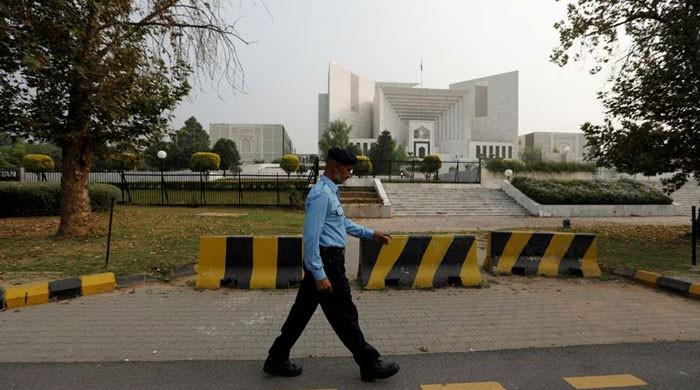
In a unanimous verdict, a five-member bench of the Supreme Court on Monday declared civilians’ trials in military courts null and void as it admitted the petitions challenging the trial of civilians involved in the May 9 riots triggered by the arrest of Pakistan Tehreek-e-Insaf (PTI) chief Imran Khan in a corruption case.

The five-member apex court bench — headed by Justice Ijaz Ul Ahsan, and comprising Justice Munib Akhtar, Justice Yahya Afridi, Justice Sayyed Mazahar Ali Akbar Naqvi and Justice Ayesha Malik — heard the petitions filed by the PTI chief and others on Monday.

The larger bench in its short verdict ordered that 102 accused arrested under the Army Act be tried in the criminal court and ruled that the trial of any civilian if held in military court has been declared null and void.  

The apex court had reserved the verdict earlier today after Attorney General of Pakistan (AGP) Mansoor Usman Awan completed his arguments centred around the domain and scope of the military courts to try the civilians under the Army Act. 

At the outset of the hearing today, petitioner lawyer Salman Akram Raja told the bench that trials of civilians already commenced before the top court’s verdict in the matter.

Responding to this, Justice Ahsan said the method of conducting proceedings of the case would be settled after Attorney General of Pakistan (AGP) Mansoor Usman Awan completed his arguments.

Presenting his arguments, the AGP said he would explain to the court why a constitutional amendment was necessary to form military courts in 2015 to try the terrorists.

Responding to Justice Ahsan’s query, AGP Awan said the accused who were tried in military courts were local as well as foreign nationals.

He said the accused would be tried under Section 2 (1) (D) of the Official Secrets Act and a trial under the Army Act would fulfill all the requirements of a criminal case.

“The trial of the May 9 accused will be held in line with the procedure of a criminal court,” the AGP said.

The AGP said the 21st Amendment was passed because the terrorists did not fall in the ambit of the Army Act.

“Amendment was necessary for the trial of terrorists [then] why amendment not required for the civilians? At the time of the 21st constitutional amendment, did the accused attack the army or installations?” inquired Justice Ahsan.

AGP Awan replied that the 21st Amendment included a provision to try accused involved in attacking restricted areas.

“How do civilians come under the ambit of the Army Act?” Justice Ahsan asked the AGP.

Justice Malik asked AGP Awan to explain what does Article 8 of the Constitution say. “According to Article 8, legislation against fundamental rights cannot be sustained,” the AGP responded.

Justice Malik observed that the Army Act was enacted to establish discipline in the forces. “How can the law of discipline in the armed forces be applied to civilians?” she inquired.

The AGP responded by saying that discipline of the forces is an internal matter while obstructing armed forces from discharging duties is a separate issue.

He said any person facing the charges under the Army Act can be tried in military courts.

“The laws you [AGP] are referring to are related to army discipline,” Justice Ahsan said.

Justice Malik inquired whether the provision of fundamental rights be left to the will of Parliament.

“The Constitution ensures the provision of fundamental rights at all costs,” she added.

If the court opened this door then even a traffic signal violator will be deprived of his fundamental rights, Justice Malik said.

The AGP told the bench that court-martial is not an established court under Article 175 of the Constitution.

At which, Justice Ahsan said court martials are not under Article 175 but are courts established under the Constitution and Law.

After hearing the arguments, the bench reserved the verdict on the petitions.

A day earlier, the federal government informed the apex court that the military trials of civilians had already commenced.

After concluding the hearing, Justice Ahsan hinted at issuing a short order on the petitions. 

The government told the court about the development related to trials in the military court in a miscellaneous application following orders of the top court on August 3, highlighting that at least 102 people were taken into custody due to their involvement in the attacks on military installations and establishments. 

Suspects express confidence in mly courts

The same day, expressing their “faith and confidence” in military authorities, nine of the May 9 suspects — who are currently in army’s custody — moved the Supreme Court, seeking an order for their trial in the military court be proceeded and concluded expeditiously to “meet the ends of justice”.

Nine out of more than 100 suspects, who were in the army’s custody, filed their petitions in the apex court via an advocate-on-record.

The May 9 riots were triggered almost across the country after former prime minister Imran Khan’s — who was removed from office via a vote of no confidence in April last year — arrest in the £190 million settlement case. Hundreds of PTI workers and senior leaders were put behind bars for their involvement in violence and attacks on military installations.

Last hearing

In response to the move by the then-government and military to try the May 9 protestors in military courts, PTI Chairman Imran Khan, former chief justice Jawwad S Khawaja, lawyer Aitzaz Ahsan, and five civil society members, including Pakistan Institute of Labour Education and Research (Piler) Executive Director Karamat Ali, requested the apex court to declare the military trials “unconstitutional”.

The initial hearings were marred by objections on the bench formation and recusals by the judges. Eventually, the six-member bench heard the petitions.

However, in the last hearing on August 3, the then-chief justice Umar Ata Bandial said the apex court would stop the country’s army from resorting to any unconstitutional moves while hearing the pleas challenging the trial of civilians in military courts.

A six-member bench, led by the CJP and comprising Justice Ijaz Ul Ahsan, Justice Munib Akhtar, Justice Yahya Afridi, Justice Sayyed Mazahar Ali Akbar Naqvi, and Justice Ayesha Malik, heard the case.

In the last hearing, the case was adjourned indefinitely after the Attorney General for Pakistan (AGP) Mansoor Usman Awan assured the then CJP that the military trials would not proceed without informing the apex court.

Continue Reading

Pakistan

Sea conditions ‘very high’ as Cyclone Tej moves towards northwestward

Published

on

By

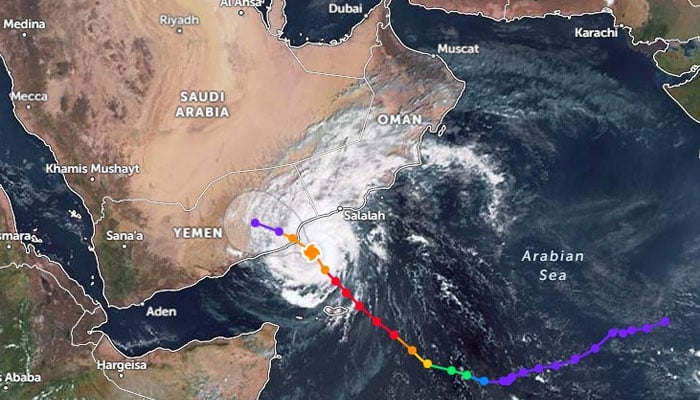
An Extremely Severe Cyclonic Storm (ESCS) named “Tej”, which has been brewing in the southwest Arabian Sea for the past few days, has continued to move northwestward toward the Arabian Peninsula’s coast.

According to the Pakistan Meteorological Department (PMD), over the past 12 hours, Cyclone Tej has been moving in a northwestward direction and is now “centred around latitude 14.4 N & longitude 53.2 °E”.

The update, which was issued today (Monday) at 10:00am (PST), also revealed that the brewing cyclone is situated “about 300km southwest of Salalah (Oman), 220km southeast of Al Ghaydah (Yemen) and 1520km southwest of Gwadar (Pakistan)”.

Additionally, the cyclone’s maximum sustained surface winds are between 150-160km/h, with gusts reaching 180km/h.

Moreover, sea conditions are currently very high, with maximum wave heights of 35ft around the system centre, according to the Met Office.

The system is expected to continue moving in a northwest direction and is likely to cross the Yemen coast, near Al Ghaydah by midnight as a very severe cyclonic storm (VSCS) with winds packing speeds of 120-130km/h and gusts reaching 150km/h.

However, it is important to note that there will be no impact on any of Pakistan’s coastal areas from this system.

According to PMD’s Daily Forecast, the weather is expected to remain dry for the next few days in most districts of Sindh, one of the coastal provinces of Pakistan.

Meanwhile, strong winds and thundershowers are likely to occur in and around some parts of Balochistan today, but dry weather is expected for the next few days.

Continue Reading

Pakistan

PCB ‘dismisses’ objections over players support for Palestinians

Published

on

By

LAHORE: Pakistan’s cricket team, which is currently busy participating in the ICC Men’s T20 Cricket World Cup, has shown their firm support and shared their prayers for all Palestinians suffering at the hands of Israel.

However, there have been many questions raised by Indian fans and cricket experts on the players’ constant support for Palestine asking ICC — the governing body of the game — whether such moves were allowed in the tournament.

According to sources, the Pakistan Cricket Board (PCB) rejected the objections over players’ conduct saying: “The team’s expression of solidarity was a personal decision.”

Pakistan’s national team on Wednesday, posted a picture of the Palestinian flag on their individual X, formerly known as Twitter, accounts to show that they stand in solidarity with Palestine and that they are praying for the people suffering there including children.

Prior to this Pakistan’s wicket-keeper batsman, Mohammad Rizwan, dedicated the team’s victory over Sri Lanka to his “brothers and sisters in Gaza”.

Meanwhile, Indian fans and cricket experts used the team’s support for Palestine to create controversies, claiming that the national team had violated ICC rules.

Sources from PCB added that the team is “allowed to express whatever they wanted to,” and that the players “did not violate any code of conduct by the ICC or PCB”.

The Health Ministry in Gaza reports that at least 3,061 Palestinians have died and over 13,750 more have been injured as a result of Israel’s shelling.

Pakistan has categorically condemned the Israeli atrocities and called for an immediate cessation of the bombardment, which has not even spared hospitals or schools, in solidarity with its Palestinian brothers and sisters.

Even Pakistani cricket legends who are not participating in the team anymore showed their support for Palestine.

Moreover, Pakistan is set to face Australia tomorrow (Friday) in M Chinnaswamy Stadium, Bengaluru after a few days of rest.

Continue Reading

Trending