Connect with us

Business

Symmetry eyes to raise quality bar in startup sector with IPO

Published

on

Symmetry Group Limited — with an aim to work on the development of artificial intelligence (AI) and data-powered marketing technology, tools, and platforms — is set to launch an initial public offering (IPO) and intends to hold the book building on August 8-9.

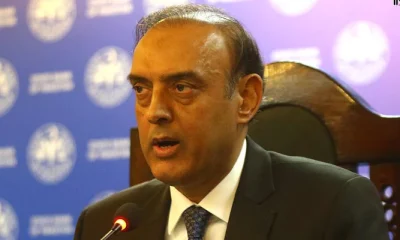
Walking the Geo.tv down the entire journey of the IPO, Symmetry Group Limited chief executive Sarocsh Ahmed explained how August was the optimal time for the launch.

“The timing is carefully considered, accounting for approvals from the Pakistan Stock Exchange (PSX) and the Security and Exchange Commission of Pakistan (SECP). The optimal timing for the IPO considers market and economic conditions, as well as the broader political landscape,” he said, adding that the company has been planning this IPO since 2021.

Ahmed — whose company is offering 101,240,082 shares as part of the IPO — maintained that it was a long wait and the work was going on, and now they have reached the level that they need funds to continue the expansion plans.

He stated: “If we look into that context, we all, in fact, management and the advisers were waiting for [some clarity regarding] the International Monetary Fund (IMF) [programme] and now that [standby deal has been signed] the stock market has responded well to it.

“Plus, another important factor to look at was the approval from PSX and SECP, so the last approval we had to have was from the SECP. And that we received it on June 1.”

He went on to explain that it was a time-bound approval and the company — which would be listed on the main board of PSX — needed to close the IPO by August 31. “We’ve fixed August 8 and 9 for the book building as we cannot delay this because we have the public portion and refund phase as well after that,” he added.

— Facebook/@SymmetryGroup

Referring to the bullish momentum at the benchmark KSE-100 index, the startup co-founder said “he feels there couldn’t have been a better time than now… we do see stability, at least for six months Pakistan will not default, that’s a good thing.”

Shedding light on his expectations from the book building — a process undertaken to elicit demand for shares offered through which bids are collected from the bidders and a book is built which depicts demand for the shares at different price levels — stage, Ahmed revealed that the response so far was overwhelming and “I personally believe we’ll have an oversubscription.”

Ahmed, while sharing why the company decided to keep the floor price at 4.25 per share, said: “We had to keep the floor price at low levels because when we were taking approvals, the market wasn’t performing this well and plus the general feedback that we received from investors was that the initial price of Rs5.50 was too high so we revised our strategy and gave a discount.”

He further added that now the company is leaving it to the market to discover the strike price and with the recent rally at the PSX “we are hopeful that the market is in a state where our strike price can be higher.”

‘All digital indicators are on the rise’

In response to a question regarding the effect of an increase in taxes on digital services in the recent budget on his company and in general, Ahmed highlighted that “data consumption has increased, we see, in every budget, there is an increase in taxes but did we observe any negative impact of it?”

“All the digital indicators are on the rise including mobile, broadband subscriptions and issuing licences of digital banks, digital transactions, and e-commerce,” he maintained, adding, “There is another indicator which is digital channels such as social media and there is a rise in their traffic”.

Highlighting the good from one of the major challenges — rising population — the president said “we should not miss our population growth which is very high”. “It is a problem but there is an opportunity in that too. Every year, a new number of people emerges as a user. When they graduate, they are natives of the technology,” he stated.

HR — main resource in Pakistan

Ahmed, while commenting on the actual IT potential in Pakistan, highlighted that the main resource Pakistan has is HR (human resources).

“Some of our clients from the Middle East who are outsourcing their business and who used to go to India are now diverting towards Pakistan because their cost in India has doubled. Their currency has become strong and the resource asks for more money given the global inflation,” he explained.

“Currently, in Pakistan, we can see a huge discount in resource hiring which is a huge benefit and if we connect it with our HR and offer timely products and solutions and market them, then we can generate good revenues.”

“When officials claim that we will have exports worth $20 billion in the IT sector in the next five years. We can do that and there is nothing wrong with this. Currently, the numbers are half reported and the main reason is the exchange rate difference, most people divert their money to other kinds of investment or hold it outside the country.”

“Meanwhile, the money brought into the country by freelancers is counted under the head of home remittances, and if we properly record these numbers then it may be counted as nearly $4 billion of our IT exports.”

He claimed that the problem was not that digital growth would stop due to the brain drain because consumption was there — people are talking about inclusion and digital banks. “Easypaisa and JazzCash have transformed society, the market is there, people consume mobile data for whatever reason — be it entertainment or work.”

Quality should come first

Ahmed highlighted that the potential of freelancing is huge in Pakistan and in order to provide a platform for this industry, the private sector should step forward. “Freelance associations should work more vigilantly to support the industry,” he said while identifying the biggest challenge — which needs to be controlled as well — is quality.

“Pakistan’s problem, not only in freelancing but other industries too, is fraudulent activities — i.e. charging money from clients but not delivering work on time. Because of such activities clients will outsource work to your company only once and then poor rating will shrink your client list and badly reflect on the country as well,” he maintained.

Startup owners need to bootstrap

The co-founder of a company further added that all startups needed to bootstrap — i.e. getting oneself into or out of a situation using existing resources — and they should not go lavish on expenses because burnout models would no longer work as the world has progressed far more than anticipated in the past one year and “we can see that funding has stopped pouring in Pakistan.”

He explained that “inflows take a backseat only when companies don’t offer profit/bottom line”.

“Business models have changed — previously it was all about getting traction or a number of users on topline and a lot of times it was only about the number of users and not about profit. Time has changed. We now need a profitable business. All our startups need better financial advisory where they are encouraged to build profitable and sustainable businesses. The problem is that if one raises $20 million — the amount is huge especially when working in Pakistan — how can one burn all the money in one year?”

“I personally believe that pitchers should always have less money compared to what they have demanded. They should get a reasonable amount which is used to fulfil their requirements and then they should go for the next round in that manner the startup owners will know that they have to strictly work on something but if they get extra money of which he/she has no plan then it won’t work.”

“First and foremost we need to correct our intentions because we [Pakistanis] have a habit of doing fraud which is not good — neither for the industry nor for the country. And secondly, we should work on our bottom lines, bootstrap ourselves and take baby steps to grow,” he added.

Business

Supreme Court annuls trials of civilians in military courts

Published

on

By

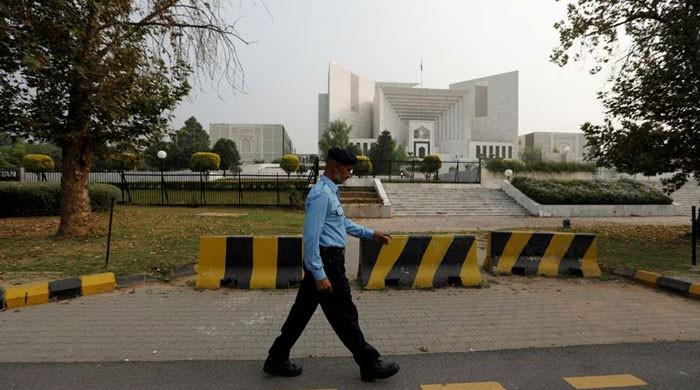
In a unanimous verdict, a five-member bench of the Supreme Court on Monday declared civilians’ trials in military courts null and void as it admitted the petitions challenging the trial of civilians involved in the May 9 riots triggered by the arrest of Pakistan Tehreek-e-Insaf (PTI) chief Imran Khan in a corruption case.

The five-member apex court bench — headed by Justice Ijaz Ul Ahsan, and comprising Justice Munib Akhtar, Justice Yahya Afridi, Justice Sayyed Mazahar Ali Akbar Naqvi and Justice Ayesha Malik — heard the petitions filed by the PTI chief and others on Monday.

The larger bench in its short verdict ordered that 102 accused arrested under the Army Act be tried in the criminal court and ruled that the trial of any civilian if held in military court has been declared null and void.  

The apex court had reserved the verdict earlier today after Attorney General of Pakistan (AGP) Mansoor Usman Awan completed his arguments centred around the domain and scope of the military courts to try the civilians under the Army Act. 

At the outset of the hearing today, petitioner lawyer Salman Akram Raja told the bench that trials of civilians already commenced before the top court’s verdict in the matter.

Responding to this, Justice Ahsan said the method of conducting proceedings of the case would be settled after Attorney General of Pakistan (AGP) Mansoor Usman Awan completed his arguments.

Presenting his arguments, the AGP said he would explain to the court why a constitutional amendment was necessary to form military courts in 2015 to try the terrorists.

Responding to Justice Ahsan’s query, AGP Awan said the accused who were tried in military courts were local as well as foreign nationals.

He said the accused would be tried under Section 2 (1) (D) of the Official Secrets Act and a trial under the Army Act would fulfill all the requirements of a criminal case.

“The trial of the May 9 accused will be held in line with the procedure of a criminal court,” the AGP said.

The AGP said the 21st Amendment was passed because the terrorists did not fall in the ambit of the Army Act.

“Amendment was necessary for the trial of terrorists [then] why amendment not required for the civilians? At the time of the 21st constitutional amendment, did the accused attack the army or installations?” inquired Justice Ahsan.

AGP Awan replied that the 21st Amendment included a provision to try accused involved in attacking restricted areas.

“How do civilians come under the ambit of the Army Act?” Justice Ahsan asked the AGP.

Justice Malik asked AGP Awan to explain what does Article 8 of the Constitution say. “According to Article 8, legislation against fundamental rights cannot be sustained,” the AGP responded.

Justice Malik observed that the Army Act was enacted to establish discipline in the forces. “How can the law of discipline in the armed forces be applied to civilians?” she inquired.

The AGP responded by saying that discipline of the forces is an internal matter while obstructing armed forces from discharging duties is a separate issue.

He said any person facing the charges under the Army Act can be tried in military courts.

“The laws you [AGP] are referring to are related to army discipline,” Justice Ahsan said.

Justice Malik inquired whether the provision of fundamental rights be left to the will of Parliament.

“The Constitution ensures the provision of fundamental rights at all costs,” she added.

If the court opened this door then even a traffic signal violator will be deprived of his fundamental rights, Justice Malik said.

The AGP told the bench that court-martial is not an established court under Article 175 of the Constitution.

At which, Justice Ahsan said court martials are not under Article 175 but are courts established under the Constitution and Law.

After hearing the arguments, the bench reserved the verdict on the petitions.

A day earlier, the federal government informed the apex court that the military trials of civilians had already commenced.

After concluding the hearing, Justice Ahsan hinted at issuing a short order on the petitions. 

The government told the court about the development related to trials in the military court in a miscellaneous application following orders of the top court on August 3, highlighting that at least 102 people were taken into custody due to their involvement in the attacks on military installations and establishments. 

Suspects express confidence in mly courts

The same day, expressing their “faith and confidence” in military authorities, nine of the May 9 suspects — who are currently in army’s custody — moved the Supreme Court, seeking an order for their trial in the military court be proceeded and concluded expeditiously to “meet the ends of justice”.

Nine out of more than 100 suspects, who were in the army’s custody, filed their petitions in the apex court via an advocate-on-record.

The May 9 riots were triggered almost across the country after former prime minister Imran Khan’s — who was removed from office via a vote of no confidence in April last year — arrest in the £190 million settlement case. Hundreds of PTI workers and senior leaders were put behind bars for their involvement in violence and attacks on military installations.

Last hearing

In response to the move by the then-government and military to try the May 9 protestors in military courts, PTI Chairman Imran Khan, former chief justice Jawwad S Khawaja, lawyer Aitzaz Ahsan, and five civil society members, including Pakistan Institute of Labour Education and Research (Piler) Executive Director Karamat Ali, requested the apex court to declare the military trials “unconstitutional”.

The initial hearings were marred by objections on the bench formation and recusals by the judges. Eventually, the six-member bench heard the petitions.

However, in the last hearing on August 3, the then-chief justice Umar Ata Bandial said the apex court would stop the country’s army from resorting to any unconstitutional moves while hearing the pleas challenging the trial of civilians in military courts.

A six-member bench, led by the CJP and comprising Justice Ijaz Ul Ahsan, Justice Munib Akhtar, Justice Yahya Afridi, Justice Sayyed Mazahar Ali Akbar Naqvi, and Justice Ayesha Malik, heard the case.

In the last hearing, the case was adjourned indefinitely after the Attorney General for Pakistan (AGP) Mansoor Usman Awan assured the then CJP that the military trials would not proceed without informing the apex court.

Continue Reading

Business

IMF condition: ECC set to green light gas tariff hike today

Published

on

By

  • Tariff may go up by 173% for non-protected domestic consumers. 
  • Petroleum Division to push for implementation of hike from Oct 1. 
  • Circular debt to increase by Rs15bn if hike implemented from today.

ISLAMABAD: The Economic Coordination Committee (ECC) will meet today (Monday) to green-light the plan to hike the gas tariff, a key part of the International Monetary Fund (IMF) conditions, including a zero hike in the gas circular debt for the ongoing financial year 2023-24, reported The News.

The government is likely to increase the local gas tariff up to 173% for non-protected domestic consumers, 136.4% for commercial, 86.4% for export and 117% for the non-export industry.

Since there is no budgeted subsidy for even domestic, commercial, and industrial sectors, the high-end consumers will provide cross-subsidies to low-end consumers.

The government’s failure to hike the gas prices from July 1 has forced it to incur a loss of Rs50 billion during the July-September in the gas sector. But the losses will be bridged when the government moves ahead with the increase in the gas tariff which would give enough monetary space to recover with the loss.

As per the publication, the IMF has been taken onboard on this point. It has been informed that the gas prices would be increased in such a manner that it would not increase the circular debt during this financial year, which right now stands at Rs2.9 trillion.

However, now the Petroleum Division will try to ensure that the gas tariff hike is implemented from October 1. If the government decides to implement the hike from today onwards then the circular debt would increase by Rs15 billion.

But there would be no increase in the gas tariff from January 1, 2024, a further gas tariff increase would be implemented as under the law, the review of gas prices is carried out bi-annually.

The cement sector will have to purchase the gas 193.3% higher than the current cost, making it the biggest bearer of the brunt, from 1,500 per MMBtu to Rs4,400 per MMBtu.

The CNG sector, will face the second-highest increase in gas tariff by 143.8% from Rs1,805 per MMBtu to Rs4,400.

If the hike is approved, then it means that cement prices will skyrocket and CNG will be much more expensive than petrol.

The government, however, does not plan on increasing the tariff for tandoors which would ensure that roti prices remain stable.

The summary prepared by the petroleum ministry that is to be pitched today in the ECC meeting shows it has not spared the four protected domestic consumer categories as ostensibly it has not proposed to increase their gas tariffs but hiked their monthly fixed charges from Rs10 to Rs400 per month.

More importantly, the Petroleum Division has also proposed to escalate the per month fixed charges for the first 4 non-protected domestic consumers by 117.4% to Rs1,000 from Rs460 per month from their gas tariffs increase by 50-150%. Also, to be increased are per month fixed charges for the remaining 4 non-protected domestic consumers, by 334.78%, to Rs2,000 from Rs460 per month part, increasing their gas tariff by 100%-173%.

The summary states that SNGPL will now offer a blend of natural gas and RLNG in a 20:80 ratio to non-export industry out of the estimated volumes for industrial consumers, both process and captive, as per petitions filed by SNGPL to OGRA for revenue determination.

The blend offered by the Sui companies shall be reviewed every quarter based on the availability of natural gas and RLNG. And SSGC shall offer a blend of NG and RLNG of 90:10 out of the estimated volumes for industrial consumers, both process and captive, as per petitions filed by SSGC to OGRA for revenue determination.

Coming to the export industry, the summary says that currently, there is a wide price disparity between the industry operating on SSGCL and SNGPL networks. Industry in the north (operating on the SNGPL network) consumes a 50:50 blend of indigenous and RLNG for 9 months (Mar to Nov) and 100% RLNG for 3 months (Dec-Feb), averaging to the current tariff of $9.6/MMBtu (Rs2,790) over the year.

On the other hand, process connections of the industry in the south (operating on SSGCL) are being charged at Rs1,100/MMBtu. SSGC has recently started a supply of blend in the proportion of 75:25 for captive use of gas, which approximates $5.9/MMBtu (Rs1,710).

Continue Reading

Business

Govt to only finance important projects for provinces: SIFC

Published

on

By

  • PSDP listed projects to be presented before CCER for review.
  • Finance minister to chair CCER meeting upon return from Morocco.
  • “Exercise to abandon provincial projects underway,” top official says.

ISLAMABAD: The Special Investment Facilitation Council (SIFC) has decided to only finance extremely important development projects in the provinces with 50% of funds allocated by the federal government and provinces each, The News reported.

The Planning Ministry has, meanwhile, identified all the Public Sector Development Programmes (PSDP) listed projects to be presented before the Cabinet Committee on Economic Revival (CCER) with its aims to scrap all such schemes and save Rs314 billion under the austerity drive.

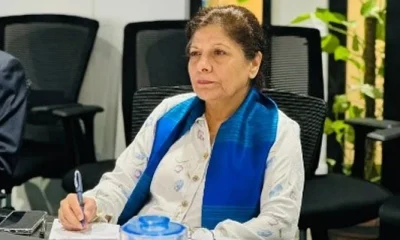
Finance Minister Dr Shamshad Akhtar, following her return from Morocco where she is attending the annual meetings of the World Bank and International Monetary Fund (IMF), will be chairing the CCER meeting.

“The exercise to abandon the provincial nature projects from PSDP list is underway,” a top government official said on Thursday.

It was decided in the last SIFC’s Apex Committee meeting that development projects of provincial nature would only be executed in the future through the cost-sharing of 50%:50% of funds borne by both the Centre and provinces. “If the provincial government does not bear 50% cost on an equal basis, the Centre will not provide its share of funding,” another top official source confirmed while talking to The News.

One senior official said the decision had already been taken up by the Executive Committee of the National Economic Council (ECNEC). The SIFC’s Executive Committee is scheduled to meet early next week to undertake all spadework for tabling it before the apex committee under the chairmanship of Caretaker Prime Minister Anwar-ul-Haq Kakar in the coming weeks.

So far, the SIFC has remained unable to finalise much-awaited multi-billion dollar transactions for attracting investments but it is making all-out efforts to lure foreign investors in areas of mining, IT, agriculture, and others.

One of the future SIFC agendas for considering mechanisms for corporate farming lies on the table. Although some initial work was done during the tenure of late Gen (retd) Musharraf, still there is a need to undertake its basic framework in a detailed manner before striking pacts with international investors. However, it is critical to hire technical experts for drafting international agreements and steering the negotiations against the backdrop of several past agreements ending up in disputes due to a lack of technical capacity.

Meanwhile, different ministries/divisions have been directed to undertake steps under the austerity plans to ensure savings. The Ministry of Finance instructed all its wings and attached departments to review all the foreign visits and banned all those deemed necessary next week.

Continue Reading

Trending