Connect with us

Latest News

NA passes bill abolishing use of EVMs in election

Published

on

  • Law minister says holding polls using EVMs in a single day “impossible”.
  • Dismisses impression that amendment is aimed at depriving overseas Pakistanis of their right to vote.
  • Says govt does not believe in snatching overseas Pakistanis’ right to vote.

ISLAMABAD: The National Assembly on Thursday passed a bill to abolish the former government’s election reforms giving overseas Pakistanis the right to vote through i-Voting and electronic voting machines (EVMs).

The development came during the Parliament meeting convened by President Arif Alvi to deliberate on the current economic situation of the country.

The Election Amendment Bill 2022 —  which was introduced by Parliamentary Affairs Minister Murtaza Javed Abbasi — was introduced in the National Assembly today.

The NA had bulldozed legislation for use of EVMs through the passage of a bill on November 17, 2021, giving overseas Pakistanis the right to vote in general elections through a voting device introduced by the PTI government.

Speaking at the NA session, Federal Minister of Law and Justice Azam Nazeer Tarar said that holding polls using EVMs in a single day is “impossible”.

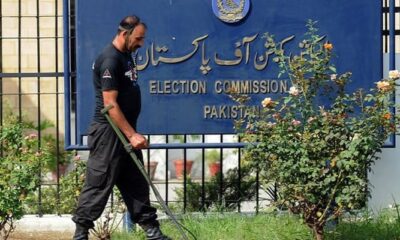
Tarar said the Election Commission of Pakistan (ECP) had also expressed its inability to hold the elections through i-voting and EVMs in such a short span of time, that too without proper homework.

He said two amendments are being brought to revive the Elections Act 2017, enabling the ECP to ensure free, fair, and transparent elections.

The minister dismissed the impression that the amendment was aimed at depriving overseas Pakistanis of their right to vote, adding that Pakistanis living abroad were a “precious asset of the country” and the government does not believe in snatching their right to vote.

Regarding the use of EVMs, the law minister said they are not against the use of technology, but they had concerns about misuse of technology as the Results Transmission System (RTS) had failed in the 2018 elections to favour a particular political party. 

Meanwhile, a motion to suspend the rule of sending Election Act Amendment Bill 2022 to the Standing Committee was also passed.

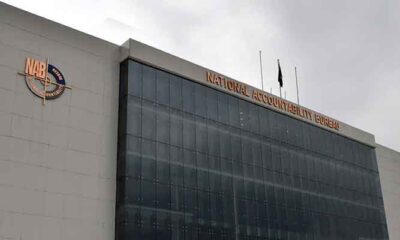
Moreover, the house also approved the National Accountability (Second Amendment) Bill, 2021, formulating a post-retirement procedure for its chairman.

Following amendments were made to the ordinance:

  • NAB’s deputy chairman will be the acting head of the watchdog when its chairman retires
  • If the deputy chairman is absent then any senior officer will be given charge of the top post
  • Tax-related matters have been excluded from NAB’s jurisdiction
  • Provincial and federal cabinets’ decisions for enjoying financial benefits will not be under NAB’s ambit
  • NAB will not probe irregularities in any development scheme or project
  • NAB cannot take action over the decision of any regularity institution
  • Judges’ appointments in accountability courts will be for a maximum three-year term
  • Consultation with the concerned high court chief justice will be mandatory for the removal of an accountability court judge
  • The consultation process for the appointment of a new NAB chairman will start two months prior to the incumbent’s retirement
  • The consultation process for the appointment of a new NAB chairman will be completed in 40 days
  • If the prime minister and the opposition leader fail to agree on any name for the coveted post, the matter will be sent to the parliamentary committee
  • The parliamentary committee is bound to finalise the name for the post of NAB chairman in 30 days
  • After completing a three-year term, a person can not be re-appointed to the post of NAB chairman.

Business

Supreme Court annuls trials of civilians in military courts

Published

on

By

In a unanimous verdict, a five-member bench of the Supreme Court on Monday declared civilians’ trials in military courts null and void as it admitted the petitions challenging the trial of civilians involved in the May 9 riots triggered by the arrest of Pakistan Tehreek-e-Insaf (PTI) chief Imran Khan in a corruption case.

The five-member apex court bench — headed by Justice Ijaz Ul Ahsan, and comprising Justice Munib Akhtar, Justice Yahya Afridi, Justice Sayyed Mazahar Ali Akbar Naqvi and Justice Ayesha Malik — heard the petitions filed by the PTI chief and others on Monday.

The larger bench in its short verdict ordered that 102 accused arrested under the Army Act be tried in the criminal court and ruled that the trial of any civilian if held in military court has been declared null and void.  

The apex court had reserved the verdict earlier today after Attorney General of Pakistan (AGP) Mansoor Usman Awan completed his arguments centred around the domain and scope of the military courts to try the civilians under the Army Act. 

At the outset of the hearing today, petitioner lawyer Salman Akram Raja told the bench that trials of civilians already commenced before the top court’s verdict in the matter.

Responding to this, Justice Ahsan said the method of conducting proceedings of the case would be settled after Attorney General of Pakistan (AGP) Mansoor Usman Awan completed his arguments.

Presenting his arguments, the AGP said he would explain to the court why a constitutional amendment was necessary to form military courts in 2015 to try the terrorists.

Responding to Justice Ahsan’s query, AGP Awan said the accused who were tried in military courts were local as well as foreign nationals.

He said the accused would be tried under Section 2 (1) (D) of the Official Secrets Act and a trial under the Army Act would fulfill all the requirements of a criminal case.

“The trial of the May 9 accused will be held in line with the procedure of a criminal court,” the AGP said.

The AGP said the 21st Amendment was passed because the terrorists did not fall in the ambit of the Army Act.

“Amendment was necessary for the trial of terrorists [then] why amendment not required for the civilians? At the time of the 21st constitutional amendment, did the accused attack the army or installations?” inquired Justice Ahsan.

AGP Awan replied that the 21st Amendment included a provision to try accused involved in attacking restricted areas.

“How do civilians come under the ambit of the Army Act?” Justice Ahsan asked the AGP.

Justice Malik asked AGP Awan to explain what does Article 8 of the Constitution say. “According to Article 8, legislation against fundamental rights cannot be sustained,” the AGP responded.

Justice Malik observed that the Army Act was enacted to establish discipline in the forces. “How can the law of discipline in the armed forces be applied to civilians?” she inquired.

The AGP responded by saying that discipline of the forces is an internal matter while obstructing armed forces from discharging duties is a separate issue.

He said any person facing the charges under the Army Act can be tried in military courts.

“The laws you [AGP] are referring to are related to army discipline,” Justice Ahsan said.

Justice Malik inquired whether the provision of fundamental rights be left to the will of Parliament.

“The Constitution ensures the provision of fundamental rights at all costs,” she added.

If the court opened this door then even a traffic signal violator will be deprived of his fundamental rights, Justice Malik said.

The AGP told the bench that court-martial is not an established court under Article 175 of the Constitution.

At which, Justice Ahsan said court martials are not under Article 175 but are courts established under the Constitution and Law.

After hearing the arguments, the bench reserved the verdict on the petitions.

A day earlier, the federal government informed the apex court that the military trials of civilians had already commenced.

After concluding the hearing, Justice Ahsan hinted at issuing a short order on the petitions. 

The government told the court about the development related to trials in the military court in a miscellaneous application following orders of the top court on August 3, highlighting that at least 102 people were taken into custody due to their involvement in the attacks on military installations and establishments. 

Suspects express confidence in mly courts

The same day, expressing their “faith and confidence” in military authorities, nine of the May 9 suspects — who are currently in army’s custody — moved the Supreme Court, seeking an order for their trial in the military court be proceeded and concluded expeditiously to “meet the ends of justice”.

Nine out of more than 100 suspects, who were in the army’s custody, filed their petitions in the apex court via an advocate-on-record.

The May 9 riots were triggered almost across the country after former prime minister Imran Khan’s — who was removed from office via a vote of no confidence in April last year — arrest in the £190 million settlement case. Hundreds of PTI workers and senior leaders were put behind bars for their involvement in violence and attacks on military installations.

Last hearing

In response to the move by the then-government and military to try the May 9 protestors in military courts, PTI Chairman Imran Khan, former chief justice Jawwad S Khawaja, lawyer Aitzaz Ahsan, and five civil society members, including Pakistan Institute of Labour Education and Research (Piler) Executive Director Karamat Ali, requested the apex court to declare the military trials “unconstitutional”.

The initial hearings were marred by objections on the bench formation and recusals by the judges. Eventually, the six-member bench heard the petitions.

However, in the last hearing on August 3, the then-chief justice Umar Ata Bandial said the apex court would stop the country’s army from resorting to any unconstitutional moves while hearing the pleas challenging the trial of civilians in military courts.

A six-member bench, led by the CJP and comprising Justice Ijaz Ul Ahsan, Justice Munib Akhtar, Justice Yahya Afridi, Justice Sayyed Mazahar Ali Akbar Naqvi, and Justice Ayesha Malik, heard the case.

In the last hearing, the case was adjourned indefinitely after the Attorney General for Pakistan (AGP) Mansoor Usman Awan assured the then CJP that the military trials would not proceed without informing the apex court.

Continue Reading

Entertainment

Sham Idrees announces break in his marriage with Froggy

Published

on

By

YouTube’s famous couple Sham Idrees and Froggy aka Sehar are taking sometime away from each other in their relationship.

Sham, taking it to his Instagram, left his fans in a shock after announcing his separation with Froggy. He wrote: “I would like to announce that me and froggy are taking sometime away from each other in our relationship. Please don’t involve me in issues concerning froggy, rabil or any of the other family members. I appreciate some privacy during this difficult time.”

Sham Idrees announces break in his marriage with Froggy

Sham is a Canadian based YouTuber, who has a following of 1.4 million people on Instagram, is widely-known for his entertaining content. His videos often feature his wife Sehar along with him.

The couple tied the knot a few years ago and is parents to baby Sierra who is two-years old. The duo welcomed another daughter on September 28, 2022. They named her Shanaya Idrees.

After the birth of his first daughter, Sham Idrees also introduced his fans to his daughter Dua from his previous marriage.

Continue Reading

Latest News

Massive power breakdown hits Pakistan

Published

on

By

  • Minister says power generation units are temporarily shut in winter at night.
  • Says frequency variation in national grid triggered outage.
  • Says ministry trying to restore power in next 12 hours.

LAHORE/KARACHI/QUETTA/ISLAMABAD: A countrywide power breakdown, triggered by a “frequency variation” in the national grid early Monday morning, has left large parts of the country including Karachi, Lahore, Islamabad, Peshawar and Quetta without electricity. 

Power Minister Khurrum Dastagir, while talking to Geo News, said that the power generation units are temporarily shut down in winter at night as an economic measure to save fuel costs.

“When the systems were turned on at 7:30am this morning one by one, frequency variation was reported in the southern part of the country between Jamshoro and Dadu. There was a fluctuation in voltage and power generating units were shut down one by one due to cascading impact. This is not a major crisis,” said the federal minister as the country plunged into darkness for the second time in four months.

The minister said that his ministry has started restoring some grid stations in Tarbela and Warsak. 

“Peshawar Electric Supply Company (PESCO) and some grids of Islamabad Electric Supply Company (IESCO) have already been restored,” claimed the minister.  

Talking about the breakdown in Karachi, the minister said that the matter in the port city is complicated as it has a complete electric supply system.

A shopkeeper speaks with a customer (not pictured) at a medical store during a country-wide power breakdown in Karachi, Pakistan January 23, 2023. — Reuters

“We provide K-Electric about 1,000-1,100 megawatts routinely, however, it will be restored within a few hours. It is not certain how long will it take to sort this issue. However, my target is to restore electricity in the country in the next 12 hours,” said the minister. 

Before the energy ministry’s announcement, different power distribution companies had confirmed the breakdown.

According to Quetta Electric Supply Company (QESCO), the two transmission lines have tripped leaving 22 districts of Balochistan, including Quetta without power.

Karachi power update

Meanwhile, K-Electric spokesperson Imran Rana said that at approximately 7:34am today, the national grid experienced a loss of frequency, affecting the power supply to multiple cities across Pakistan

“This has also cascaded to KE’s network affecting power supply to Karachi,” Rana said, adding the KE’s network is safe and protected.

“Our teams are actively monitoring the situation and enabling restoration efforts.”

An IESCO spokesperson said that its 117 grid stations were without electricity.

Meanwhile, PESCO also confirmed the outage in areas where it supplies electricity. 

This is the second time within four months that a country was hit by a major power breakdown.

NEPRA takes notice

The National Electric Power Regulatory Authority (NEPRA), in a statement, said that it has taken “serious notice” of the power outage and directed the National Transmission & Despatch Company (NTDC) to submit a “detailed report”.

The statement also said that the regulator has previously imposed fines on similar outages in the 2021 and 2022. It also shared that NEPRA has consistently issued directives and recommendations on tackling such events in future.

Previous breakdown 

In October of last year, Karachi, Hyderabad, Sukkur, Quetta, Multan, and Faisalabad were hit by a power outage.

At that time, the power minister said that nearly 8,000 megawatts of power went offline.

Back then, Dastagir had said that the simultaneous faults in two power lines, which had triggered the breakdown, at the same time was concerning for the government. He had also announced that an in-depth inquiry was ordered and promised action.

A timeline of power breakdowns in Pakistan

The country’s generation and distribution network has suffered eight major power breakdowns during the last nine years.

In 2014 and 2017, nationwide blackouts were caused by a fault in Tarbela Power Station while fog, frequency variation and the Guddu Power Plant fault were blamed for breakdowns in 2015, 2018, 2019, 2021, 2022 and 2023.

Every time the party in power announced to conduct a comprehensive probe and vowed to rectify the issues but nothing has happened despite multiple inquiries.

Continue Reading

Trending