- Court will not interfere in negotiations nor give any instructions, says CJP.
- There is a “break” in the negotiations, not a “break-up”, adds Saad Rafique.
- Shah Mehmood Qureshi says PTI has “withdrawn” from negotiations.
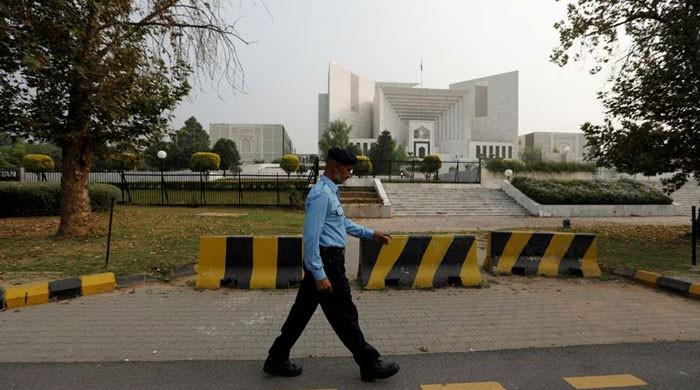
ISLAMABAD: Chief Justice (CJP) Umar Ata Bandial warned that if the talks between the government and the Pakistan Tehreek-e-Insaf (PTI) failed then the Supreme Court would use the Constitution to implement its verdict of holding elections in Punjab on May 14.
The warning was issued when CJP Bandial resumed the hearing of the petition seeking simultaneous elections across the country.
Apart from the CJP, the three-member bench included Justice Ijaz Ul Ahsan and Justice Munib Akhtar.
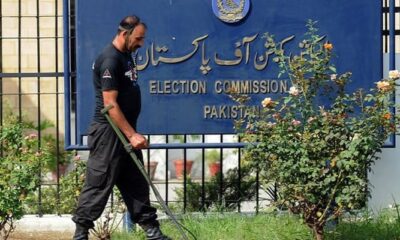
The apex court bench heard the PTI petition that challenged the Election Commission of Pakistan’s (ECP) order to hold Punjab elections in October.
Later, another petition was filed by a citizen, Sardar Kashif Khan, nominating the federal government, the ECP, and major political parties as respondents seeking the holding of polls on the same date across the country.
In the last hearing on April 27, the three-member Supreme Court bench directed the government and PTI to hold talks while making it clear that its April 4 order on Punjab Assembly elections had remained unchanged.
More time needed for negotiations, says Naek
At the outset of the hearing, Attorney General for Pakistan (AGP) Mansoor Usman Awan arrived at the rostrum and shared that the government has submitted its response on the talks with the Pakistan Tehreek-e-Insaf (PTI). He then said that Pakistan Peoples Party (PPP) lawyer Farooq H Naek would brief the court about the negotiations.
Naek informed the court that the federal government had filed a combined petition regarding the date of the Punjab elections.
Briefing the court about the negotiations held in the office of Senate Chairman Sadiq Sanjrani, Naek shared that the former had played the role of a “facilitator” during the negotiations.
He shared that there had been five rounds of negotiations between the Pakistan Tehreek-e-Insaf (PTI) and the ruling alliance.
“The coalition parties informed PTI about the current economic situation in the country and the ongoing negotiations with the IMF,” Naik said. He added that the PTI also agreed on the dire economic situation.
He then said that while the ruling alliance had agreed to dissolve the National Assembly in August, “more time is needed for negotiations.”
In response to this the CJP inquired, why the IMF agreement had been emphasised in the government’s response.
“The issue in the court is constitutional, not political,” he remarked, adding that the court leaves the political matter to the political parties.
Instead, he asked that the ruling alliance explain why the approval of IMF agreement and trade policy is so important in the matter.
In response, Naek said that the IMF loan was “necessary for the budget.” He contended that if the assemblies were dissolved, the budget would not be approved.
“If the Punjab and Khyber Pakhtunkhwa Assemblies had not been dissolved, this crisis would not have occurred,” he said, adding that the “crisis” was also wasting the court’s time.
Naek maintained that resolving the matter through understanding was the best recourse.
The chief justice then asked whether the IMF loan would be added to the government’s fund reserves or be used in the repayment of debts.
“The finance minister can give this answer,” Naek responded.
He then asked Senator Naek: “Has PTI recognised or rejected the importance of the budget?”
The chief justice remarked that no one can deny that the Constitution mandates elections be held within 90 days of the assembly’s dissolution.
The PPP lawyer agreed and added that there were no two opinions on the issue.
“This is a matter of complying with the Constitutional along with one of public importance. The court has given a decision on holding elections in 90 days,” CJP Bandial said, adding that he had heard the position of both sides on television last night.
However, he warned that were the negotiation to fail, the court would not sit idle and would ensure that the elections are held on May 14, as per the Constitution.
“We will use the constitution to ensure that the court’s order is followed,” he said, adding the court is performing its duty.
The chief justice defended the top court’s role in the matter and addressed accusations of “not abiding by the Constitution” levelled against it.
“It was said that in the past, the court did not respect the Constitution which caused damage,” he said while referring to the statements made in the National Assembly. However, he said that the court always respected everyone’s opinion and did not respond to any criticism.
“We do not even get angry, because if we do our decisions may be affected.” He asked Naek to compare the level of the conversation at the court and at the National Assembly.
Govt did not take case seriously:CJP
Naek then said that the court will have to re-examine the issue of conducting elections within 90 days.
“It is necessary to have caretaker governments for elections, or no one will accept the results of the elections,” he maintained.
“When the [case began] on February 23 you started pointing fingers. All these points were not raised at that time?” said CJP Bandial. He also slammed the government for not taking the constitutional process “seriously”.
Naek responded: “We were not heard by the court.”
At this the top judge replied that when the apex court had started the hearing, the government had boycotted it.
He said that after the boycott, the SC also bid “good bye” to the government.
He said that the government never tried to get a judgment on the matter previously and had, instead, consistently argued whether the petition has been rejected or accepted.
“When Justice Athar Minallah raised the point of restoring the assemblies, the government was not interested,” the CJP lambasted.
“Just look at today’s conversation, no one is talking about rulings or law,” said the top judge. He further censured the government for failing to file a review petition after the court had initially announced the election date.
“The government is showing interest in politics and not in law,” remarked CJP Bandial, adding that great sacrifices are being made for the sake of the country.”
“We lost six soldiers yesterday, this is our great loss, he said, “Apart from the economic situation, we are facing an important problem of security as well.”
If the politicians are left to their own devices, where will the constitution go? He asked.
PTI ready for simultaneous elections: Ali Zafar
PTI lawyer Barrister Ali Zafar, who was also part of the negotiating team, informed the bench that his party took part in the parleys with seriousness. He added that both the government and PTI have shown an inclination for holding polls on the same day but warned that the government might use the negotiations to prolong the issue.
“Everyone has to follow the decision of the Supreme Court,” said Zafar. However, he added that when they asked the government to inform the court about the dissolution of the National Assembly they did not agree to it.
“Whatever the Supreme Court rules we will accept it [but] Supreme Court decision should be implemented,” said Zafar.
Holding polls in one province may be destructive: Saad
After Zafar, Railways Minister Khawaja Saad Rafique came to the rostrum and told the bench he’s not a lawyer so he may not be able to address the court properly but would speak the truth.
“With respect, since 2017 Supreme Court committed injustices against us,” the minister said, adding that they did not want confrontation with institutions.
“The Constitution mentions about holding polls in 90 days but also talks about free and fair elections,” Rafique said, warning that polls in Punjab will create more problems.
“We have lost half the country over elections once. Holding polls in one province may be destructive,” the minister said.
He added that polls were delayed during the 1988 floods and after the assassination of former prime minister Benazir Bhutto.
Rafique also asked the court that the government had filed a review petition on the Article 63-A case.
“We are putting up that petition attorney general has been informed about it,” responded CJP Bandial, adding that if this case is wrapped up then the Supreme Court can look into other matters.
“If more time is granted then a [better] situation might arise,” said the minister. He added that involving courts in political matters creates problems.
“First Zia, then Musharraf, and the recent veiled martial law ended [as well] so this time will also pass by,” said the minister.
CJP Bandial responded that elections were held during major wars, and in Turkey despite an earthquake. He added that the things being told to the court could have been said in writing.
“The budget could have been presented in May. It is not necessary that the budget should be presented on June 30,” said the top judge.
Moving on, CJP Bandial said that the issue must be ended for the sake of the country.
The Pakistan Muslim League-Nawaz (PML-N) leader responded that there is consensus on three points and it will be developed on the fourth one as well.
“The current break in ongoing talks is not that huge,” said Rafique.
The government then requested more time for the talks and urged the court not to issue any directions after the case, saying that there was a “break” in the negotiations — not a “break-up”.
Court not to interfere in talks: CJP
Chief Justice Bandial said that the court will not interfere in the negotiations nor give any instructions. However, he said, “Today is Friday. If negotiations are to be held, they should be started.”
He then added that if negotiations do not take place, the matter would be looked into after a few days.
Advocate Shah Khawar — who filed the petition on behalf of Sardar Kashif Khan — then urged the government to file a review, adding that the ECP’s request for review had come.
He further suggested that Prime Minister Shehbaz Sharif and the PTI chief be taken on video link.
“After listening to Imran Khan and the prime minister, we can find a solution sooner,” advocate Khawar said.
However, the CJP remarked that both the prime minister and Imran are “busy people”.
“Representatives of Imran and PM Shehbaz are present here, we only like listening to those in black coats,” he said.
However, he added that it was yet to be seen if the ECP had a right to request revision or not.
CJP Bandial maintained that the time for reviewing the election decision had passed.
PTI has withdrawn from talks: Qureshi
Following Khawar, PTI Vice Chairman Shah Mehmood Qureshi came to the rostrum.
He said: “People sitting in the government are arrogant.”
He further said that the reply filed by the government’s committee only had the signatures of the finance minister.
The chief justice then said: “The attorney general prepared an application at night which we are hearing without numbering.”
He reiterated that the court only wanted to “facilitate” the matter and said that there should be a consensus on the date of elections on the same day.
Qureshi then asserted that the government was not having any talks with the IMF.
“We are aware of the financial difficulties, but the agreement with the IMF is stalled, he said, adding that the country was currently suffering from a political crisis.
The chief justice then asked him whether the PTI wanted negotiations or not.
“Tehreek-e-Insaf has withdrawn from negotiations,” the PTI leader replied.
After this, the SC bench concluded the hearing, with the CJP saying that the court would issue an “appropriate order”.
Senator Naek then requested the court to dispose of the petition today, requesting that the May 14 judgment be heard later.
However, Chief Justice Bandial responded: “If the court disposes of the case, the main purpose of the case will not be achieved.”
Naek then suggested that the case be concluded on the grounds that both parties agreed to hold the election on the same date.
The Chief Justice then said: “The matter has been left to the political process.”
This problem will be solved, Senator Naek said; however, the CJP responded by saying: “You only make promises.
“This point could have been given in writing that Punjab is a big province and smaller provinces will be affected by its elections.”
Govt-PTI negotiations
The negotiations — which were held in five formal and informal rounds — aimed at developing a consensus on a date for elections. However, despite agreeing to hold elections on the same date, the negotiating parties failed to reach a consensus on the date and submitted separate reports to the apex court.
On Wednesday, the Imran Khan-led PTI submitted its report to the Supreme Court on negotiations with the Pakistan Democratic Movement-led government, requesting it to ensure implementation of its April 4 judgement regarding holding elections to the Punjab Assembly on May 14.
In the report, the PTI — the main opposition party — apprised the court of progress on negotiations, saying it held three rounds of talks with the team of ruling PDM, an alliance of 13 political parties, in line with the commitment made to the top court in the Punjab elections delay case.
Earlier today, Finance Minister Ishaq Dar also informed the Supreme Court that the ruling alliance “believes that political issues can best be resolved through dialogue and are ready to resume” it in the “larger national interest”.
The government made the assurance in its four-page statement submitted to the court today. Dar submitted the statement on behalf of the government.