
Latest News
Six big takeaways from a turbulent week of UN diplomacy

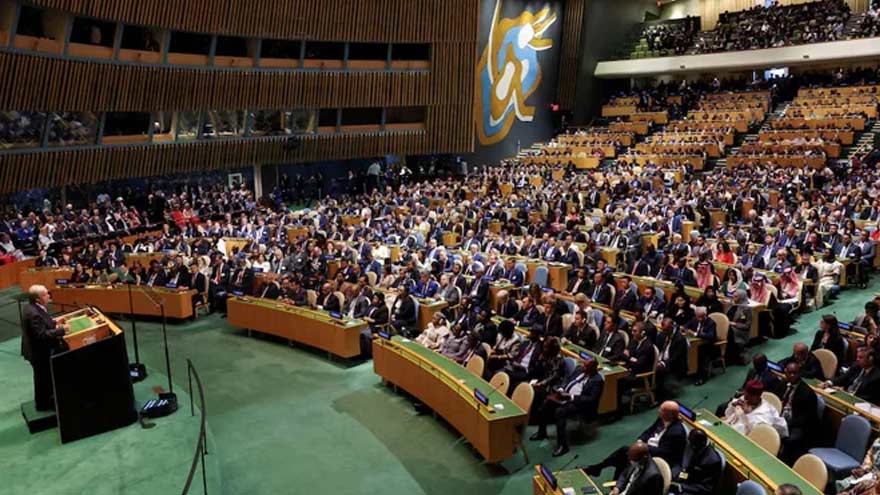
– Limousines whisked world leaders away from the United Nations on Friday after a week of speeches, meetings and hallway diplomacy.
While they reached no breakthroughs on the world’s most intractable conflicts, talks on the Iran and Ukraine wars inched forward, and global powers used the venue to debate AI risks with industry leaders.
Here are the big takeaways from scores of panels, hundreds of meetings, hours spent in lines and listening to speeches — and countless cups of coffee:
Reboot of Iran diplomacy
The UN was probably most useful for facilitating the first shuttle talks between American and Iranian officials since the collapse of a ceasefire in July. Iran’s Foreign Minister Abbas Araqchi and US envoys Steve Witkoff and Jared Kushner communicated through mediators.
The efforts must continue, a senior Iranian official told Reuters, even as Iranian and American leaders exchanged sharp words at the General Assembly hall, with the US threatening to “annihilate” Iran and Iran accusing the US of a “bullying mentality.”
The senior Iranian official said Tehran was reviewing Washington’s response to its proposals, which include lifting a US naval blockade on Iranian ports and reopening the Strait of Hormuz.
But no agreement appeared imminent. US Secretary of State Marco Rubio cautioned that a deal would involve hard work over time.
Ukraine grain and energy
Rubio also held talks with Russian Foreign Minister Sergey Lavrov, after which he said Ukraine and Russia had both voiced an interest in a limited ceasefire involving grain and energy-related targets.
Ukraine and its allies are racing to secure limited agreements on energy infrastructure and Black Sea shipping before winter, fearing renewed Russian strikes on power and heating facilities.
But hours after Rubio spoke on Wednesday, Lavrov addressed the Security Council meeting on Ukraine, showing no indication Russia was prepared to engage on any subject. “Europe, whatever it thinks, just wants to get a pause, and it wants to use it to pump the Kyiv regime with weapons,” Lavrov said.
AI steals climate’s spotlight
Climate change — a focus of UN discussions in recent years — was largely pushed aside by debate over artificial intelligence.
The festival of diplomacy coincided with an unprecedented outpouring of concern around AI after several safety breaches, and as top researchers warned it could destroy humanity.
The UN convened a Security Council meeting featuring OpenAI CEO Sam Altman, who made an appearance in person, as well as Anthropic CEO Dario Amodei. The industry leaders appealed for governments to work together to manage AI.
Underscoring the concerns, just as they spoke, Australian Prime Minister Anthony Albanese said that an AI agent developed by OpenAI infiltrated an Australian government website in June, accessing public and non-public files.
US President Donald Trump, who has dismissed AI risks as a “hoax” and “sick conspiracy,” told the UN he “rejects any attempt to construct a globalist scheme to control” AI, describing it as amazing while promising the US would be careful.
Surprise arrival
The biggest surprise arrival at the UN was Venezuela’s interim President Delcy Rodriguez, who used her trip to hold first in-person talks with Trump since coming to power after US forces grabbed then-President Nicolas Maduro in a dramatic nighttime raid.
The Venezuelan delegation’s focus was on restructuring its billions of dollars in sovereign debt as it met US officials, multilateral lenders and companies.
Trump used his speech to the body dedicated to global peace to declare that in Venezuela: “to the victor belong the spoils,” and called an oil deal the US signed with Caracas last month “perhaps the biggest deal ever made.”
As Rodriguez and Trump met in New York, Venezuelan opposition leader Maria Corina Machado made three unsuccessful bids to return to her country.
Surprise absence
The biggest surprise absence was the Sudanese army chief Abdel Fattah al-Burhan. The US withheld his visa in a move that Sudanese and other sources said was linked to a US-backed ceasefire proposal that Khartoum has resisted.
The dispute, first reported by Reuters, threatened to deepen tensions between Washington and Sudan’s army at a critical moment in the civil war, which the UN calls the world’s largest humanitarian crisis.
Burhan had represented Sudan at the General Assembly since the coup. Another notable absentee was Palestinian President Mahmoud Abbas, who addressed delegates by video and condemned US curbs on the Palestinian mission’s access to the UN.
Uncertain future
The cash-strapped United Nations may no longer be in “freefall,” but it remains stuck in an “open-ended crisis,” International Crisis Group analyst Richard Gowan said. The organisation is grappling with shrinking budgets, waning influence and mounting geopolitical conflicts.
Wars in Ukraine and Iran rage on, while Trump has denounced the 193-member body as bloated and globalist, slashed US funding and withdrawn from dozens of UN agencies.
As UN Secretary-General Antonio Guterres received a standing ovation after his final General Assembly speech, a small group of politicians and former UN officials lobbied publicly and behind closed doors to succeed him. His second five-year term ends on December 31, leaving little time for the world’s major powers to agree on a replacement.
The race, conducted according to an arcane multi-step process involving “straw polls,” has no clear frontrunner, but former Costa Rican Vice President Rebeca Grynspan and Guyana’s UN Ambassador Carolyn Rodrigues Birkett are leading the pack.
Whoever gets the world’s most difficult job will inherit an organisation buffeted by crises, low morale and declining political relevancy. That person, too, will welcome the leaders to New York for next year’s summit.

WhatsApp has began rolling out a new “Mentions and Replies” filter that will enable users to easily identify chats where they have been mentioned or their message has been replied to.
WABetaInfo says the feature is now being implemented for select users on WhatsApp beta for Android version 2.26.42.12.
The new filter will be available in the Chats page, allowing users to see conversations where they have been tagged or their messages addressed. It is said to help you keep track of key communications more easily in huge group conversations and groups.
The feature could be particularly useful for people who get a lot of messages and sometimes miss critical queries, answers or comments in crowded chats.
Another important feature is that even after you have cleared the notifications, the relevant chats will still be available through the filter, enabling you get back to conversations that need your attention.
Users will also be able to tweak the feature as per their tastes with choices to disable it through settings or relocate it to the “More” section.
The “Mentions and Replies” filter is now being handed out to a small number of beta users. WhatsApp has not yet announced when it will be sent out to all users.
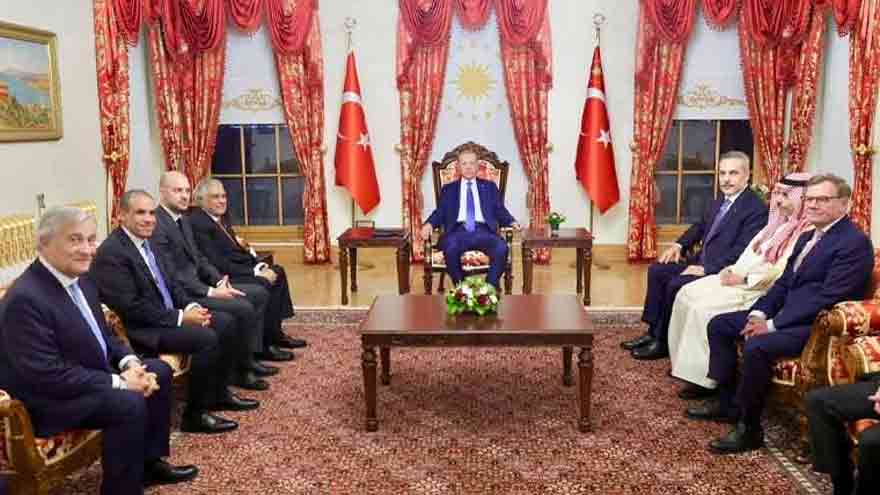
Foreign ministers of eight nations including Pakistan agreed to the urgent need to resolve regional crises through conversation, diplomacy and de-escalation.
The foreign ministers of Turkey, Egypt, Pakistan and Saudi Arabia (R4) and the FMs of France, Germany, Italy and the United Kingdom, met in Istanbul on 23 October 2026, the Foreign Office stated in a statement on Saturday.
Ministers discussed issues of regional and international importance, namely US/Israel-Iran conflict, Israeli-Palestinian conflict and the need for a negotiated two-state solution, appalling Houthi militia attacks against the Kingdom of Saudi Arabia and the Government of Yemen, safety and freedom of navigation, escalated tension in Straits of Hormuz and Bab El Mandeb and the Black Sea.
They pledged their ongoing commitment to contribute to diplomatic efforts to promote peace and stability in the area and beyond and address the security, economic and trade ramifications of these concerns.
They stressed the importance of finding durable negotiated solutions to all ongoing issues in conformity with the applicable UN Resolutions. The Ministers resolved to continue the engagement in this format with a view to averting disputes and promoting peace and stability in the area.
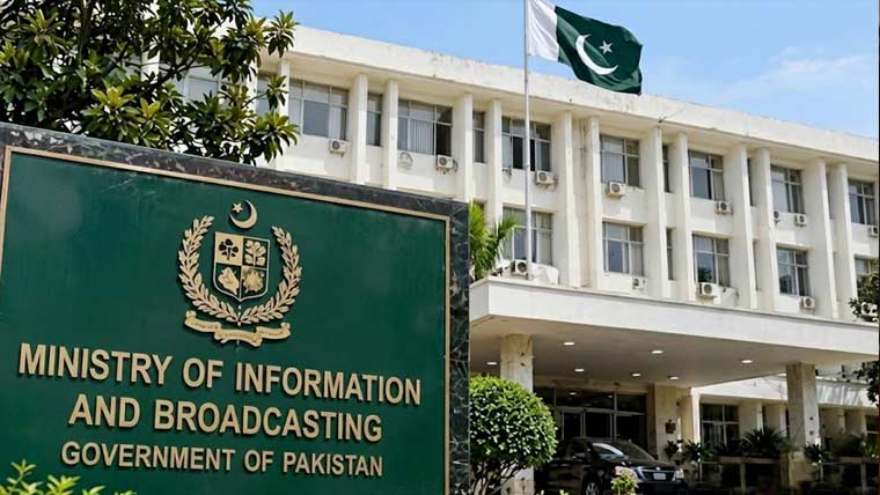
Pakistan reiterated its worries about militant activity emanating from Afghan territory and called on the Afghan Taliban leadership to stop all kinds of support, facilitation and tolerance for the Tehreek-e-Taliban Pakistan (TTP), the Balochistan Liberation Army (BLA) and their affiliated groups.
The Ministry of Information and Broadcasting claimed that the claims against Pakistan’s security institutions could not take away from Islamabad’s long-standing security worries. It underlined that Afghan authorities must ensure that their land is not utilised to plan, prepare or carry out terrorist operations against Pakistan.
The ministry, reacting to the latest statements by the Afghan Taliban regime, said Pakistan’s concerns were not conjectural but were based on international reporting and documented proof. It stated that Afghan authorities were responsible for preventing the use of Afghan land for terrorist actions against Pakistan and that the blame on Pakistani security agencies would not clear them of their obligation.
The ministry said it was referring to a report by the United Nations Security Council’s Analytical Support and Sanctions Monitoring Team, investigating the presence and actions of terrorist groups in Afghanistan, known as document S/2025/796.
It also cited a report presented to the US Congress by the US Lead Inspector General covering Operation Enduring Sentinel from January to March 2026.
The Pakistani ministry’s version of the US report said the Afghan Taliban had continued to allow the TTP to operate from Afghan territory. The report attributed the spike in attacks against Pakistan to growing Taliban backing and greater operational independence for the group.
The statement cited numbers that approximated the size of the TTP at between 4,000 and 6,000 combatants.
The ministry said the foreign evaluations illustrate the seriousness of Pakistan’s worries about terrorist safe havens and support networks in Afghanistan. It said that dismissing the capacity or desire of extremist groups to destabilise Pakistan did not take care of the issues expressed via solid evidence.
The statement also mentioned continuous efforts by armed extremists to get into Pakistan from across the Afghan border. It alluded to the killings of Afghan nationals and members of terrorist groups in Pakistani counter-terrorism operations, and the capture of foreign-made weaponry from militant elements.
“Such issues need to be taken seriously. The concerns raised about Afghan Taliban officials, including in Kandahar, allegedly facilitating terrorist groups need credible explanations and verifiable action, not outright denials,” the ministry said.
Pakistan said its security measures were aimed at terrorist threats, not at the Afghan people. The ministry said peace and stability of the two nations were interlinked and a terrorism-free region would benefit the people of Pakistan and Afghanistan.
It encouraged the Afghan Taliban administration to take concrete measures to remove the support mechanisms accessible to the TTP, BLA and allied organisations. It added these steps must ensure that Afghan land is not utilised for planning, preparing or executing strikes against Pakistan.
The ministry stated that characterising Pakistan’s legitimate security concerns and steps for defence as enmity toward Afghanistan would neither address the root cause of the crisis, nor would it divert attention from it.
The statement stated that Pakistan would continue to take all necessary actions to preserve its citizens, sovereignty and territorial integrity.
At the same time, Islamabad was ready for a responsible engagement based on mutual respect, verifiable assurances and concrete action against terrorist safe havens, support networks and cross-border infiltration.
The ministry said that sustainable peace in the region would depend on the Afghan Taliban government taking real steps to address Pakistan’s core security concerns in a way that could be independently confirmed.
Search Topics

WhatsApp rolls out new ‘Mentions and Replies’ chat filter

Eight countries, including Pakistan, urge diplomacy to resolve regional conflicts

Pakistan warns Taliban regime to stop supporting terror outfits

ICC board meeting in India: Mohsin Naqvi gets invitation

‘Self-Reliance in Digital ID’: NADRA launches locally produced QR code-based National Identity Card

23 people have died during the monsoon as rain-related incidents plague Punjab and KP.
-
 Latest News5 months ago
ICC board meeting in India: Mohsin Naqvi gets invitation
-
 Latest News2 months ago
‘Self-Reliance in Digital ID’: NADRA launches locally produced QR code-based National Identity Card
-
 Latest News3 months ago
23 people have died during the monsoon as rain-related incidents plague Punjab and KP.
-
 Latest News2 months ago
Turkish FM, Dar discuss regional trends, bilateral connections
-
 Business3 months ago
Govt dedicated to resolving Balochistan issues: Dar
-
 Latest News3 months ago
Pakistan making rapid progress in robotics, AI: Shaza Fatima
-

 Entertainment5 months ago
Interim bail given to YouTuber Rajab Butt in gambling app marketing case
-
 Latest News3 months ago
After a divorce, LHC decides that women who have been harmed by their spouses get their dower.