
Latest News
ByteDance in talks to buy Chinese AI chip maker Iluvatar CoreX

Chinese tech firm ByteDance is in talks to buy AI processors for inference work from Shanghai-based Iluvatar CoreX (9903.HK), and is also eyeing a similar deal with Baidu (9888.HK), two persons with knowledge of the subject said.
If an agreement is reached, Iluvatar CoreX would be ByteDance’s third major domestic GPU supplier after Huawei and Cambricon (688256.SS), the sources stated.
ByteDance, TikTok’s company, is also considering utilising Baidu’s (9888.HK) Kunlunxin chips, they said, declining to be named as the discussions are private. Tencent (0700.HK) is already a customer for Kunlunxin chips, one of the sources said.
ByteDance, Iluvatar CoreX, Baidu and Tencent did not respond to requests for comment.
The possible acquisitions reflect Chinese chipmakers’ efforts to build alternatives to foreign AI chips that are gaining pace as Beijing pushes the use of locally made chips to increase self-reliance amid U.S. export limits on sophisticated processors.
In April, Reuters reported that Chinese GPU and AI chip makers took about 41% of China’s AI accelerator server market last year, eating into Nvidia (NVDA.O)’s once-dominant position there in one of its most crucial overseas markets.
In the second half of this year, Chinese AI chips would be accessible in big quantities, while Nvidia’s market share in China has effectively gone to nothing, Tencent’s Chief Strategy Officer James Mitchell said in May.
The sources claimed Iluvatar CoreX, a top GPU startup in China, expects to sell at least 50,000 chips to ByteDance this year, with the most of them going to inference workloads as ByteDance adds customers to its flagship AI chatbot, Doubao.
Inference workloads are all about answering questions and they are different from AI model training that tends to use the most powerful CPUs.
Sources stated the terms of the possible deals are not final and could possibly alter.
BUSINESS MILESTONE
A partnership with ByteDance — one of China’s biggest digital businesses and a heavy spender on AI infrastructure — would mark a key commercial milestone for Iluvatar CoreX. The Shanghai-based company has largely supplied government procurement projects until now, said one of the sources.
Iluvatar CoreX, which debuted in Hong Kong in January, had sales of 1 billion yuan ($148 million) in 2025, almost 90% of which came from selling GPUs, as it benefited from increased demand for local AI gear.
Its Tiangai series chips are designed for AI training, and its Zhikai series is targeted at inference tasks, according to its website.
The research note said Huatai Securities estimated Iluvatar CoreX’s sales would reach 3.04 billion yuan ($449.8 million) this year, with total shipments soaring 139% to more than 100,000 chips. The average selling price for the Zhikai inference chips was 12,000 yuan, or around $1,775 each, said the trader.
Shares of Iluvatar Corex jumped 12% in Hong Kong after the Reuters report.
– Punjab Chief Minister Maryam Nawaz Sharif has digitally inaugurated five road projects under the Punjab Public-Private Partnership Authority, with the management and operation of the five roads handed over to the private sector.
The transfer of the projects under the Punjab Public-Private Partnership Authority is expected to generate Rs22 billion in revenue for the Punjab government. Modern electronic toll plazas will also be established on roads shifted to the PPP model.
The projects include the 80-kilometre Muridke-Narowal Road, 33-kilometre Shakargarh-Narowal Road and 97-kilometre Faisalabad Ring Road. The 52-kilometre Faisalabad-Sahianwala Road and 56-kilometre Faisalabad-Samundri-Rajana Road are also part of the PPP projects.
Under the arrangement, private contractors will collect tolls linked with the National Highway Authority for seven years, while the private companies will also be responsible for maintenance, construction and repair of the respective roads.
Vice Chairperson of the Punjab Public-Private Partnership Authority and Senior Minister Marriyum Aurangzeb briefed the meeting on the projects. She said projects involving hostels, hospitals, parks, sports grounds, waste-to-energy facilities, parking plazas, tourism, water supply and recycling were also in the pipeline under the PPP authority.
Effluent treatment plants for filtering toxic industrial wastewater, as well as Zarrar Cafe, tourism and food street projects, will also be completed under the PPP model.
The processing time for projects under the Punjab Public-Private Partnership Authority has been reduced from less than two years to six months.
Four more roads in Punjab will be shifted to the PPP model, including the 42-kilometre Bahawalpur-Yazman Road, 43-kilometre Yazman-Ahmadpur East Road, 28-kilometre Raiwind-Changa Manga Road and 26-kilometre Gajjumata-Kasur Road.
Water and sanitation services projects in Chakwal and Kasur will also be completed under public-private partnerships. In Lahore, the Tourism Department will develop a Time Travel Park under the PPP model.
For the first time, an FMD vaccine protection plant will be established to combat foot-and-mouth disease among livestock. A parking plaza and multimodal commercial facility will also be developed at Badami Bagh bus terminal, while a bridge will be constructed at Sahuka Pattan over the River Sutlej under the PPP model.
Black soldier fly larvae facilities will be established for solid waste management at vegetable and fruit markets across Punjab. The management of 100 sports grounds and other facilities will also be carried out under the PPP framework.
A modern truck terminal will be developed in Faisalabad under the PPP model. Girls’ and boys’ hostels will be constructed at Punjab University and 28 other public-sector universities, while hostels at three medical colleges will also be developed through public-private partnerships.
Fourteen hostels will be established across the province for working women under the PPP model. The operation and development of the Nursing Hostel at Sahiwal Teaching Hospital and Faridia Park Sahiwal will also be undertaken through public-private partnerships.
Projects worth up to Rs500 million can be approved and implemented through the divisional PPP working party headed by the commissioner.
Chief Minister Maryam Nawaz Sharif appreciated Finance Secretary Mujahid Sher Dil, Communications Secretary Raja Jahangir Anwar, PPP Authority CEO Dr Zeeshan Hanif and their team for their efforts. Provincial Communications Minister Sohaib Ahmed Bharth, Finance Secretary Mujahid Sher Dil and Communications Secretary Raja Jahangir Anwar also addressed the ceremony.

Jet fuel prices have once again increased in the country, along with the price of kerosene oil.
The price of jet fuel has been increased by Rs9.05 per litre, while kerosene oil has become Rs7.68 per litre more expensive.
Following the increase, the new price of jet fuel has been fixed at Rs355.52 per litre, while kerosene oil will now cost Rs329.54 per litre.
Meanwhile, according to a notification issued by the Petroleum Division, the price of petrol has also been increased by Rs2.10 per litre, taking its new price to Rs392.76 per litre.
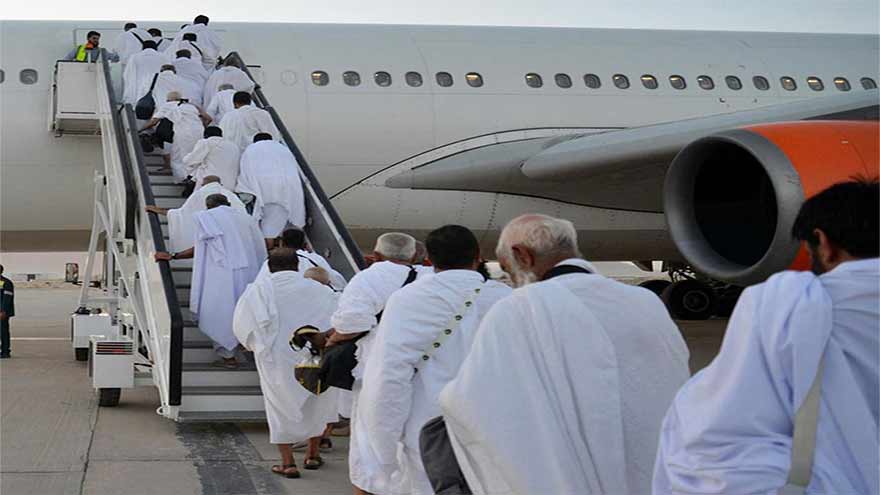
The religious affairs ministry stated late Friday that the federal government has fixed October 20 as the deadline for intending pilgrims selected under the government Hajj system to deposit the second installment of their pilgrimage dues.
ISLAMABAD: Pakistan has set aside 107,526 slots for the government plan, including 30,000 for a shorter package, and another 71,696 slots have been granted to the private scheme for next year’s Hajj.
The country on Aug. 25 completed online booking of all tickets in the government Hajj scheme, the first time the whole quota has been filled through a digital reservation system.
The ministry of religious affairs said in a statement on Friday that the applications of pilgrims for next year’s Hajj will be cancelled if they did not pay by the deadline.
“The dates for depositing the second installment of dues for Hajj pilgrims under the government scheme have been fixed from 5 October to 20 October, 2026,” the ministry said.
“If the second installment is not deposited within the deadline, then the Ministry said the pilgrim’s application will be cancelled and the amount deposited earlier will be refunded to the pilgrim’s account,” the Ministry said.
Under the government arrangement, pilgrims can pay the second payment of Hajj dues through the ‘Pak Hajj App’ or digital Hajj site within the stipulated deadline.
The government said that submitting the Hajj medical fitness certificate on the ‘Pak Hajj’ app or the digital Hajj portal was essential before depositing the second installment.
This year the government announced that pilgrims will pay Rs1.2 million ($4,334) for a 40-day Hajj package and Rs1.3 million ($4,695) for a shorter, 20- to 25-day package under the government system.
The first installment of dues for seats under the shorter government package was paid within 24 hours of the process starting on Aug 18 and the rest of the seats under the plan were booked by Aug 25.

Maryam inaugurates 5 road projects under Punjab PPP Authority

Jet fuel price rises by Rs9.05 per litre in Pakistan

Govt sets deadline of 20th Oct for pilgrims to pay 2nd Hajj installment

ICC board meeting in India: Mohsin Naqvi gets invitation

23 people have died during the monsoon as rain-related incidents plague Punjab and KP.

‘Self-Reliance in Digital ID’: NADRA launches locally produced QR code-based National Identity Card
-
 Latest News5 months ago
ICC board meeting in India: Mohsin Naqvi gets invitation
-
 Latest News2 months ago
23 people have died during the monsoon as rain-related incidents plague Punjab and KP.
-
 Latest News2 months ago
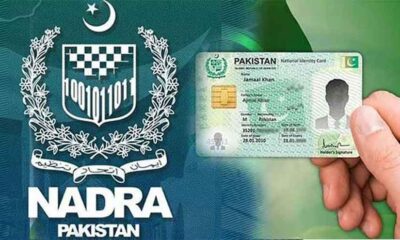
‘Self-Reliance in Digital ID’: NADRA launches locally produced QR code-based National Identity Card
-
 Business3 months ago
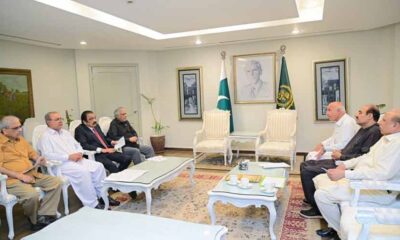
Govt dedicated to resolving Balochistan issues: Dar
-
 Latest News2 months ago
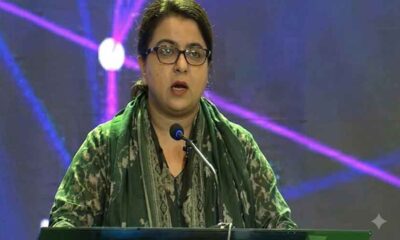
Pakistan making rapid progress in robotics, AI: Shaza Fatima
-
 Latest News1 month ago
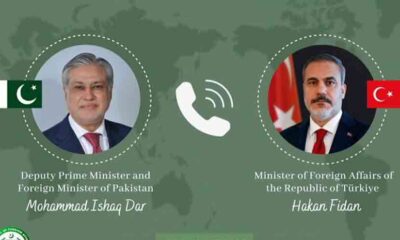
Turkish FM, Dar discuss regional trends, bilateral connections
-

 Entertainment5 months ago
Interim bail given to YouTuber Rajab Butt in gambling app marketing case
-
 Latest News2 months ago
After a divorce, LHC decides that women who have been harmed by their spouses get their dower.