
Business
U.S. relaxes Iran sanctions following talks; Lebanon violence eases

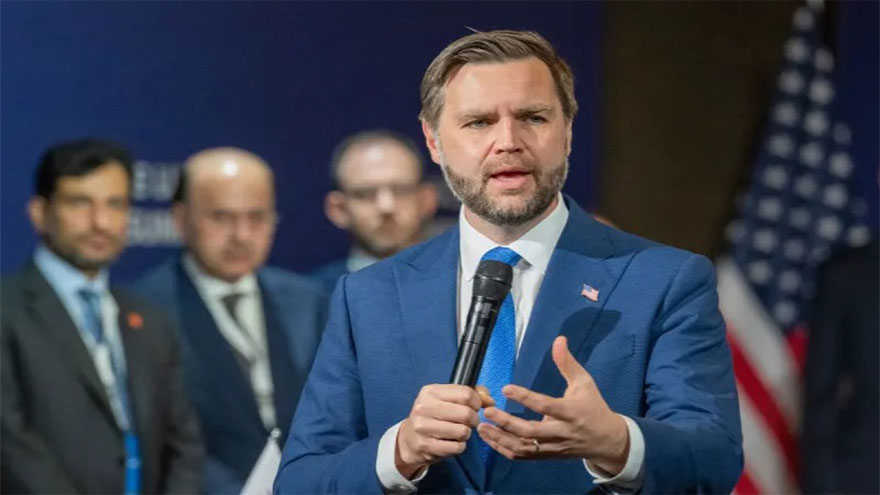
The United States on Monday suspended sanctions on Iran for 60 days after the first negotiations under a new peace pact, as officials reported a continued pause in fighting in Lebanon under the agreement to end hostilities across the region.
The developments came after a weekend that threatened to jeopardise the week-old pact, with U.S. President Donald Trump threatening to reignite the war if Iran impeded shipping through the Strait of Hormuz after Tehran declared the crucial waterway blocked. Traffic in the strait picked up Monday and oil prices began their drop.
U.S. Vice President JD Vance said meetings with Iranian officials in Switzerland had built a good basis for a final peace agreement, however Iran denied it had begun talks over its nuclear program.
U.S.-Israeli strikes on Iran and Israeli attacks in Lebanon have killed thousands and uprooted millions. The conflict with Iran has also roiled markets throughout the world and driven up global oil prices, which closed down 3 percent Monday after Vance said some progress had been made.
The two sides negotiated a plan for a permanent agreement within 60 days at discussions in the Qatari-owned Swiss alpine resort of Buergenstock, where they tried to expand on the temporary arrangement they reached last week, mediators Pakistan and Qatar said.
They also agreed on a mechanism to cease hostilities in Lebanon between US ally Israel and Iran-aligned Hezbollah and created a communications channel to help assure safe passage for commercial ships through the Strait of Hormuz to avert war in the crucial waterway.
In one of the first of numerous steps under the agreement, the U.S. Treasury announced a waiver until Aug. 21 on sanctions that allow Tehran to sell oil and related products and get paid for them, providing economic relief to Iran.
Vance upbeat on assessment
Vance, positive since the memorandum of understanding was signed, said Tehran has agreed to let in nuclear inspectors and to create systems for dealing with its frozen assets overseas and for managing cease-fires.We built a very excellent basis for a successful final deal,” he told reporters after participating in the talks.
But Iran’s Foreign Ministry spokesman Esmaeil Baghaei told the official IRNA news agency Iran had not yet discussed nuclear problems and made new pledges.
“Iran will agree to weapons inspections to ensure ‘nuclear honesty,’ ” Trump stated Monday on Truth Social.Later Trump told reporters, “If Iran doesn’t live up to their agreement, or if they’re not behaving, I will do what I have to do.
Iran has cut back on inspections by the International Atomic Energy Agency since the U.S. and Israel conducted an initial round of air strikes last year, then stopped them altogether when war broke out in February. It insists its nuclear program is for peaceful purposes.
Foreign Minister Abbas Araqchi stated on social media that Tehran had received waivers for oil and petrochemical exports, release of some of its blocked assets abroad and launching of a rehabilitation and development plan for Iran.
White House envoy Jared Kushner, Trump’s son-in-law, had worked out a procedure under which the U.S. and Qatar would oversee Iranian finances when they were unfrozen and the money could be used to buy U.S. corn, soy and wheat, Vance said.“So the money that we lift is going to go to our farmers,” Trump told reporters.
Iran’s Central Bank Governor Abdolnaser Hemmati claimed there was no such duty and stated at least some of the remaining frozen funds might be used to buy other non-sanctioned items, Iran’s Tasnim news agency reported.
Cease-fire
Technical conversations are scheduled to continue through the end of the week.
The interim peace accord calls for a halt to all hostilities, including Lebanon, which Israel invaded in March after Hezbollah fired across the border.
Israel has not signed the peace accord and has said it will not withdraw its troops from Lebanon but approved a new truce on Friday. Lebanese officials said the fighting had subsided since Saturday night but continued fiercely for another day.
Israel and Lebanon are scheduled to begin a fresh round of discussions in Washington on Tuesday, with Beirut eager to move forward with direct negotiations, even as they seem to be overshadowed by Iran’s intention to include Lebanon in its negotiations with the United States.
“The first two full days of quiet since the war started,” said Hassan Wazni, director of a hospital in the brutally battered city of Nabatieh.I’m taking it day by day and most of the time I’m sleeping at the hospital. “This is the longest ceasefire to hold,” he told Reuters over the phone.
More than a million Lebanese have been displaced by the war, some have begun to return home, but many are still afraid.
In the southern village of Qennarit, mourners carried the bodies of four women killed in the latest round of Israeli attacks on Saturday. The coffins were covered with yellow Hezbollah banners and the group’s green insignia of an arm holding an assault rifle.
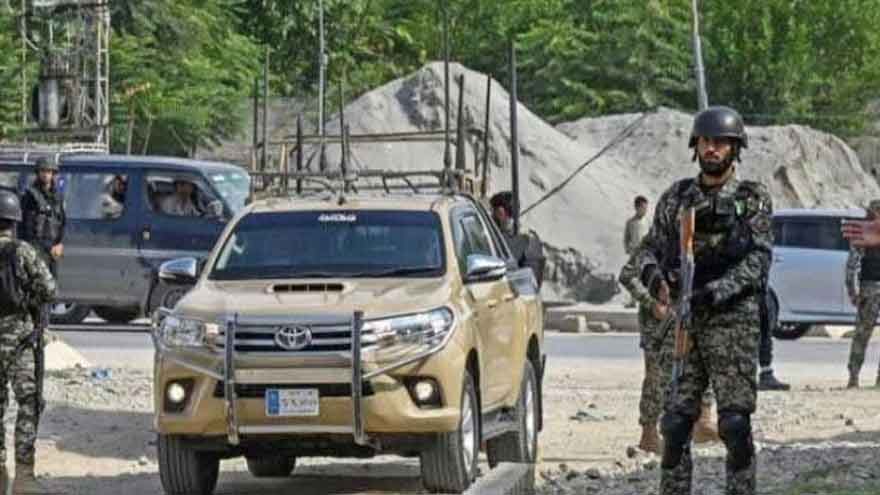
The security forces have conducted effective operations in Khyber Pakhtunkhwa and Balochistan which have resulted in a steep drop in the number of terrorist strikes.
The Pakistan Institute for Conflict and Security Studies (PICSS) said in a new report that terrorist assaults had fallen by about sixty-six percent in a five week period.
The report claimed attacks reduced to 21 between October 16 and 22, from 61 registered between September 18 and 24.
There was also a week-on-week drop of 38 per cent in militant attacks from October 16-22. In such attacks, the number of people injured fell from 20 in the previous week to 11 in the same period, a fall of 45 percent.
PICSS said security forces have conducted 10 operations in which 33 insurgents were killed.
The research also looked at the effect of an internal leadership struggle in Fitna al-Hindustan and changes in the propaganda approach of Fitna al-Khawarij on the militant scene.
The data show that insurgent activity has gone down throughout the review period, but security challenges continue in regions of the country.
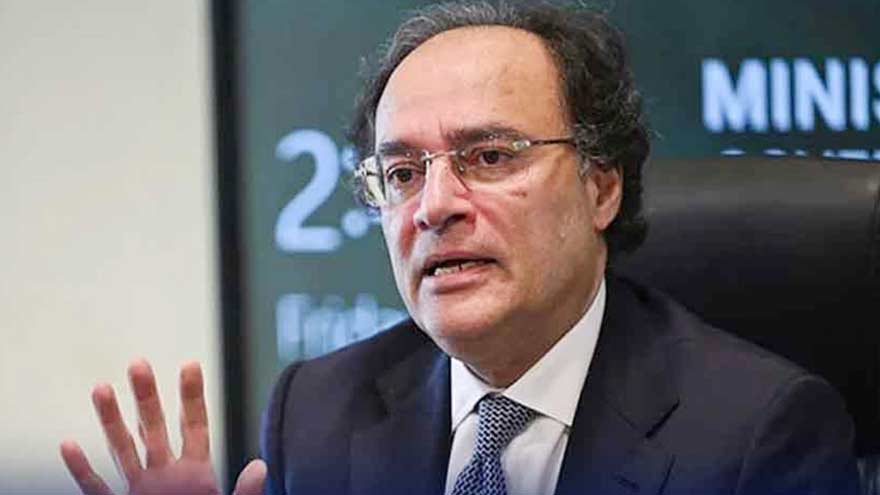
Finance Minister Muhammad Aurangzeb said that Pakistan’s crude oil and other energy supplies are satisfactory. He said the government has made sufficient provisions to cover the country’s energy needs till November and further efforts are being taken to secure supply during winter.
Aurangzeb remarked while addressing a ceremony at a private university in Lahore that Pakistan has not had an energy shortage and there were no queues at gas stations or law and order issues due to an energy crisis.
He did acknowledge, however, that more had to be done to satisfy the country’s gas and liquefied natural gas (LNG) needs.
Talking about the economic performance of the country, the finance minister said that the information technology (IT) export services of Pakistan increased from one billion dollars to 4.6 billion dollars. “We expect IT exports to reach $5.5 billion in the current fiscal year,” he continued.
Aurangzeb said foreign exchange reserves were sufficient to cover more than three months of imports and had reached a record high. He recalled that at one time the reserves had dropped to the equivalent of only two weeks’ imports.
Pakistan’s credit rating has improved three times since April last year and the administration had taken major steps to recover access to international financial markets, he said.
Pakistan carried out a private placement in April this year, tapped the international markets by the issuing of Panda bonds and issued bonds worth three billion euros in the first week of September, the minister said.
Investors from Asia, the Middle East, Europe and the United States showed interest, he said, adding that orders received from investors for Pakistan’s euro bonds were twice the amount offered.
Aurangzeb also said that international investors were reviewing Pakistan’s economic outlook after its interaction with the International Monetary Fund (IMF). The current IMF program is due to expire in October next year, he noted.
On energy supplies, the minister said Pakistan had taken adequate measures for energy procurement and supplies in spite of regional crises. Arrangements were made to meet requirements until November and preparations were in hand for the winter season.
The finance minister said the administration has opted for targeted subsidies instead of blanket subsidies so that the assistance reaches the deserving part of the community.
He said that motorbikes, three wheelers and automobiles with engines below 800cc were given targeted incentives. So far, the relief had reached around 12 million distinct beneficiaries, while an estimated 40 to 50 million people across the country had benefited altogether.
“Pakistan is continuing structural reforms along with efforts to maintain economic stability, and reforms have moved beyond the planning stage and are now being implemented,” Aurangzeb added.
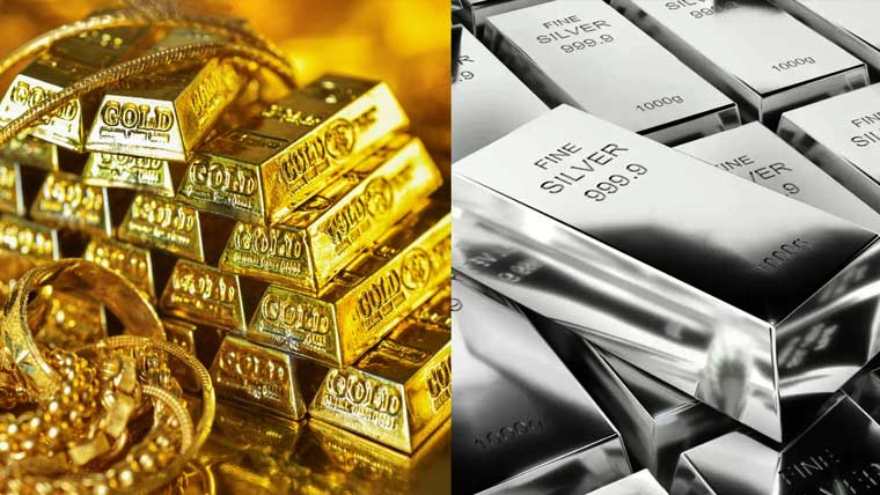
Gold prices in Pakistan continued to tumble on Saturday, recording a fifth straight day of losses as international bullion prices fell below the critical $4,000 per ounce threshold.
The All Sarafa Association said the continued decrease drove gold to a five-month low in both domestic and international markets.
In the local market, the price of 24-carat gold declined by Rs2,500 per tola to Rs422,036. The price of 10 grams also decreased by Rs2,144 to Rs361,686.
The current cut is the latest in a run of sustained deterioration in bullion prices with the domestic market mirroring the slide in foreign rates.
World prices
International gold prices also saw another downturn, dropping by $25 per ounce to $3,995. The move sent bullion below the psychologically important $4,000 barrier, boosting pressure on local prices.
Gold prices fell for the fifth consecutive day in global and domestic markets. The group said the latest numbers “show the scale of the recent retreat” with prices dropping to their lowest in five months.
The jewellery markets in Pakistan observe the international bullion movements closely as global price changes affect local rates, alongside currency fluctuations and other market considerations.
Silver drops
Also prices of silver also came down in domestic trade. Silver prices decreased by Rs7 per tola to Rs5,858.
The simultaneous fall in gold and silver is a reflection of the wider weakness seen across the local precious metals market.

WhatsApp rolls out new ‘Mentions and Replies’ chat filter

Eight countries, including Pakistan, urge diplomacy to resolve regional conflicts

Pakistan warns Taliban regime to stop supporting terror outfits

ICC board meeting in India: Mohsin Naqvi gets invitation

‘Self-Reliance in Digital ID’: NADRA launches locally produced QR code-based National Identity Card

23 people have died during the monsoon as rain-related incidents plague Punjab and KP.
-
 Latest News5 months ago
ICC board meeting in India: Mohsin Naqvi gets invitation
-
 Latest News2 months ago
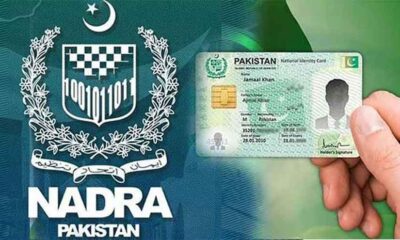
‘Self-Reliance in Digital ID’: NADRA launches locally produced QR code-based National Identity Card
-
 Latest News3 months ago
23 people have died during the monsoon as rain-related incidents plague Punjab and KP.
-

 Latest News2 months ago
Turkish FM, Dar discuss regional trends, bilateral connections
-
 Business3 months ago
Govt dedicated to resolving Balochistan issues: Dar
-
 Latest News3 months ago
Pakistan making rapid progress in robotics, AI: Shaza Fatima
-

 Entertainment5 months ago
Interim bail given to YouTuber Rajab Butt in gambling app marketing case
-
 Latest News3 months ago
After a divorce, LHC decides that women who have been harmed by their spouses get their dower.