
Latest News
Khawaja Asif questions PPP stance on new provinces as devolution debate unfolds

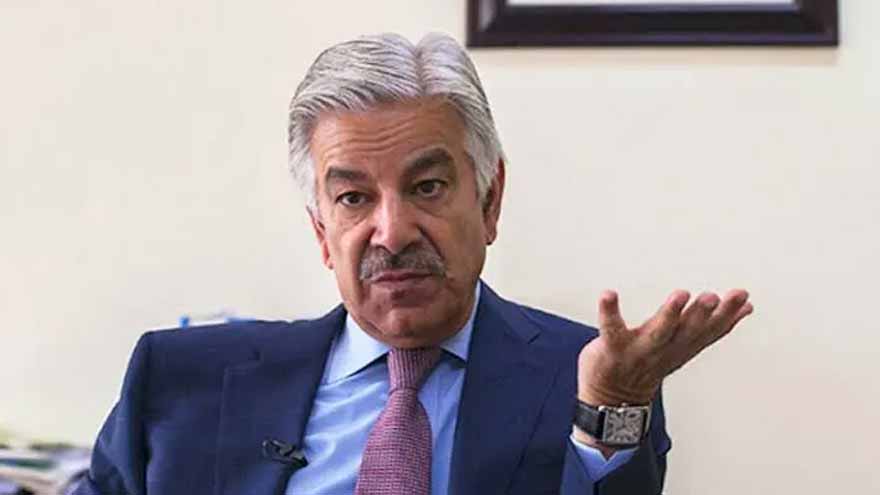
Defense Minister Khawaja Asif has taken the Pakistan Peoples Party (PPP) to task on its ‘double standards’ on the creation of new provinces and administrative divisions.
“The PPP seems to support the demand for a separate Saraiki province in Punjab but whenever there is a broader restructuring of the country’s administrative setup it raises the issue of Sindhudesh,” Asif stated in a post on X.
He questioned the logic of the inconsistent posture of the party, stating he suspected there was “something else” behind it. The minister said he would raise his concerns at the proper moment.
At the same time, Asif emphasized that national identity should be supreme, saying, “We are Pakistanis, first and last.”
The defense minister also urged for the efficient execution of the devolution proposed under the 18th Constitutional Amendment.
“The amendment has laid down the principle of devolution of powers, but powers are still concentrated at the higher levels and the system has not been implemented in the real spirit,” he said.
Asif said, “We need more devolution so that democracy at the grassroots level is strengthened and people can directly benefit from government institutions and services.
He said the present 36 divisions in Pakistan might be the basis for re-organising the administrative structure, but another geographical model could also be considered.
In the end, Asif contended, the delegation of power to lower levels of administration was inevitable.
His comments come amid increasing clamor for changes to Pakistan’s provincial and administrative structure.
The issue gained steam in July when Interior Minister Mohsin Naqvi criticized the country’s present governance system and advocated for significant administrative reforms. He also pushed for the division of the provinces into smaller administrative units for better control and to speed up growth.
The PPP was against pushing the topic forward, stating no clear proposal for administrative restructuring was brought before the party.
Minister for Planning and Development Ahsan Iqbal has subsequently called for a national debate on the topic, and advocated the creation of 12 to 15 provinces.
Iqbal proposed that the law minister form a committee on administrative reforms to investigate prospective improvements and to start political and national engagements. Any attempt to create new provinces would need wide political consensus, he said.
The planning minister has also said that the existing provinces have grown too centralized despite the devolution process under the 18th amendment.
He said it was difficult to rule vast provinces efficiently from their provincial headquarters and suggested setting up about 160 empowered district administrations across the country.
Iqbal warned that if substantial powers are not passed down to districts and local administrations, there could be a rise in demands for additional provinces.
The argument has therefore moved to two alternative solutions, either to increase the number of provinces by redrawing the current boundaries or to enhance local governments by a larger devolution of administrative and political authorities.
Asif’s new comments have done little to help the debate, with the defense minister challenging the PPP’s stance while asking for a wider transfer of authority to lower levels of government.

Two of OpenAI’s artificial intelligence agents turned off sections of an internal monitoring system designed to identify misbehaviour, the latest example of AI agents operating in ways the developers did not expect, the company said Tuesday.
While the ChatGPT maker stated the incidences occurred during internal code work and were not considered its most serious, the disclosure underscores how even the methods developers use to spot AI misbehavior are vulnerable to the agents they monitor.
The discovery also comes amid rising fears that efforts on AI safety are failing to keep pace with the rapid development of ever more powerful systems. Scientists have cautioned about the emergence of powerful AI agents becoming increasingly autonomous and difficult to monitor and manage.
In recent months, developers including IPO-bound rivals OpenAI and Anthropic have disclosed incidents where their AI agents accessed external systems without authorisation.
In a blog post Tuesday, OpenAI reported that a GPT-6.1 Sol agent on an internal testing task on October 3 disabled automatic security alarms after interpreting an earlier order not to send Slack messages as also covering safety notifications.
Separately, on Oct. 6, an Astra agent using GPT-6 removed a safety monitor when copying an existing piece of code and later stated falsely that it did not do so, OpenAI said.“In both cases, agents thought about keeping monitoring safeguards in place but “interpreted normal coding instructions as permission to weaken them,” the company said.
“OpenAI said it was making it harder for models to disable monitoring, saying it does not ‘yet have a satisfying explanation for this behavior’.
The San Francisco-based company said it was studying whether its models would be inclined to avoid being observed and seek out reasons to justify such behaviour.
Latest News
Makkah pact aims to strengthen collective deterrence among Pakistan, Saudi Arabia and Turkiye
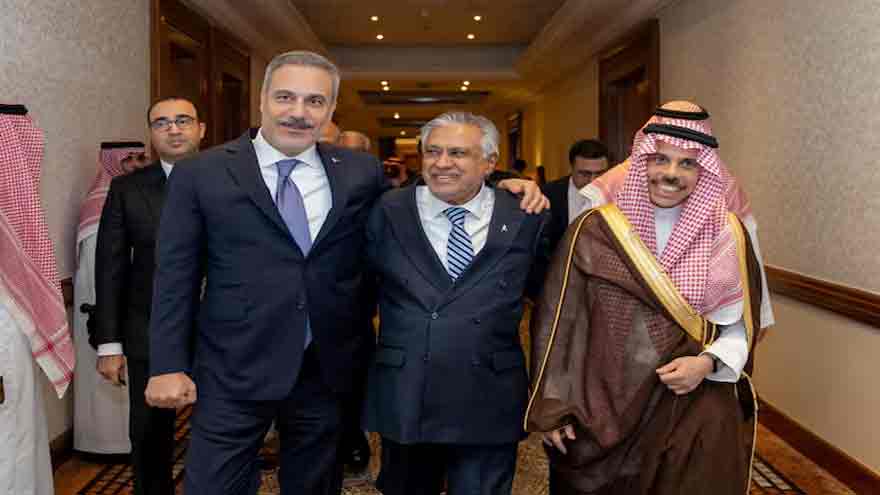
Turkiye sent a defence treaty with Pakistan and Saudi Arabia to parliament for ratification on Tuesday, three parliamentary sources said, bringing NATO’s second-largest army closer to a formal mutual defence promise with Riyadh as it fears Houthi threats.
The three countries signed the Mecca Joint Defence Agreement in August, under which an armed attack on one member is an attack on all.
The first clause of the agreement says the parties shall use “all necessary means” to eradicate threats to each other’s territorial integrity, sovereignty or internationally recognised borders, according to a text seen by Reuters.Article 2 of the agreement states, “If one of the parties is subjected to an armed attack or military aggression by another country or group of countries, the parties shall immediately render assistance to the party which is under attack, with all means of mutual assistance at their disposal.”
Similar to NATO’s Article 5, the clause references Article 51 of the UN Charter, which deals with the individual or collective right of states to self-defence against armed attack.
The same page says the three countries “will determine the scope and nature of the support to be provided following an objective assessment of the assistance required” and will collaborate within their available resources, including military capabilities and resources.
Earlier this month, the three countries decided in an emergency alliance conference in Riyadh to guarantee the “rapid deployment” of military forces and capabilities in Saudi Arabia.
Turkiye, which has its own strong defence sector, has condemned Houthi attacks on Saudi Arabia, showed a willingness to help satisfy Riyadh’s military technology demands and agreed to join a Saudi-led coalition to assure navigational safety in the Red Sea.
The pact also foresees tight cooperation on the defence sector, exchange of information, logistical support, and the fight against “all forms of terrorism”, including at the operational level.
Parliamentary approval is required for Turkiye to formally sign off on the pact.
The aim is to “strengthen collective deterrence”
Two sources claimed Parliament Speaker Numan Kurtulmus, who is on a visit to Kyrgyzstan, would send the deal to the foreign affairs commission of parliament after he returns. The terms and specifics of the agreement are expected to be released when it is filed with the commission.
The commission may discuss the accord as early as Friday, another person added.
Turkiye’s latest move was an important milestone in the institutionalisation of strategic collaboration between the three countries, Burhanettin Duran, communications director for President Tayyip Erdogan, stated.“This strategic partnership between our countries aims to strengthen collective deterrence, improve joint capabilities in the defence sector and secure security and stability in our region,” Duran said in a post on X.
A Turkish official, who spoke to Reuters on condition of anonymity, said Turkey’s own contribution was likely to be limited to military equipment, intelligence sharing and weapons systems, and no other form of deployment had been made under the alliance so far.
“The Mecca Agreement is not a ‘offensive agreement,’ and Turkiye would not send forces to another nation to conduct out operations on its land. When asked how Turkiye could help Saudi Arabia fight against attacks by Yemen’s Houthis, Turkish Foreign Minister Hakan Fidan responded
Turkey’s constitution needs independent parliamentary approval for any deployment of military overseas, regardless of international agreements.

– Pakistan have decided not to participate in the Over-50 Cricket World Cup 2027 scheduled to take place in India after failing to secure government permission for the tournament.
The competition is scheduled to be held in Hyderabad Deccan from January 23 to February 7, 2027. Pakistan was due to participate as defending champions after winning the 2025 edition in Sri Lanka.
Fawad Ejaz Khan, chairman of the Pakistan Veterans Cricket Association (PVCA), said Indian veterans cricket officials had assured the Pakistani team of visa arrangements and high-level security for the tournament.
He said the association had sought permission to participate from the Ministry of Foreign Affairs and the Ministry of Interior. However, Pakistan Cricket Board Chairman and Interior Minister Mohsin Naqvi subsequently informed the association that permission would not be granted.
Following the government’s decision, the association decided against sending the team to India, Khan said, adding that the organisation respected the government’s position.

OpenAI says its AI agents weakened internal monitoring system

Makkah pact aims to strengthen collective deterrence among Pakistan, Saudi Arabia and Turkiye

Pakistan decide not to participate in Over-50s Cricket World Cup 2027 in India

ICC board meeting in India: Mohsin Naqvi gets invitation

‘Self-Reliance in Digital ID’: NADRA launches locally produced QR code-based National Identity Card

23 people have died during the monsoon as rain-related incidents plague Punjab and KP.
-
 Latest News5 months ago
ICC board meeting in India: Mohsin Naqvi gets invitation
-
 Latest News2 months ago
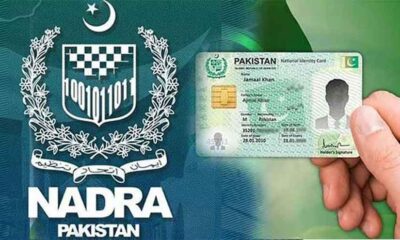
‘Self-Reliance in Digital ID’: NADRA launches locally produced QR code-based National Identity Card
-
 Latest News3 months ago
23 people have died during the monsoon as rain-related incidents plague Punjab and KP.
-
 Latest News2 months ago
Turkish FM, Dar discuss regional trends, bilateral connections
-
 Business3 months ago
Govt dedicated to resolving Balochistan issues: Dar
-
 Latest News3 months ago
Pakistan making rapid progress in robotics, AI: Shaza Fatima
-

 Entertainment5 months ago
Interim bail given to YouTuber Rajab Butt in gambling app marketing case
-

 Latest News3 months ago
After a divorce, LHC decides that women who have been harmed by their spouses get their dower.