
Latest News
Khawaja Asif questions PPP stance on new provinces as devolution debate unfolds

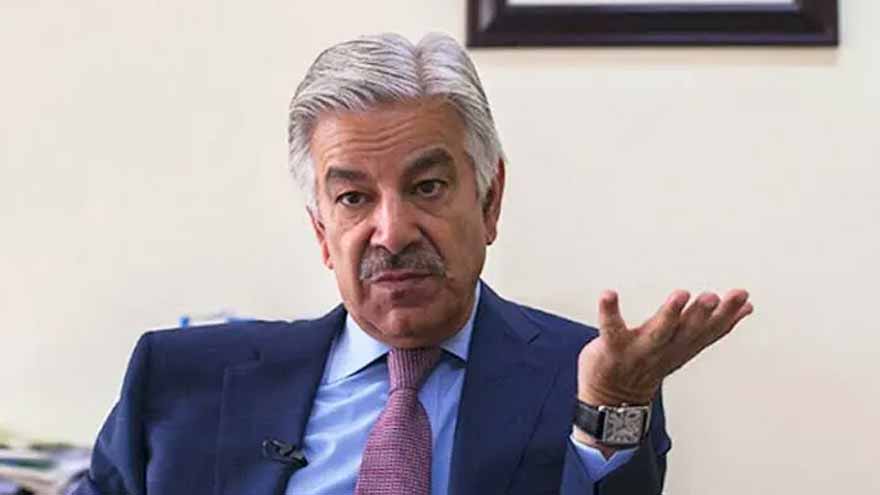
Defense Minister Khawaja Asif has taken the Pakistan Peoples Party (PPP) to task on its ‘double standards’ on the creation of new provinces and administrative divisions.
“The PPP seems to support the demand for a separate Saraiki province in Punjab but whenever there is a broader restructuring of the country’s administrative setup it raises the issue of Sindhudesh,” Asif stated in a post on X.
He questioned the logic of the inconsistent posture of the party, stating he suspected there was “something else” behind it. The minister said he would raise his concerns at the proper moment.
At the same time, Asif emphasized that national identity should be supreme, saying, “We are Pakistanis, first and last.”
The defense minister also urged for the efficient execution of the devolution proposed under the 18th Constitutional Amendment.
“The amendment has laid down the principle of devolution of powers, but powers are still concentrated at the higher levels and the system has not been implemented in the real spirit,” he said.
Asif said, “We need more devolution so that democracy at the grassroots level is strengthened and people can directly benefit from government institutions and services.
He said the present 36 divisions in Pakistan might be the basis for re-organising the administrative structure, but another geographical model could also be considered.
In the end, Asif contended, the delegation of power to lower levels of administration was inevitable.
His comments come amid increasing clamor for changes to Pakistan’s provincial and administrative structure.
The issue gained steam in July when Interior Minister Mohsin Naqvi criticized the country’s present governance system and advocated for significant administrative reforms. He also pushed for the division of the provinces into smaller administrative units for better control and to speed up growth.
The PPP was against pushing the topic forward, stating no clear proposal for administrative restructuring was brought before the party.
Minister for Planning and Development Ahsan Iqbal has subsequently called for a national debate on the topic, and advocated the creation of 12 to 15 provinces.
Iqbal proposed that the law minister form a committee on administrative reforms to investigate prospective improvements and to start political and national engagements. Any attempt to create new provinces would need wide political consensus, he said.
The planning minister has also said that the existing provinces have grown too centralized despite the devolution process under the 18th amendment.
He said it was difficult to rule vast provinces efficiently from their provincial headquarters and suggested setting up about 160 empowered district administrations across the country.
Iqbal warned that if substantial powers are not passed down to districts and local administrations, there could be a rise in demands for additional provinces.
The argument has therefore moved to two alternative solutions, either to increase the number of provinces by redrawing the current boundaries or to enhance local governments by a larger devolution of administrative and political authorities.
Asif’s new comments have done little to help the debate, with the defense minister challenging the PPP’s stance while asking for a wider transfer of authority to lower levels of government.
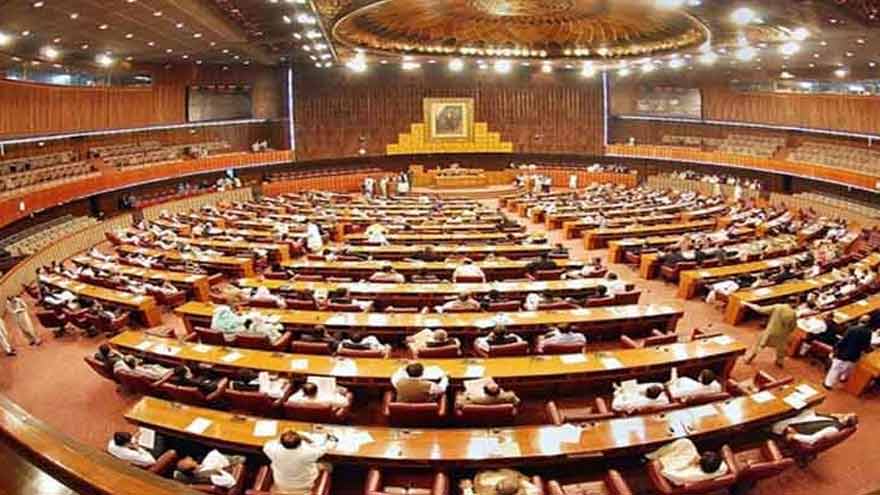
– Prime Minister Shehbaz Sharif has not yet forwarded the summary to the president for convening the National Assembly session, with the sitting now likely to be held next week.
According to parliamentary sources, the Ministry of Parliamentary Affairs had sent a summary to the prime minister seeking to convene the National Assembly session on Monday at 5pm.
Sources said a decision to reschedule the session was taken during a meeting between the president and the prime minister.
Parliamentary sources added that the National Assembly session is now expected to be summoned next week.
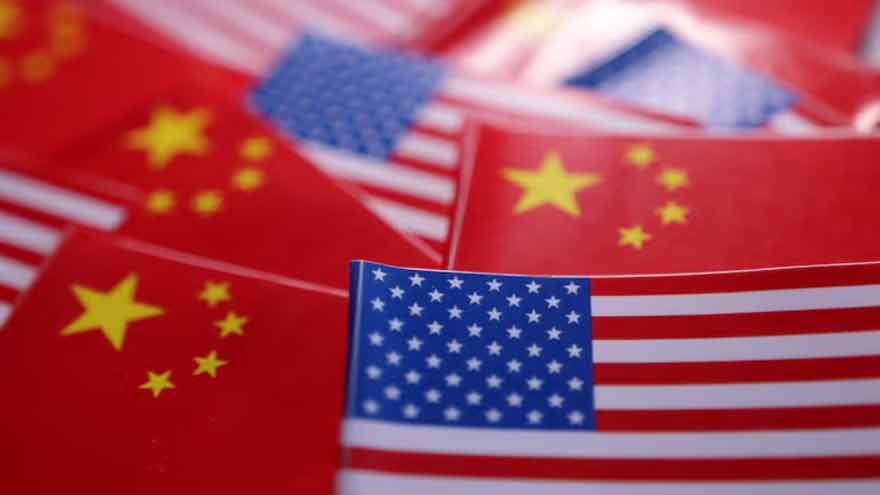
China and the United States discussed tariff cuts, agricultural trade and other issues at their first trade council meeting on Friday, China’s Commerce Ministry said on Saturday, days ahead of a leaders’ meeting in Shenzhen next week.
The Ministry of Commerce said: “The two sides had open, in-depth and constructive exchanges on issues of common concern, such as the implementation of the results of the previous China-US economic and trade consultations, including tariffs, the “US$30 billion for US$30 billion” mutually beneficial tax reduction regime, and agricultural trade.” It did not disclose whether any agreement had been reached. The Ministry of Commerce added that both sides will continue to use the council to resolve trade issues, expand cooperation and reduce outstanding issues. After a summit between President Xi Jinping and President Trump in Washington in September, the two sides proposed a $60 billion plan to cut reciprocal tariffs that would cover $17 billion worth of Chinese imports of U.S. agricultural products by 2024, but the plan has not yet been finalized.
A Reuters analysis of customs data earlier this month showed that China’s purchases of U.S. agricultural products, excluding soybeans, will hit a seven-year low this year, despite an agreement for $17 billion a year through 2028, underscoring lingering uncertainty over the deal. Beijing has repeatedly called on Washington to implement a $60 billion tariff reduction deal, saying it is a prerequisite for increased purchases of US agricultural products.
The White House said Trump will meet with Xi Jinping on Thursday on the sidelines of the Asia-Pacific Economic Cooperation Forum in Shenzhen.
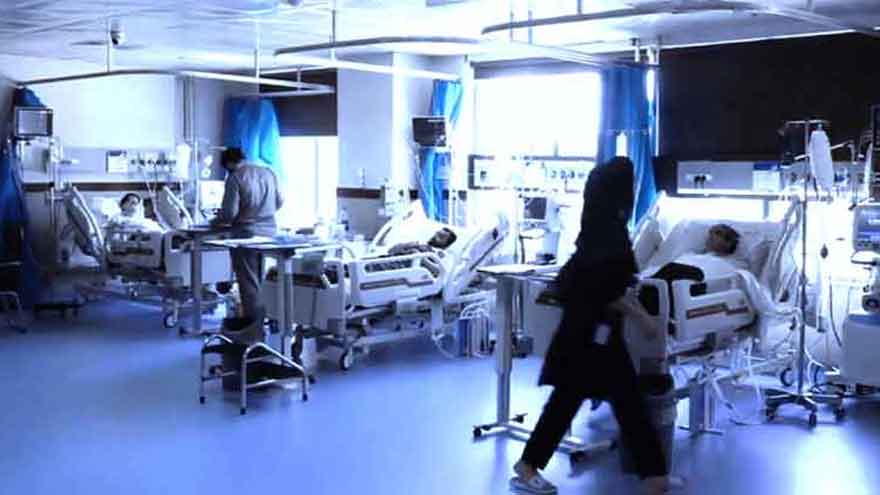
A concerning shortage of healthcare facilities and medical staff has emerged in Khyber Pakhtunkhwa, highlighting significant gaps in the province’s healthcare system.
Only 8,024 doctors are available to serve the province’s population of more than 40 million, meaning there is approximately one doctor for every 5,000 to 6,000 people. The media report that the situation of state medical facilities in the entire province is also unsatisfactory, as more than 200 different types of state medical centers are unable to function. Public hospitals are also facing a serious shortage of clinical places. The report said that the public hospitals of Khyber Pakhtunkhwa have a total of 18,432 beds and require about 64,000 beds to meet the health needs of the people of the province. This makes the bed gap about 45,568.
The report further highlights that the current number of doctors in the province is extremely low relative to its population, potentially making it difficult for patients to access medical consultations and treatment facilities.
Moreover, the closure of a large number of government healthcare centres is also hindering the provision of basic medical services to the public.
Meanwhile, Provincial Health Adviser Lieutenant General (retd) Nigar Johar said during a briefing that the provincial government had decided to introduce amendments to the Medical Teaching Institutions (MTI) Act and conduct audits of government hospitals to improve the healthcare system.
She added that shortcomings in the Sehat Card programme would be addressed and the system further improved to ensure better access to healthcare services for the public. A shortage of doctors, non-functioning health centers and insufficient hospital beds remain major problems in the province, requiring government reforms and expansion of health facilities.

NA sesssion likely to be rescheduled for next week

China, US discuss tariffs, farm trade ahead of Xi-Trump meeting

KP healthcare system faces acute shortage of doctors, hospital beds

ICC board meeting in India: Mohsin Naqvi gets invitation

‘Self-Reliance in Digital ID’: NADRA launches locally produced QR code-based National Identity Card

23 people have died during the monsoon as rain-related incidents plague Punjab and KP.
-
 Latest News6 months ago
ICC board meeting in India: Mohsin Naqvi gets invitation
-
 Latest News3 months ago
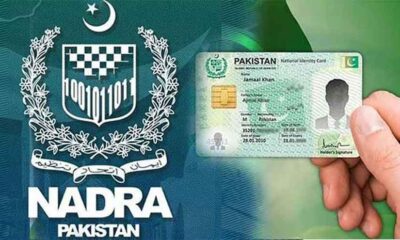
‘Self-Reliance in Digital ID’: NADRA launches locally produced QR code-based National Identity Card
-
 Latest News4 months ago
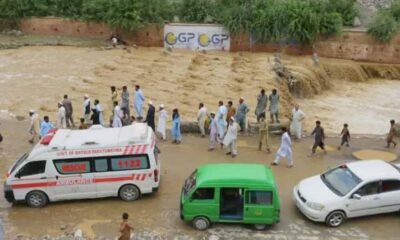
23 people have died during the monsoon as rain-related incidents plague Punjab and KP.
-
 Latest News3 months ago
Turkish FM, Dar discuss regional trends, bilateral connections
-
 Business4 months ago
Govt dedicated to resolving Balochistan issues: Dar
-
 Latest News4 months ago
Pakistan making rapid progress in robotics, AI: Shaza Fatima
-

 Entertainment6 months ago
Interim bail given to YouTuber Rajab Butt in gambling app marketing case
-
 Latest News4 months ago
After a divorce, LHC decides that women who have been harmed by their spouses get their dower.