
Latest News
Turkey, Pakistan, Egypt rally around Saudi Arabia’s right to self-defense

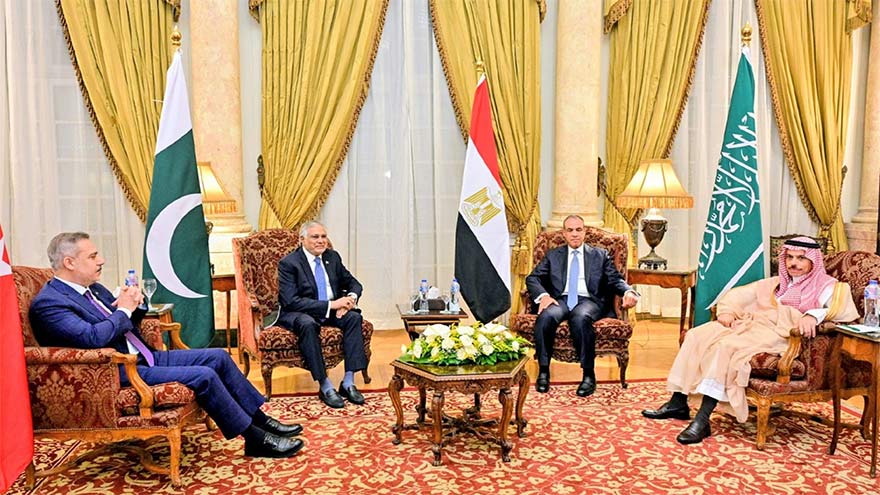
Turkiye, Egypt and Pakistan’s foreign ministers on Tuesday said they affirmed Riyadh’s right to defend itself in accordance with international law and stressed the need to maintain safety of navigation in the region, amid escalating attacks by Yemen’s Iran-backed Houthis against the Kingdom.
The declaration followed a meeting of the foreign ministers of Turkiye, Pakistan, Egypt and Saudi Arabia on the sidelines of the United Nations General Assembly in New York, where they voiced profound worry at the continuing crises in the area.
The Houthis have been assaulting the Kingdom with missiles and drones and the organization launched several strikes last month that wounded more than 80 people in Saudi Arabia and affected the operations of a major oil pipeline.
The four foreign ministers exchanged views on recent regional and international developments and reiterated the significance of ongoing consultation in support of peace and stability in the Middle East and the broader region, Pakistan’s foreign ministry said.
The Ministers also strongly condemned all attacks against the Kingdom of Saudi Arabia, including the recent Houthi attacks, and reiterated their steadfast support for the sovereignty, territorial integrity and security of the Kingdom,” a joint statement shared by Pakistani foreign ministry read.
They also reaffirmed the Kingdom’s inherent right to defend itself, its territory and its people, in conformity with international law and the Charter of the United Nations.
The Houthis, who have pushed forward in recent weeks along Yemen’s Red Sea coast surrounding the crucial Bab Al-Mandab Strait, have stoked anxieties over commercial shipping and oil supplies already stressed by disruptions through the Strait of Hormuz from the US-Iran war.
The statement said the foreign ministers pointed out the need of “safeguarding the safety and freedom of maritime navigation” in the region.
They stressed that conversation and diplomacy were the only way forward to reach a permanent solution and in this regard urged for the maintaining of the Islamabad Memorandum of Understanding (MoU) between the United States and Iran.
Pakistan helped arrange the MoU in June, which aimed to cease military operations and chart a course for a broader settlement, including talks on Iran’s nuclear program, sanctions and regional security. Soon, however, both teams were again on the attack and have remained stuck in a deadlock.
The foreign ministers also reiterated the crucial importance of the Palestinian struggle to peace, security and stability in the Middle East.
The Ministers reaffirmed their support for the legitimate rights of the Palestinian people, including their inalienable right to self-determination and to establish an independent, sovereign, viable and contiguous State of Palestine on the basis of the 4 June 1967 lines, with East Jerusalem as its capital,” the joint statement said.
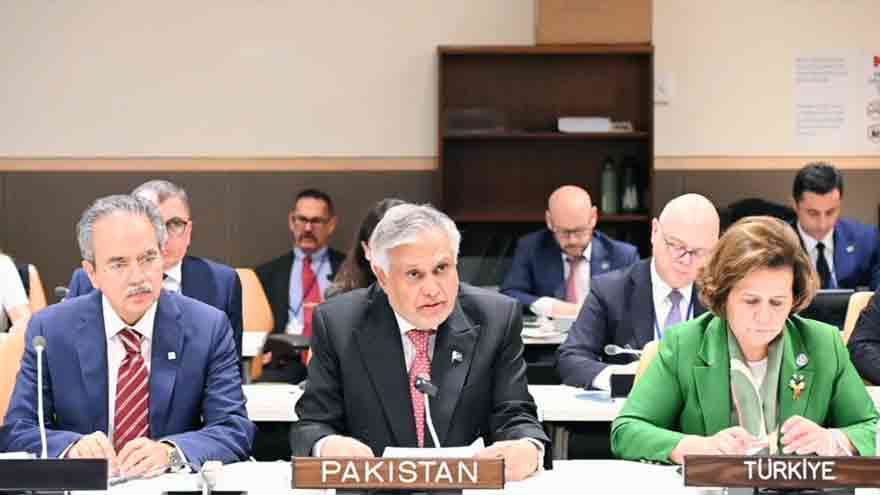
Highlighting the continuing restrictions on political and civic space in Indian Illegally Occupied Jammu and Kashmir, Deputy Prime Minister and Foreign Minister Senator Mohammad Ishaq Dar on Wednesday urged the OIC member states to maintain a unified position on Jammu and Kashmir at the United Nations and other international fora.
The deputy prime minister briefed the participants on the Indian attempts to change its demographic, political and cultural identity while addressing the Ministerial Meeting of the OIC Contact Group on Jammu and Kashmir on the sidelines of the 81st session of the UN General Assembly here.
He expressed gratitude to the OIC Secretary General, members of the Contact Group, the OIC Special Envoy on Jammu and Kashmir and the OIC Independent Permanent Human Rights Commission for their strong and principled support to the people of Jammu and Kashmir.
The Deputy Prime Minister said that Jammu and Kashmir remained an internationally accepted dispute on the agenda of the UN Security Council and stressed that no domestic law, judicial verdict, electoral exercise or demographic manipulation could replace the inalienable right to self-determination of the Kashmiri people.
He emphasized Pakistan’s commitment for a just and peaceful solution of the dispute in accordance with the relevant UN Security Council resolutions and demands of the Kashmiri people.
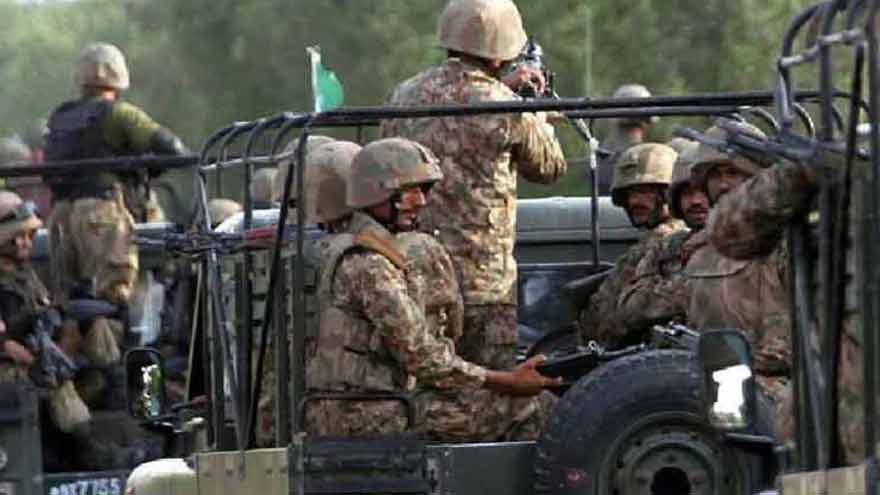
The Punjab government has sought the federal government for army and Rangers’ deployment in several areas in view of the Pakistan Tehreek-e-Insaf’s (PTI) likely lengthy march on September 27.
Sources said that Punjab government has sought Rangers deployment in Rawalpindi, Attock, Jhelum and Mianwali districts. Punjab Home Department has also proposed deployment of army forces in Rawalpindi.
The Punjab government has written to the federal government for army and Rangers’ deployment till October 5. The request was made for law and order maintenance in view of the expected political activities, sources said.
The topic was also discussed by the Standing Committee of Punjab Cabinet on Law and Justice, sources said.
Ahead of a likely PTI march, the Islamabad Police has also requested 18,000 more troops from Punjab and Sindh.
Police sources claimed 16,000 men have been requested from Punjab Police while another 2,000 from Sindh Police. The Islamabad police has also sought three deputy inspectors general (DIGs), seven senior superintendents of police (SSPs) and 18 superintendents of police (SPs) from the two provinces.
The demands are part of security measures in and around Islamabad in the run-up to the political action on September 27.
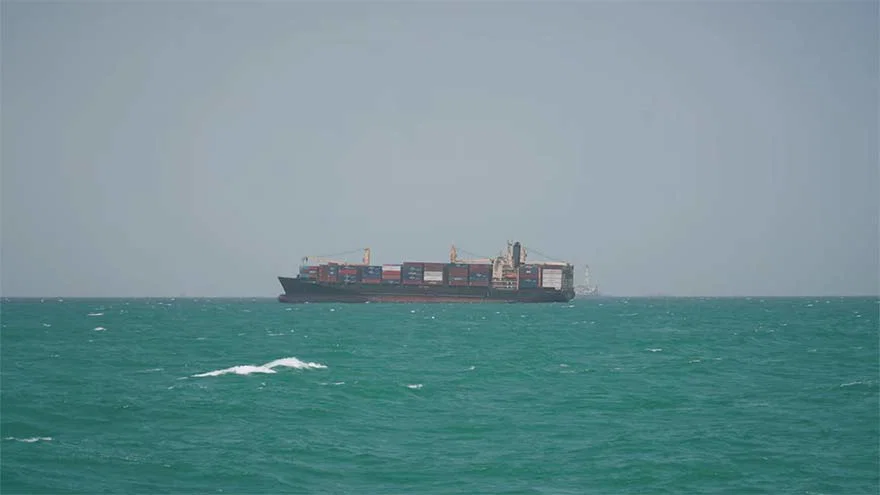
Saudi petroleum exports to Pakistan via the Red Sea reopened after drone attacks stopped a crucial pipeline, alleviating scarcity concerns as regional violence affects the country’s primary Middle Eastern supply sources, officials said on Tuesday.
Saudi Arabia resumed the operation of its East-West Pipeline that transports crude from oilfields in the Kingdom’s east to the Red Sea port of Yanbu, after it was interrupted on Sept 13 due to attacks that also suspended loadings at the export terminal.
The route helps Saudi crude avoid the Strait of Hormuz, where commerce had been severely affected since the war involving the United States, Israel and Iran broke out in February. TANKERS FROM YANBU TO PAKISTAN SAILING SOUTH THROUGH THE RED SEA AND THE BAB AL-MANDAB STRAIT TO THE ARABIAN SEA.
Reuters reported Tuesday that the East-West Pipeline had resumed at a slower rate and work was ongoing to get flows back up to their pre-war level of about 4 million barrels a day, or four percent of the world’s oil supply.
The restart helped send benchmark Brent crude down more than $2 to about $98 a barrel Tuesday, its lowest level in two weeks, while prices remain high on continuing disruption across the Middle East.

DPM Dar asks OIC members to maintain united stance on Kashmir at UN

Punjab seeks army, rangers deployment ahead of PTI march

Saudi crude supplies to Pakistan resume across the Red Sea

ICC board meeting in India: Mohsin Naqvi gets invitation

23 people have died during the monsoon as rain-related incidents plague Punjab and KP.

Govt dedicated to resolving Balochistan issues: Dar
-
 Latest News4 months ago
ICC board meeting in India: Mohsin Naqvi gets invitation
-
 Latest News2 months ago
23 people have died during the monsoon as rain-related incidents plague Punjab and KP.
-
 Business2 months ago
Govt dedicated to resolving Balochistan issues: Dar
-

 Latest News1 month ago
‘Self-Reliance in Digital ID’: NADRA launches locally produced QR code-based National Identity Card
-

 Latest News2 months ago
Pakistan making rapid progress in robotics, AI: Shaza Fatima
-

 Latest News2 months ago
After a divorce, LHC decides that women who have been harmed by their spouses get their dower.
-

 Entertainment4 months ago
Interim bail given to YouTuber Rajab Butt in gambling app marketing case
-

 Latest News4 months ago
A meta program to monitor mouse clicks made by employees in violation of EU privacy regulations