
Latest News
SCO forum: Pakistan, India must strengthen cultural ties through dialogue, says Musadik Malik


Pakistan has called for closer cultural ties and greater dialogue between countries in the region, where the Federal Minister for Climate Change, Dr. Musadiq Masood Malik at the Shanghai Cooperation Organization (SCO) forum in New Delhi emphasizes the importance of the civilization of Pakistan and India.
dr. Musadik Malik informally told the media during the SCO Forum on Dialogue among Civilizations that opportunities for multilateral discussions on culture and civilizations are particularly important, giving countries a platform to explore shared historical, geographical and cultural ties. Emphasizing that culture and civilization are not limited by national or geographical boundaries, he argued that dialogue between regional countries is essential to understanding their common heritage and appreciating their differences.
“Dialogue between civilizations is not unity, but diversity,” said the minister, emphasizing the importance of maintaining dialogue between countries with different cultural features and historical experiences. dr. Musadiq Malik said that promoting civilizational ties and dialogue between Pakistan and India and other countries in the region has become an important necessity.
Pakistani delegation visits India
According to the Indian Minister of Culture and Tourism, Dr. Musadiq Malik’s invitation to the Pakistani delegation to participate in the SCO Dialogue of Civilizations Forum held in New Delhi from November 20 to 22. The federal minister arrived in India to attend the event and was received by Pakistan’s charge d’affaires Saad Walaich.
A spokesman for Pakistan’s Ministry of Foreign Affairs said that the Pakistani delegation participated in the forum to demonstrate the country’s views on dialogue among civilizations and to emphasize its contribution to regional diplomacy. Pakistan also used the platform to showcase its diverse cultural and civilizational heritage and highlight its constructive role within the SCO framework.
The delegation will participate in thematic discussions and hold meetings with representatives of other SCO member states during the forum.
The discussions provide an opportunity for participating countries to exchange views on their historical connections, cultural identities and the importance of cooperation across geographical and political boundaries.
During his interaction with the media, Dr Musadik Malik highlighted the historical connections linking Pakistan, India, Russia, China and the Central Asian republics.
He said the countries shared centuries-old civilisational links, with archaeological discoveries and excavations across the region providing evidence of common cultural traditions and historical interactions.
The minister noted that these connections demonstrated how civilisations had developed through centuries of interaction, trade, cultural exchanges and the movement of people across territories that are now divided by modern national borders. He said the SCO forum is an important opportunity for countries to discuss these shared experiences and increase understanding of the region’s diverse cultural heritage.
Dr. Mousadiq Malik reiterated that cultural and civilizational exchanges should not be limited by geographical boundaries, adding that there is a need for dialogue between regional countries to recognize their commonalities and differences. His remarks placed special emphasis on Pakistan-India cultural engagement, suggesting that sustained dialogue could help preserve historical ties and encourage greater understanding between the neighboring countries.
Pakistan highlights Shanghai Spirit
The Foreign Ministry spokesman said Pakistan’s participation in the forum reflected its commitment to the principles of the Shanghai Spirit, which underpins cooperation among SCO member states. Islamabad is expected to host a series of SCO-related events ahead of next year’s summit, providing more opportunities for engagement among member states.
The Council of Heads of State is the organization’s highest decision-making body, and brings together leaders of member states to discuss important issues involving regional cooperation and the organization’s future development direction. The New Delhi Forum brought together representatives of SCO member states to discuss the role of cultural exchange, historical understanding and dialogue in strengthening regional relations.
For Pakistan, the event provides an opportunity to showcase its cultural heritage and diplomatic priorities, while communicating with the participating countries about the shared historical experience and the importance of cooperation between civilizations.

- The National Cyber Crime Investigation Agency (NCCIA) arrested a suspect suspected of illegally obtaining, possessing and selling sensitive and classified information belonging to US government agencies, law enforcement organizations and private companies.
The investigation revealed that the suspect operated online under the pseudonym “DP BRUCE” and was suspected of using the cybercrime platforms LeakBase and Telegram to advertise and sell stolen databases containing sensitive information. The compromised database reportedly contained information related to several prominent US government agencies, including the FBI, CIA, State Department, Defense Department, and various US police departments. Information belonging to private companies was also allegedly leaked. The agency also found that the suspects may have received payments for the stolen information through cryptocurrency transactions, including Bitcoin.
Acting on what it called a credible intelligence, the NCCIA Karachi team conducted a raid in Karachi’s Manzoor Colony area and arrested the suspect on November 11. A laptop belonging to the suspect was also seized during the operation.
Initial technical testing of the device reportedly revealed several databases and files containing sensitive information related to US government agencies, law enforcement and other organizations. Digital evidence also suggests that online platforms may have been used to facilitate the sale and distribution of stolen material.
NCCIA Karachi reiterated its commitment to combat cybercrime, disrupt networks involved in illegal trade in stolen information and take strict legal action against individuals involved in domestic and international cybercrime activities. A day earlier, the agency claimed to have uncovered a far-reaching financial network allegedly involved in illegal online betting and gambling, fraudulent business operations and suspected money laundering involving transactions worth 1 trillion rubles.
Earlier this month, the NCCIA also arrested 130 suspects, including nine women and four foreigners, in a series of operations targeting international cyber fraud networks, illegal call centers, the sale of citizens’ personal data and online extortion.
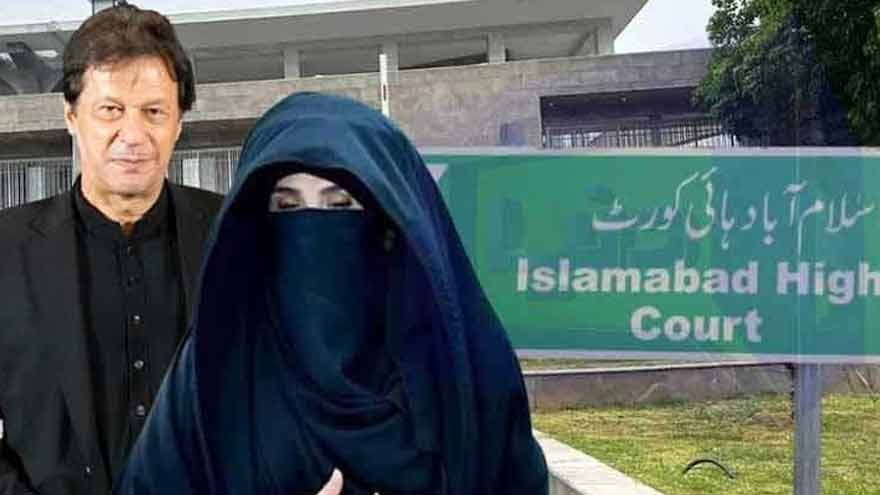
The Islamabad High Court (IHC) has formally scheduled appeals filed by Pakistan Tehreek-e-Insaf (PTI) founder Imran Khan and his wife Bushra Bibi against their sentences in the £190 million case for hearing on November 25.
The IHC registrar has issued the cause list for the appeals, according to which Chief Justice Sardar Muhammad Sarfraz Dogar and Justice Muhammad Asif will hear the petitions challenging the sentences.
During the previous hearing, Imran Khan’s counsel had sought additional time to prepare for the case. Barrister Salman Safdar had requested the court to grant a two-week period for preparation.
However, the court had allowed the defence one week to prepare for the proceedings during the previous hearing.
Following the completion of the granted preparation period, the Islamabad High Court has now fixed the appeals against the sentences of Imran Khan and Bushra Bibi for hearing on November 25.
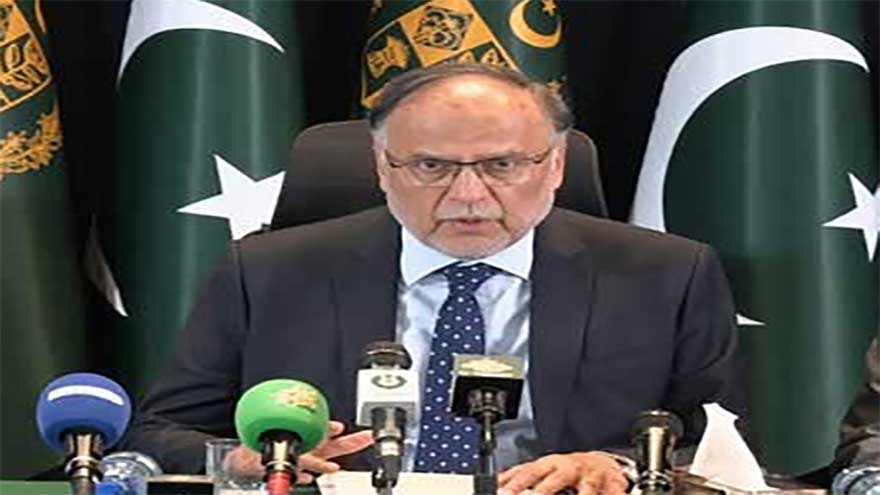
The Central Development Working Group (CDWP) has approved seven development projects worth DKK 19.3 billion. Rs and recommended four projects costing Rs 172.4 billion. Rs., for final approval by the Executive Committee of the Economic Council (ECNEC).
The decisions were taken at a meeting of the CDWP chaired by Federal Minister for Planning Ahsan Iqbal which reviewed 11 development projects with a total estimated cost of Rs 191.8 billion. Among the major proposals referred to ECNEC was Punjab’s Rs104.4 billion agricultural transformation project, aimed at increasing farmers’ incomes and promoting efficient water use in the agriculture sector.
The forum also granted in-principle approval to the third revised Prime Minister’s Youth Skill Development Programme, worth Rs47.6 billion, and referred it to ECNEC for final approval. Ahsan Iqbal directed officials to rationalize costs and avoid duplication of work.
Two road infrastructure projects in Balochistan were also recommended for ECNEC approval. These include the construction and widening of Sibi-Talli and Kohlu-Rakhni roads, which cost Rs 11.1 billion, and a Rs 9.3 billion project for the construction of a black road from Sui to Kashmore.
CDWP approved a Rs4.4 billion project to expand mobile services in Azad Jammu and Kashmir and Gilgit-Baltistan. It also approved a Rs 60 million initiative to provide education, employment and empowerment opportunities to the youth in 16 districts of Sindh. The program aims to provide skills training and employment opportunities to 15,000 youth, with women expected to make up around 50% of beneficiaries. The meeting also approved the establishment of border posts in Taftan and Gabood on the Pakistan-Iraq border. The Taftan terminal is expected to cost over Rs 480 crore, while the Gabd terminal is expected to cost over Rs 434 crore.
The terminals are expected to help regulate cross-border trade, curb smuggling and generate employment opportunities.
Additionally, the CDWP approved a Rs1.4 billion Pakistan Atomic Energy Commission project for the exploration of radioactive minerals in the Marwat Range.
A revised project for the construction of the Mirwaiz Maulvi Muhammad Farooq Shaheed Medical College in Muzaffarabad, costing more than Rs3.41 billion, was also approved.
The forum further approved a project to strengthen administrative institutions responsible for managing refugees in Azad Jammu and Kashmir and Gilgit-Baltistan.

NCCIA arrests suspect over alleged theft and sale of sensitive US government data

IHC schedules Imran Khan, Bushra Bibi’s appeals in 190mn pounds case for November 25

CDWP approves seven development projects worth Rs19.3 billion

ICC board meeting in India: Mohsin Naqvi gets invitation

‘Self-Reliance in Digital ID’: NADRA launches locally produced QR code-based National Identity Card

23 people have died during the monsoon as rain-related incidents plague Punjab and KP.
-
 Latest News6 months ago
ICC board meeting in India: Mohsin Naqvi gets invitation
-
 Latest News3 months ago
‘Self-Reliance in Digital ID’: NADRA launches locally produced QR code-based National Identity Card
-
 Latest News4 months ago
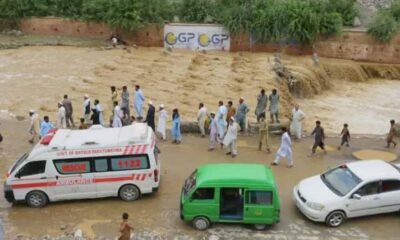
23 people have died during the monsoon as rain-related incidents plague Punjab and KP.
-
 Latest News3 months ago
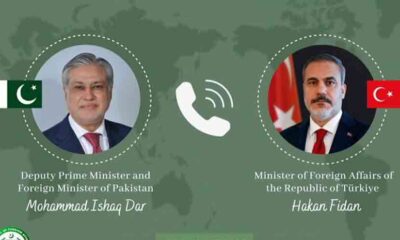
Turkish FM, Dar discuss regional trends, bilateral connections
-
 Business4 months ago
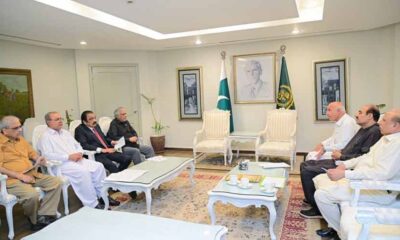
Govt dedicated to resolving Balochistan issues: Dar
-
 Latest News4 months ago
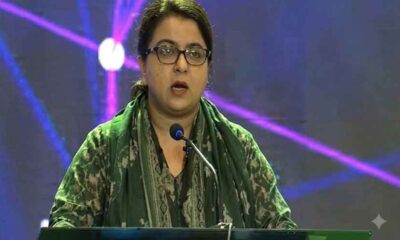
Pakistan making rapid progress in robotics, AI: Shaza Fatima
-

 Entertainment6 months ago
Interim bail given to YouTuber Rajab Butt in gambling app marketing case
-
 Latest News4 months ago
After a divorce, LHC decides that women who have been harmed by their spouses get their dower.