
Latest News
Three militants killed in joint CTD-Army operation in Peshawar


Three militants belonging to the proscribed group Fitna al-Khawarij were killed during a joint operation by the Counter Terrorism Department (CTD) and Pakistan Army in Peshawar’s Matani area, officials said on Sunday.
According to a spokesperson for the Khyber Pakhtunkhwa CTD, intelligence sources had reported the presence of militants affiliated with Fitna al-Khawarij along Pasani Road near Adizi Khor in Matani. The suspects were allegedly planning attacks on government installations and activities aimed at undermining Pakistan’s security and sovereignty.
Acting on the intelligence, teams from the CTD’s SWAT unit, accompanied by Pakistan Army personnel, reached the location and took positions to apprehend the suspects.
However, the militants opened heavy fire upon spotting the security forces, prompting personnel to retaliate in self-defence and engage the suspects.
Two terrorists killed in CTD operation in Peshawar
Following the exchange of fire, a search of the area led to the recovery of three bodies. The deceased were identified as Abdul Rashid, Saeedullah and Saeed Nawab.
Other suspected militants managed to escape under the cover of darkness and dense bushes, the spokesperson said.
Security personnel recovered two Kalashnikov rifles, a pistol, three hand grenades, five magazines and national identity cards from the possession of the deceased.
A search operation is underway in the area to track down and arrest the fleeing suspects.
Khyber Pakhtunkhwa Inspector General of Police Zulfiqar Hameed and Additional Inspector General of Police, CTD, reaffirmed their commitment to preventing militants from carrying out their activities and bringing those involved in terrorism to justice.
In three national public health recommendations, the National Institutes of Health (NIH) called on federal and state health officials to increase disease surveillance, immunization, and medical preparedness to combat vaccine-preventable diseases, winter smog, and seasonal influenza.
The NIH Center for Disease Control (CDC) issued the warning on Saturday. They address health risks associated with smog and precautionary measures, seasonal influenza prevention and control for 2026–2027, and vaccine-preventable disease prevention and control.
While the spread of diseases, including measles, diphtheria, pertussis, and tetanus, continued to be a public health concern, the NIH cautioned that decreasing temperatures and shifting disease patterns could raise respiratory and cardiovascular health risks.
Under the advisories, federal and provincial health departments, hospitals, and laboratories have been urged to strengthen routine and catch-up immunization to address vaccination gaps and improve protection against preventable diseases.
The guidelines also call for early detection of suspected cases, timely laboratory confirmation, standardized clinical management, and enhanced hospital preparedness to handle potential increases in patient numbers. Health authorities have been directed to increase public awareness and risk communication to encourage preventive measures against seasonal diseases and smog-related health risks.
The National Institutes of Health called on all health authorities and stakeholders across the country to immediately implement the proposed measures to reduce winter-related health risks and protect public health.

Prime Minister Shehbaz Sharif will inaugurate the Mehfooz Dawa App in Islamabad on November 24, sources said.
The application is designed to help identify and curb the circulation of counterfeit medicines by enabling consumers to verify the authenticity of pharmaceutical products through the two-dimensional (2D) barcode printed on medicine packaging.
Using the application, consumers will be able to access verified information about a medicine’s authenticity, expiry date, usage instructions and retail price by scanning the barcode on its packaging.
The sources further said, the implementation of the Track and Trace System has been made mandatory for human and veterinary pharmaceutical companies, as well as medicine manufacturers and importers across the country.
Under the regulatory requirements, pharmaceutical products manufactured from October 9 onwards must carry a unique 2D data barcode and serial number.
Read more: Punjab orders recall of five medicines over quality, safety concerns
The import and sale of medicines without the prescribed 2D barcode have also been prohibited with effect from October 9.
However, medicine batches manufactured before October 9, as well as imported pharmaceutical products brought into the country before the specified date, have been exempted from the barcode requirement.
The Drug Regulatory Authority of Pakistan (DRAP) will be responsible for overseeing and ensuring the implementation of the Medicine Track and Trace System, sources added.
The initiative is aimed at improving pharmaceutical supply chain transparency, strengthening regulatory oversight and enabling consumers to verify the authenticity of medicines through digital technology.
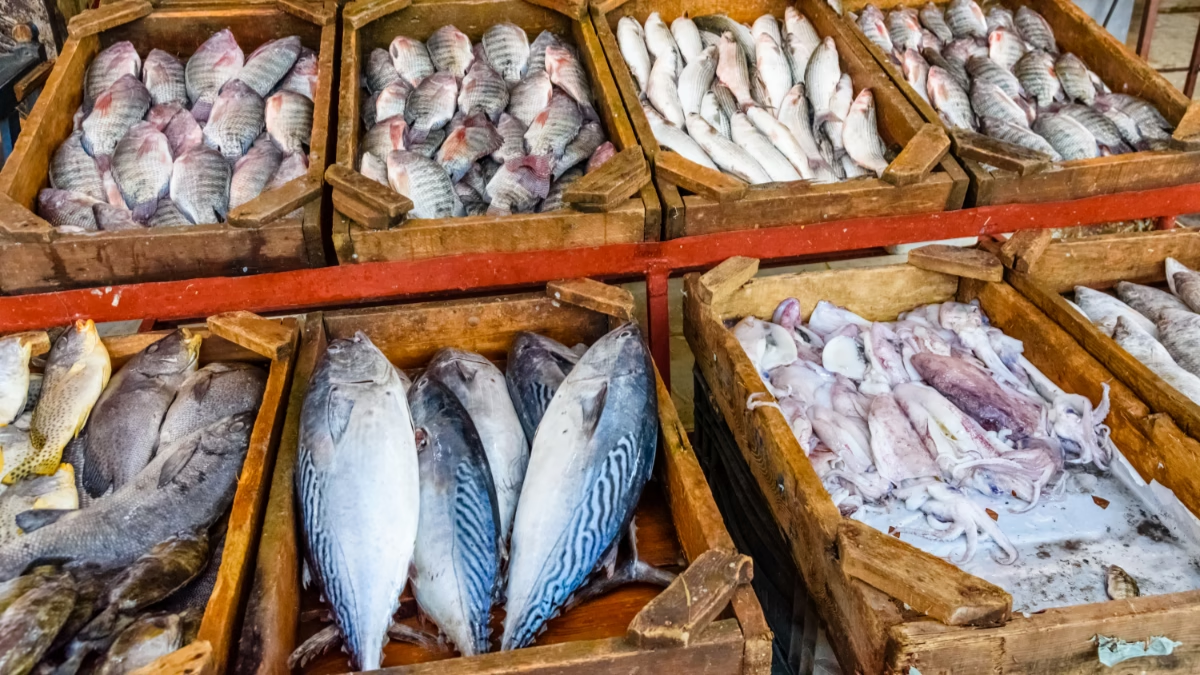
Federal Maritime Minister Muhammad Junaid Anwar Chaudhry called for the transformation of the country’s fishing sector into a high-value export industry, ensuring decent jobs, better living conditions in fishing villages and sustainable use of marine resources.
In a statement on the occasion of World Fisheries Day on November 21, Muhammad Junaid Anwar Chaudhry said Pakistan has huge untapped potential in fisheries and aquaculture. He said the country produced 642,180 tonnes of fish from July to March in the 2025-26 fiscal year. This includes 427,180 tonnes from marine fishing and 215,000 tonnes from inland fishing. Seafood exports earned $568 million during the same period, highlighting the sector’s contribution to foreign exchange earnings, employment and economic growth, he added.
However, the federal minister said that increasing production and exports alone will not be enough to realize the sector’s potential. It also required modern fishing methods, improved infrastructure, stricter regulations and further investment in processing.
Referring to the theme of this year’s World Fisheries Day, “Making a difference for people: Promoting decent work in fisheries and aquaculture, especially for youth and women,” the minister said fishing villages should be at the heart of Pakistan’s blue economy plan. She called for increased opportunities for women and youth in seafood processing, aquaculture and marketing, as well as improved workplace safety, technical training and access to the latest technology.
He stressed the need to improve working conditions, occupational safety, technical training and access to the latest fishing technologies, while creating greater opportunities for women and youth in fish processing, aquaculture, marketing, entrepreneurship and other fisheries-related enterprises. The minister said Pakistan needs to strengthen the entire seafood value chain, from responsible collection and on-board processing to cold storage, transportation, processing, packaging and international marketing, to reduce post-harvest losses and improve the quality and value of seafood.
He called for science-based fisheries management, reliable stock assessments, responsible fishing practices and increased monitoring to prevent overfishing and protect marine biodiversity. He added that compliance with international standards for food safety, traceability and sustainability is essential to diversify export destinations and secure access to valuable international markets.
The Minister highlighted the link between fisheries and national development, saying the sector supports SDG 14 (life below water) and promotes food security, decent work, responsible production and climate resilience under SDGs 2, 8, 12 and 13.
He said protecting Pakistan’s marine ecosystems, strengthening inland fisheries, promoting responsible aquaculture and expanding marine scientific research were essential to securing long-term economic benefits from the country’s aquatic resources.
Junaid Chaudhry reaffirmed the Marine Fisheries Department’s commitment to working with provincial governments, research institutions, academia, development partners, exporters and fishing communities to improve seafood quality, promote sustainable resource utilization and strengthen Pakistan’s position in international seafood markets. He said strengthening the fisheries sector would not only strengthen Pakistan’s blue economy but also improve the economic prospects of local communities whose livelihoods depend on the country’s sea and inland waters.
Three health advisories issued ahead of winter
Pakistan to ‘launch’ medicine verification app on Nov 24 to curb counterfeit drugs
Pakistan aims to boost seafood exports

ICC board meeting in India: Mohsin Naqvi gets invitation

‘Self-Reliance in Digital ID’: NADRA launches locally produced QR code-based National Identity Card

23 people have died during the monsoon as rain-related incidents plague Punjab and KP.
-
 Latest News6 months ago
ICC board meeting in India: Mohsin Naqvi gets invitation
-
 Latest News3 months ago
‘Self-Reliance in Digital ID’: NADRA launches locally produced QR code-based National Identity Card
-
 Latest News4 months ago
23 people have died during the monsoon as rain-related incidents plague Punjab and KP.
-

 Latest News3 months ago
Turkish FM, Dar discuss regional trends, bilateral connections
-

 Business4 months ago
Govt dedicated to resolving Balochistan issues: Dar
-

 Latest News4 months ago
Pakistan making rapid progress in robotics, AI: Shaza Fatima
-

 Entertainment6 months ago
Interim bail given to YouTuber Rajab Butt in gambling app marketing case
-

 Latest News4 months ago
After a divorce, LHC decides that women who have been harmed by their spouses get their dower.