
Business
Federal cabinet approves sugar sector deregulation policy

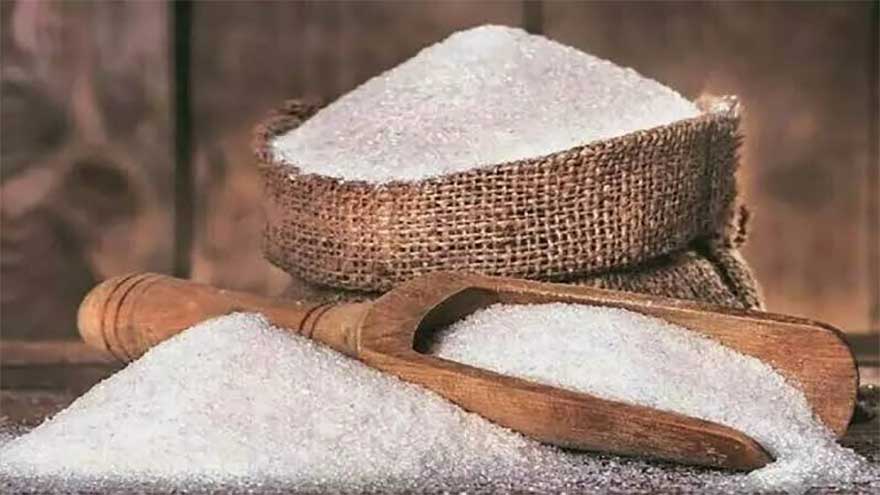
The Federal Cabinet approved a new national policy for deregulation of the sugar sector.
The outline of the policy was submitted to the Cabinet by the Ministry of Industry and Production.
The federal cabinet approved the proposals included in the summary presented through circulation on Tuesday.
The Cabinet also approved the proposals presented in paragraphs 6 and 8 of the Sugar Sector Deregulation Policy. The national policy for deregulation of the sugar sector was submitted to the Cabinet under the 1973 Business Rules.
APP further added, “All provincial governments, including Sindh and Punjab, have unanimously agreed to implement sugar deregulation policies that will pave the way for fundamental transformation of the sugar industry through market reforms, increased competition, and a more favorable business environment.” federal government
It aims to transform Pakistan’s sugar industry into a competitive, transparent and market-driven enterprise by reducing unnecessary government intervention and providing opportunities and incentives across the value chain.
The framework is designed to benefit all stakeholders, including manufacturers, millers, traders and exporters, while contributing to the broader national interest by increasing production, increasing efficiency, improving business opportunities and increasing income for industry and government. At the commercial stage, the policy introduces a predictable sugar import/export mechanism, eliminates export subsidies, and facilitates the movement of sugar between states.
These measures are aimed at creating an open and competitive business environment, improving market efficiency and allowing supply and demand to play a greater role in determining market outcomes. “Initially, sugarcane producers will be free to sell their produce to any buyer, and the price of sugarcane will be determined by market mechanisms. This will give farmers greater flexibility, encourage competition among buyers, and allow producers to make business decisions based on market opportunities.” Access to finance for sugarcane producers will also be facilitated to support agricultural activities and strengthen farmers’ financial capacity, while farm mechanization programs will help improve productivity and agricultural efficiency.
“Producers will further benefit from a more competitive sugar sector where market forces, rather than unnecessary regulatory controls, shape commercial decisions.”
At the processing stage, the policy removes restrictions on the establishment of new sugar mills and capacity approvals, while enabling mills to make production decisions in response to market conditions.
This shift is expected to encourage investment, promote efficiency and create a more competitive industrial environment. Recognizing the importance of a smooth transition, the policy also includes support measures for farmers and other stakeholders.
This includes facilitating access to finance for farmers and sugar mills and promoting agricultural mechanization programs to improve agricultural productivity. Additionally, the government will work on mandating ethanol blending and developing feedstock markets to strengthen market mechanisms, improve price discovery and create new opportunities in this sector.
The unanimous agreement of all state governments marks an important step in the reform process and demonstrates a common commitment towards creating a more efficient and sustainable sugar industry.
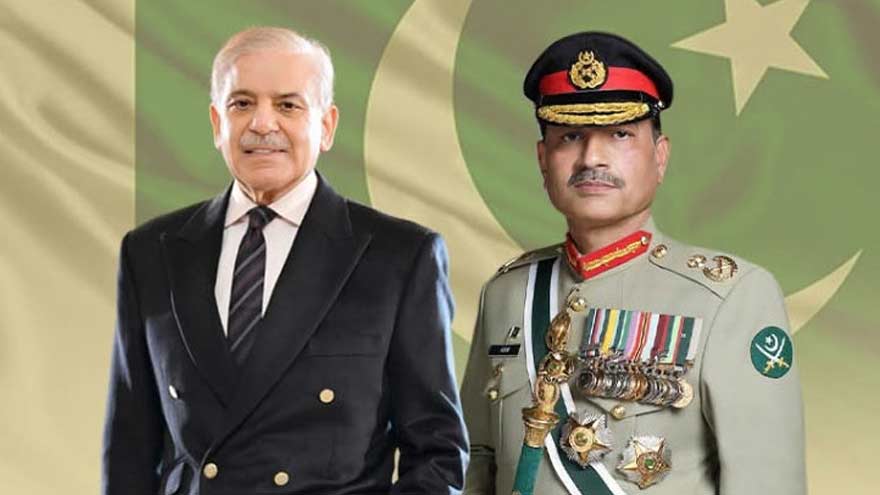
Prime Minister Shehbaz Sharif has congratulated Chief of Army Staff and Chief of Defence Forces Field Marshal Syed Asim Munir on his induction into the Hall of Fame of Malaysia’s National Defence Studies Centre.
In his congratulatory message, Prime Minister Shehbaz Sharif stated that Field Marshal Syed Asim Munir’s inclusion in the Hall of Fame reflects the longstanding friendship between Pakistan and Malaysia. He praised the field marshal for his leadership during the “Jihad” and his unwavering commitment to the defense of the motherland, adding that his contribution to promoting peace and raising the profile of Pakistan on the global stage deserved much appreciation.
Prime Minister Shehbaz also said that this honor is also a tribute to the bravery, dedication and sacrifices of the brave soldiers and officers of the Pakistan Armed Forces. He emphasized that the armed forces safeguard the country, while the nation’s steadfastness and unwavering support remain its greatest strength.
Prime Minister Shehbaz Sharif also prayed for Pakistan’s continued progress, prosperity, and guidance, asking Allah Almighty to bless the collective efforts aimed at serving the country and the nation.
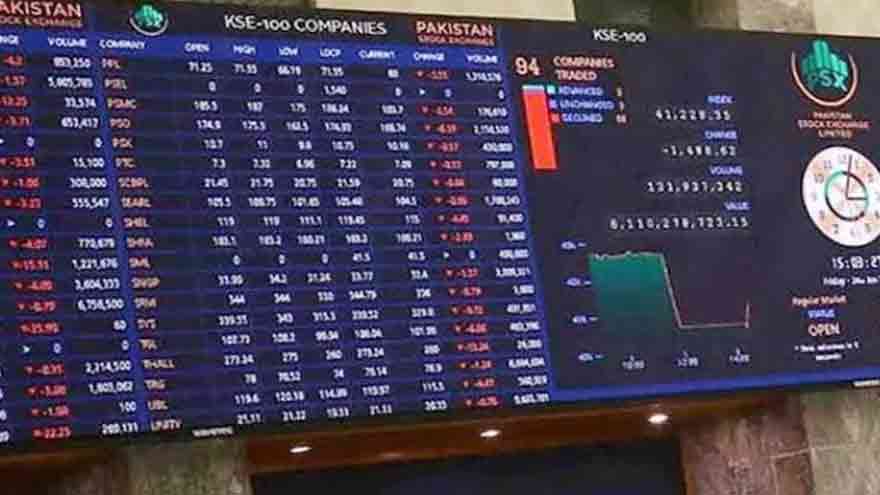
The Pakistan Stock Exchange (PSX) opened the new business week on a positive note amid a buying rally.
At the beginning of the session, active buying pushed up the benchmark KSE-100 index by more than 1,000 points, bringing it to the level of 178,470 points. The early rally builds on previous market gains as the benchmark index had ended the last trading session of the previous working week at 177,382 points.
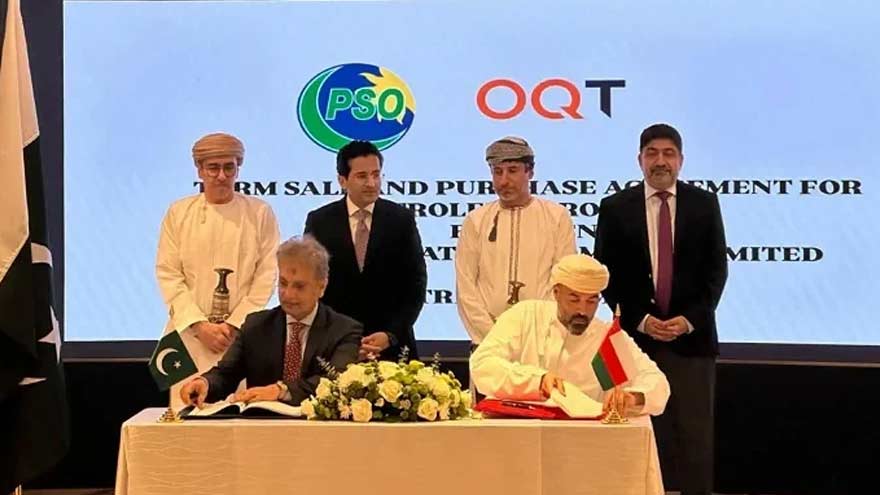
Pakistan has finalized a new energy supply agreement with Oman, securing a $200 million credit line from OQ Trading (OQT), Oman’s global commodities trading arm, to help Pakistan State Oil (PSO) finance the purchase of petroleum products.
TSO and OQT officially signed the Sale and Purchase Agreement (SPA) in Muscat on November 22 in the presence of Federal Minister of Petroleum Ali Pervaiz Malik and Omani Minister of Energy and Mines Eng. Salim Al Aufi.
Under the terms of the agreement, OQ Trading will provide TSO with a $200 million line of credit to finance the purchase of fuel. The agreement creates a formal commercial mechanism designed to improve Pakistan’s fuel procurement flexibility and protect supply chains from regional market turbulence. The deal, which was earlier approved by the Economic Coordination Committee (ECC) under an existing bilateral intergovernmental agreement, aims to expand Pakistan’s fuel import pipeline.
The new facility deepens an already active commercial partnership between the two state entities. Throughout 2026, OQ Trading has served as a primary gasoline supplier to PSO, shipping over one million tonnes to the country. In addition to automotive fuel, OQT is steadily expanding its operations in Pakistan’s LPG space, servicing public and private importers, and total LPG deliveries are expected to exceed 120,000 tonnes by the end of the year.
Prior to the signing ceremony, Minister Malik spoke with Omani Foreign Minister Eng. Salim Al Aufi, in Muscat to map out broader collaboration across the oil, gas, and mining industries. Both officials welcomed the formation of the Pakistan-Oman Joint Working Group on Oil and Gas, pledging to utilize the platform to unlock fresh investments across the energy and minerals value chain.
Both sides noted that operationalizing the supply agreement will translate historic diplomatic goodwill between Islamabad and Muscat into tangible economic and energy security gains.

Nine terrorists killed in Bannu, Lakki Marwat operations

Petrol price slashed by Rs1, diesel by Rs4 per litre

Maldives to launch direct flights to Pakistan soon, announces tourism minister

ICC board meeting in India: Mohsin Naqvi gets invitation

‘Self-Reliance in Digital ID’: NADRA launches locally produced QR code-based National Identity Card

23 people have died during the monsoon as rain-related incidents plague Punjab and KP.
-
 Latest News6 months ago
ICC board meeting in India: Mohsin Naqvi gets invitation
-
 Latest News3 months ago
‘Self-Reliance in Digital ID’: NADRA launches locally produced QR code-based National Identity Card
-
 Latest News4 months ago
23 people have died during the monsoon as rain-related incidents plague Punjab and KP.
-
 Latest News3 months ago
Turkish FM, Dar discuss regional trends, bilateral connections
-
 Business4 months ago
Govt dedicated to resolving Balochistan issues: Dar
-
 Latest News4 months ago
Pakistan making rapid progress in robotics, AI: Shaza Fatima
-

 Entertainment6 months ago
Interim bail given to YouTuber Rajab Butt in gambling app marketing case
-
 Latest News4 months ago
After a divorce, LHC decides that women who have been harmed by their spouses get their dower.