
Business
Aurangeb heads to US for trade and investment discussions

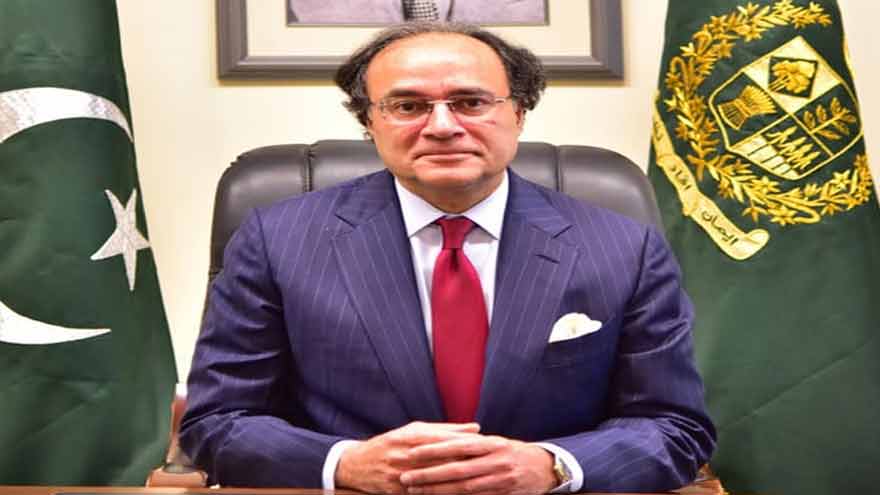
Finance Minister Muhammad Aurangzeb has arrived in Washington on a three-day official visit and is anticipated to hold talks with US authorities on trade, investment, finance and broader economic cooperation.
Pakistan and the United States will restart talks Monday to boost economic ties between the two countries. Aurangzeb is due to see officials from the Office of the United States Trade Representative (USTR), the US Export-Import Bank, the US International Development Finance Corporation (DFC) and the International Monetary Fund (IMF) during his visit.
Talks will concentrate on a framework of a potential bilateral trade pact to boost trade and investment between the two countries. Tariffs, market access, investment opportunities and broader economic cooperation are scheduled to be discussed at talks.
The meetings with the US Export-Import Bank and DFC will also cover funding prospects for infrastructure, energy and private sector investment projects in Pakistan.
Aurangzeb’s visit comes as Washington and Islamabad resume talks over US tariffs on Pakistani exports. A visit to Washington by a Pakistani delegation earlier this month has resulted in the planned tariff rate being lowered from 29% to 19%.
The tariff structure has been altered by a US Supreme Court case that overturned duties imposed under the International Emergency Economic Powers Act (IEEPA). The US administration then put in place a temporary 10% global duty under Section 122 of the Trade Act, which expires July 24.
Pakistan is also among roughly 60 nations being probed by USTR under Section 301 over suspected forced labour and associated trade violations. Ahead of the latest round of negotiations, Islamabad has filed detailed responses and a supplementary submission.
Besides the tariff problems, the two sides are also scheduled to discuss ways to boost bilateral commerce and attract more investment.
Earlier this year, Aurangzeb visited Washington for the IMF and World Bank Spring Meetings, where he discussed Pakistan’s economic reform agenda, macroeconomic stability and plans to return to international capital markets through Panda Bonds and Eurobonds with international financial institutions, investors and US officials.

The report said the weekend attacks on two oil tankers and strikes by Yemen’s Iran-backed Houthi movement on Saudi Arabia fueled investor concerns about future regional oil supply disruptions.
Brent crude prices jumped 76 cents, or 0.73%, to $105.48 a barrel at 7:04 p.m. EDT Sunday. U.S. West Texas Intermediate (WTI) crude futures increased 59 cents, or 0.64%, to $92.44 a barrel.
Houthi fighters claimed responsibility for a missile attack on Riyadh’s international airport Saturday that killed 13 people and wounded more than 300 others.
Saudi police announced another death and further injuries Sunday in a second attack on the airport.
The Federal Aviation Administration (FAA) cautioned U.S. airlines on Sunday to exercise extreme caution flying in or above Saudi airspace, citing increased security threats stemming from the ongoing military conflict and disruptions to navigation systems, Reuters reported.
A notification to airmen (NOTAM) by the FAA, effective through Dec. 10, comes after a series of strikes on Riyadh, the capital of Saudi Arabia, including a new wave over the weekend.”Threats could pose a potential risk to aircraft during all phases of flight, including overflight, arrival and departure,” the FAA said.
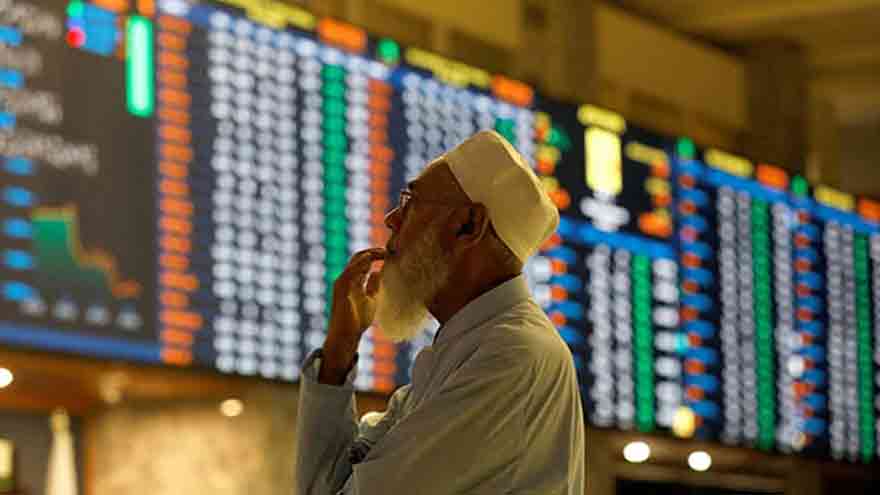
— The Pakistan Stock Exchange (PSX) started the new work week on a negative note as the benchmark KSE-100 index fell more than 900 points in early trading.
The index was below the 166,100-point threshold soon after the market opened, indicating selling pressure in the market.
The stock market was mixed on the last day of trading of the last week before a late-session slide sent the benchmark index down 352 points to conclude at 167 089 points.
According to sources, the Federal Board of Revenue (FBR) has decided to impose fines on taxpayers providing inaccurate information in income tax forms, concealing assets or tampering with financial data.
Sources stated the FBR has data on properties and assets owned by tax filers around the country which will be used to check the information declared in their income tax forms.
The FBR will automatically match the data submitted in tax returns with the data already available in its database to discover any irregularities. Sources said that artificial intelligence (AI) will also be used to check information and discover probable abnormalities.
Taxpayers who were caught hiding assets or doctoring paperwork were told they would face hefty penalties, sources said. Sources stated income tax department could impose fines up to 75 per cent of salaries for salaried persons filing wrong income tax filings.
They said that a fee of Rs1,000 per day might also be imposed if the penalty was not paid within the stipulated period.
Tax filers have a chance to correct problems in their income tax filings before October 15. Sources advised the taxpayers to cross-check facts stated in their return, including income and asset details and make required revisions within the time limit.
The move comes as the FBR is ramping up the use of automated technologies and artificial intelligence to scrutinize tax returns and find differences between the information provided and the accessible data. Dawn, in an October 7 report, stated the FBR has suggested regulations for electronic assessment of individual tax returns so that its automated system can identify possible factual and legal mistakes before taking further action.

ATC orders jail meetings for Imaan Mazari, Hadi Ali Chattha with lawyers

Oil prices up after escalation in Middle East tensions

Commissioners of six KP divisions changed in major reshuffle

ICC board meeting in India: Mohsin Naqvi gets invitation

23 people have died during the monsoon as rain-related incidents plague Punjab and KP.

‘Self-Reliance in Digital ID’: NADRA launches locally produced QR code-based National Identity Card
-
 Latest News5 months ago
ICC board meeting in India: Mohsin Naqvi gets invitation
-
 Latest News3 months ago
23 people have died during the monsoon as rain-related incidents plague Punjab and KP.
-
 Latest News2 months ago
‘Self-Reliance in Digital ID’: NADRA launches locally produced QR code-based National Identity Card
-
 Latest News2 months ago
Turkish FM, Dar discuss regional trends, bilateral connections
-
 Business3 months ago
Govt dedicated to resolving Balochistan issues: Dar
-
 Latest News3 months ago
Pakistan making rapid progress in robotics, AI: Shaza Fatima
-

 Entertainment5 months ago
Interim bail given to YouTuber Rajab Butt in gambling app marketing case
-
 Latest News3 months ago
After a divorce, LHC decides that women who have been harmed by their spouses get their dower.