
Business
Due of debt anxiety, the dollar is trading close to multi-month lows.

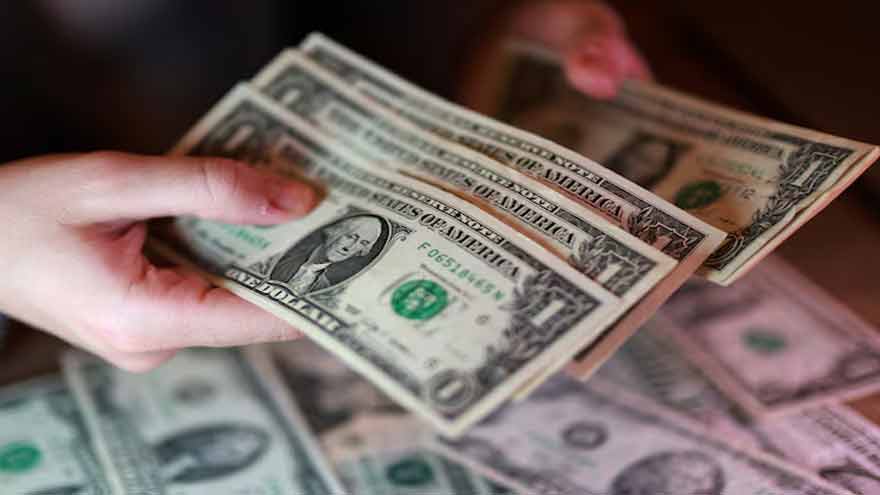
– A wavering dollar teetered near multi-month lows on Monday in a market unsettled by the U.S. Treasury’s promise to buy back more long bonds, while traders awaited details of sanctions on Iran and on policy speeches this week in the U.S. and Japan.
The Canadian dollar slipped 0.2% in early trade, to C$1.3798 per dollar, after trade talks with the U.S. collapsed and Washington imposed 50% tariffs on Canadian goods, with Canada retaliating in kind.
The Australian and New Zealand dollars traded just shy of three-month highs at $0.7171 and $0.5979 respectively.
The euro was comfortably above $1.16 at $1.1685 while the yen kept to the strong side of 159 per dollar.
Friday data showing the strongest U.S. services growth in nearly two years in August held off dollar sellers in steady early trade.
The dollar logged its largest weekly drop against bitcoin in nearly three-and-a-half years on Sunday and it’s been sliding sharply on gold over revived fears the currency will suffer if the U.S. tries to hold down yields.
Long-end yields have been climbing globally on a combination of a solid economic growth outlook, rising inflation expectations and nerves about ballooning sovereign debts.
Last week, after 30-year yields hit almost two-decade highs, the U.S. Treasury announced it would double buybacks at the long end to $4 billion per operation.
The size is paltry in a market worth $32 trillion but the interventionist signal spooked traders and hit the dollar.
“The U.S. Treasury’s attempts to artificially hold down long-term bond yields appears to be reigniting the $US debasement trade,” said Shane Oliver, head of investment strategy at Australian financial services firm AMP.
The mood was keeping Australian dollar above 71 cents, he said.
Sterling was firm at $1.3650 in morning trade and the yuan , which notched an eighth straight weekly rise last week, hovered near a 3/1-2 year high at 6.7222 per dollar.
SANCTIONS AND WARSH
Later on Monday, at 1800 GMT, U.S. Treasury Secretary Scott Bessent is due to hold a press conference after threatening “the toughest sanctions in history” on Iran, with markets focused on whether he will target China.
Iran’s foreign minister has dismissed the threat of new U.S. sanctions as a sign of desperation.
Market participants will also be hoping for some clarity on the outlook for U.S. interest rates when Federal Reserve Chairman Kevin Warsh speaks in Jackson Hole, Wyoming, on Friday.
He is also sure to face questions about Treasury’s buybacks.
“Any comments on the balance sheet, duration supply, or term premium could move the long end more than the data itself. That said, given Warsh’s typically restrained style, we aren’t holding our breath,” said BNY strategist Geoff Yu.
A Thursday appearance by Bank of Japan deputy governor Ryozo Himino will also be closely watched as a prelude to next month’s policy meeting. In particular, investors will be looking to see if he pushes back on a shift in market pricing to see a faster pace of hikes.
“Himino may signal the BOJ is moving closer to another interest rate hike,” said Commonwealth Bank of Australia strategist Joe Capurso.
“However, any hawkish comments are likely to exert only modest downward pressure on USD/JPY. Developments in the U.S. bond market area are a more important driver of USD/JPY.”
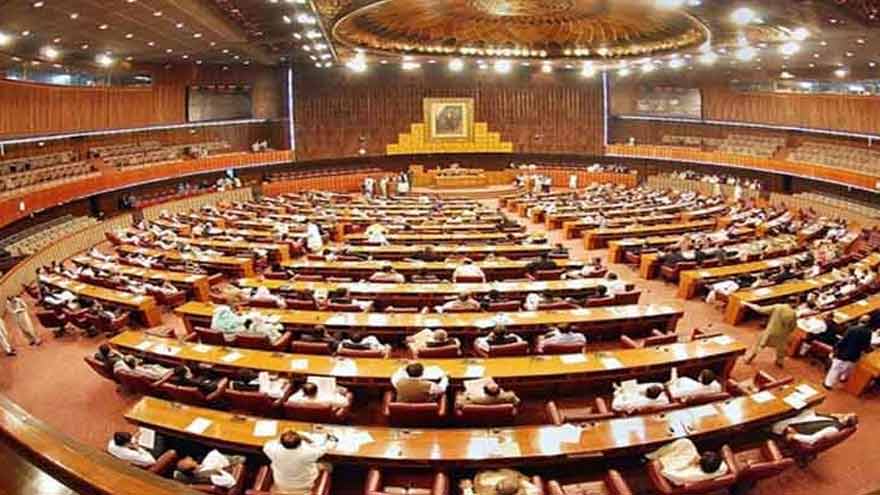
– Prime Minister Shehbaz Sharif has not yet forwarded the summary to the president for convening the National Assembly session, with the sitting now likely to be held next week.
According to parliamentary sources, the Ministry of Parliamentary Affairs had sent a summary to the prime minister seeking to convene the National Assembly session on Monday at 5pm.
Sources said a decision to reschedule the session was taken during a meeting between the president and the prime minister.
Parliamentary sources added that the National Assembly session is now expected to be summoned next week.
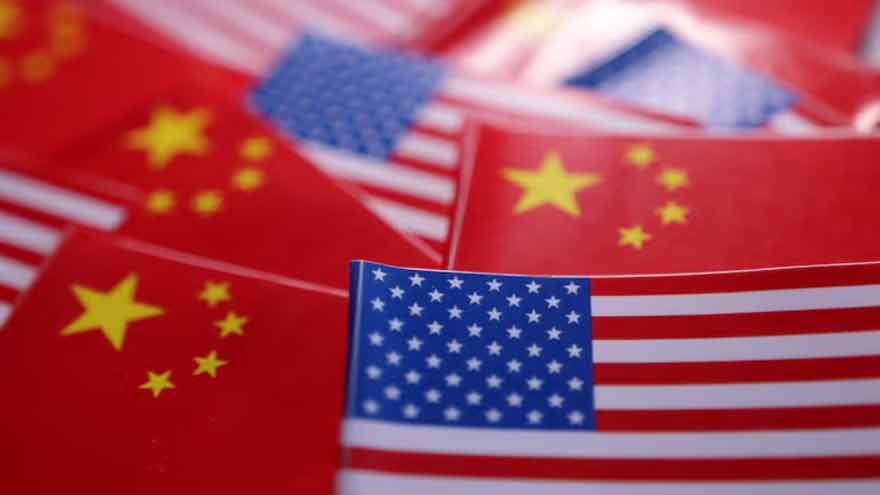
China and the United States discussed tariff cuts, agricultural trade and other issues at their first trade council meeting on Friday, China’s Commerce Ministry said on Saturday, days ahead of a leaders’ meeting in Shenzhen next week.
The Ministry of Commerce said: “The two sides had open, in-depth and constructive exchanges on issues of common concern, such as the implementation of the results of the previous China-US economic and trade consultations, including tariffs, the “US$30 billion for US$30 billion” mutually beneficial tax reduction regime, and agricultural trade.” It did not disclose whether any agreement had been reached. The Ministry of Commerce added that both sides will continue to use the council to resolve trade issues, expand cooperation and reduce outstanding issues. After a summit between President Xi Jinping and President Trump in Washington in September, the two sides proposed a $60 billion plan to cut reciprocal tariffs that would cover $17 billion worth of Chinese imports of U.S. agricultural products by 2024, but the plan has not yet been finalized.
A Reuters analysis of customs data earlier this month showed that China’s purchases of U.S. agricultural products, excluding soybeans, will hit a seven-year low this year, despite an agreement for $17 billion a year through 2028, underscoring lingering uncertainty over the deal. Beijing has repeatedly called on Washington to implement a $60 billion tariff reduction deal, saying it is a prerequisite for increased purchases of US agricultural products.
The White House said Trump will meet with Xi Jinping on Thursday on the sidelines of the Asia-Pacific Economic Cooperation Forum in Shenzhen.

The International Monetary Fund (IMF) has reiterated its call for Pakistan to phase out its fuel subsidy program, stressing that any future government support to deal with rising oil prices must be limited, temporary and within the framework of the current fiscal year’s budget.
An IMF spokesman told Arab News that existing fuel subsidy programs should be phased out because of their broad reach. If international oil prices unexpectedly rise, any further assistance should be directed to deserving groups through established social security programs and kept within the fiscal year 2027 budget, the spokesman said.
Pakistan launched a fuel subsidy program in September to protect low-income motorists from rising oil prices amid the US-Iran war. Under the program, motorcycle and rickshaw users get weekly petrol vouchers worth Rs 500 ($1.80), while owners of vehicles with an engine capacity of up to 800 cc get a discount of Rs 100 ($0.36) per liter, subject to a limit of 10 liters every 10 days.
The IMF had also called for an immediate end to the program in a statement last month, citing its high costs and wide coverage. Pakistan is trying to transition from economic stability to growth under the International Monetary Fund’s $7 billion Enhanced Funds Program (EFF). The spokesman said that under the plan, Pakistani authorities are committed to bringing domestic oil prices in line with international oil prices, while protecting the most vulnerable sections of society. Pakistan’s Finance Minister Mohammad Aurangzeb, Finance Minister Bilal Azhar Kayani and Finance Adviser Khurram Shehzad did not respond to Arab News’ requests for comment on the IMF’s latest position.
Like several other countries, Pakistan raised oil prices after the US-Israeli war on Iran that began in February. Petrol prices hit a record high of Rs 458.41 per liter on April 3, but gradually eased to Rs 330 per liter as tensions eased in the region.
great economic pressure
A representative of the International Monetary Fund said that the current conflict in the Middle East is a major challenge for Pakistan, which depends on oil and gas imports from the Persian Gulf countries. Disruption of international shipping routes, especially in the strategically important Strait of Hormuz following Iran’s blockade, has raised concerns about economic growth in developing countries, including Pakistan.
International Monetary Fund officials said rising international oil prices have added to domestic inflationary pressures. The IMF said Pakistan’s policy priorities should focus on maintaining macroeconomic stability and implementing reforms to strengthen public finances, improve competition, increase productivity and competitiveness, and strengthen social protection and human capital.
It also emphasized the need for reforms in state-owned enterprises, improved public service delivery and greater viability of the energy sector. Last month, the IMF reached a staff-level agreement with Pakistan after talks with officials in Karachi and Islamabad. The contract must be approved by the fund’s management. Once approved, Pakistan is expected to receive approximately $1 billion from the EFF program and an additional $210 million through the Resilience and Sustainability Fund (RSF), bringing the total expenditure of the two programs to approximately $5.7 billion.
An IMF spokesman said an executive meeting to review Pakistan’s EFF and RSF review and the 2026 Article IV consultation would be held in December, subject to program requirements.

NA sesssion likely to be rescheduled for next week

China, US discuss tariffs, farm trade ahead of Xi-Trump meeting

KP healthcare system faces acute shortage of doctors, hospital beds

ICC board meeting in India: Mohsin Naqvi gets invitation

‘Self-Reliance in Digital ID’: NADRA launches locally produced QR code-based National Identity Card

23 people have died during the monsoon as rain-related incidents plague Punjab and KP.
-
 Latest News6 months ago
ICC board meeting in India: Mohsin Naqvi gets invitation
-
 Latest News3 months ago
‘Self-Reliance in Digital ID’: NADRA launches locally produced QR code-based National Identity Card
-
 Latest News4 months ago
23 people have died during the monsoon as rain-related incidents plague Punjab and KP.
-
 Latest News3 months ago
Turkish FM, Dar discuss regional trends, bilateral connections
-
 Business4 months ago
Govt dedicated to resolving Balochistan issues: Dar
-

 Latest News4 months ago
Pakistan making rapid progress in robotics, AI: Shaza Fatima
-

 Entertainment6 months ago
Interim bail given to YouTuber Rajab Butt in gambling app marketing case
-
 Latest News4 months ago
After a divorce, LHC decides that women who have been harmed by their spouses get their dower.