
Latest News
Pentagon: US strikes in Yemen killed 153 people, wounded 243 in 2025


– US military operations in Yemen killed 153 civilians and wounded 243 in 2025, a US official said on Tuesday, citing Pentagon assessments, marking a sharp increase from the previous year.
The figures represent a sharp increase from 2024, when Pentagon assessments found that two civilians were killed and two injured in US military operations.
A Pentagon report submitted to Congress and published by US media said all civilian deaths and injuries recorded in 2025 resulted from three US strikes in Yemen.
The report said US Central Command assessed that the three strikes, carried out in April 2025, “more likely than not” resulted in civilian harm.
The Pentagon also said that, as of February 2026, Central Command was assessing 15 other incidents in Yemen following reports received from non-governmental organisations.
The US military has said its operations in Yemen are aimed at degrading the capabilities of Houthi militants.
The Pentagon report did not include casualties from US strikes in the Caribbean and eastern Pacific.
According to the report, as of February 1, 2026, US Southern Command assessed that there were no incidents in its area of responsibility in 2025 in which civilian casualties “more likely than not resulted” from US military operations.
Meanwhile, President Donald Trump’s administration has carried out strikes on vessels it accuses of transporting narcotics in the eastern Pacific, describing those targeted as “narco-terrorists”.
US military strikes on the vessels have killed more than 200 people since September 2025, according to a Reuters tally based on death tolls released after each strike.
Human Rights Watch and Amnesty International have described the strikes as unlawful extrajudicial killings, while the American Civil Liberties Union has criticised the Trump administration’s allegations against those targeted as “unsubstantiated, fear-mongering claims”.
Latest News
Iran denies backing Houthi attacks on Saudi Arabia amid fresh missile, drone interceptions
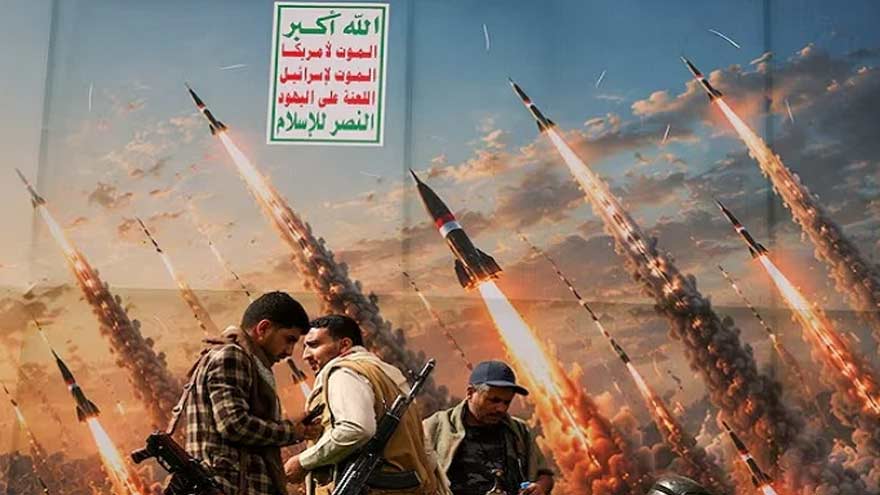
Iran on Friday denied any connection with strikes by Yemen’s Houthis, a day after Saudi Arabia accused Tehran of urging the group to escalate its recent attacks on the country.
Pro-Iran Houthis have launched numerous attacks on Saudi targets since Yemen’s civil conflict reignited in July, including Red Sea ships, oil facilities and Riyadh’s international airport, where 13 people died in one incident last week.
Yemen’s internationally recognized government has been supported by a Saudi-led military coalition for almost a decade. On Friday it reported intercepting more missiles and drones as the monarchy came under relentless attack from the Houthis.
A Saudi foreign ministry official alleged a day earlier that Iran had “encouraged” the escalation, a charge Tehran denied.Iran denies any allegations it has helped in the (Yemeni) Houthi operations,” Iranian foreign ministry spokesman Esmaeil Baqaei said in a statement.But the Yemeni armed forces behave according to their own interests and assessments, and such allegations are not plausible for those who are familiar with the connections between Iran and its friends. But Iran does not think escalation of hostilities would be in the interests of any party,” he said.
Saudi official Deputy Minister for Public Diplomacy Dr Rayed Krimly said the Houthis had turned down an offer to meet in Oman at the start of the latest round of hostilities.
But Baqaei repeated Tehran’s offer to intervene between the two parties, adding that Iran “has always been ready to use its good offices to help end the hostilities”.
The Saudi-led military coalition said on Friday it had “intercepted and destroyed three drones in the southern area and Riyadh… and two cruise missiles over the Red Sea,” a spokesman for the alliance said.
And “in the past hours we intercepted and destroyed a ballistic missile over Yanbu”, a city on the Red Sea coast that is the end of a major oil pipeline, he said.
Houthi attacks have grown since the group’s rapid advance in Yemen in September, when it seized critical territory controlled by government forces along the Red Sea coast overlooking a vital chokepoint for global shipping.
Saudi Arabia, the world’s biggest oil exporter, is facing rising pressure at a time when global energy markets are already in turmoil due to Iran’s blockage of the Strait of Hormuz at the start of the broader Middle East war in February.
Airports strike
On Thursday, the UN Security Council “condemned in the strongest terms continued and escalatory Houthi attacks against the Kingdom of Saudi Arabia”, as well as their “attacks and threats against commercial shipping in the Red Sea and Bab al-Mandeb” Strait, the southern gateway to the Suez Canal.
The Security Council also condemned the group’s “irresponsible attacks” on the airport in Riyadh, which the Saudi-led coalition says have attacked the airport at least 20 times so far this month.
On Thursday, Saudi foreign ministry official Krimly accused Iran of continuing “to arm, train and support the Houthi militia in violation of UN Security Council resolutions”.
Yemeni government forces, backed by Saudi air support, have launched a counteroffensive to reclaim territories held by the Houthis, but so far have failed to reverse their advances.
On Friday, the local security office in Aden, the government’s interim capital, said two missiles had fallen inside the boundary of the city’s airport “in the second incident of its kind in less than a week,” and no one was injured.
A military source stated in a statement that the Houthis had targeted “the command headquarters of the Saudi forces” and a weapons stockpile.
The day before, the organization launched a fatal missile attack on the presidential palace in Aden, killing five people and wounded 16, the health minister said.
Yemeni Prime Minister Shaya al-Zindani condemned the “cowardly” conduct on X, saying it was a “continuation of (the Houthis’) criminal pattern”.
One minister of the government, who declined to be named, claimed the Houthis had gone after command centers for Yemeni and Saudi coalition forces at the palace complex.
Media loyal to the Houthis stated the attack targeted “the headquarters of military operations, led by Saudi officers, at the Al-Maashiq Palace in Aden”.
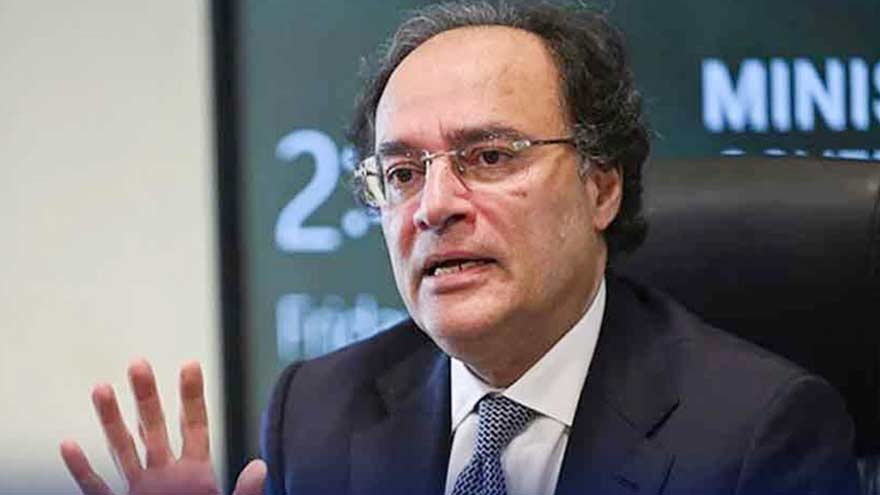
ISLAMABAD: Finance Minister Muhammad Aurangzeb said on Saturday Pakistan had so far been able to weather the shock from the soaring oil costs due to the Iran war but attacks on infrastructure in Saudi Arabia and other Gulf countries were “worrying” for the country’s longer-term economic prospects.
“We have enough energy supplies for November and we are preparing for the winter months when the demand of households goes up,” Aurangzeb told AFP on the sidelines of the IMF-World Bank Annual Meetings in Bangkok.“Pakistan has negotiated well the first order impact,” he remarked.”We have had no shortage, no queues at the gas stations and no law and order situation which at times we have seen in some of the countries,” he said.
“The government would not be procuring spot cargoes on the LNG front unless it saw an absolute dire need,” he said. These are often much more expensive than contracted cargoes.
Since the United States and ally Israel began the war on Iran in February, global energy prices have skyrocketed, with Tehran’s retaliatory action against Washington’s Gulf allies, and curbing supply of oil and gas.
And with Yemen’s civil conflict flaring up again, the Houthis there have frequently assaulted Saudi infrastructure like energy installations and airports in recent days.
“Damage to such sites will only prolong the restoration to economic normalcy,” Aurangzeb said. “I am alarmed about the escalation.“The scary part of it is when the energy infrastructure starts getting hit now,” he warned.To be very honest I don’t know where that would go. But one thing is very clear: if the infrastructure continues to get hammered, the return to normalcy, even if things subside, will be longer,” he said.Pushback
Pakistan is a regular customer of the International Monetary Fund (IMF), the lender of last resort to countries teetering on default.
Since independence in 1947, it is now in the middle of its 25th program with the Fund – at least 11 of which have been full-fledged bailouts.
The present program is worth about $7 billion over three years and the Fund agreed last month to disburse a $1.2 billion tranche.
The Fund urged on all economies, even those most vulnerable to the shock of the Iran conflict, to engage in fiscal consolidation at this year’s annual meetings to avoid a possible crisis given the high levels of global debt stocks. ““We have been on this fiscal consolidation path for a while, thankfully for us,” Aurangzeb added with rueful smile.
In recent years tax revenues of the country have expanded considerably and the finance minister indicated that the government was targeting the theft of taxes by private sector enterprises who collected sales tax from consumers but never paid it into government accounts.
The theft was in the billions of dollars, Aurangzeb said, adding that there was “room for improvement” in strengthening income tax collection.
He claimed industry, lobbying groups and vested interests had resisted the government’s reform agenda.“Every reform, every thing you try to do when you try to change the status quo, there is pushback,” he said.
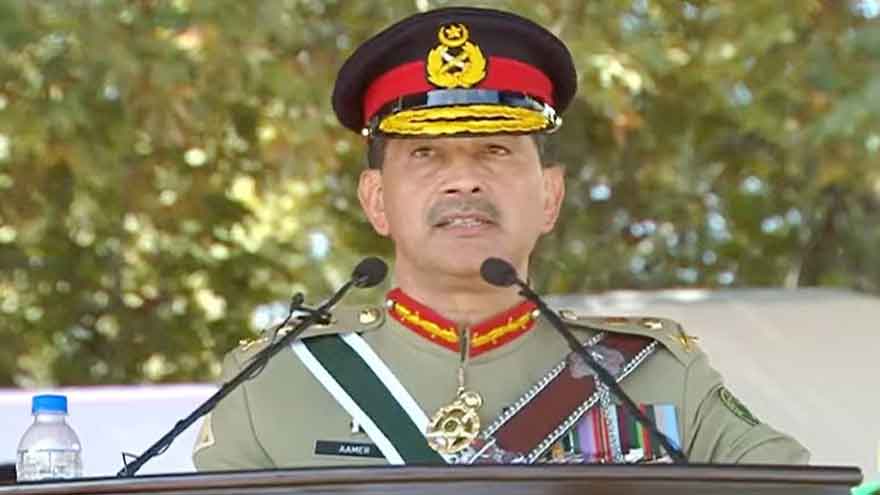
Commander National Strategic Command General Syed Amir Raza said that Pakistan’s military forces have demonstrated their skills in every field. He stated national security would not be jeopardized and the country’s borders were well safeguarded.
Addressing a dignified passing out ceremony at Pakistan Military Academy (PMA) Kakul, General Syed Amir Raza said that cadets will execute their entire duty in safeguarding national security. “We’re going to have struggles every day as we start our professional life,” he remarked.
General Amir Raza said honesty, integrity and boldness are the key principles of leadership and recommended the cadets to face these difficulties with courage. “It is matter of pride that women are participating and Pakistan Armed Forces have shown their capabilities in every field,” he told the audience.
He said Pakistan had played a good role worldwide as a mediator for regional peace. “The world has seen Pakistan’s role as a mediator for regional peace,” he said, adding that the country has played a good role internationally amid recent regional tensions.
The commander said Pakistan’s national security was not threatened and its military forces were adequately prepared to defend every inch of the country. He also stressed that cross-border infiltration would not be tolerated under any circumstances.
The Kashmir issue has remained unresolved at the international level on the resolutions of the United Nations Security Council, stated General Syed Amir Raza. He also called for an end to the violation of human rights in Palestine.
He informed the cadets that the brave military of the country were laying down their lives for the defense of Pakistan. The cadets would carry the heavy responsibility of protecting the security, dignity and sovereignty of the country, he said.
Pakistan Military Academy Kakul will hold the passing-out ceremony of 73rd Integrated Course and 28th Lady Cadet Course. The occasion also witnessed passing out of the graduates of the 154th PMA Long Course and the 39th Technical Graduate Course after finishing training.

Iran denies backing Houthi attacks on Saudi Arabia amid fresh missile, drone interceptions

Attacks on Gulf energy infrastructure ‘worrying’ for outlook, says FM Aurangzeb

No compromise on national security, Pakistan’s borders fully secure: General Amir Raza

ICC board meeting in India: Mohsin Naqvi gets invitation

‘Self-Reliance in Digital ID’: NADRA launches locally produced QR code-based National Identity Card

23 people have died during the monsoon as rain-related incidents plague Punjab and KP.
-
 Latest News5 months ago
ICC board meeting in India: Mohsin Naqvi gets invitation
-
 Latest News2 months ago
‘Self-Reliance in Digital ID’: NADRA launches locally produced QR code-based National Identity Card
-
 Latest News3 months ago
23 people have died during the monsoon as rain-related incidents plague Punjab and KP.
-

 Latest News2 months ago
Turkish FM, Dar discuss regional trends, bilateral connections
-
 Business3 months ago
Govt dedicated to resolving Balochistan issues: Dar
-

 Latest News3 months ago
Pakistan making rapid progress in robotics, AI: Shaza Fatima
-

 Entertainment5 months ago
Interim bail given to YouTuber Rajab Butt in gambling app marketing case
-

 Latest News3 months ago
After a divorce, LHC decides that women who have been harmed by their spouses get their dower.