
Business
The government extends the hours of freestanding food and kiryana stores to 10 PM every day.

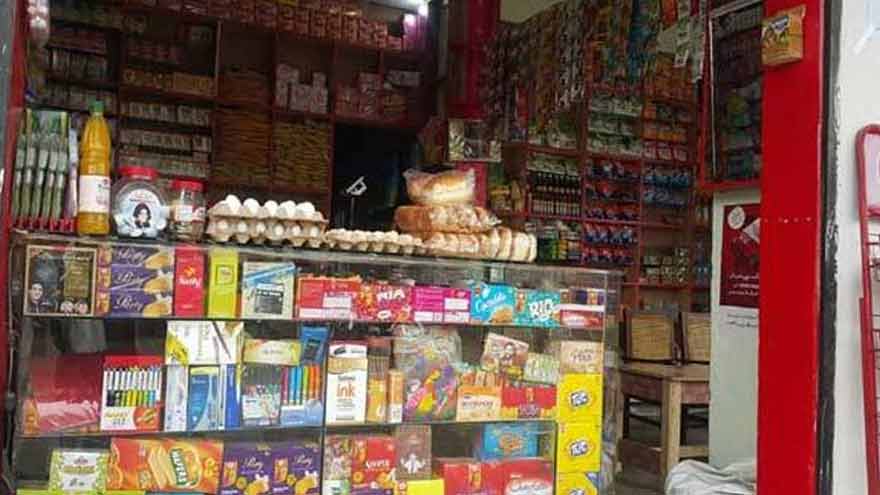
– The Committee for Monitoring and Implementation of Fuel Conservation and Additional Austerity Measures on Wednesday recommended to extend the applicability of certain austerity measures till June 30, 2026 besides extending the closing time of standalone grocery and kiryana stores to 10:00 PM all days of the week.
The committee, which met under the chair of Deputy Prime Minister and Foreign Minister Senator Mohammad Ishaq Dar, evaluated numerous instances submitted by different ministries and divisions seeking exemptions from the applicability of specific austerity measures and finalised its recommendations in this regard.
It was also decided to keep the consular attestation services functional at the Ministry of Foreign Affairs and its liaison offices in Quetta, Karachi, Peshawar, Gujrat and Lahore on Fridays for facilitation of the public.
The committee suggested to extend the applicability term of those extra austerity measures whose expiry date had been notified as June 13, 2026 till June 30, 2026.
It also agreed to increase the closing hour of freestanding grocery and kiryana shops to 10 pm on all days of the week, including Saturdays and Sundays.
The meeting was attended by ministers for petroleum, climate change and IT & Telecom, special assistant to PM (SAPM) on finance, special assistant to deputy prime minister (SADPM), federal secretaries of cabinet, commerce, petroleum and IT & Telecom and senior officials of concerned ministries and divisions.

The daily pricing method has resulted in more frequent revisions in petroleum rates. In the current revision of fuel prices, the federal government has decreased the petrol price by 66 paisa per liter but increased the rate of high-speed diesel (HSD) by 52 paisa.
Petrol would be available for Rs398.30 a liter after the amendment as compared to Rs398.96, while high-speed diesel will be sold at Rs396.24 a liter against Rs395.72.
The revised tariffs will be effective from October 10 to 12, 2026, according to Petroleum Division announcement. The revision comes amid instability in international oil markets and a move toward more frequent evaluations of domestic fuel pricing.
Price reviews daily
The government has initiated a daily review of petroleum pricing to respond more rapidly to the changes in international oil prices.
Under the new framework, OGRA will fix petrol and high-speed diesel prices on daily basis on the basis of the average rates in the international market during the prior seven days on an ex-depot basis.
Petroleum Minister Ali Pervaiz Malik said the daily estimates will be based on a seven-day average of international pricing, in line with international traditions.
OGRA has also started releasing daily petroleum prices on its website to provide transparency and allow for changes in foreign markets to be reflected in domestic rates faster.
The regulator can announce revised rates without having to have the previous consent of the prime minister or the federal government for each and every change. But the pricing announced Friday will not change over the weekend.
The switch to daily pricing comes as global oil markets swing with increasing tensions in the Middle East and worries over energy supplies.
After the outbreak of hostilities between Iran, Israel and the United States on 28 February, the government moved to weekly gasoline price reviews. In the past, petroleum products were amended on a fortnightly basis.
Tensions in the Strait of Hormuz have created uncertainty in energy markets. The key canal handled approximately a fifth of the world’s oil and other energy supplies before the conflict and any disruption is a huge issue for worldwide markets.
As per the new structure, OGRA will be bound to post Platts daily reference prices. The procedure also limits the scope for modifications in petroleum levies: the ceiling on levies is determined by the federal cabinet and the levy’s rate requires the permission of the Finance Division.
Pakistan has fast-tracked changes in the energy sector to meet the International Monetary Fund (IMF) conditions and directions, and the government has been working on revamping the present electricity and gas slab and cross-subsidy systems.
Sources said the planned approach intends to confine electricity and gas subsidies to the deserving and low income clients.
The plan provides for the enactment of a new mechanism of electricity subsidies in January 2027, while the new system for gas consumers is expected to be implemented on July 1, 2027.
In a bid to enhance transparency and efficiency, the Power Division has started work on a specialized socioeconomic registry of qualified users with support from the World Bank.
The government expects to finish the registration of eligible consumers by November this year, sources added.
The data collected will be verified and then compared to the main Benazir Income Support Program (BISP) database. This will allow officials to determine who actually qualifies for financial help and subsidies.
The objective is to scrap the existing system of tariff differential subsidy and cross subsidy for electricity by January 2027 and to take gas consumers on board with the same database by July 1, 2027.
The reformed subsidy structure is aimed at relieving the long-standing pressure of the circular debt on the energy sector.
The sources claimed electricity distribution companies (DISCOs) also filed formal applications for revision of the benchmark electricity rate.
Meanwhile, the government has briefed the IMF about preparations for privatization of electricity distribution businesses and administrative reforms. The initiatives are intended to help achieve the objectives of permanently reducing circular debt and enhancing the energy industry.
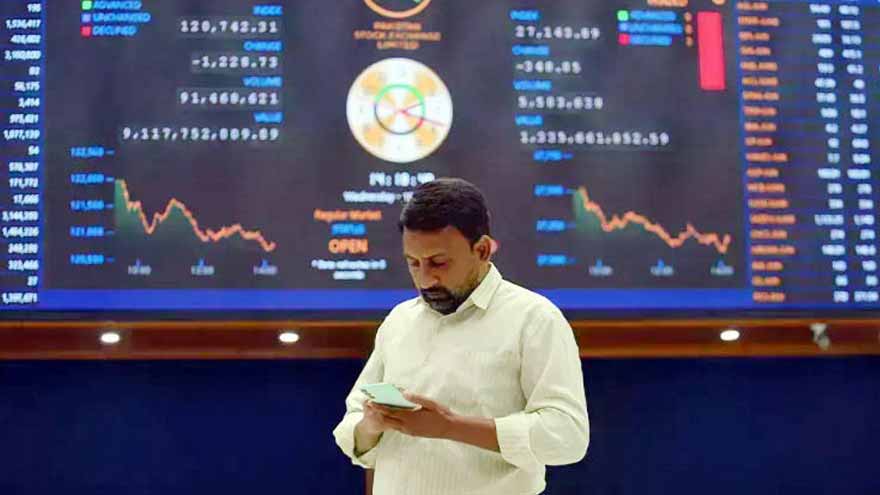
The Pakistan Stock Exchange (PSX) concluded the week in the red as the benchmark KSE-100 Index dropped 1,066 points to close at 166,789.
The index’s range of movement in the week was 3,834 points, indicating volatility in the market.
The index’s weekly high was at 169,486 points and its low at 165,651 points.
Value of trades touched Rs90 billion during the week when 2.13 billion shares changed hands.
In the meantime, the entire capitalization of the market fell by Rs156 billion to Rs18.569 trillion.

Pakistan beat Sri Lanka by four wickets as Farhan, Sadaqat star in Rawalpindi

Isaias weakens to Category 1 hurricane after Florida landfall, NHC says

Petrol price cut by 66 paisa, diesel rises 52 paisa per litre

ICC board meeting in India: Mohsin Naqvi gets invitation

23 people have died during the monsoon as rain-related incidents plague Punjab and KP.

‘Self-Reliance in Digital ID’: NADRA launches locally produced QR code-based National Identity Card
-
 Latest News5 months ago
ICC board meeting in India: Mohsin Naqvi gets invitation
-
 Latest News3 months ago
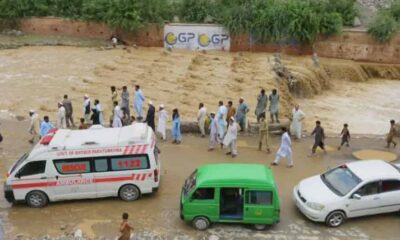
23 people have died during the monsoon as rain-related incidents plague Punjab and KP.
-
 Latest News2 months ago
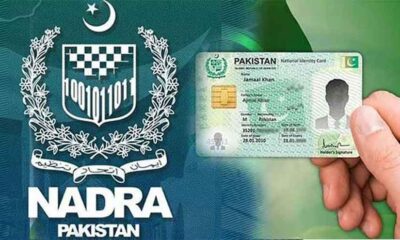
‘Self-Reliance in Digital ID’: NADRA launches locally produced QR code-based National Identity Card
-

 Latest News2 months ago
Turkish FM, Dar discuss regional trends, bilateral connections
-
 Business3 months ago
Govt dedicated to resolving Balochistan issues: Dar
-
 Latest News3 months ago
Pakistan making rapid progress in robotics, AI: Shaza Fatima
-

 Entertainment5 months ago
Interim bail given to YouTuber Rajab Butt in gambling app marketing case
-
 Latest News3 months ago
After a divorce, LHC decides that women who have been harmed by their spouses get their dower.