
Latest News
Trump orders a renewed blockade of Iran, and Iran threatens to block more important seaways.

– Iran’s Islamic Revolutionary Guard Corps has threatened to close “all other export corridors that benefit the US and its allies”, Iranian media reported, after Iran shut the Strait of Hormuz and the US reimposed a naval blockade of Iranian ports.
“Regional energy exports are either shared by all, or denied to all,” the IRGC said in a statement carried by Iran’s IRNA state news agency on Wednesday.
Analysts have said Iran has been signalling it may use its Houthi allies in Yemen to shut the Bab el-Mandeb gateway to the Red Sea, opening a new front against Washington and putting two of the world’s most vital energy arteries at risk.
The narrow gateway links the Red Sea to the Gulf of Aden, through which Saudi oil exports and a substantial share of global shipping pass.
A senior Houthi official warned on Monday that the group was prepared to close the Bab el-Mandeb Strait – a move he said could send oil prices soaring to $200 a barrel – if Saudi Arabia continued to attack Yemen, according to a report on Iran’s Press TV website.
Houthi forces fired missiles at Saudi Arabia after accusing the kingdom of bombing an airport under their control on Monday, breaking a four-year truce in the conflict between the kingdom and the Iran-aligned group.
The Houthis have already shown they can choke global commerce through the Bab el-Mandeb. After the Gaza war erupted in October 2023, the Iran-backed group launched attacks on commercial shipping in the Red Sea, saying it was targeting vessels linked to Israel in support of Palestinians.
The latest threat to global shipping comes a day after the US military said it began a fresh round of strikes “to continue degrading Iranian capabilities used to attack commercial shipping in the Strait of Hormuz.”
The United States said Iran had attacked seven commercial ships over the last week, leading to nearly a dozen crew members being killed, missing or injured.
The US military said late on Tuesday that it hit dozens of military targets near the Strait of Hormuz and Iranian coastal areas. The wave of strikes lasted seven hours, the US Central Command said in a statement.
‘END OF AMERICA’S EVILS’
The IRGC said on Wednesday that the Strait of Hormuz would remain closed until what it described as “the end of America’s evils”. Before the war began in February, about a fifth of global oil and gas shipments passed through Hormuz each day.
The Guards said they had targeted what they described as command-and-control, logistics, fuel and military equipment facilities belonging to the US Fifth Fleet in Bahrain, in response to the latest US strikes in the Strait of Hormuz.
They also said they had set fire to and destroyed what they described as a US logistics facility in Kuwait’s Mina Abdullah and that their air force had struck what they described as a US base at Azraq in Jordan, targeting aircraft hangars. They said some of the US attacks had been launched from bases on Jordanian territory.
Earlier on Wednesday, Kuwait’s state news agency reported that a fire was brought under control at a site targeted in Iranian attacks. It was not immediately clear whether the fire was at the same site referred to in the IRGC statement.
Jordan’s air defence intercepted and shot down three ballistic missiles that entered the country’s airspace from Iranian territory early on Wednesday.
The hostilities between Iran and the US re-ignited last week, fraying an already fragile truce reached in June after several months of fighting that has killed thousands.
TRUMP THREATENS TO HIT ENERGY TARGETS
US President Donald Trump on Tuesday threatened to hit Iranian power plants and bridges next week unless Tehran resumes negotiations.
“I’ll save the energy targets for last, but ultimately we’ll hit energy targets,” Trump said in an interview with Fox News’ Trey Yingst.
US negotiators had been in touch with their Iranian counterparts to tell them “you better make a deal”, Trump added.
As tensions escalated, Trump on Monday floated the idea of a 20% fee on shipping through the strait, which drew sharp criticism from the UN shipping agency and others. On Tuesday, he scrapped the idea and said, without providing details, that he would instead seek investment deals with Gulf states.
Oil prices rose on Wednesday, after closing up 2% to a one-month high on Tuesday, as the latest attacks deepened a supply disruption in the Strait of Hormuz.
For the second straight session, Brent closed at its highest since June 12 and West Texas Intermediate at its highest since June 15. Both contracts rose further in early Wednesday trading.
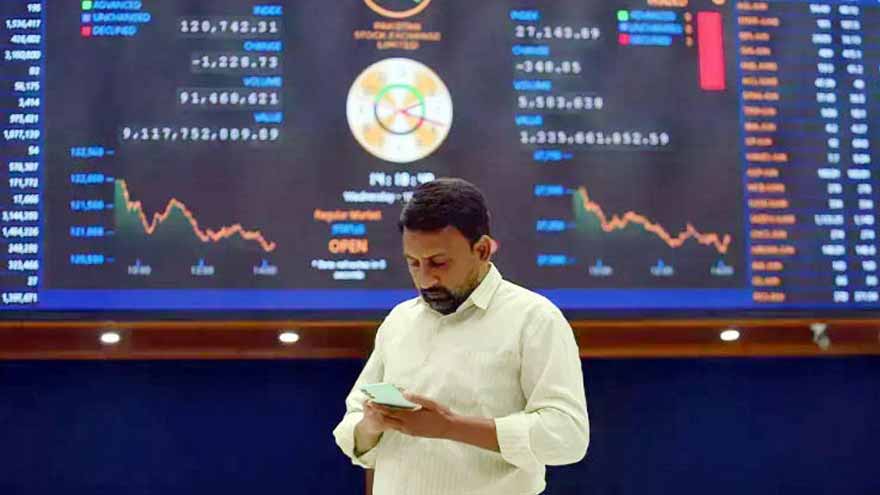
The Pakistan Stock Exchange (PSX) opened Tuesday’s trading session on a positive note, with the benchmark KSE-100 Index climbing more than 1,300 points.
The index surged to 164,368 points during early trading, reflecting a strong upward movement in the market.
In the previous session, the benchmark index had settled at 163,038 points.
The latest rally marks a positive start to the trading day, with the market gaining momentum after the previous session’s close.
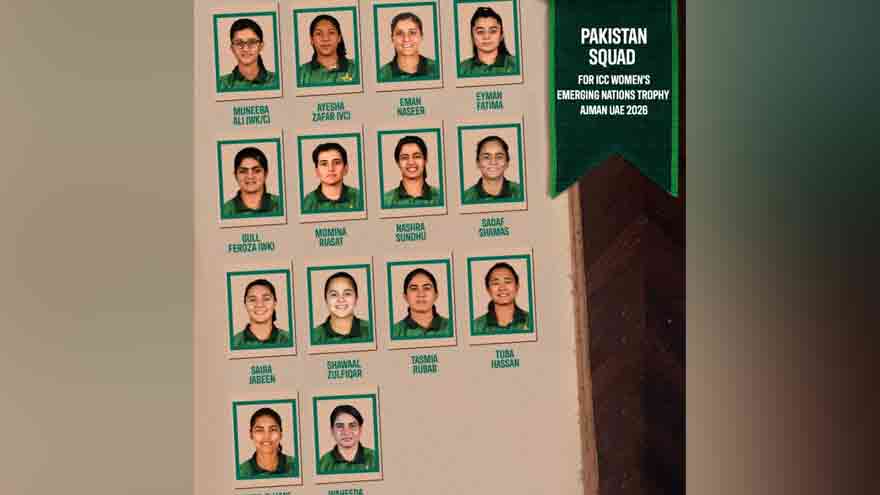
Muneeba Ali will lead Pakistan in ICC Women’s Emerging Nations Trophy 2026 Pakistan Cricket Board on Tuesday named a 14-member squad for the forthcoming ICC Women’s Emerging Nations Trophy 2026 to be held in Ajman, United Arab Emirates (UAE) from November 12 to 25.
The squad also includes hitters Eman Naseer, Eyman Fatima, Sadaf Shamas, Saira Jabeen and Shawaal Zulfiqar. Ayesha Zafar has been appointed the vice-captain. The squad also includes Gull Feroza who was declared the best wicketkeeper-batter in the recently ended National Women’s T20 Tournament.
Left-arm spinner Nashra Sundhu will head the bowling assault alongside Momina Riasat, Tuba Hassan and Umm-e-Hani in the spin quartet. The frontline pace options in the squad are Tasmia Rubab and Waheeda Akhtar.
The Pakistan women’s team has earned the Bronze Medal in the Asian Games in Japan. Sadaf and Waheeda have been recalled, while twelve players have retained their spot in the team from Pakistan’s last assignment. Regular skipper Fatima Sana will also be missing from Pakistan’s contingent as she will be in Australia playing her inaugural Women’s Big Bash League season.
The event involves 10 teams in two groups and 30 matches. Pakistan participate in Group B with Bangladesh, Thailand, Netherlands and Zimbabwe. Group A: Sri Lanka, Ireland, Scotland Papua New Guinea and hosts United Arab Emirates (UAE)
After the single-league round-robin round, three clubs from each group will qualify for the Super Six stage, where they will play three matches each. The final will be played on Wednesday November 25 between the top two teams from the Super Six stage.
Pakistan squad will gather in Lahore on November 6 and it will have a pre-tournament training camp on November 7, 8 and 9 before flying to UAE.
14-man squad
Muneeba Ali Siddiqui (c & wk), Ayesha Zafar (vc), Eman Naseer, Eyman Fatima, Gull Feroza (wk), Momina Riasat, Nashra Sundhu, Sadaf Shamas, Saira Jabeen, Shawaal Zulfiqar, Tasmia Rubab, Tuba Hassan, Umm-e-Hani, Waheeda Akhtar
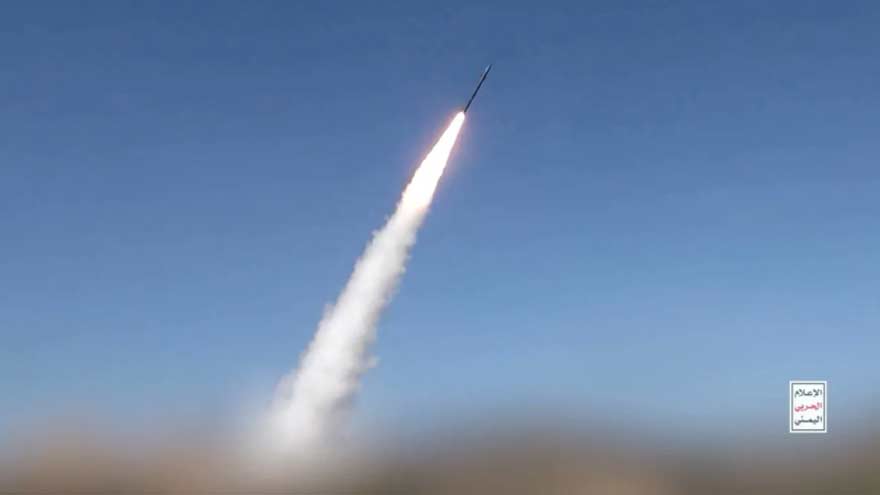
The Saudi-led coalition fighting Yemen’s Houthi rebels claimed Tuesday it intercepted and destroyed ballistic missiles and drones launched at two areas of the kingdom by the Iran-aligned group, as the battle between Saudi Arabia and the Houthis escalates.
The coalition reported the Houthis launched three ballistic missiles toward the Eastern Region of Saudi Arabia and four drones toward the Southern Region of the kingdom.
Saudi Civil Defence warned of a possible hostile threat in the Eastern Region and in the governorate of Kharj, and later said the risk has passed in both places.
Last month, the Houthis captured key strategic areas along Yemen’s Red Sea coast, moving closer to the Bab el-Mandeb Strait, a critical global shipping lane for Gulf oil producers across the Arabian Peninsula from the Strait of Hormuz. Since then, Saudi Arabia has stepped up its strikes against the Houthis.
The two sides have resumed fire, shattering a 2022 UN-brokered truce that had largely kept strikes at bay between the Saudi-led coalition, which backs Yemen’s internationally recognised government, and the Houthis who control the capital Sanaa.
The escalation also opens up a new front in the US-Israeli attack on Iran.

PSX opens on a positive note, gains over 1,300 points in early trading

Pakistan squad announced for ICC Women’s Emerging Nations Trophy

Saudi-led coalition says it intercepted Houthi missiles, drones attacking kingdom

ICC board meeting in India: Mohsin Naqvi gets invitation

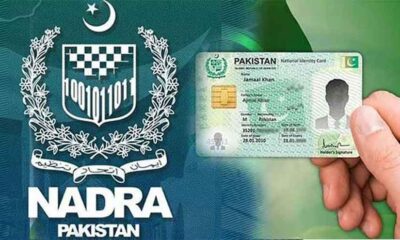
‘Self-Reliance in Digital ID’: NADRA launches locally produced QR code-based National Identity Card

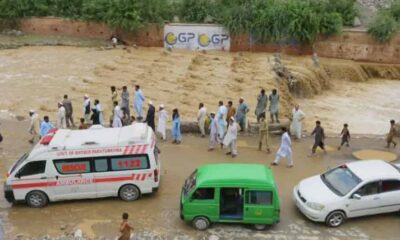
23 people have died during the monsoon as rain-related incidents plague Punjab and KP.
-
 Latest News5 months ago
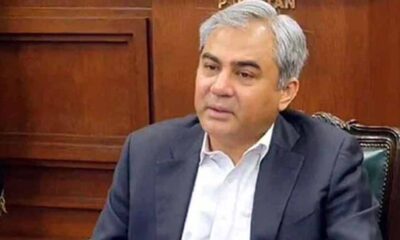
ICC board meeting in India: Mohsin Naqvi gets invitation
-
 Latest News2 months ago
‘Self-Reliance in Digital ID’: NADRA launches locally produced QR code-based National Identity Card
-
 Latest News3 months ago
23 people have died during the monsoon as rain-related incidents plague Punjab and KP.
-
 Latest News2 months ago
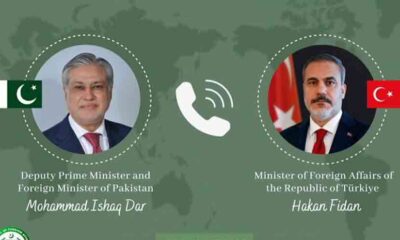
Turkish FM, Dar discuss regional trends, bilateral connections
-
 Business3 months ago
Govt dedicated to resolving Balochistan issues: Dar
-
 Latest News3 months ago
Pakistan making rapid progress in robotics, AI: Shaza Fatima
-

 Entertainment5 months ago
Interim bail given to YouTuber Rajab Butt in gambling app marketing case
-
 Latest News3 months ago
After a divorce, LHC decides that women who have been harmed by their spouses get their dower.