
Latest News
Trump to ask Congress to approve Saudi Arabia nuclear energy accord

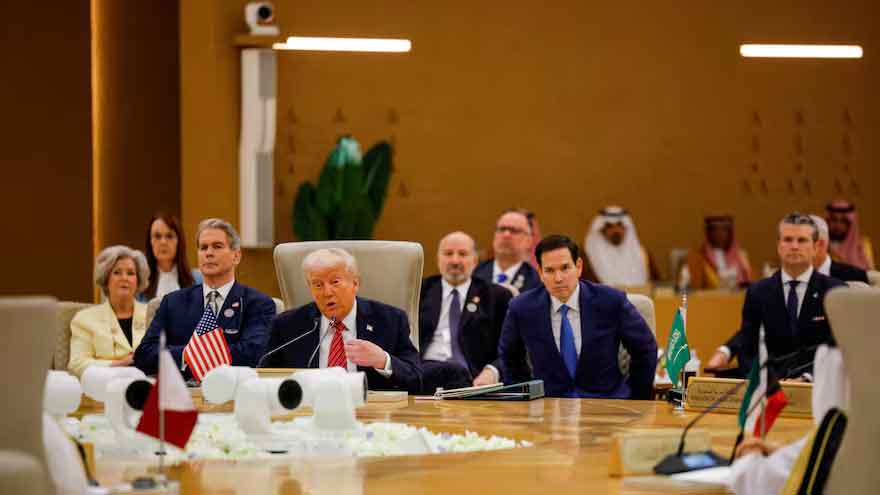
The Trump administration wants to propose to Congress a contract with Saudi Arabia to share nuclear power technology that does not include protections the United States has long said would avoid materials being used in nuclear weapons projects, two sources told Reuters.
The administration will send to Congress within days a document known as a 123 Agreement to be signed by U.S. Energy Secretary Chris Wright and Saudi energy minister Abdulaziz bin Salman, the sources said.
The two reached a preliminary deal in Riyadh last year.
The White House and the U.S. Department of Energy did not immediately respond to requests for comment.
The deal cites Section 123 of the U.S. Atomic Energy Act of 1954 and is needed to allow the U.S. government and American firms to engage with businesses in the kingdom to build a multibillion-dollar civil nuclear industry.
Sources familiar with the deal say it does not include the “Gold Standard” that would prevent the monarchy from enriching uranium and reprocessing used nuclear fuel, both potential avenues to nuclear weapons.
The sources, who spoke on condition of anonymity to discuss sensitive issues, said the deal also excludes the “Additional Protocol” which gives the U.N.’s International Atomic Energy Agency wide and more intrusive oversight of a country’s nuclear activities, including the power to conduct snap inspections at undeclared sites.
The administration would submit the agreement as soon as Wednesday, one of the individuals said. The other suggested the agreement will be submitted in a week or so. One of them, who did not say whether the agreement was without safeguards, said it would be presented shortly.
Wright had stated the preliminary deal was not about enrichment, and it included all the nonproliferation provisions in the Atomic Energy Act, which are among the highest in the world.
The agreement would create a legal framework for working together on the nuclear fuel cycle, including uranium enrichment, without the need for the United States to share any of its related capabilities or technology with Saudi Arabia, according to one of the sources.
FEARS OF PROLIFERATION
Saudi Arabia’s Crown Prince Mohammed bin Salman stated long before Iran’s announcement Saudi Arabia would create a nuclear weapon if Iran did, raising concerns among arms control activists and some U.S. politicians about a civil nuclear deal.
Saudi Arabia doesn’t intend to acquire any nuclear bomb but without a doubt if Iran created a nuclear bomb, we will follow suit as quickly as possible,” the crown prince told CBS in 2018.
The kingdom has also said it wants to keep the right to enrich uranium.
The United Arab Emirates signed a 123 Agreement in 2009 with Washington and agreed to the “Gold Standard.”
When 123 agreements are sent to Congress, they go through a review period of roughly 90 days of consecutive congressional sessions for lawmakers to object, or they become effective.
Congress would have to pass a joint resolution and have a two-thirds majority to override any presidential veto to block the agreement.
Many Democrats and some Republicans, including President Donald Trump’s Secretary of State Marco Rubio when he was in the Senate, have insisted any deal contain guardrails.
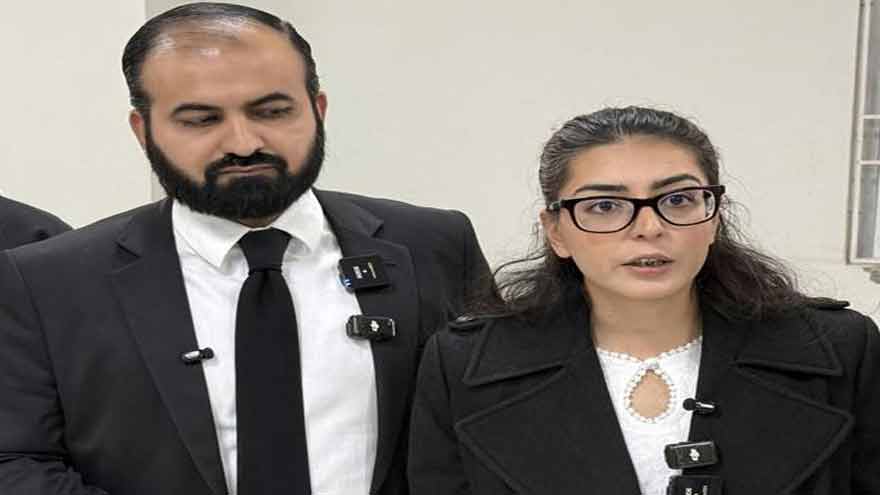
ISLAMABAD: An Anti-Terrorism Court (ATC) in Islamabad has authorized lawyers to meet Imaan Mazari and Hadi Ali Chattha in jail, who are arrested in a terrorism case relating to the demolition of security barriers.
Dr Shireen Mazari appeared before the case was heard by ATC Judge Tahir Abbas Sipra, who was accompanied by Advocate Riasat Ali Azad and Advocate Aimal Khan.
The court ordered that Riasat Ali Azad, Zainab Janjua and Aimal Khan be allowed to meet Imaan Mazari and Hadi Ali Chattha in jail.
At the hearing, Riasat Ali Azad stated that meetings between the lawyers and their clients were necessary for the case to move forward.
Judge Sipra noted that the anti-terrorism law mandated trials to be held on a day-to-day basis. He asked the prosecutor how many witnesses were still to be examined and the prosecutor said that there were nine witnesses to be presented.
The judge asked the prosecution to ensure the accused were allowed to meet their lawyers, adding that such meetings had to be enabled.
During the proceedings, Hadi Ali Chattha asked why he and Imaan Mazari were not being shown before the court, claiming the situation was against the norms of fair trial. He stated he had been in prison for eight months and could not see how efficiently he could continue his case in the circumstances.
Chattha also highlighted worries over holding meetings with lawyers in places that are equipped with cameras, questioning how secret contact between lawyer and client can be held in such circumstances.
He said the court should decide if he and Mazari were guilty of the charges, and demanded their production before it.
The judge scheduled further proceedings for Oct. 14.
The lawsuit contains charges about the dismantling of security obstacles for the visit of an international cricket team. The court in earlier hearings formally formulated allegations against Mazari and Chattha notwithstanding defense objections over access to legal counsel and copies of case papers.
Explore Topics

The report said the weekend attacks on two oil tankers and strikes by Yemen’s Iran-backed Houthi movement on Saudi Arabia fueled investor concerns about future regional oil supply disruptions.
Brent crude prices jumped 76 cents, or 0.73%, to $105.48 a barrel at 7:04 p.m. EDT Sunday. U.S. West Texas Intermediate (WTI) crude futures increased 59 cents, or 0.64%, to $92.44 a barrel.
Houthi fighters claimed responsibility for a missile attack on Riyadh’s international airport Saturday that killed 13 people and wounded more than 300 others.
Saudi police announced another death and further injuries Sunday in a second attack on the airport.
The Federal Aviation Administration (FAA) cautioned U.S. airlines on Sunday to exercise extreme caution flying in or above Saudi airspace, citing increased security threats stemming from the ongoing military conflict and disruptions to navigation systems, Reuters reported.
A notification to airmen (NOTAM) by the FAA, effective through Dec. 10, comes after a series of strikes on Riyadh, the capital of Saudi Arabia, including a new wave over the weekend.”Threats could pose a potential risk to aircraft during all phases of flight, including overflight, arrival and departure,” the FAA said.
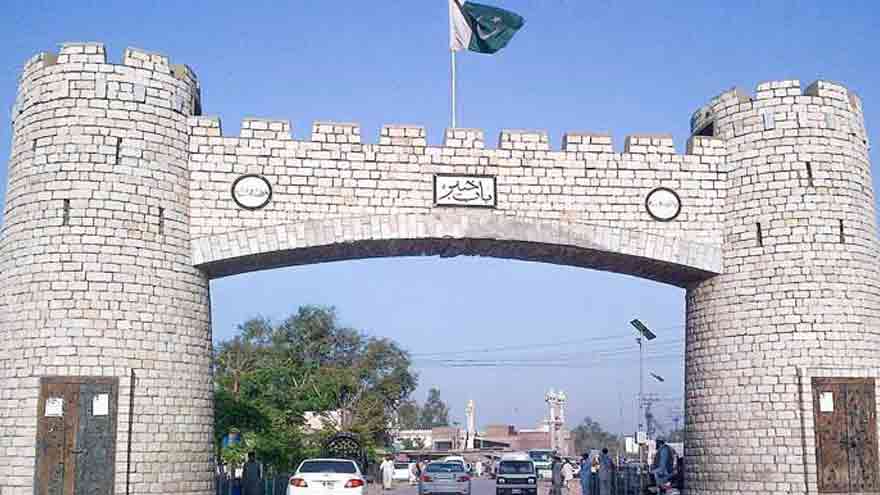
The Khyber Pakhtunkhwa government announced a substantial upheaval in the provincial administration, with the announcement of transfers and new appointments for commissioners in six divisions.
An official notice said that Khalid Mahmood, who was acting as commissioner Bannu, has been appointed commissioner Peshawar.
Ahmed Ali Shah, who is awaiting a new posting, has been named commissioner Mardan.
Samiullah, who was secretary Dera Ismail Khan, has been promoted as commissioner Bannu and Shakirullah, who was additional home secretary, has been posted as commissioner Hazara.
In another appointment, Federal Joint Secretary Iqbal Hussain has been appointed Commissioner Malakand.
Other administrative posts will also be reshuffled, the letter also said. Additional Secretary Agriculture Parvez Kashar has been removed from his position, while Peshawar Commissioner Riaz Khan Mahsud and Mardan Commissioner Habibullah have been appointed officers on special duty (OSDs).
Meanwhile, Hazara Commissioner Shahidullah and Malakand Commissioner Masood Ahmed were asked to report to the Establishment Division, the notification said.

ATC orders jail meetings for Imaan Mazari, Hadi Ali Chattha with lawyers

Oil prices up after escalation in Middle East tensions

Commissioners of six KP divisions changed in major reshuffle

ICC board meeting in India: Mohsin Naqvi gets invitation

23 people have died during the monsoon as rain-related incidents plague Punjab and KP.

‘Self-Reliance in Digital ID’: NADRA launches locally produced QR code-based National Identity Card
-
 Latest News5 months ago
ICC board meeting in India: Mohsin Naqvi gets invitation
-
 Latest News3 months ago
23 people have died during the monsoon as rain-related incidents plague Punjab and KP.
-
 Latest News2 months ago
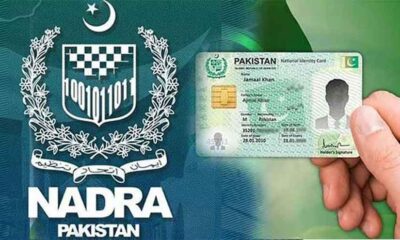
‘Self-Reliance in Digital ID’: NADRA launches locally produced QR code-based National Identity Card
-

 Latest News2 months ago
Turkish FM, Dar discuss regional trends, bilateral connections
-
 Business3 months ago
Govt dedicated to resolving Balochistan issues: Dar
-
 Latest News3 months ago
Pakistan making rapid progress in robotics, AI: Shaza Fatima
-

 Entertainment5 months ago
Interim bail given to YouTuber Rajab Butt in gambling app marketing case
-
 Latest News3 months ago
After a divorce, LHC decides that women who have been harmed by their spouses get their dower.