
Business
As the Middle East turmoil disturbs markets, Pakistan reduces its mango export objective by 30,000 tonnes.

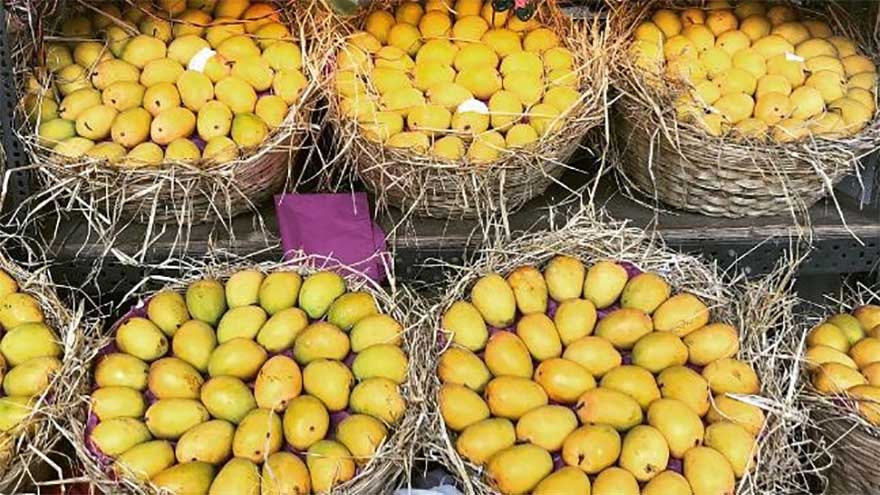
In response to the fact that one of Pakistan’s most lucrative fruit exports is being threatened by conflict-related interruptions across the Middle East, skyrocketing freight costs, and climate-related crop losses, Pakistan’s mango exporters have reduced their export objective for this year by 30,000 tonnes, which is roughly 30 percent.
According to the Pakistan Fruit and Vegetable Exporters, Importers and Merchants Association (PFVA), exporters now anticipate shipping 80,000 tonnes of mangoes this season, which is a decrease from 110,000 tonnes the previous year. Additionally, export earnings are projected to fall to between $75 million and $80 million, which is a decrease from approximately $110 million the previous year.
It was on Sunday that the first shipments of mangoes from Pakistan were sent to markets outside of Pakistan, marking the official beginning of the export season.
There are a number of mango varieties that are native to Pakistan, including Sindhri, Chaunsa, and Anwar Ratol. Pakistan is the fourth largest mango grower in the world. One of the most significant horticultural exports from the country is the fruit, and the Gulf states are the country’s most important trading partners in the international market.
According to a statement released by the Patron-in-Chief of the PFVA, Waheed Ahmed, “the export target has been reduced to 80,000 tonnes from 110,000 tonnes last year.” This decision was made in light of the enormous problems that are currently being faced by the trade.
As a result of tensions involving Iran, Israel, the United States, and the wider Middle East, shipping routes have been disrupted, cargo movements have been delayed, and transportation costs have sharply increased across a region that serves as Pakistan’s most important mango market. This reduction comes at a time when exporters are struggling to deal with the fallout of these tensions.
Approximately 35 percent of Pakistan’s mango exports are destined for the Gulf region. In addition, exporters utilise overland trade routes that pass through Afghanistan, which is Pakistan’s neighbour, in order to access Central Asian markets.
According to Ahmed, exporters have become cautious as a result of the uncertainty surrounding regional crises.
His statement was that the Gulf crisis was the primary cause of this situation.
“Access to Afghanistan is absolutely restricted. There is also a crisis in Iran. In addition, there is a conflict going on in the Middle East.
“We are unable to predict what will take place tomorrow.”
Exporters have reported that the unrest in the region has resulted in a significant increase in the expenses of shipping.
According to the PFVA, the number of dollars charged for sea freight to Gulf destinations increased from approximately $1,200 to $1,400 per container during the previous season to as high as $6,000 to $7,000. The prices of air freight have also increased by more than twofold, reaching approximately two dollars per kilogram.
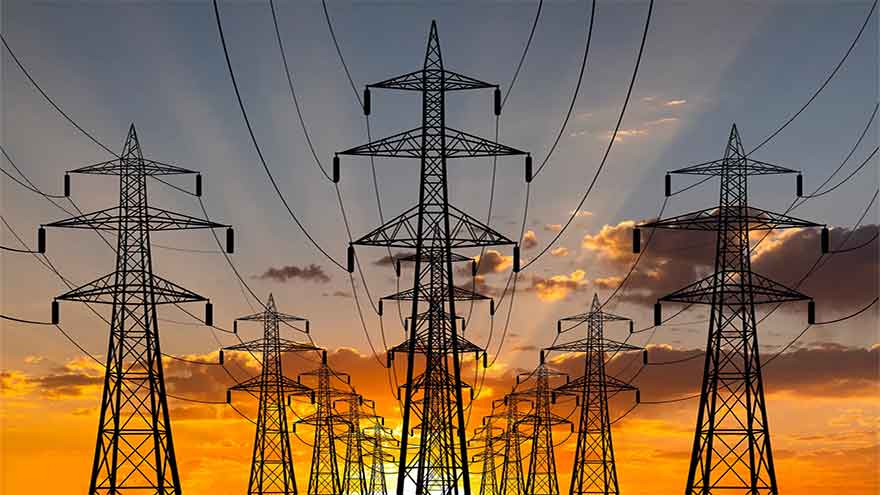
The Privatisation Commission Board has shortlisted nine companies to take over 51% to 100% of the shares and control of Gujranwala Electric Power Company (GEPCO).
This decision was made during a meeting of the Privatisation Commission Board, led by Prime Minister’s Adviser Muhammad Ali, where the progress on GEPCO’s privatisation and other state-owned companies was discussed.
The board received 11 applications for GEPCO’s privatisation, and nine of them were approved to move forward.
The companies that made it through the first round include Aktor Electric and Genvira Energy from Türkiye, and Engro Energy, Hub Power, Sapphire, Shirazi Investments, Artistic Milliners, and AKD Securities from Pakistan.
K-Electric officially pulled out of the bidding, and Al-Sharif Contracting did not submit the required paperwork.
The Privatisation Commission said the nine approved companies will now start the due diligence process using a virtual data room.
The meeting also looked at the progress on outsourcing Islamabad, Karachi, and Lahore airports.
The board agreed to reorganize the team handling the airport outsourcing deals.
Additionally, the board has decided to speed up the privatisation of Zarai Taraqiati Bank Limited (ZTBL) and the House Building Finance Company Limited (HBFCL), asking advisers to work quickly on these deals.
A spokesperson from the Privatisation Commission stated that all privatisation deals will be handled in a fair, competitive, and professional way.
Ongoing talks between Pakistan and the International Monetary Fund (IMF) are likely to end this week, which might lead to a staff-level agreement and the release of about $1.2 billion, according to officials from the Finance Ministry.
The discussions have centered around Pakistan’s economic performance and how well the country is meeting important goals set by the IMF program.
Officials said the IMF is happy with Pakistan’s foreign exchange reserves and liked the performance of the Federal Board of Revenue in reaching its revenue targets during the July-September period.
Meeting the tax collection target was called a major achievement for the first quarter of the current financial year, according to the sources.
Both sides also talked about a plan to start a fixed tax system for farmers by the end of the current financial year.
The State Bank of Pakistan shared details with the IMF team about steps taken to keep foreign exchange reserves stable and reduce inflation.
The central bank told the delegation that foreign exchange reserves are at $21.4 billion, and commercial banks hold an additional $5.4 billion, the sources added.
The IMF delegation is set to give Pakistan’s economic team a draft of the Memorandum of Economic and Financial Policies (MEFP).
Reaching an agreement on the MEFP would help move forward with a staff-level agreement, which could lead to the release of a $1.2 billion funding amount, the sources said.
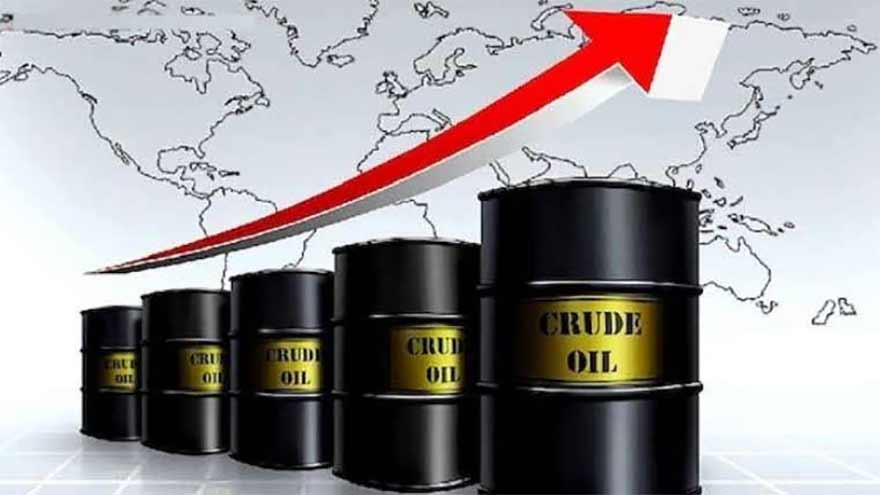
After the Iran-aligned Houthi rebels in Yemen claimed to have attacked Saudi Aramco, the kingdom’s state oil corporation, the price of oil increased internationally.
On October 4, Reuters reported that the Houthis claimed to have fired drones and ballistic missiles targeting Aramco installations in the Khurais region and in Riyadh, the Saudi capital.
Prices increased due to worries that Saudi Arabia, one of the main exporters of crude in the Middle East, would experience production disruptions.
Brent crude futures were up 81 cents, or 0.79%, at $103.06 per barrel as of 10:02 p.m. GMT. West Texas Intermediate crude futures in the United States increased by 46 cents, or 0.50%, to $91.57 per barrel.
One of Saudi Arabia’s primary oil-producing regions is Khurais, which the Houthis designated as a target.
Whether the attack actually damaged any infrastructure or interfered with the production of crude oil was not immediately apparent.

Pakistan test-fires upgraded Fatah-4 with enhanced precision and survivability

Syria, Saudi Arabia discuss reconstruction, investment

Vance says Iran must cut enrichment to end war

ICC board meeting in India: Mohsin Naqvi gets invitation

23 people have died during the monsoon as rain-related incidents plague Punjab and KP.

‘Self-Reliance in Digital ID’: NADRA launches locally produced QR code-based National Identity Card
-
 Latest News5 months ago
ICC board meeting in India: Mohsin Naqvi gets invitation
-
 Latest News3 months ago
23 people have died during the monsoon as rain-related incidents plague Punjab and KP.
-
 Latest News2 months ago
‘Self-Reliance in Digital ID’: NADRA launches locally produced QR code-based National Identity Card
-
 Business3 months ago
Govt dedicated to resolving Balochistan issues: Dar
-

 Latest News1 month ago
Turkish FM, Dar discuss regional trends, bilateral connections
-

 Latest News2 months ago
Pakistan making rapid progress in robotics, AI: Shaza Fatima
-

 Entertainment5 months ago
Interim bail given to YouTuber Rajab Butt in gambling app marketing case
-
 Latest News2 months ago
After a divorce, LHC decides that women who have been harmed by their spouses get their dower.