
Business
As the Middle East turmoil disturbs markets, Pakistan reduces its mango export objective by 30,000 tonnes.

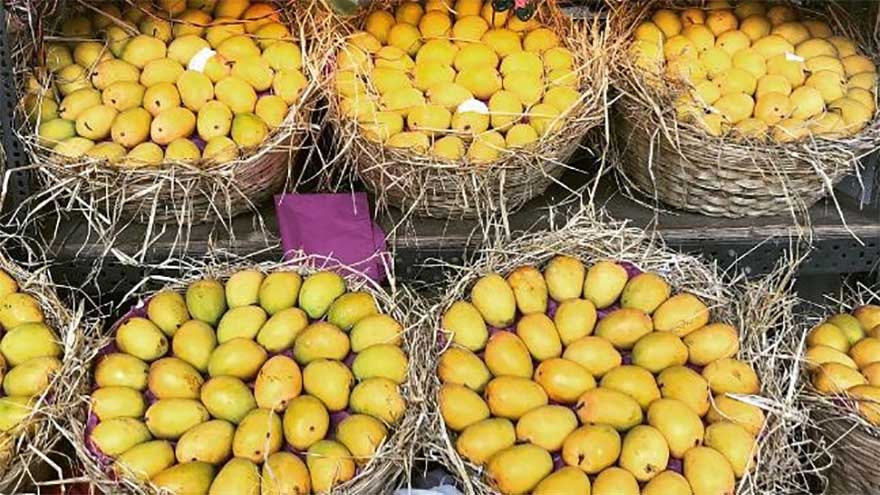
In response to the fact that one of Pakistan’s most lucrative fruit exports is being threatened by conflict-related interruptions across the Middle East, skyrocketing freight costs, and climate-related crop losses, Pakistan’s mango exporters have reduced their export objective for this year by 30,000 tonnes, which is roughly 30 percent.
According to the Pakistan Fruit and Vegetable Exporters, Importers and Merchants Association (PFVA), exporters now anticipate shipping 80,000 tonnes of mangoes this season, which is a decrease from 110,000 tonnes the previous year. Additionally, export earnings are projected to fall to between $75 million and $80 million, which is a decrease from approximately $110 million the previous year.
It was on Sunday that the first shipments of mangoes from Pakistan were sent to markets outside of Pakistan, marking the official beginning of the export season.
There are a number of mango varieties that are native to Pakistan, including Sindhri, Chaunsa, and Anwar Ratol. Pakistan is the fourth largest mango grower in the world. One of the most significant horticultural exports from the country is the fruit, and the Gulf states are the country’s most important trading partners in the international market.
According to a statement released by the Patron-in-Chief of the PFVA, Waheed Ahmed, “the export target has been reduced to 80,000 tonnes from 110,000 tonnes last year.” This decision was made in light of the enormous problems that are currently being faced by the trade.
As a result of tensions involving Iran, Israel, the United States, and the wider Middle East, shipping routes have been disrupted, cargo movements have been delayed, and transportation costs have sharply increased across a region that serves as Pakistan’s most important mango market. This reduction comes at a time when exporters are struggling to deal with the fallout of these tensions.
Approximately 35 percent of Pakistan’s mango exports are destined for the Gulf region. In addition, exporters utilise overland trade routes that pass through Afghanistan, which is Pakistan’s neighbour, in order to access Central Asian markets.
According to Ahmed, exporters have become cautious as a result of the uncertainty surrounding regional crises.
His statement was that the Gulf crisis was the primary cause of this situation.
“Access to Afghanistan is absolutely restricted. There is also a crisis in Iran. In addition, there is a conflict going on in the Middle East.
“We are unable to predict what will take place tomorrow.”
Exporters have reported that the unrest in the region has resulted in a significant increase in the expenses of shipping.
According to the PFVA, the number of dollars charged for sea freight to Gulf destinations increased from approximately $1,200 to $1,400 per container during the previous season to as high as $6,000 to $7,000. The prices of air freight have also increased by more than twofold, reaching approximately two dollars per kilogram.
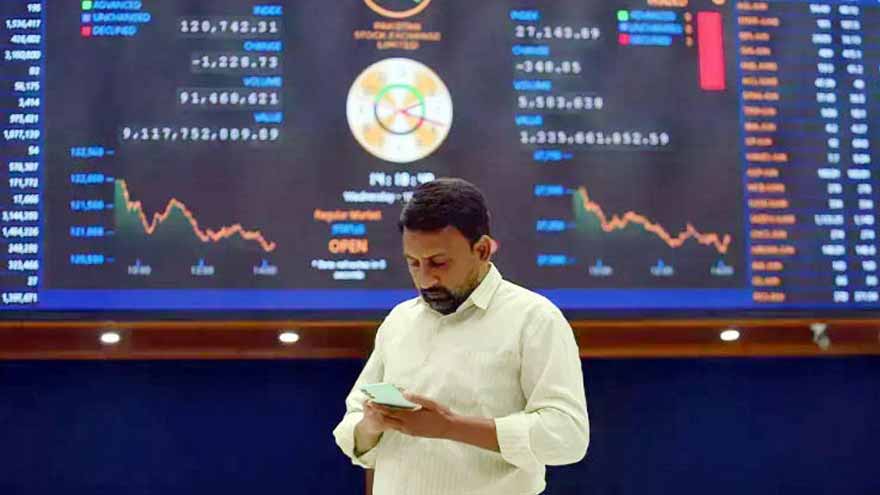
The Pakistan Stock Exchange (PSX) opened Tuesday’s trading session on a positive note, with the benchmark KSE-100 Index climbing more than 1,300 points.
The index surged to 164,368 points during early trading, reflecting a strong upward movement in the market.
In the previous session, the benchmark index had settled at 163,038 points.
The latest rally marks a positive start to the trading day, with the market gaining momentum after the previous session’s close.

Pakistan latest change in government gasoline prices has caused an increase in petrol and high-speed diesel prices and the cost of both major petroleum products has been increased ahead of Tuesday (October 27).
An official statement released by the Petroleum Division stated that the petrol price has been hiked by Rs1.54 per litre while high speed diesel (HSD) has become costlier by Rs2.16 per litre.
The price of petrol will be Rs379.25 per litre after the modification, while the new price of high speed diesel has been fixed at Rs395.82 per litre. The Oil and Gas Regulatory Authority (OGRA) has changed the ex-depot prices for October 27, 2026, and the revised rates have been calculated as per the petroleum pricing system of the government.
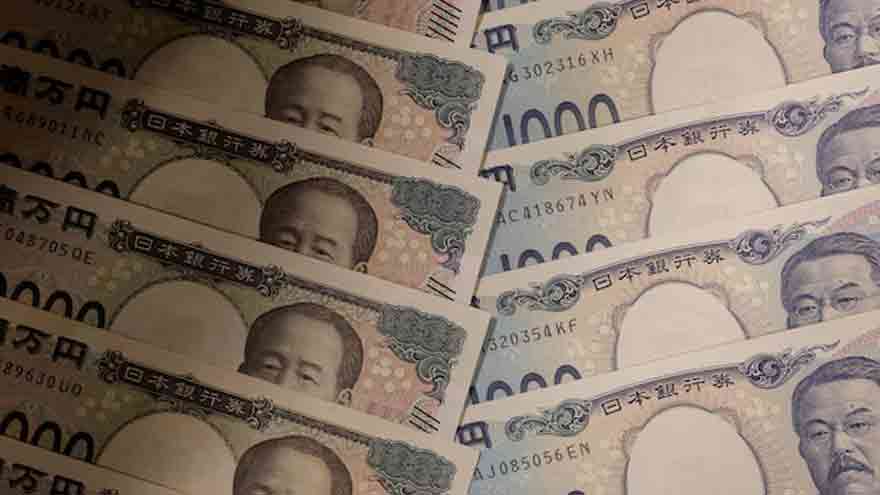
The Japanese yen eased against the US dollar on Tuesday, further eroding last week’s safe-haven gains, underpinned by a risk-on mood and a weaker euro ahead of key central bank meetings this week that will influence the global rates outlook.
The yen was 0.16% weaker at 157.73 per dollar, inching further away from the one-month high it touched last week ahead of the Bank of Japan policy decision later this week. The yen had lost ground on Monday too.
The BOJ is set to keep interest rates steady at 1.25% in a two-day meeting concluding on Friday, but signal its readiness to continue raising borrowing costs on mounting price pressures.
A key gauge of Japan’s service-sector inflation rose 3.7% in September from a year earlier, data showed on Tuesday, a sign of increasing price pressures that will likely keep the central bank on track for further interest rate hikes.
“We expect the BOJ will conclude that the underlying rate of consumer price inflation is at a level generally consistent with the 2% price stability target,” analysts at MUFG said in a note.
However, simply touching the target once is not enough, the analysts said, adding that the BOJ will now shift from a focus on the downside risks to inflation to a stance of monitoring risks in both directions.
The yen was among the best-performing major currencies last week, as AI jitters in the equity market spurred a haven rush into the currency.
Markets price slightly better-than-even odds of a December BOJ hike, so there is plenty of room for a rebound in the yen should Governor Ueda strike a hawkish note, said Ebury analysts in a note.
“We still favour another hike at the last meeting of the year, though whether the BOJ will be prepared to commit to that just yet is unclear.”
Apart from the BOJ, four other major central banks will announce policy decisions this week. The BOJ’s meeting follows that of the Fed, which is seen skipping a hike at its two-day meeting concluding on Wednesday.
The video player is currently playing an ad. You can skip the ad in 5 sec with a mouse or keyboard
The European Central Bank is also set to keep rates unchanged at 2.5% on Thursday. New Zealand’s and Canada’s central banks are expected to raise rates this week.
DOLLAR FIRMS ON RISK-APPETITE REVIVAL
The dollar index held steady near a one-week high on Tuesday at 102.04 as a tech-led rebound on Wall Street revived appetite for risk, while investors await megacap earnings and the US midterm elections.
Risk appetite returned overnight after Anthropic’s IPO filing and Meta’s (META.O), opens new tab $95 billion equity plan rekindled the artificial intelligence trade.
The dollar was also underpinned by a weaker euro , which fell to a near two-week low against the greenback as worries over France’s fiscal health piled pressure on the single currency. The euro last fetched $1.1165, down about 1.4% this month.
A selloff in French government bonds that drove the country’s debt-risk premium to its highest since the 2011 sovereign debt crisis has rekindled concerns about financial stress across the euro zone.
The Brazilian real stabilised after it fell sharply against the US dollar after President Luiz Inacio Lula da Silva won a historic fourth term on Sunday against Senator Flavio Bolsonaro, the eldest son of former President Jair Bolsonaro.

PSX opens on a positive note, gains over 1,300 points in early trading

Pakistan squad announced for ICC Women’s Emerging Nations Trophy

Saudi-led coalition says it intercepted Houthi missiles, drones attacking kingdom

ICC board meeting in India: Mohsin Naqvi gets invitation

‘Self-Reliance in Digital ID’: NADRA launches locally produced QR code-based National Identity Card

23 people have died during the monsoon as rain-related incidents plague Punjab and KP.
-
 Latest News5 months ago
ICC board meeting in India: Mohsin Naqvi gets invitation
-
 Latest News2 months ago
‘Self-Reliance in Digital ID’: NADRA launches locally produced QR code-based National Identity Card
-
 Latest News3 months ago
23 people have died during the monsoon as rain-related incidents plague Punjab and KP.
-

 Latest News2 months ago
Turkish FM, Dar discuss regional trends, bilateral connections
-

 Business3 months ago
Govt dedicated to resolving Balochistan issues: Dar
-

 Latest News3 months ago
Pakistan making rapid progress in robotics, AI: Shaza Fatima
-

 Entertainment5 months ago
Interim bail given to YouTuber Rajab Butt in gambling app marketing case
-

 Latest News3 months ago
After a divorce, LHC decides that women who have been harmed by their spouses get their dower.