
Latest News
Pakistan passport among world’s poorest travel documents, ranked 101st globally

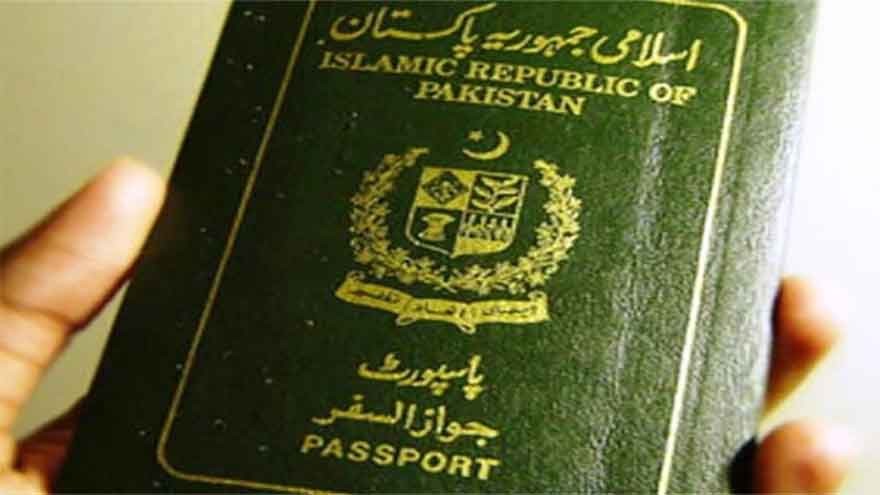
Pakistan’s passport has slid down a notch to 101st place in the 2016 Henley Passport Index – maintaining its position as the fourth weakest passport in the world. Pakistani citizens can access just 29 places visa-free or visa on arrival.
The 2018 Henley Passport Index, published on Tuesday, rated Pakistan at 101st out of 199 passports measured for worldwide travel freedom across 227 destinations.
The fall followed a reduction in the number of countries providing visa-free and visa-on-arrival access from 30 in May to 29 in July, causing Pakistan to slide one place from its prior rank of 100.
The index shows that Pakistani passport holders can travel to places like Barbados, Dominica, Haiti, Micronesia, Montserrat, Rwanda, St. Vincent and the Grenadines, The Gambia, Trinidad and Tobago, Vanuatu and the Cook Islands without a visa.
Visa on arrival is offered in Cambodia, Maldives, Nepal, Madagascar, Mozambique, Palau, Samoa, Senegal, Sierra Leone and Timor-Leste, while electronic travel authorisations can be obtained for Kenya, Seychelles and Sri Lanka.
The report said that Cape Verde, Mozambique and Qatar no longer offer visa-free or visa-on-arrival entrance to Pakistani passport holders, adding to the latest reduction in travel access.
The drop in travel mobility over the last few months saw Pakistan rank 98th in March with access to 31 locations, and 97th in February with 32 destinations.
Pakistan’s passport ranking is better than 2021, when the country was placed 113th in the world, yet it faced another setback. The country was placed 107th in 2021, 109th in 2022, and 100th in 2023 and 2024.
Pakistan is only ranked below Afghanistan, Iraq and Syria in the global passport index, whereas Yemen has moved one spot above Pakistan with visa-free or visa-on-arrival access to 30 destinations.
Singapore had the world’s most powerful passport at the top of the rankings, allowing entry to 192 places without a prior visa. Japan, South Korea and the United Arab Emirates were tied for second position, with access to 188 destinations, while Sweden was third, with 187.
Passport holders can visit without a prior visa (visa-free, visa on arrival and electronic travel authorisation arrangements) and ranks the world’s passports relative to other countries.
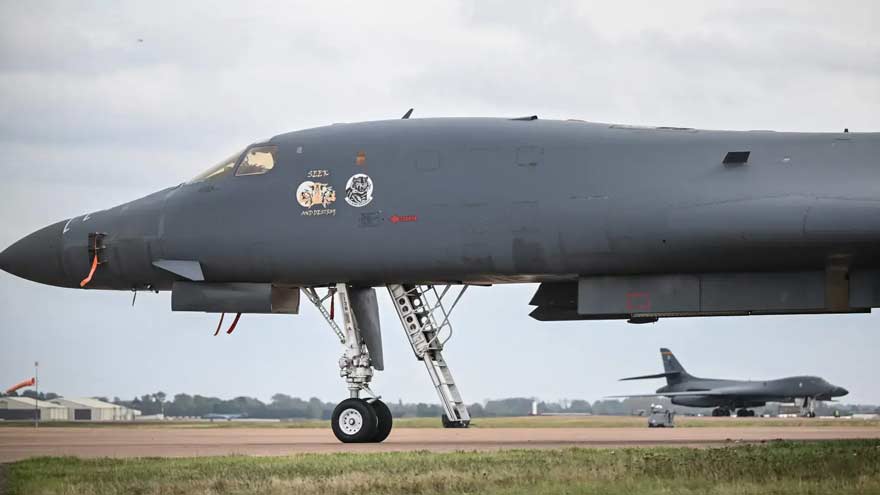
Iran categorically denied involvement on Monday in a suspected plot to attack a British airbase used by the United States to strike Iranian sites, just as British police announced they were releasing on bail five men arrested over explosives and terrorism offences.
In a statement on X, Iran’s embassy in London said it “categorically rejects and strongly condemns the recent unfounded and malicious speculations”.
It said claims in the British media linking Tehran to the incident would only fuel “Iranophobia propaganda” in the UK.
The five men, British nationals from London in their mid-20s, were arrested early on Sunday after police were alerted to three suspicious white vans heading towards RAF Fairford in Gloucestershire, which houses US bombers that fly missions against Iran.
Police said on Monday the men had been released on bail after extensive interviews and inquiries. But Laurence Taylor, the assistant commissioner and head of Counter Terrorism Policing, said this did not mean the investigation was over.
Officers were considering the incident “from every possible angle”, he told reporters, “including that this may be activity committed by proxies, or individuals either knowingly or unknowingly, working on behalf of a foreign state”.
Counter Terrorism Policing Senior National Coordinator Vicki Evans said she was aware of speculation about the motive and geopolitical questions that were being raised, but asked that police be given “the space to work carefully and clearly”.
Meanwhile, British Prime Minister Andy Burnham called an emergency meeting of senior officials to ensure they had “the full picture”. He pulled out of several events at Labour’s annual conference on Sunday to monitor the situation.
Authorities have not confirmed the exact nature of the threat. A bomb disposal robot was seen operating around the vans, which were examined by forensic experts with military support. Armed police guarded the main entrance to the base while heavy machinery blocked other access points.
A farmer from the nearby village of Whelford, who alerted police after seeing “hooded and masked men” running into fields, said she believed her 999 call had foiled any plot. Speaking anonymously, she said she believed police had “dropped the ball” over the threat.
The defence secretary, Wes Streeting, told the BBC the farmer had only a “partial picture” of the investigation. He declined to speculate about motives during a live inquiry but said the UK faced a general threat from Iran.
“We know that Iran and their proxies wish to do us harm,” he said. “We know that they hate our democracy, and we know that we regularly have to thwart Iranian attempts to threaten either our interests or indeed our allies.”
After the Fairford arrests, the US Embassy issued a security alert saying US citizens should “exercise caution” and be “mindful of personal security”. Security was stepped up at other US airbases in Britain. Donald Trump, speaking during a visit to Chicago on Sunday, said the suspects had been looking to do “big damage to our fort” and had been under investigation by British and American authorities.
“You’ll be hearing about it very soon. We caught them,” the US president said, appearing to nod when asked about an Iranian connection.
In March, the UK government authorised the US to use bombers based at Fairford to strike Iranian missile sites that were attacking ships in the Strait of Hormuz.
After the arrests, police put a 400-metre cordon around the base and evacuated residents from 85 homes. The home secretary, Shabana Mahmood, said on Monday afternoon that the scene was now safe and residents would shortly be able to return.
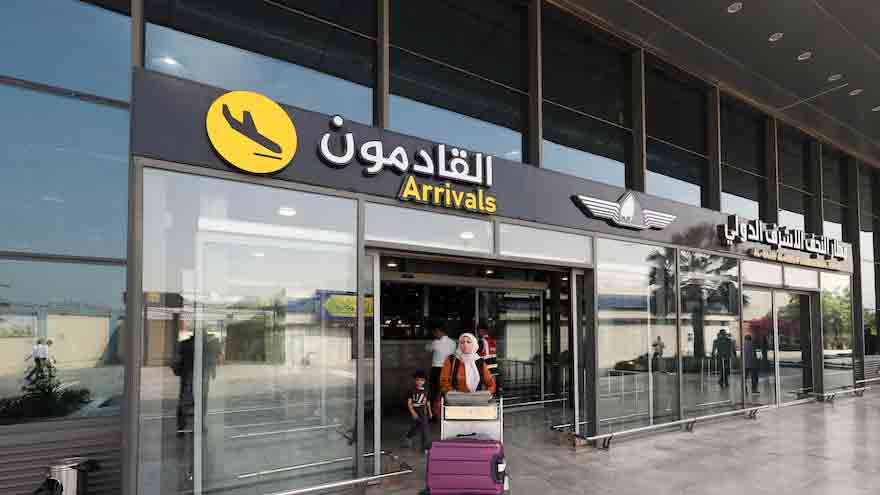
US President Donald Trump’s administration was set to grant a limited waiver to its Iran sanctions program on Monday to allow for flights carrying Shi’ite Muslim religious pilgrims between Iran and Iraq, a person with direct knowledge of the matter said.
The source, who is involved in the deliberations, said the US Treasury Department waiver would allow Iraqi Airways to fly back and forth between Iran and the Shi’ite holy city of Najaf in Iraq for one month, with a more permanent waiver potentially following.
Iraq halted flights to and from Iran on Friday, in line with US sanctions.
The source said the move aimed to ease pressure on the Iraqi government of Prime Minister Ali al-Zaidi, who has sought to deepen ties with Washington while also balancing a strong relationship with Iraq’s influential neighbour, Iran.
Trump’s effort to impose a crippling economic blockade on Iran is forcing regional governments to scale back ties with Iran, creating potential backlash against those states, particularly those that balance their ties with both Washington and Tehran.
Zaidi’s office over the weekend said that Iraq was seeking an exemption for travel between Iran and Iraq for medical treatment, education and pilgrimage.
An Iraqi official said the Iraqi government was in talks with the US about the Najaf exemption and expected flights between Iran and Najaf to resume within 48 hours.
The US State Department referred questions to the Treasury Department, which did not immediately respond to a request for comment.
In recent days, countries including Turkey, the UAE and Iraq have cancelled direct flights with Iran as a result of US pressure. In response, Iranian officials have threatened to halt regional air travel if Iran’s air links continued to be cut.
With Shi’ite religious pilgrims travelling between Iran and Iraq each year to visit key shrine cities, Iraq is perhaps in the most sensitive position.
Najaf, a center for religious study, draws millions of pilgrims a year to the shrine of Imam Ali, the first Shi’ite leader, and the world’s largest and oldest active Islamic cemetery.
U.S. President Donald Trump on Saturday said he rejected an Iranian proposal to reopen the Strait of Hormuz and end fighting in the Middle East.
The source said that barring flights between the two countries could cause severe backlash against Iraq’s government by uniting Shi’ites who follow Iran’s supreme leader and those who follow Iraq’s Grand Ayatollah Ali al-Sistani, undermining US efforts to reduce Iranian influence in Iraq.
Zaidi has offered to provide safeguards for the flights, including rigorous screening and information sharing as well as ensuring the flights are not used for transfer of weapons, sanctioned individuals or illicit money, the source said.
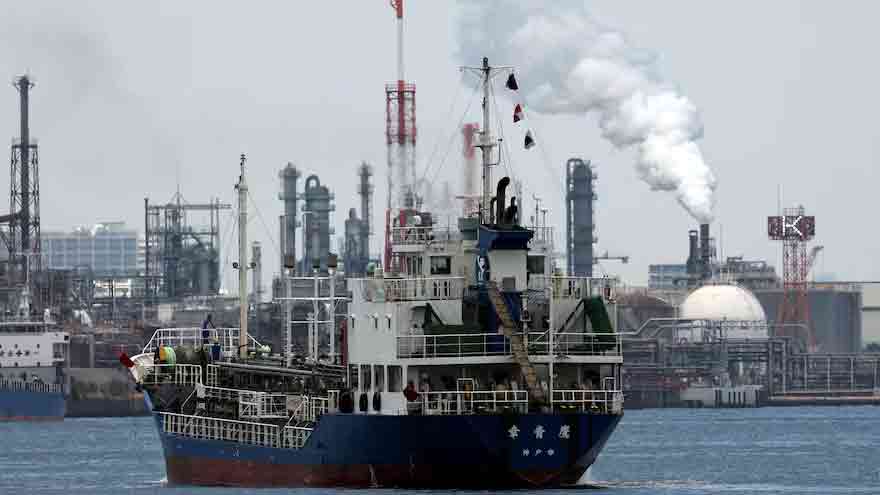
Oil prices increased for a second straight session on Tuesday as ongoing fears of Middle East supply disruption due to US-Iran tensions overshadowed signals of recovering crude supplies from the region.
Brent crude futures were up $1.49, or 1.4%, at $106.77 a barrel by 0326 GMT while US West Texas Intermediate crude was at $93.94, up $1.34, or 1.5%. Both benchmarks finished the last session with gains of around $1 a barrel.Higher volumes of oil exports are increasingly visible exiting the Gulf, but much of the growth still depends on workarounds such as ship-to-ship transfers. “The methods are less efficient, more costly than normal operations, which is why crude prices remain elevated,” KCM Trade chief analyst Tim Waterer said.
Crude exports from major Middle Eastern producers jumped to 12.8 million barrels a day in September, the highest since February, aided by higher shipments from Saudi Arabia and the United Arab Emirates, preliminary statistics from data source Kpler showed on Monday.
U.S. and Iranian officials separately spoke to mediators in a renewed effort to end seven months of hostilities, officials from both nations said. Further talks are widely expected to focus on a revised version of a seven-day proposal Iran submitted last week on the margins of the United Nations General Assembly.“The dominant risk remains the US-Iran standoff and its implications for energy prices and inflation expectations,” UOB analysts said in a client note.Iranian officials have allegedly been pessimistic about striking a compromise before the Strait of Hormuz crisis worsens further, keeping oil supply uncertainties elevated.”
The conflict that started in late February with US and Israeli strikes on Iran has turned the spotlight onto the Strait of Hormuz, a vital shipping path for oil and gas supplies that has been thrown into chaos and shaken up energy markets.
Meanwhile, the US is weighing regulatory relief to enable wider sales of red-dyed diesel to help decrease prices, a move that might allow some consumers to escape federal fuel tax, people familiar with discussions told Reuters. The proposal came after days of negotiations as a key alternative to a ban on fuel exports.

Iran denies role in bomb scare at British airbase

U.S. to let flights between Iran and Iraq’s Najaf under sanctions waiver: source

Oil prices rise for second session on continued Middle East supply concern

ICC board meeting in India: Mohsin Naqvi gets invitation

23 people have died during the monsoon as rain-related incidents plague Punjab and KP.

‘Self-Reliance in Digital ID’: NADRA launches locally produced QR code-based National Identity Card
-
 Latest News5 months ago
ICC board meeting in India: Mohsin Naqvi gets invitation
-
 Latest News2 months ago
23 people have died during the monsoon as rain-related incidents plague Punjab and KP.
-
 Latest News1 month ago
‘Self-Reliance in Digital ID’: NADRA launches locally produced QR code-based National Identity Card
-
 Business2 months ago
Govt dedicated to resolving Balochistan issues: Dar
-

 Latest News2 months ago
Pakistan making rapid progress in robotics, AI: Shaza Fatima
-
 Latest News2 months ago
After a divorce, LHC decides that women who have been harmed by their spouses get their dower.
-

 Entertainment4 months ago
Interim bail given to YouTuber Rajab Butt in gambling app marketing case
-

 Latest News1 month ago
Turkish FM, Dar discuss regional trends, bilateral connections