
Latest News
Govt to deploy 286 early warning systems in GB, KP to fight glacier floods

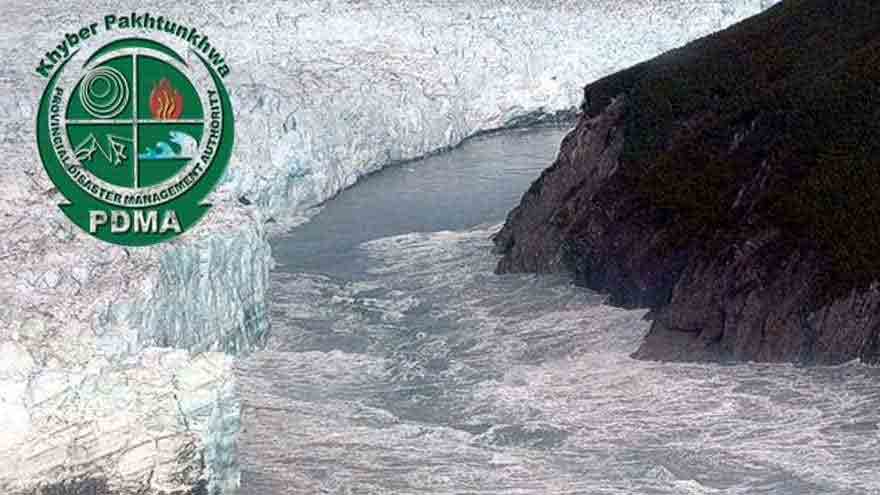
Pakistan is installing 286 early warning systems in its northern Gilgit-Baltistan region and the northwestern Khyber Pakhtunkhwa (KP) province under a $37 million GLOF-II project, Pakistani state media reported on Sunday, amid government efforts to strengthen preparedness against glacial lake outburst floods and other climate hazards.
Pakistan is considered one of the most vulnerable nations to climate change and has experienced increasingly erratic weather events, including heatwaves, droughts, cyclones, extreme rainfall and floods.
This year, at least 155 people have been killed and more than 460 others injured in heavy rains and floods since the beginning of the monsoon season in June, according to the National Disaster Management Authority.
The government is installing early warning systems in 24 vulnerable valleys, of which 18 are in Gilgit-Baltistan and six in Khyber Pakhtunkhwa, the state-run Associated Press of Pakistan (APP) news agency reported, citing a document.
“The document puts the total cost of the project at $37 million,” the report read.
Funded by the United Nations (UN) Adaptation Fund, the GLOF-I project ran from 2011 to 2016 to help safeguard vulnerable communities in Gilgit-Baltistan and KP’s Chitral against glacial floods.
Monsoon rains and flooding killed more than 1,000 people and caused widespread damage to homes, roads, agricultural land and public infrastructure in Pakistan last year, with Punjab among the hardest-hit provinces.
In 2022, record monsoon rains and glacial melt triggered catastrophic floods that killed more than 1,700 people, affected over 33 million people and caused an estimated $30 billion in economic losses, making it one of Pakistan’s worst natural disasters.
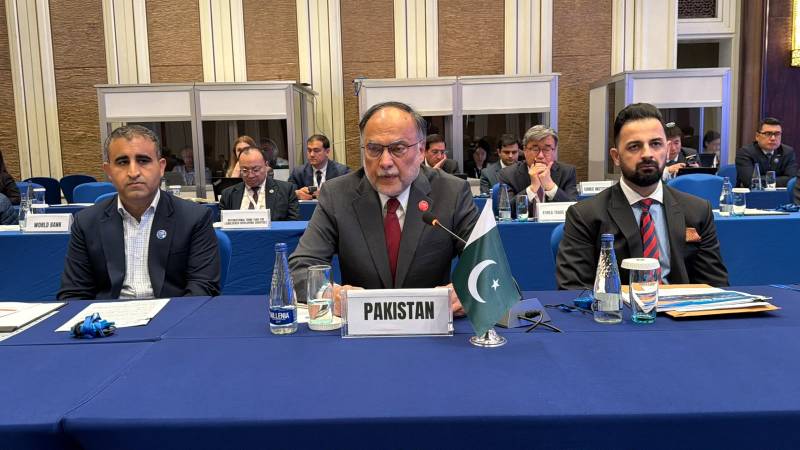
Federal Minister for Planning, Development and Special Initiatives Ahsan Iqbal claimed that Pakistan would assume the presidency of the Central Asia Regional Economic Cooperation (CAREC) Program in 2027 and host the 26th CAREC Ministerial Conference,
Speaking at the 25th CAREC Ministerial Conference in Ulaanbaatar, Mongolia, Iqbal urged for CAREC transport routes to be turned into next-generation economic corridors by integrating infrastructure, logistics, digital connection, energy cooperation and climate resilience.
The 25th ministerial conference is taking place in Ulaanbaatar from September 29 to October 2.
“CAREC Corridors 5 and 6 offer Pakistan an opportunity to link Central Asian markets to the Arabian Sea and boost more economic activity along the routes,” Iqbal remarked.
“Rather than just allowing trucks to go through the corridors, the emphasis should be on allowing businesses to use the corridors reliably, competitively and profitably,” he said.
This will entail upgrading the CAREC highways, modernizing border facilities at Torkham and Chaman, enhancing rail freight capacity with the proposed ML-1 expansion and improving the connectivity with dry ports and seaports, added the minister.
Iqbal highlighted the need for a digital corridor across the CAREC region and said Pakistan’s Single Window system could be a basis for incremental digital integration with regional partners.
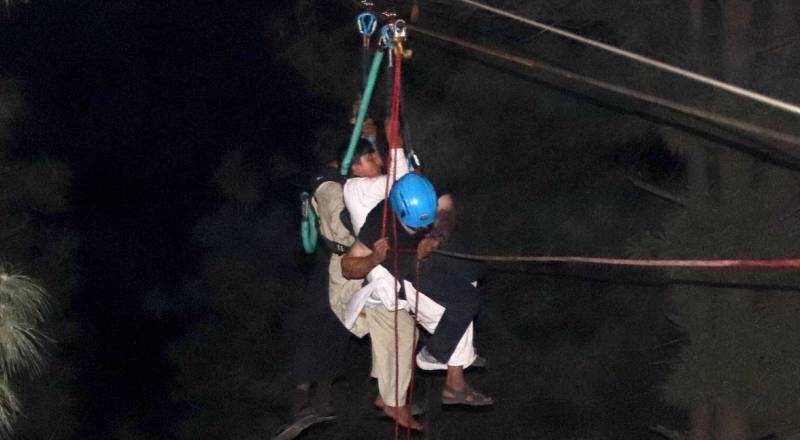
Shau district of Kalam in Upper Swat: Four persons including two ladies and a child were successfully rescued from a chairlift, Rescue 1122 and other relevant department teams reached the area with rescue equipment as soon as they got the report and concluded the rescue operation.
Residents also joined the rescue operation, with heavy machinery from the Upper Swat Development Authority, cranes, police and the district government participating.
Assistant Commissioner Kalam was the supervisor of the rescue operation.
Earlier in December 2025, four persons including a mother and a child were stranded in a chairlift (doli) in the Bahrain area of Swat River.
“The family was crossing the river when the chairlift suddenly stopped in the middle of the stream due to a technical fault,” a representative of Rescue 1122 said.
Rescue teams arrived and evacuated all four people safely.
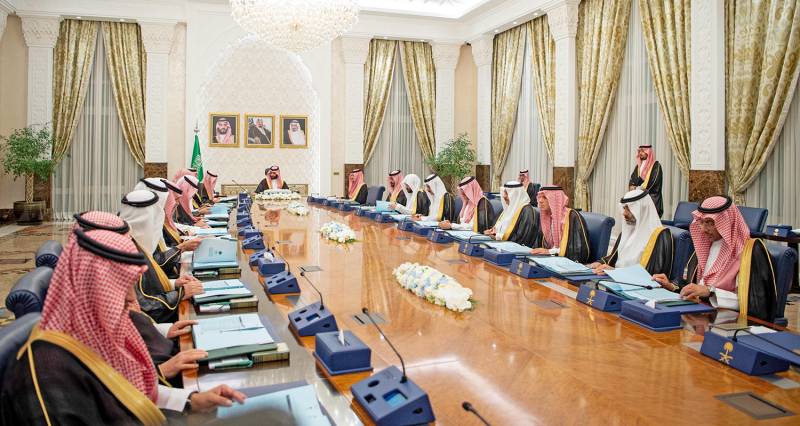
Under the chairmanship of Crown Prince Mohammed bin Salman, Saudi Arabia’s Cabinet evaluated the progress made in establishing the secretariat of the Makkah Joint Defense Agreement. Riyadh, Islamabad and Ankara are continuing their efforts to bolster defense cooperation. The Cabinet also reviewed developments in defense cooperation between Saudi Arabia, Pakistan and Turkey, as well as regional and international security issues.
The three countries signed the Makkah Joint Defense Agreement in August, pledging to work more closely together on collective security and defense. The pact specifies that an armed attack against any of the three is to be treated as an attack against all three.
The latest Cabinet discussions followed a meeting on Friday in Riyadh of the defense chiefs and chiefs of general staff of Saudi Arabia, Pakistan and Türkiye.
The military commanders examined dangers facing Saudi Arabia and discussed measures to enhance intelligence sharing, military coordination, and integration of defense capabilities.

Pakistan to assume CAREC chairmanship in 2027, host 26th Ministerial Conference

Four people including a child rescued from chairlift in Kalam

Saudi Cabinet reviews progress on Makkah defence agreement with Pakistan, Türkiye

ICC board meeting in India: Mohsin Naqvi gets invitation

23 people have died during the monsoon as rain-related incidents plague Punjab and KP.

‘Self-Reliance in Digital ID’: NADRA launches locally produced QR code-based National Identity Card
-
 Latest News5 months ago
ICC board meeting in India: Mohsin Naqvi gets invitation
-
 Latest News2 months ago
23 people have died during the monsoon as rain-related incidents plague Punjab and KP.
-
 Latest News2 months ago
‘Self-Reliance in Digital ID’: NADRA launches locally produced QR code-based National Identity Card
-
 Business2 months ago
Govt dedicated to resolving Balochistan issues: Dar
-
 Latest News2 months ago
Pakistan making rapid progress in robotics, AI: Shaza Fatima
-
 Latest News1 month ago
Turkish FM, Dar discuss regional trends, bilateral connections
-
 Latest News2 months ago
After a divorce, LHC decides that women who have been harmed by their spouses get their dower.
-

 Entertainment4 months ago
Interim bail given to YouTuber Rajab Butt in gambling app marketing case