
Business
Food costs go up across Pakistan, making vegetables, meat and bread expensive

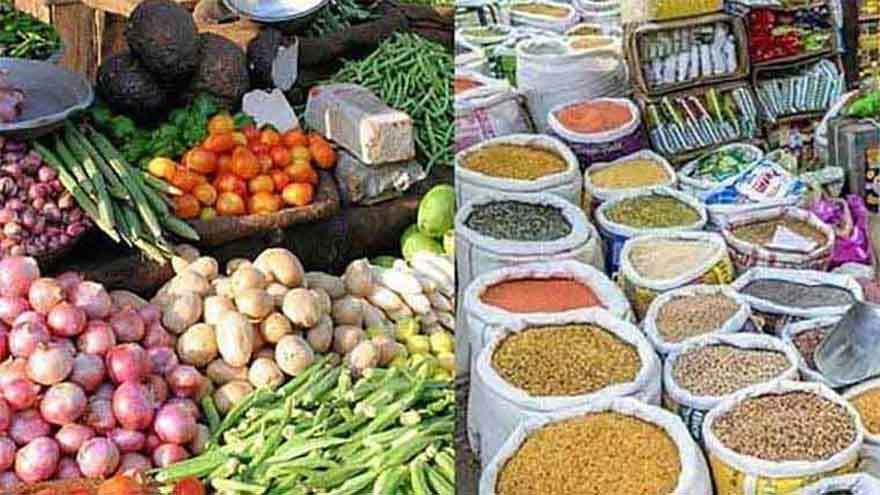
Consumers across Pakistan are facing higher food prices as the cost of vegetables, fruits, meat and flour has increased in several major cities, adding to pressure on household budgets.
In Lahore, vegetable prices remained above officially notified rates, with consumers complaining that market prices were higher despite government price lists. Onions, for instance, were officially priced at Rs195 per kilogram but were being sold for around Rs200 per kg in the market.
Tomatoes had an official rate of Rs150 per kg, while capsicum was being sold at Rs280, bitter gourd at Rs220 and cauliflower at Rs180 per kg, according to the reported market prices.
The situation was also reported in Faisalabad, where meat prices were significantly higher than the notified rates. Beef was being sold for around Rs1,500 per kg, compared with an official rate of Rs1,150.
Mutton prices saw an even larger difference, reaching approximately Rs3,000 per kg in the market against the notified price of Rs2,100 per kg.
The increase in meat prices has added to the financial burden on consumers, particularly households that have already been dealing with higher prices of essential food items.
In Peshawar, the price of flour also increased. The price of a 20-kilogram bag of fine flour reportedly rose by Rs100 to Rs3,150.
Consumers in Quetta also faced higher vegetable prices. Tomatoes reportedly became Rs40 per kg more expensive, while onion prices increased by Rs20 per kg. Okra prices rose by Rs30 per kg, while peas became Rs50 per kg more expensive.
The latest increases have renewed concerns among consumers about the gap between officially notified prices and actual retail market rates.
Official price lists are generally issued by district administrations and relevant authorities to regulate the prices of essential commodities. However, enforcement remains a challenge when retailers sell goods above notified rates.
For consumers, food inflation has a direct impact on household expenditure because vegetables, flour and meat form a significant part of daily food consumption. Higher prices can force families to reduce purchases, switch to cheaper alternatives or allocate a larger share of their income to food.
The price differences reported in different cities also reflect the varying supply and demand conditions in local markets. Transportation costs, availability of produce, seasonal changes and wholesale market prices can influence retail rates.
Authorities routinely conduct inspections and impose fines against retailers accused of overcharging, but consumers frequently complain that official rates are not consistently reflected in markets.
The latest rise in food prices comes as households continue to closely monitor the cost of essential commodities. Any sustained increase in food prices could further increase pressure on family budgets and household purchasing power.
Market conditions and government enforcement measures will determine whether the current price increases ease in the coming days.

— The Pakistan Stock Exchange (PSX) kicked off on a bullish note on Tuesday with the benchmark KSE-100 Index rising more than 400 points in early trade.
The index rose to 166,425 points at the start of the second trading session of the business week, indicating better market performance.
The KSE-100 Index closed down 453 points at 165,966 points in the last trading session.
The benchmark index turned positive during early trading after falling in the previous session. The latest gains were made as the benchmark index went into positive territory during early trading.

The dollar rose from near its lowest levels of the month at the start of trading in Asia on Monday, as violent protests in France put pressure on the euro.
The euro was 0.1% down at $1.1225 at the start of Asian trading. The dollar index was most heavily weighted toward the common currency and its decline helped calm the greenback, which was trading flat at 101.83.
French President Emmanuel Macron criticised “shocking” displays of violence on the fringes of protests over the cost of living in a televised speech to the country on Sunday, a day after France had one of its worst days of unrest in years.‘The weekend disturbance does matter for the euro mostly through French bonds rather than directly,’ Kieran Williams, head of Asia FX at InTouch Capital Markets in London, said.
Bank of Japan Governor Kazuo Ueda said on Monday underlying inflation is “quite close” to the central bank’s 2% objective, with the US dollar unchanged at 158.00 yen on the yen.
The U.S. dollar was unchanged at 6.6842 yuan in offshore trade ahead of the announcement of Chinese third-quarter GDP statistics. China’s economy likely improved marginally in the time from a more-than three-year low.
A lot of attention in emerging market Asia will be on the Indonesian rupiah, after a threat from MSCI to downgrade the nation’s stock market to “standalone” status last week sent shares into an 11.6% plunge. The rupiah closed at 18,000 versus the dollar on Friday, its lowest in nearly three months.
The Australian dollar was 0.3% higher at $0.6965 and the kiwi was steady at $0.5656. The British pound stayed steady at $1.3329.
Oil prices fell when Asian trade began on Monday, with Brent oil futures down 1.7% at $108.02, after US President Donald Trump waived sanctions and tariffs on Russia that may lead to additional Russian fuel shipments.

Pakistani freelancers created a new record in the country’s digital economy by earning the most amount of foreign currencies in September 2026.
Figures indicate exports by freelancers hit a record $197 million last month, up 49 percent year-on-year and 11 percent month-on-month in September 2026.
Pakistani freelancers have exported services worth $550 million from July to September 2026, representing a substantial 46% growth in export profits in the first quarter of the current fiscal year.
Note that before, Pakistani freelancers earned foreign currencies of $1.76 billion in the fiscal year 2025-26.

Govt Hajj scheme 2027: Second instalment payment deadline falls today

PSX gains over 400 points at opening

NAB summons special assistant to dysfunctional CM Afridi in corruption inquiry

ICC board meeting in India: Mohsin Naqvi gets invitation

‘Self-Reliance in Digital ID’: NADRA launches locally produced QR code-based National Identity Card

23 people have died during the monsoon as rain-related incidents plague Punjab and KP.
-
 Latest News5 months ago
ICC board meeting in India: Mohsin Naqvi gets invitation
-
 Latest News2 months ago
‘Self-Reliance in Digital ID’: NADRA launches locally produced QR code-based National Identity Card
-
 Latest News3 months ago
23 people have died during the monsoon as rain-related incidents plague Punjab and KP.
-

 Latest News2 months ago
Turkish FM, Dar discuss regional trends, bilateral connections
-

 Business3 months ago
Govt dedicated to resolving Balochistan issues: Dar
-

 Latest News3 months ago
Pakistan making rapid progress in robotics, AI: Shaza Fatima
-

 Entertainment5 months ago
Interim bail given to YouTuber Rajab Butt in gambling app marketing case
-

 Latest News3 months ago
After a divorce, LHC decides that women who have been harmed by their spouses get their dower.