
Business
Food costs go up across Pakistan, making vegetables, meat and bread expensive

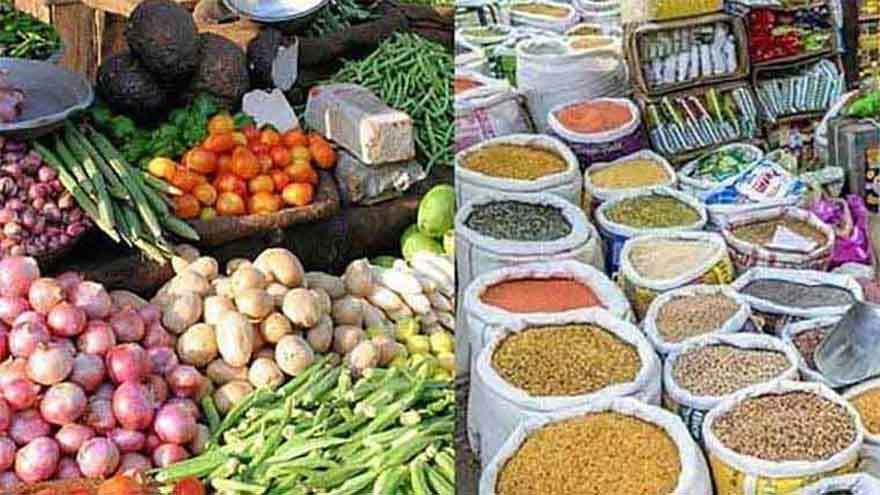
Consumers across Pakistan are facing higher food prices as the cost of vegetables, fruits, meat and flour has increased in several major cities, adding to pressure on household budgets.
In Lahore, vegetable prices remained above officially notified rates, with consumers complaining that market prices were higher despite government price lists. Onions, for instance, were officially priced at Rs195 per kilogram but were being sold for around Rs200 per kg in the market.
Tomatoes had an official rate of Rs150 per kg, while capsicum was being sold at Rs280, bitter gourd at Rs220 and cauliflower at Rs180 per kg, according to the reported market prices.
The situation was also reported in Faisalabad, where meat prices were significantly higher than the notified rates. Beef was being sold for around Rs1,500 per kg, compared with an official rate of Rs1,150.
Mutton prices saw an even larger difference, reaching approximately Rs3,000 per kg in the market against the notified price of Rs2,100 per kg.
The increase in meat prices has added to the financial burden on consumers, particularly households that have already been dealing with higher prices of essential food items.
In Peshawar, the price of flour also increased. The price of a 20-kilogram bag of fine flour reportedly rose by Rs100 to Rs3,150.
Consumers in Quetta also faced higher vegetable prices. Tomatoes reportedly became Rs40 per kg more expensive, while onion prices increased by Rs20 per kg. Okra prices rose by Rs30 per kg, while peas became Rs50 per kg more expensive.
The latest increases have renewed concerns among consumers about the gap between officially notified prices and actual retail market rates.
Official price lists are generally issued by district administrations and relevant authorities to regulate the prices of essential commodities. However, enforcement remains a challenge when retailers sell goods above notified rates.
For consumers, food inflation has a direct impact on household expenditure because vegetables, flour and meat form a significant part of daily food consumption. Higher prices can force families to reduce purchases, switch to cheaper alternatives or allocate a larger share of their income to food.
The price differences reported in different cities also reflect the varying supply and demand conditions in local markets. Transportation costs, availability of produce, seasonal changes and wholesale market prices can influence retail rates.
Authorities routinely conduct inspections and impose fines against retailers accused of overcharging, but consumers frequently complain that official rates are not consistently reflected in markets.
The latest rise in food prices comes as households continue to closely monitor the cost of essential commodities. Any sustained increase in food prices could further increase pressure on family budgets and household purchasing power.
Market conditions and government enforcement measures will determine whether the current price increases ease in the coming days.
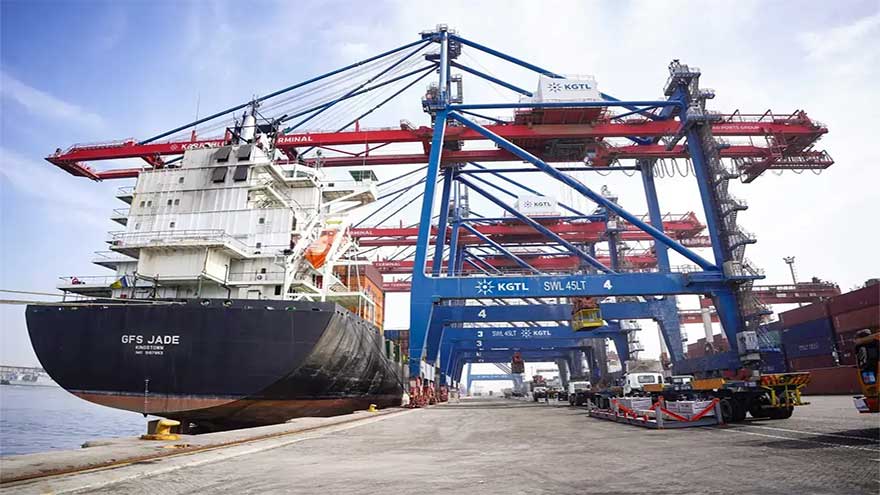
A Saudi business delegation led by Prince Mansoor bin Mohammed Al Saud has expressed interest in investing in Karachi’s port infrastructure, logistics links and green initiatives, Pakistani authorities said Monday, as Islamabad seeks to expand maritime cooperation with its longtime Gulf ally.
The visit comes amid efforts by Pakistan and Saudi Arabia to expand economic partnership from traditional trade, remittances and financial support to investment-based cooperation in infrastructure, energy and other areas. Pakistan is also seeking to modernize its ports, improve connections with land transport networks and expand transshipment operations to strengthen its position in regional trade.
Prince Mansoor, Chairman of the Saudi Arabian Chapter of the Saudi-Pakistan Joint Business Council, led a high-level corporate delegation to Karachi Port Trust (KPT), Port Qasim and South Asia Pakistan Terminals Limited, where officials were briefed on investment opportunities and ongoing modernization projects.
The briefings focused on the proposed 140-acre Maritime Business District in Karachi and the development of Manora Shipyard.
“Prince Mansour expressed keen interest in KPT’s Maritime Business District, Green port initiatives, terminal infrastructure expansion and connectivity initiatives, recognizing their scope for mutually beneficial Saudi investment and joint ventures,” the KPT said in a statement. The Saudi-Pakistan Joint Business Council serves as a platform for companies and investors from both countries to identify commercial opportunities, develop partnerships and form joint ventures. Prince Mansour has led several delegations to Pakistan as the two governments seek to translate their long-standing political and defense ties into greater private sector investment. In June, KPT signed a memorandum of understanding with its Saudi Arabian and Pakistani partners to explore the development of a maritime business zone on MT Khan Road in Karachi.
The proposed development involves the Saudi Arabian Business Council – Najd Gateway Holding Company, Arif Habib Dolmen REIT Management Limited and a consortium of Pakistani companies and is intended to accommodate commercial and maritime businesses.

The Pakistan Stock Exchange (PSX) opened in positive territory on Wednesday with the benchmark KSE-100 gaining 309 points in early trade.
The index rose to 179,600 points, continuing the upward momentum in the market at the start of the third trading day of the business week.
The latest gains follow a strong performance in the previous session, when the stock market maintained its upward trend throughout trading.
At the close of Tuesday’s session, the KSE-100 Index had surged by 5,448 points to settle at 179,335 points.

A joint council of Saudi Arabian and Pakistani investors launched a private equity fund on Monday as part of the countries’ broader push to deepen two-way trade and private sector investment.
The Saudi-Pakistan Joint Business Council, formed by the governments of both countries, said the fund’s initial size is “multi hundred million”, which is expected to expand based on opportunities across sectors.
Three-fourths of the fund will be invested in Pakistan, while the rest will be invested in Saudi Arabian projects, the council said in a statement.
The launch of the fund comes at a time when Islamabad and Riyadh are deepening longstanding ties, especially in defense, amid few signs of a breakthrough in the months-long US-Iran conflict.

IHC direct Islamabad administration to issue domicile to Lakki Marwat citizen

PM Shehbaz to address COP31 summit in Turkiye, hold key meetings with world leaders

Saudi delegation eyes Karachi port investments as Pakistan expands maritime trade

ICC board meeting in India: Mohsin Naqvi gets invitation

‘Self-Reliance in Digital ID’: NADRA launches locally produced QR code-based National Identity Card

23 people have died during the monsoon as rain-related incidents plague Punjab and KP.
-
 Latest News6 months ago
ICC board meeting in India: Mohsin Naqvi gets invitation
-
 Latest News3 months ago
‘Self-Reliance in Digital ID’: NADRA launches locally produced QR code-based National Identity Card
-
 Latest News4 months ago
23 people have died during the monsoon as rain-related incidents plague Punjab and KP.
-

 Latest News3 months ago
Turkish FM, Dar discuss regional trends, bilateral connections
-

 Business4 months ago
Govt dedicated to resolving Balochistan issues: Dar
-

 Latest News4 months ago
Pakistan making rapid progress in robotics, AI: Shaza Fatima
-

 Entertainment6 months ago
Interim bail given to YouTuber Rajab Butt in gambling app marketing case
-
 Latest News4 months ago
After a divorce, LHC decides that women who have been harmed by their spouses get their dower.