
Business
Petrol price cut by Rs1.49, diesel drops Rs2.73 per litre

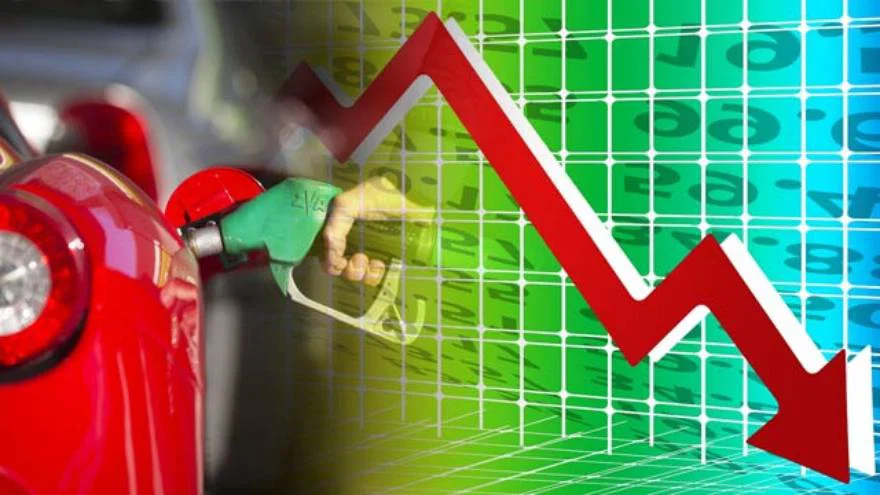
The recent revision in fuel-price has again lowered petrol and diesel costs.
Petrol has been cheaper by Rs1.49 per liter and diesel by a higher Rs2.73.
The new rates will come into effect from 30 September 2026.
Under the latest revision, the price of petrol will be Rs387.54 per liter and diesel would be Rs402.24 per liter for motorists starting September 30.
The latest change is another straight fall in the price of petrol.
Petrol has come down by Rs3.76 per liter and diesel by Rs6.29 per liter in the last two revisions.

The dollar was near this year’s high against the euro and heading for its biggest monthly gain against it in 14 months on Wednesday, thanks to US growth and rising US interest rates relative to oil and debt worries swirling in Europe.
The euro dropped to an 11-month low of $1.1312 on Tuesday and was last quoted at $1.1339 in Asia on Wednesday. The euro is also challenging support at about 178 yen.
The dollar is up almost 2.5% against the euro in September and is on track for a third consecutive quarterly gain.
The Aussie dollar fell below 70 cents for the first time since early August as the stronger greenback dragged it down to a nine-week low of $0.6959 after inflation data came in a tad below predictions.”The US economy is running hot, Europe is losing the global AI race and energy supplies and French politics remain big concerns for the euro,” said Brent Donnelly, president of foreign exchange trading at analytics firm Spectra Markets.
European benchmark gas prices jumped earlier this month to their highest since 2022.
French markets are being squeezed by debt and political paralysis ahead of next year’s presidential election with the margin with German rates blowing out above 115 basis points to its largest since 2012.
Options prices have just shifted dramatically to suggest investors prefer buying protection from potential euro declines – though Donnelly argues the dollar probably needs strong US data to make advances from here.
The dollar also struck a 16-1/2-month high against the Swiss franc of 0.8358 francs on Tuesday. The franc has been hit in part because investors have been searching for low-yielding alternatives to yen to sell so they can get carry elsewhere.
The yen has fallen out of favor as a short against the dollar, with US-Japan currency buying in July and August, then warnings not to test their resolve and a rise in the pace of Japanese rate hikes.
The dollar has lost 2% against the yen so far this month and almost 3.8% for the quarter to date, hitting a nearly two-week low of 156.38 in Asia trade.
The Fed’s favored inflation gage, US core PCE, is coming later on Wednesday but the market is looking forward Friday’s US jobs data which if strong might bolster predictions that US interest rates are headed higher.
Some of those hopes got knocked overnight when prominent New York Fed President John Williams indicated there is “no need for urgency” in raising rates. The yield on the two-year Treasury declined by 3.5 basis points and the odds in Fed funds futures of a rate hike next month fell to 50% from 71%.
The New Zealand dollar on Tuesday hit its lowest since last November and was last at $0.5645.
Sterling dropped to a three-month low on Tuesday and last traded near that level at $1.3230. The yuan was headed for a seventh quarterly increase in a row against the dollar in its last session before China’s Oct. 1-7 holidays.
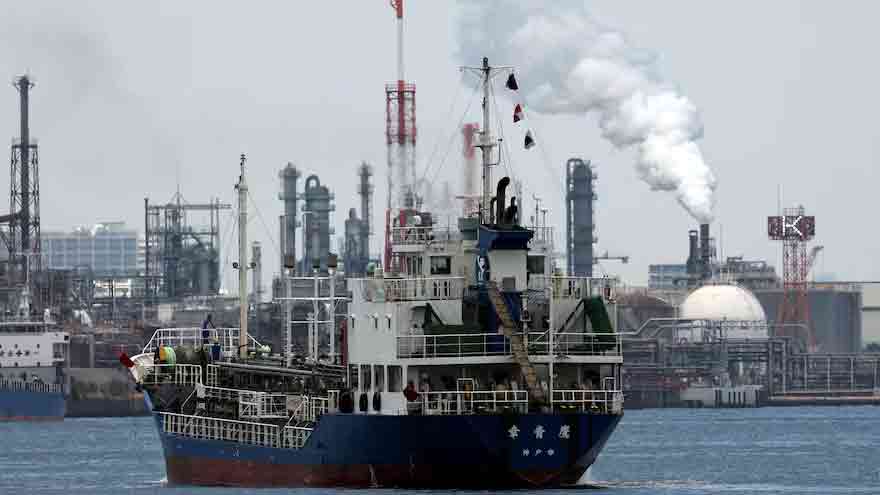
Oil prices increased for a second straight session on Tuesday as ongoing fears of Middle East supply disruption due to US-Iran tensions overshadowed signals of recovering crude supplies from the region.
Brent crude futures were up $1.49, or 1.4%, at $106.77 a barrel by 0326 GMT while US West Texas Intermediate crude was at $93.94, up $1.34, or 1.5%. Both benchmarks finished the last session with gains of around $1 a barrel.Higher volumes of oil exports are increasingly visible exiting the Gulf, but much of the growth still depends on workarounds such as ship-to-ship transfers. “The methods are less efficient, more costly than normal operations, which is why crude prices remain elevated,” KCM Trade chief analyst Tim Waterer said.
Crude exports from major Middle Eastern producers jumped to 12.8 million barrels a day in September, the highest since February, aided by higher shipments from Saudi Arabia and the United Arab Emirates, preliminary statistics from data source Kpler showed on Monday.
U.S. and Iranian officials separately spoke to mediators in a renewed effort to end seven months of hostilities, officials from both nations said. Further talks are widely expected to focus on a revised version of a seven-day proposal Iran submitted last week on the margins of the United Nations General Assembly.“The dominant risk remains the US-Iran standoff and its implications for energy prices and inflation expectations,” UOB analysts said in a client note.Iranian officials have allegedly been pessimistic about striking a compromise before the Strait of Hormuz crisis worsens further, keeping oil supply uncertainties elevated.”
The conflict that started in late February with US and Israeli strikes on Iran has turned the spotlight onto the Strait of Hormuz, a vital shipping path for oil and gas supplies that has been thrown into chaos and shaken up energy markets.
Meanwhile, the US is weighing regulatory relief to enable wider sales of red-dyed diesel to help decrease prices, a move that might allow some consumers to escape federal fuel tax, people familiar with discussions told Reuters. The proposal came after days of negotiations as a key alternative to a ban on fuel exports.

The Pakistan Stock Exchange (PSX) opened on a strong note on Tuesday, with benchmark KSE-100 Index gaining almost 500 points in early trading.
The index advanced 170,944 points, a big upside rise at the start of the second trading session of the week.
The current increase comes after a worse end in the previous session, when the KSE-100 Index dipped 339 points to conclude at 170,425 points.
Early session gains point to a return of buying interest in the market but trading conditions could change as the session wears on.

Pakistan to assume CAREC chairmanship in 2027, host 26th Ministerial Conference

Four people including a child rescued from chairlift in Kalam

Saudi Cabinet reviews progress on Makkah defence agreement with Pakistan, Türkiye

ICC board meeting in India: Mohsin Naqvi gets invitation

23 people have died during the monsoon as rain-related incidents plague Punjab and KP.

‘Self-Reliance in Digital ID’: NADRA launches locally produced QR code-based National Identity Card
-
 Latest News5 months ago
ICC board meeting in India: Mohsin Naqvi gets invitation
-
 Latest News2 months ago
23 people have died during the monsoon as rain-related incidents plague Punjab and KP.
-
 Latest News2 months ago
‘Self-Reliance in Digital ID’: NADRA launches locally produced QR code-based National Identity Card
-

 Business2 months ago
Govt dedicated to resolving Balochistan issues: Dar
-

 Latest News2 months ago
Pakistan making rapid progress in robotics, AI: Shaza Fatima
-

 Latest News1 month ago
Turkish FM, Dar discuss regional trends, bilateral connections
-

 Latest News2 months ago
After a divorce, LHC decides that women who have been harmed by their spouses get their dower.
-

 Entertainment4 months ago
Interim bail given to YouTuber Rajab Butt in gambling app marketing case