
Latest News
As the PDMA issues a new flood alert, low-level flooding continues in Kalabagh and Chashma.

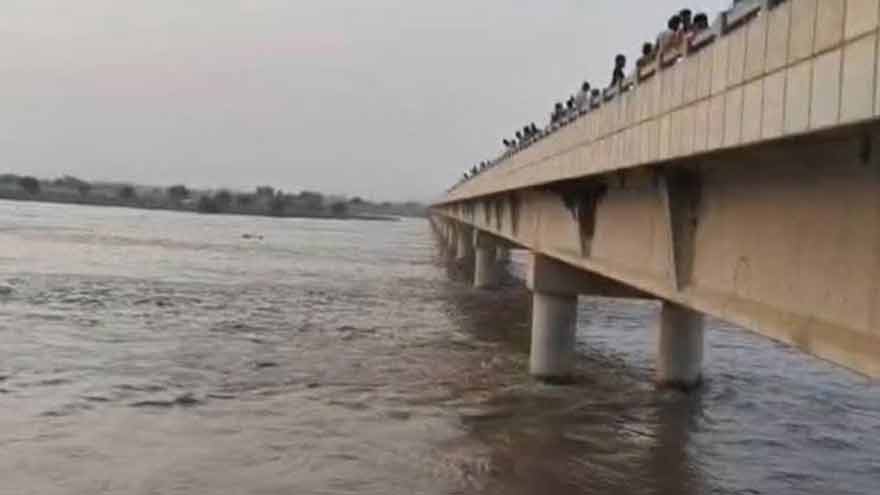
The Punjab Disaster Management Authority (PDMA) said water flows in most rivers across the province were normal but low-level flooding was continuing at parts of the Indus River and several streams. Authorities have warned of urban flooding and set up flood relief camps in vulnerable areas.
The PDMA spokesperson said water levels in the Chenab, Jhelum, Ravi and Sutlej rivers were normal, while the water situation in the hill torrents of Dera Ghazi Khan was also under control.
The official said that low-level flooding continues in Kalabagh and Chashma in the Indus River. Water flow in Kalabagh was reported at 340,000 cusecs whereas 290,000 cusecs has been recorded at Chashma.
The PDMA further reported low-level flooding in Nallah Deg Kangra, Nallah Basantar and the Bain stream in Shakargarh in Narowal district. The water flow in the Nallah Deg Kangra has touched 13,000 cusecs.
The authority said the fourth spell of monsoon rains is likely to continue till August 5 and added that projected rainfall in upper catchment areas may increase water flows in the eastern rivers and bordering streams.
Director General PDMA Saif Anwar Jappa warned that urban flooding still poses a risk to Lahore, Rawalpindi, Gujranwala, Gujrat, Sialkot, Faisalabad and Multan while landslides due to continued rainfall were a threat in Murree, Galliyat and other hilly areas.
He instructed the population living along riverbanks and in riverbeds to migrate to safer sites immediately adding that the Punjab government has built flood relief camps in impacted districts where shelter, food, medical help and other critical services will be supplied.
The DG PDMA further asked the public to adopt precautionary steps in light of the weather and flood conditions, refrain from needless travel and recreational activities near rivers, canals and streams, and make sure that minors are not permitted to play in flood waters.
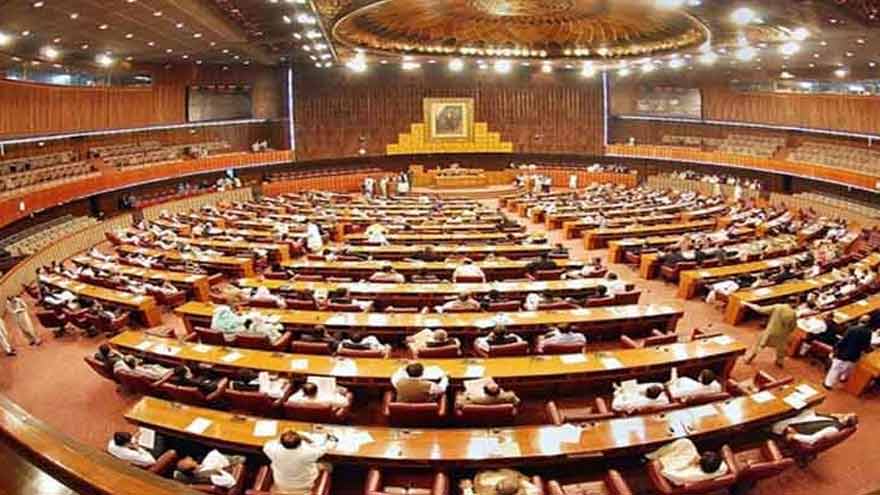
– Prime Minister Shehbaz Sharif has not yet forwarded the summary to the president for convening the National Assembly session, with the sitting now likely to be held next week.
According to parliamentary sources, the Ministry of Parliamentary Affairs had sent a summary to the prime minister seeking to convene the National Assembly session on Monday at 5pm.
Sources said a decision to reschedule the session was taken during a meeting between the president and the prime minister.
Parliamentary sources added that the National Assembly session is now expected to be summoned next week.
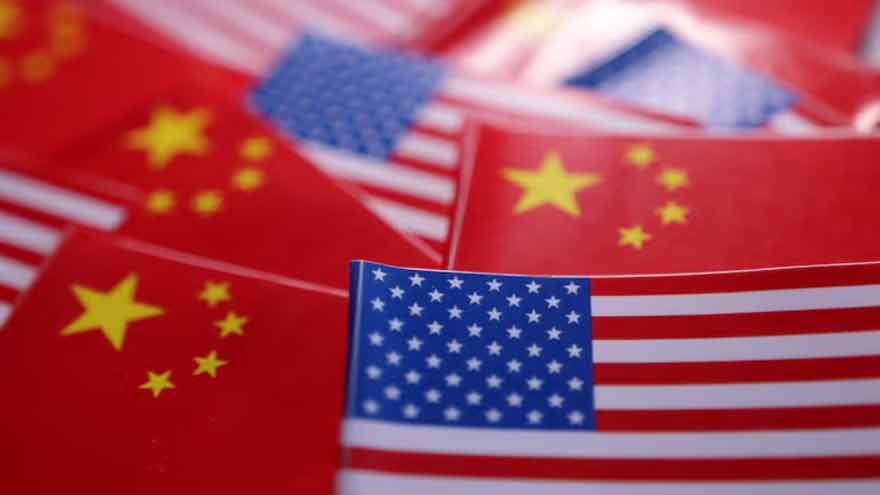
China and the United States discussed tariff cuts, agricultural trade and other issues at their first trade council meeting on Friday, China’s Commerce Ministry said on Saturday, days ahead of a leaders’ meeting in Shenzhen next week.
The Ministry of Commerce said: “The two sides had open, in-depth and constructive exchanges on issues of common concern, such as the implementation of the results of the previous China-US economic and trade consultations, including tariffs, the “US$30 billion for US$30 billion” mutually beneficial tax reduction regime, and agricultural trade.” It did not disclose whether any agreement had been reached. The Ministry of Commerce added that both sides will continue to use the council to resolve trade issues, expand cooperation and reduce outstanding issues. After a summit between President Xi Jinping and President Trump in Washington in September, the two sides proposed a $60 billion plan to cut reciprocal tariffs that would cover $17 billion worth of Chinese imports of U.S. agricultural products by 2024, but the plan has not yet been finalized.
A Reuters analysis of customs data earlier this month showed that China’s purchases of U.S. agricultural products, excluding soybeans, will hit a seven-year low this year, despite an agreement for $17 billion a year through 2028, underscoring lingering uncertainty over the deal. Beijing has repeatedly called on Washington to implement a $60 billion tariff reduction deal, saying it is a prerequisite for increased purchases of US agricultural products.
The White House said Trump will meet with Xi Jinping on Thursday on the sidelines of the Asia-Pacific Economic Cooperation Forum in Shenzhen.

A concerning shortage of healthcare facilities and medical staff has emerged in Khyber Pakhtunkhwa, highlighting significant gaps in the province’s healthcare system.
Only 8,024 doctors are available to serve the province’s population of more than 40 million, meaning there is approximately one doctor for every 5,000 to 6,000 people. The media report that the situation of state medical facilities in the entire province is also unsatisfactory, as more than 200 different types of state medical centers are unable to function. Public hospitals are also facing a serious shortage of clinical places. The report said that the public hospitals of Khyber Pakhtunkhwa have a total of 18,432 beds and require about 64,000 beds to meet the health needs of the people of the province. This makes the bed gap about 45,568.
The report further highlights that the current number of doctors in the province is extremely low relative to its population, potentially making it difficult for patients to access medical consultations and treatment facilities.
Moreover, the closure of a large number of government healthcare centres is also hindering the provision of basic medical services to the public.
Meanwhile, Provincial Health Adviser Lieutenant General (retd) Nigar Johar said during a briefing that the provincial government had decided to introduce amendments to the Medical Teaching Institutions (MTI) Act and conduct audits of government hospitals to improve the healthcare system.
She added that shortcomings in the Sehat Card programme would be addressed and the system further improved to ensure better access to healthcare services for the public. A shortage of doctors, non-functioning health centers and insufficient hospital beds remain major problems in the province, requiring government reforms and expansion of health facilities.

NA sesssion likely to be rescheduled for next week

China, US discuss tariffs, farm trade ahead of Xi-Trump meeting

KP healthcare system faces acute shortage of doctors, hospital beds

ICC board meeting in India: Mohsin Naqvi gets invitation

‘Self-Reliance in Digital ID’: NADRA launches locally produced QR code-based National Identity Card

23 people have died during the monsoon as rain-related incidents plague Punjab and KP.
-
 Latest News6 months ago
ICC board meeting in India: Mohsin Naqvi gets invitation
-
 Latest News3 months ago
‘Self-Reliance in Digital ID’: NADRA launches locally produced QR code-based National Identity Card
-
 Latest News4 months ago
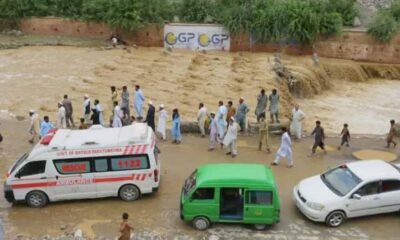
23 people have died during the monsoon as rain-related incidents plague Punjab and KP.
-

 Latest News3 months ago
Turkish FM, Dar discuss regional trends, bilateral connections
-
 Business4 months ago
Govt dedicated to resolving Balochistan issues: Dar
-
 Latest News4 months ago
Pakistan making rapid progress in robotics, AI: Shaza Fatima
-

 Entertainment6 months ago
Interim bail given to YouTuber Rajab Butt in gambling app marketing case
-
 Latest News4 months ago
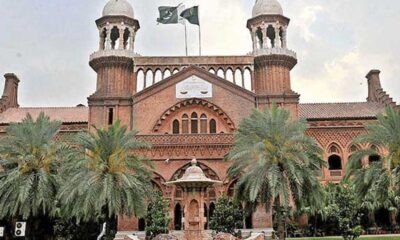
After a divorce, LHC decides that women who have been harmed by their spouses get their dower.