
Latest News
China and Pakistan Establish Collaborative Herbal Medicine Laboratory to Enhance Traditional Medicine Partnership

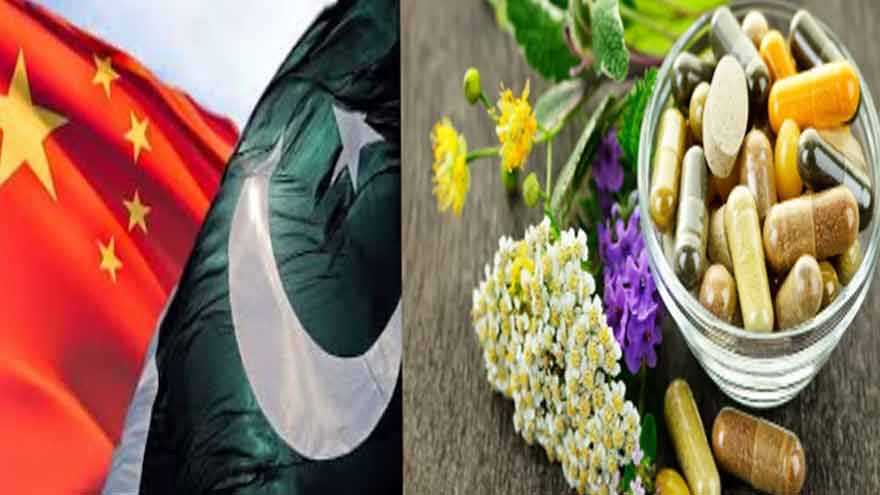
The official launch of the Zhejiang-Pakistan Joint Laboratory on R&D of Herbal Medicine at the 2026 International Symposium on Traditional Chinese Medicine–Unani Medicine Cooperation and SCO Member States Traditional Medicine Industry Exchange Forum in Ningbo, Zhejiang, on June 4 marked a milestone in the scientific cooperation between China and Pakistan.
The Joint Laboratory is an international science and technology cooperation platform at the provincial level, recognised by the Department of Science and Technology of Zhejiang Province in December 2025. It was developed jointly with the Institute of Drug Discovery Technology of Ningbo University, in cooperation with the Faculty of Medicine of Ningbo University and Ningbo Kangning Hospital.
The partners from the Pakistani side are the International Center for Chemical and Biological Sciences, University of Karachi and the University of Lahore.
Professor Zhao Yufen, member of the Chinese Academy of Sciences and dean of the Institute of Drug Discovery Technology at Ningbo University, is the chair of the Academic Committee of the Joint Laboratory. The Chinese director is Professor Liu Xinmin from the Institute of Drug Discovery Technology, and the Pakistani director is Professor Muhammad Iqbal Choudhary, head scientist at the University of Karachi and the University of Lahore.
The laboratory is staffed by a team of 50 members, 30 of whom are Chinese researchers and 20 are overseas researchers. The team covers interdisciplinary fields including Traditional Chinese Medicine (TCM), Unani Medicine, pharmacy, medicine, biology, chemistry, artificial intelligence, and policy and regulation, CEN said.
The joint laboratory is devoted to preclinical research of TCM, clinical research of TCM, international registration of relevant products, as well as academic exchanges and talent training.
During the occasion, the Shanghai Cooperation Organization Traditional Medicine Industry Alliance (SCO-TMIA) and the Organization of Islamic Cooperation Ministerial Standing Committee on Scientific and Technological Cooperation (OIC-COMSTECH) signed a Memorandum of Understanding on cooperation in areas related to Traditional Chinese Medicine and Unani Medicine, including clinical research on traditional medicine, policy and regulatory research, registration facilitation, and capacity building
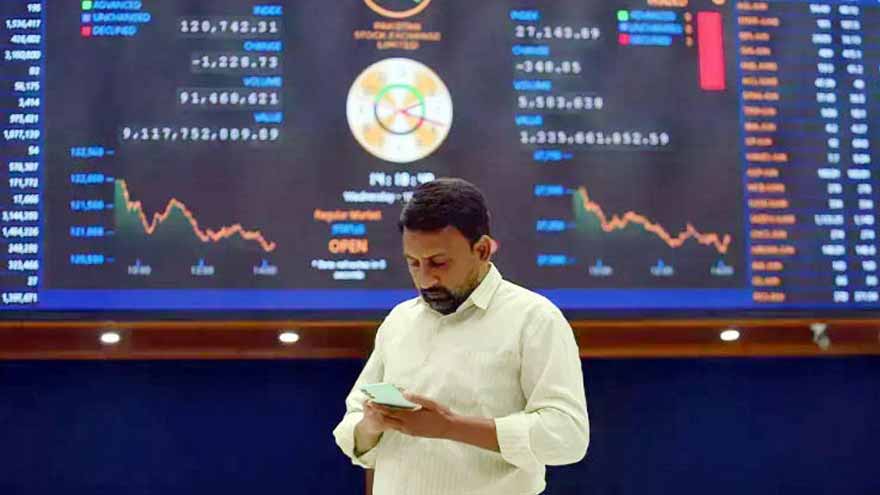
The Pakistan Stock Exchange (PSX) opened Tuesday’s trading session on a positive note, with the benchmark KSE-100 Index climbing more than 1,300 points.
The index surged to 164,368 points during early trading, reflecting a strong upward movement in the market.
In the previous session, the benchmark index had settled at 163,038 points.
The latest rally marks a positive start to the trading day, with the market gaining momentum after the previous session’s close.
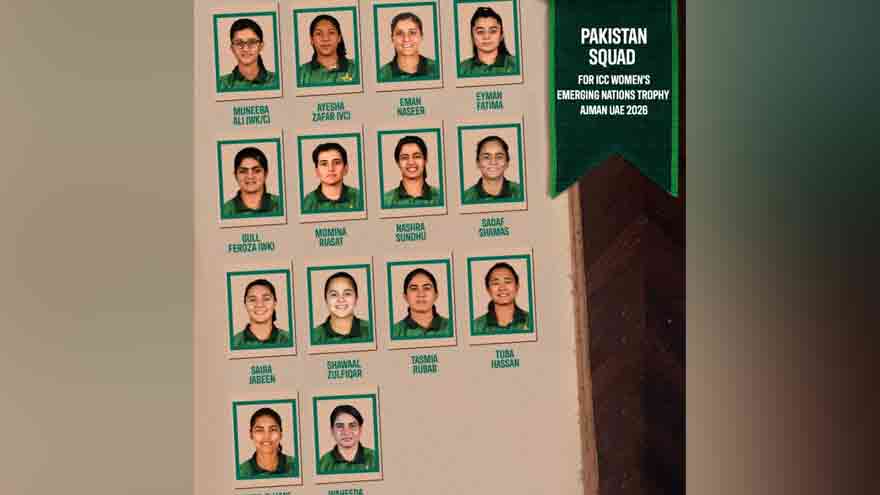
Muneeba Ali will lead Pakistan in ICC Women’s Emerging Nations Trophy 2026 Pakistan Cricket Board on Tuesday named a 14-member squad for the forthcoming ICC Women’s Emerging Nations Trophy 2026 to be held in Ajman, United Arab Emirates (UAE) from November 12 to 25.
The squad also includes hitters Eman Naseer, Eyman Fatima, Sadaf Shamas, Saira Jabeen and Shawaal Zulfiqar. Ayesha Zafar has been appointed the vice-captain. The squad also includes Gull Feroza who was declared the best wicketkeeper-batter in the recently ended National Women’s T20 Tournament.
Left-arm spinner Nashra Sundhu will head the bowling assault alongside Momina Riasat, Tuba Hassan and Umm-e-Hani in the spin quartet. The frontline pace options in the squad are Tasmia Rubab and Waheeda Akhtar.
The Pakistan women’s team has earned the Bronze Medal in the Asian Games in Japan. Sadaf and Waheeda have been recalled, while twelve players have retained their spot in the team from Pakistan’s last assignment. Regular skipper Fatima Sana will also be missing from Pakistan’s contingent as she will be in Australia playing her inaugural Women’s Big Bash League season.
The event involves 10 teams in two groups and 30 matches. Pakistan participate in Group B with Bangladesh, Thailand, Netherlands and Zimbabwe. Group A: Sri Lanka, Ireland, Scotland Papua New Guinea and hosts United Arab Emirates (UAE)
After the single-league round-robin round, three clubs from each group will qualify for the Super Six stage, where they will play three matches each. The final will be played on Wednesday November 25 between the top two teams from the Super Six stage.
Pakistan squad will gather in Lahore on November 6 and it will have a pre-tournament training camp on November 7, 8 and 9 before flying to UAE.
14-man squad
Muneeba Ali Siddiqui (c & wk), Ayesha Zafar (vc), Eman Naseer, Eyman Fatima, Gull Feroza (wk), Momina Riasat, Nashra Sundhu, Sadaf Shamas, Saira Jabeen, Shawaal Zulfiqar, Tasmia Rubab, Tuba Hassan, Umm-e-Hani, Waheeda Akhtar
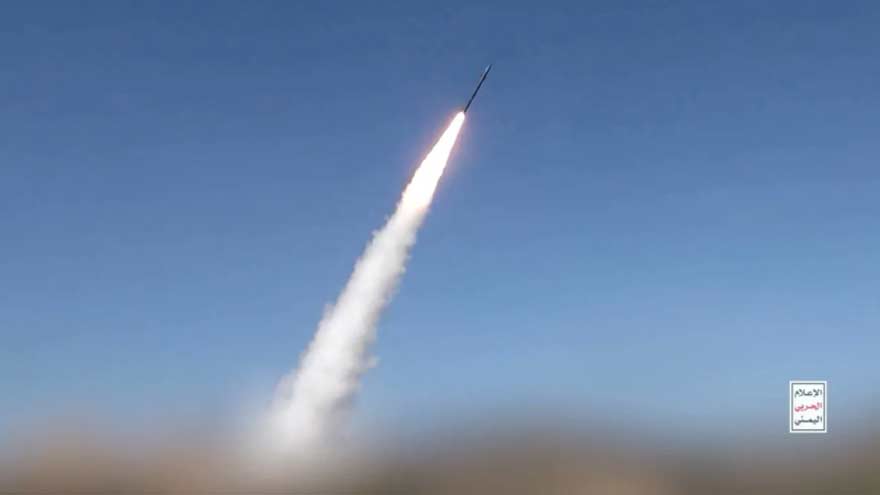
The Saudi-led coalition fighting Yemen’s Houthi rebels claimed Tuesday it intercepted and destroyed ballistic missiles and drones launched at two areas of the kingdom by the Iran-aligned group, as the battle between Saudi Arabia and the Houthis escalates.
The coalition reported the Houthis launched three ballistic missiles toward the Eastern Region of Saudi Arabia and four drones toward the Southern Region of the kingdom.
Saudi Civil Defence warned of a possible hostile threat in the Eastern Region and in the governorate of Kharj, and later said the risk has passed in both places.
Last month, the Houthis captured key strategic areas along Yemen’s Red Sea coast, moving closer to the Bab el-Mandeb Strait, a critical global shipping lane for Gulf oil producers across the Arabian Peninsula from the Strait of Hormuz. Since then, Saudi Arabia has stepped up its strikes against the Houthis.
The two sides have resumed fire, shattering a 2022 UN-brokered truce that had largely kept strikes at bay between the Saudi-led coalition, which backs Yemen’s internationally recognised government, and the Houthis who control the capital Sanaa.
The escalation also opens up a new front in the US-Israeli attack on Iran.

PSX opens on a positive note, gains over 1,300 points in early trading

Pakistan squad announced for ICC Women’s Emerging Nations Trophy

Saudi-led coalition says it intercepted Houthi missiles, drones attacking kingdom

ICC board meeting in India: Mohsin Naqvi gets invitation

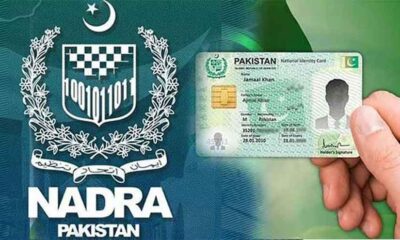
‘Self-Reliance in Digital ID’: NADRA launches locally produced QR code-based National Identity Card

23 people have died during the monsoon as rain-related incidents plague Punjab and KP.
-
 Latest News5 months ago
ICC board meeting in India: Mohsin Naqvi gets invitation
-
 Latest News2 months ago
‘Self-Reliance in Digital ID’: NADRA launches locally produced QR code-based National Identity Card
-
 Latest News3 months ago
23 people have died during the monsoon as rain-related incidents plague Punjab and KP.
-
 Latest News2 months ago
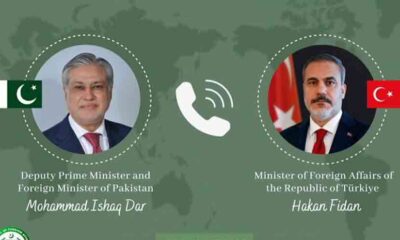
Turkish FM, Dar discuss regional trends, bilateral connections
-
 Business3 months ago
Govt dedicated to resolving Balochistan issues: Dar
-
 Latest News3 months ago
Pakistan making rapid progress in robotics, AI: Shaza Fatima
-

 Entertainment5 months ago
Interim bail given to YouTuber Rajab Butt in gambling app marketing case
-
 Latest News3 months ago
After a divorce, LHC decides that women who have been harmed by their spouses get their dower.