
Latest News
FIFA will permit disposable water bottles at World Cup matches following public outrage.


FIFA announced that it will permit supporters to bring one “soft, plastic” throwaway water bottle into World Cup sites following backlash against its prohibition of refillable bottles.All attendees will be allowed to bring one soft, plastic, 20-ounce (590ml) factory-sealed disposable water bottle into any FIFA World Cup 2026 match in the USA and Canada, stated World Cup Chief Operating Officer Heimo Schirgi in a video uploaded on FIFA’s X account.
The announcement, which FIFA termed a “clarification” of its water bottle policy, occurred two days after FIFA stated that refillable water bottles would be prohibited.
The modification to their official stadium code of conduct may compel thirsty patrons to purchase bottled water.
FIFA explained the decision on the basis of safety, “to mitigate danger and injury to players and attendees.FIFA stated to AFP that external bottles are already banned at numerous locations for safety reasons, and this policy is being implemented across all tournament stadiums.
On Friday, FIFA stated that those worries persist as legitimate.
Schirgi stated that “fans will not be allowed to bring hard-sided, reusable water bottles for safety and security reasons,” providing samples of permissible and prohibited bottles.
Forecasters have cautioned that spectators may encounter health hazards due to excessive heat at outdoor locations during the World Cup, co-hosted by the United States, Canada, and Mexico.
A survey released by the World Weather Attribution research group last month indicated that 26 out of 104 games at the World Cup are likely to occur in conditions where the Wet Bulb Global Temperature (WBGT) surpasses 26 degrees.
WBGT is an index that quantifies heat stress on the human body by integrating temperature, humidity, wind, and solar radiation.
During the previous year’s FIFA Club World Cup in the United States, where spectators expressed dissatisfaction due to extreme temperatures, attendees were prohibited from taking water bottles into the stadia.
FIFA has said that misting stations, fans, hydration stations, and cooling tents will be accessible within “the stadium footprint.
FIFA states that bottled water supplied within the venue will be priced consistently with that of other events at each stadium.

The Pakistan Stock Exchange (PSX) opened Tuesday’s trading session on a positive note, with the benchmark KSE-100 Index climbing more than 1,300 points.
The index surged to 164,368 points during early trading, reflecting a strong upward movement in the market.
In the previous session, the benchmark index had settled at 163,038 points.
The latest rally marks a positive start to the trading day, with the market gaining momentum after the previous session’s close.
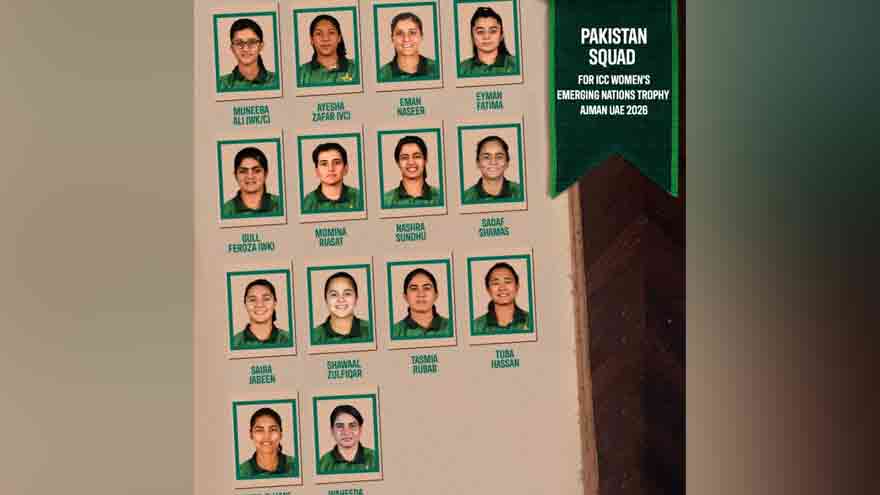
Muneeba Ali will lead Pakistan in ICC Women’s Emerging Nations Trophy 2026 Pakistan Cricket Board on Tuesday named a 14-member squad for the forthcoming ICC Women’s Emerging Nations Trophy 2026 to be held in Ajman, United Arab Emirates (UAE) from November 12 to 25.
The squad also includes hitters Eman Naseer, Eyman Fatima, Sadaf Shamas, Saira Jabeen and Shawaal Zulfiqar. Ayesha Zafar has been appointed the vice-captain. The squad also includes Gull Feroza who was declared the best wicketkeeper-batter in the recently ended National Women’s T20 Tournament.
Left-arm spinner Nashra Sundhu will head the bowling assault alongside Momina Riasat, Tuba Hassan and Umm-e-Hani in the spin quartet. The frontline pace options in the squad are Tasmia Rubab and Waheeda Akhtar.
The Pakistan women’s team has earned the Bronze Medal in the Asian Games in Japan. Sadaf and Waheeda have been recalled, while twelve players have retained their spot in the team from Pakistan’s last assignment. Regular skipper Fatima Sana will also be missing from Pakistan’s contingent as she will be in Australia playing her inaugural Women’s Big Bash League season.
The event involves 10 teams in two groups and 30 matches. Pakistan participate in Group B with Bangladesh, Thailand, Netherlands and Zimbabwe. Group A: Sri Lanka, Ireland, Scotland Papua New Guinea and hosts United Arab Emirates (UAE)
After the single-league round-robin round, three clubs from each group will qualify for the Super Six stage, where they will play three matches each. The final will be played on Wednesday November 25 between the top two teams from the Super Six stage.
Pakistan squad will gather in Lahore on November 6 and it will have a pre-tournament training camp on November 7, 8 and 9 before flying to UAE.
14-man squad
Muneeba Ali Siddiqui (c & wk), Ayesha Zafar (vc), Eman Naseer, Eyman Fatima, Gull Feroza (wk), Momina Riasat, Nashra Sundhu, Sadaf Shamas, Saira Jabeen, Shawaal Zulfiqar, Tasmia Rubab, Tuba Hassan, Umm-e-Hani, Waheeda Akhtar
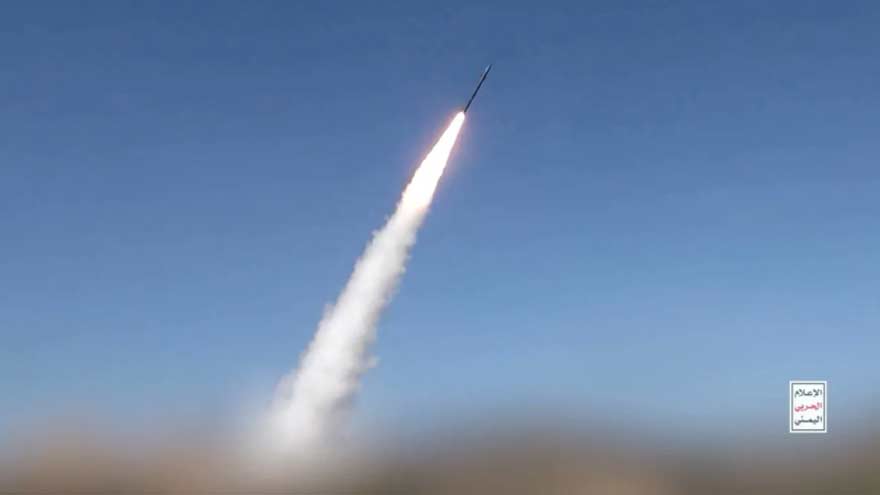
The Saudi-led coalition fighting Yemen’s Houthi rebels claimed Tuesday it intercepted and destroyed ballistic missiles and drones launched at two areas of the kingdom by the Iran-aligned group, as the battle between Saudi Arabia and the Houthis escalates.
The coalition reported the Houthis launched three ballistic missiles toward the Eastern Region of Saudi Arabia and four drones toward the Southern Region of the kingdom.
Saudi Civil Defence warned of a possible hostile threat in the Eastern Region and in the governorate of Kharj, and later said the risk has passed in both places.
Last month, the Houthis captured key strategic areas along Yemen’s Red Sea coast, moving closer to the Bab el-Mandeb Strait, a critical global shipping lane for Gulf oil producers across the Arabian Peninsula from the Strait of Hormuz. Since then, Saudi Arabia has stepped up its strikes against the Houthis.
The two sides have resumed fire, shattering a 2022 UN-brokered truce that had largely kept strikes at bay between the Saudi-led coalition, which backs Yemen’s internationally recognised government, and the Houthis who control the capital Sanaa.
The escalation also opens up a new front in the US-Israeli attack on Iran.

PSX opens on a positive note, gains over 1,300 points in early trading

Pakistan squad announced for ICC Women’s Emerging Nations Trophy

Saudi-led coalition says it intercepted Houthi missiles, drones attacking kingdom

ICC board meeting in India: Mohsin Naqvi gets invitation

‘Self-Reliance in Digital ID’: NADRA launches locally produced QR code-based National Identity Card

23 people have died during the monsoon as rain-related incidents plague Punjab and KP.
-
 Latest News5 months ago
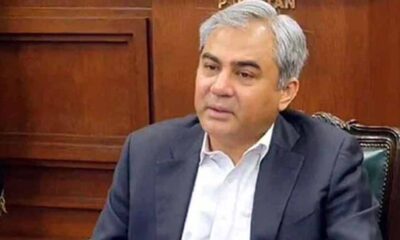
ICC board meeting in India: Mohsin Naqvi gets invitation
-
 Latest News2 months ago
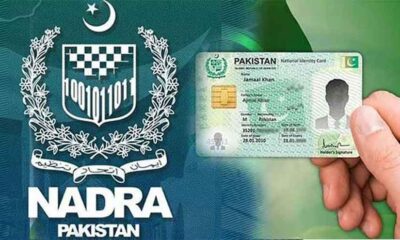
‘Self-Reliance in Digital ID’: NADRA launches locally produced QR code-based National Identity Card
-
 Latest News3 months ago
23 people have died during the monsoon as rain-related incidents plague Punjab and KP.
-
 Latest News2 months ago
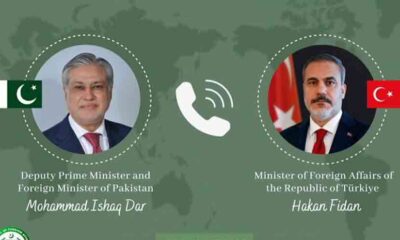
Turkish FM, Dar discuss regional trends, bilateral connections
-
 Business3 months ago
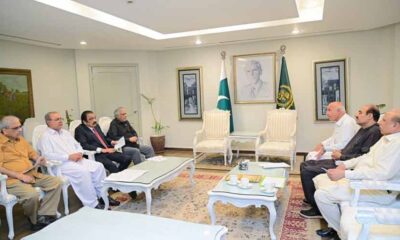
Govt dedicated to resolving Balochistan issues: Dar
-
 Latest News3 months ago
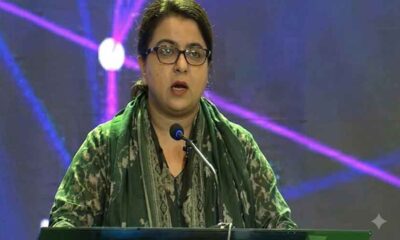
Pakistan making rapid progress in robotics, AI: Shaza Fatima
-

 Entertainment5 months ago
Interim bail given to YouTuber Rajab Butt in gambling app marketing case
-
 Latest News3 months ago
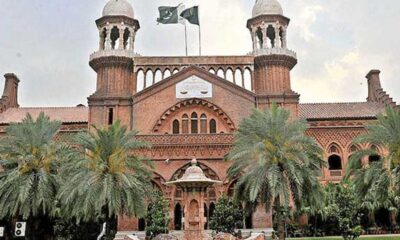
After a divorce, LHC decides that women who have been harmed by their spouses get their dower.