
Latest News
Chinese Military Casts Shadow as Global Execs Flock to Taiwan Tech Show


At sea, a hostile exchange with China was brewing as AI giants including Nvidia (NVDA.O) Intel (INTC.O) and SK Group last week championed Taiwan’s importance as a key cog in the global supply chain.
Taiwan’s coast guard clashed with Chinese colleagues in the disputed South China Sea on Friday, the final day of the high-profile Computex conference in Taipei.“The Taiwan Strait is vital to the global economy’s stability and the lifeline of the world’s technology industry,” Taiwan’s coast guard said in a warning to a Chinese warship near the Taiwan-controlled Pratas Islands.
Taiwan is home to TSMC (2330.TW) the world’s biggest contract chipmaker and supplier to Nvidia and Apple (AAPL.O) and Foxconn (2317.TW) Nvidia’s biggest server maker, and dozens of other firms working throughout the AI hardware stack.
The island is run democratically and China claims it as its territory . In recent years , and especially in the past month , China has increased military pressure to assert those sovereignty claims .
Taiwan’s military ministry reported 79 Chinese aeroplanes operating near the island during the June 2-5 Computex event, a harsh reminder about the risk to the global AI supply chain should Beijing ever make good on threats to conquer Taiwan by force.
Wednesday’s “joint combat readiness patrol” wasn’t the first in recent days by China’s military around Taiwan.
China’s defence ministry did not reply to a request for comment on its activities last week.
Billions of dollars are being invested in Taiwan to build the hardware needed to fuel the AI revolution, but there is a possible sting in the tail, said David Feith, senior scholar at U.S. think tank the Hudson Institute and a former U.S. Deputy Assistant Secretary of State.“There is a huge security threat, and it’s coming out of Beijing,” he told Reuters on Saturday at a seminar in Taipei hosted by DEST, a think tank sponsored by Taiwan’s National Science and Technology Council.I do think that markets internationally and governments I worry are underestimating the possibility of a crisis.
JENSEN HUANG GLOW UP
Last month, Nvidia CEO Jensen Huang said the company plans to spend about $150 billion annually in Taiwan, up from roughly $10 billion to $15 billion five years ago. AMD CEO Lisa Su, who was not in Taiwan for Computex but visited shortly before, has announced investment of more than $10 billion in Taiwan’s AI industry.
Huang sidestepped a question on security at his news conference Tuesday, saying the supply chain should be as “diversified and as redundant” as possible so there may be resilience, and pointed to Taiwan tech firms expanding in the U.S. “That doesn’t change the fact that Taiwan is really good at manufacturing, especially technology manufacturing,” he continued. “This is the hot spot of the ecosystem,”
TAIWAN’S ‘RESPONSIBLE OBLIGATION
Taiwan President Lai Ching-te was blunter, addressing at the Computex inauguration.The government will firmly uphold peace and stability across the Taiwan Strait and is dedicated to maintaining the status quo,” he said.“This is a bold national policy and the most responsible commitment made by Taiwan to the global technology supply chain.”
There’s also a tiny military side to Computex with many drone businesses participating.
Drones are a major part of Lai’s military modernising strategy.
U.S. drone maker Anduril Industries, whose inventor Palmer Luckey toured the expo on Thursday, is jointly developing a missile with Taiwan and told the official Central News Agency there are now some 30 Taiwanese companies in his firm’s supply chains.“There are things in this world that only exist because Taiwan is the leader in technology, and that’s not something that I want to disappear,” he remarked.
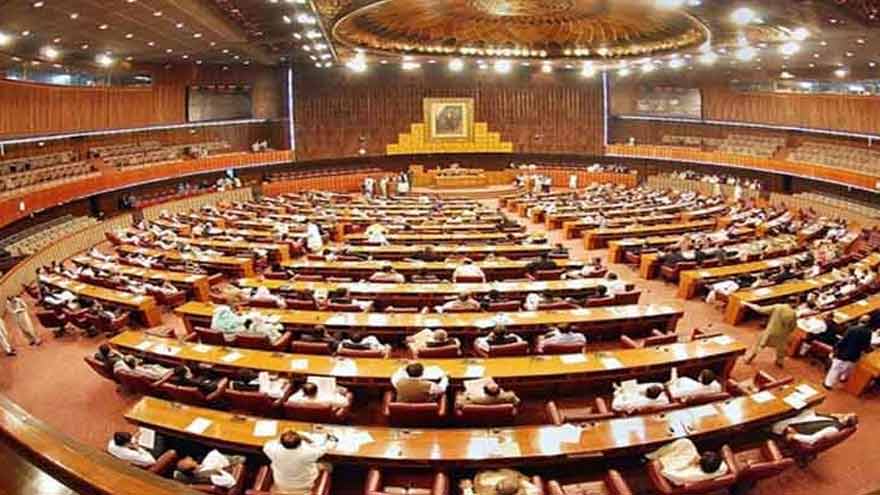
– Prime Minister Shehbaz Sharif has not yet forwarded the summary to the president for convening the National Assembly session, with the sitting now likely to be held next week.
According to parliamentary sources, the Ministry of Parliamentary Affairs had sent a summary to the prime minister seeking to convene the National Assembly session on Monday at 5pm.
Sources said a decision to reschedule the session was taken during a meeting between the president and the prime minister.
Parliamentary sources added that the National Assembly session is now expected to be summoned next week.
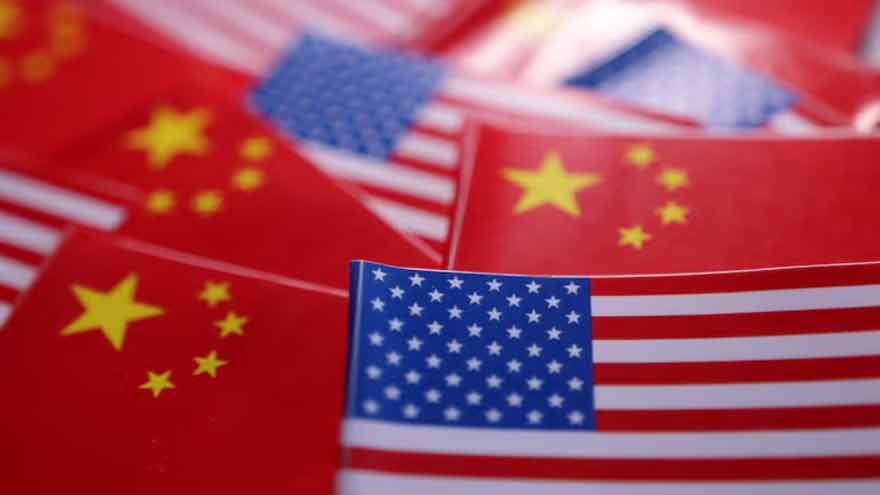
China and the United States discussed tariff cuts, agricultural trade and other issues at their first trade council meeting on Friday, China’s Commerce Ministry said on Saturday, days ahead of a leaders’ meeting in Shenzhen next week.
The Ministry of Commerce said: “The two sides had open, in-depth and constructive exchanges on issues of common concern, such as the implementation of the results of the previous China-US economic and trade consultations, including tariffs, the “US$30 billion for US$30 billion” mutually beneficial tax reduction regime, and agricultural trade.” It did not disclose whether any agreement had been reached. The Ministry of Commerce added that both sides will continue to use the council to resolve trade issues, expand cooperation and reduce outstanding issues. After a summit between President Xi Jinping and President Trump in Washington in September, the two sides proposed a $60 billion plan to cut reciprocal tariffs that would cover $17 billion worth of Chinese imports of U.S. agricultural products by 2024, but the plan has not yet been finalized.
A Reuters analysis of customs data earlier this month showed that China’s purchases of U.S. agricultural products, excluding soybeans, will hit a seven-year low this year, despite an agreement for $17 billion a year through 2028, underscoring lingering uncertainty over the deal. Beijing has repeatedly called on Washington to implement a $60 billion tariff reduction deal, saying it is a prerequisite for increased purchases of US agricultural products.
The White House said Trump will meet with Xi Jinping on Thursday on the sidelines of the Asia-Pacific Economic Cooperation Forum in Shenzhen.

A concerning shortage of healthcare facilities and medical staff has emerged in Khyber Pakhtunkhwa, highlighting significant gaps in the province’s healthcare system.
Only 8,024 doctors are available to serve the province’s population of more than 40 million, meaning there is approximately one doctor for every 5,000 to 6,000 people. The media report that the situation of state medical facilities in the entire province is also unsatisfactory, as more than 200 different types of state medical centers are unable to function. Public hospitals are also facing a serious shortage of clinical places. The report said that the public hospitals of Khyber Pakhtunkhwa have a total of 18,432 beds and require about 64,000 beds to meet the health needs of the people of the province. This makes the bed gap about 45,568.
The report further highlights that the current number of doctors in the province is extremely low relative to its population, potentially making it difficult for patients to access medical consultations and treatment facilities.
Moreover, the closure of a large number of government healthcare centres is also hindering the provision of basic medical services to the public.
Meanwhile, Provincial Health Adviser Lieutenant General (retd) Nigar Johar said during a briefing that the provincial government had decided to introduce amendments to the Medical Teaching Institutions (MTI) Act and conduct audits of government hospitals to improve the healthcare system.
She added that shortcomings in the Sehat Card programme would be addressed and the system further improved to ensure better access to healthcare services for the public. A shortage of doctors, non-functioning health centers and insufficient hospital beds remain major problems in the province, requiring government reforms and expansion of health facilities.

NA sesssion likely to be rescheduled for next week

China, US discuss tariffs, farm trade ahead of Xi-Trump meeting

KP healthcare system faces acute shortage of doctors, hospital beds

ICC board meeting in India: Mohsin Naqvi gets invitation

‘Self-Reliance in Digital ID’: NADRA launches locally produced QR code-based National Identity Card

23 people have died during the monsoon as rain-related incidents plague Punjab and KP.
-
 Latest News6 months ago
ICC board meeting in India: Mohsin Naqvi gets invitation
-
 Latest News3 months ago
‘Self-Reliance in Digital ID’: NADRA launches locally produced QR code-based National Identity Card
-
 Latest News4 months ago
23 people have died during the monsoon as rain-related incidents plague Punjab and KP.
-
 Latest News3 months ago
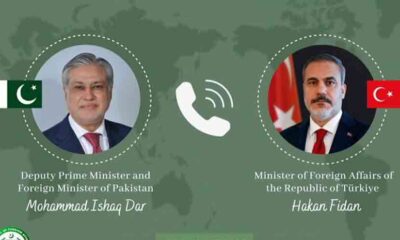
Turkish FM, Dar discuss regional trends, bilateral connections
-
 Business4 months ago
Govt dedicated to resolving Balochistan issues: Dar
-

 Latest News4 months ago
Pakistan making rapid progress in robotics, AI: Shaza Fatima
-

 Entertainment6 months ago
Interim bail given to YouTuber Rajab Butt in gambling app marketing case
-
 Latest News4 months ago
After a divorce, LHC decides that women who have been harmed by their spouses get their dower.