
Latest News
Federal constitutional court amends stay order on 3-MPO arrests in KP

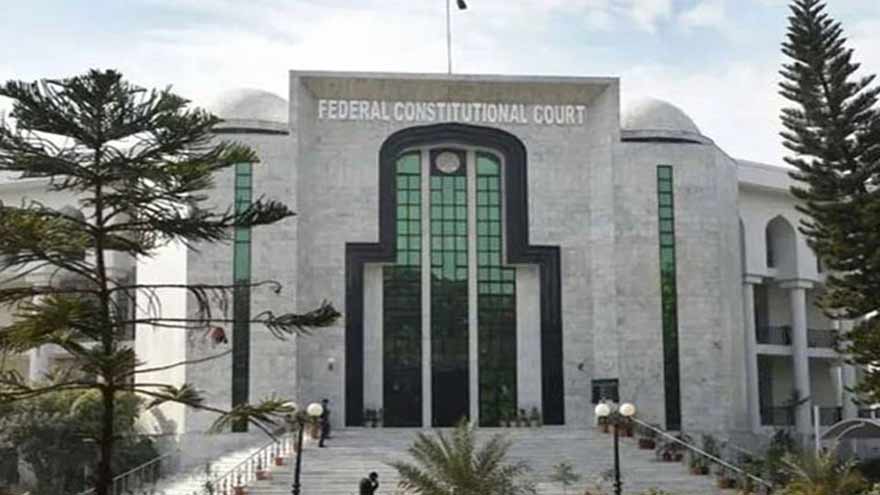
The Federal Constitutional Court has amended the suspension order regarding arrests under Article 3 of the Maintenance of Public Order Ordinance (MPO) in Khyber Pakhtankhwa Province.
A two-judge bench of the Federal Constitutional Court, comprising Chief Justice Aminuddin Khan and Justice Aamir Farooq, heard the matter and approved the Pakistan Tehreek-e-Insaf (PTI) petition and modified the November 5 stay order. During the hearing, PTI’s lawyer, Barrister Gohar, argued that the Constitution Court’s November 5 order had affected the proceedings in the Peshawar High Court and stopped the practice of lawyers.
The Constitutional Court noted that its stay order relates to matters relating to the rule of the Governor and the MPO, adding that the Peshawar High Court can continue to hear other cases under Article 199 of the Constitution.
Justice Aamir Farooq remarked that a straightforward reading of Article 245 suggested that cases under Article 199 could not be heard. However, he said that adopting a plain reading of Article 245 would bring the entire judicial system to a standstill. The court also allowed the Peshawar Bar Council to become a party to the case.
Lawyer Gohar argued that no review committee had been established in Khyber Pakhtunkhwa province yet and sought assistance in cases involving arrests under Article 3 of the MPO. The Advocate General of Khyber Pakhtunkhwa informed the court that a monitoring committee would be formed within three months.
Chief Justice Aminuddin Khan told Gohar’s advocate that various applications have been filed in the Peshawar registry and will be heard on arrival in the court. The Federal Constitutional Court postponed hearing the case.
Browse topics
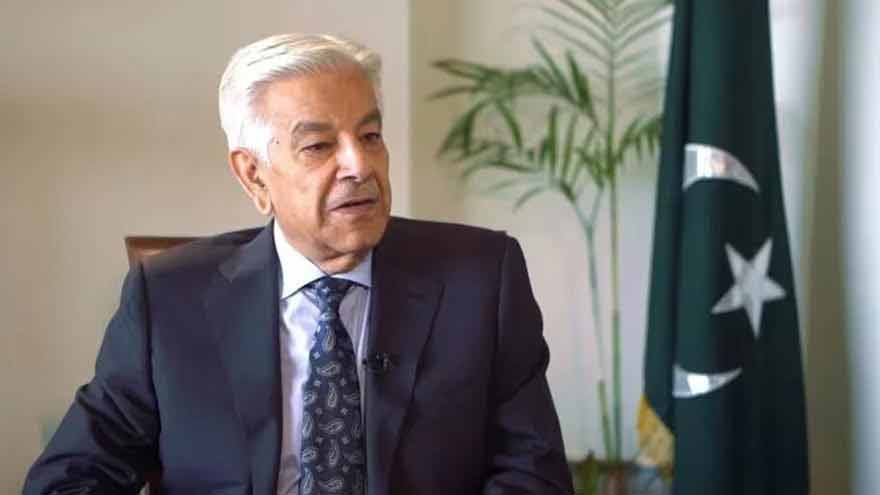
n of new provinces, adding that the political landscape could change rapidly once an agreement is reached.
Asif said the establishment of new administrative units or provinces would not threaten the political interests of any individual or party but would instead be a welcome development for Pakistan. He clarified that the military establishment never asked political leaders to discuss the creation of new provinces, adding that he was also not aware of the proposed mechanism to create new administrative units or provinces.
The defense minister said the Pakistan Tehreek-e-Insaf (PTI) founder should not oppose the creation of new provinces, arguing that accepting the proposal could also open up new political opportunities for him. Mr. Asif said there had been positive progress in the ongoing talks and stressed that politics is the art of creating possibilities.
He added that confidence had been expressed in all political parties and expressed hope that a mutually acceptable solution would be found.
He further said that differences and reservations could be transformed into consensus over the next few weeks, adding that a new administrative or political system could also emerge in the new year.
Browse Topics

Oil prices fell on Monday on hopes of a glut as supplies to the Middle East through the Strait of Hormuz returned to near pre-war levels and the United States took steps to help move fuel goods between inland ports.
At around 1:45 a.m. Japan time, Brent crude oil futures fell 47 cents, or 0.49%, to $95.37 per barrel. US West Texas Intermediate (WTI) crude oil fell 23 cents, or 0.26%, to $88.33.
Oil prices closed lower on Friday as markets weighed signs of easing geopolitical risks from the US-Israel-Iran war, which has entered its ninth month. Last week, the indexes fell 16% and 13%, respectively.
The International Energy Agency said on Friday that the global oil market will return to surplus in the fourth quarter of this year as Middle East exports recover faster than global oil demand, despite continued attacks on ships. “For the first time since the start of the US-Iran conflict, traders are actively considering the possibility of oversupply rather than continuing shortages. This change in rhetoric clearly lowers the tone,” said Tim Waterer, chief analyst at KCM Trade. Oil supplies averaged 105 million barrels per day in the fourth quarter, exceeding forecast demand by 1.7 million barrels per day, the IEA said. The IEA had previously predicted a supply shortage in the fourth quarter. The agency also provided further details about the remaining volume from member countries’ record release of emergency stockpile crude oil pledged in March, saying 71 million barrels, including 15 million barrels of diesel, would be made available by the end of February to ease market tensions.
A U.S. decision to expand shipping laws to make it easier for foreign-flagged vessels to transport fuels such as oil, gasoline and diesel between U.S. ports also put pressure on prices. President Donald Trump has extended for 90 days the repeal of the Jones Act, which requires U.S.-flagged vessels to transport cargo between U.S. ports, a White House spokesperson announced Friday.
Repealing this rule would increase the number of tankers that can transport goods between U.S. ports. However, Waterer noted that despite tight supply, transportation charges remain high, keeping oil prices in check.
Rates remain high due to the risks tankers face when transporting crude through the Strait of Hormuz and the dwindling supply of crude oil as many ships are stuck plying the waterway to transfer cargo to other ships carrying cargo to refineries.
On Sunday night, Iran’s navy said that an oil tanker caught fire after striking a naval mine east of the Strait of Hormuz, state media reported.
Reuters could not independently verify the report.

The yen was near a two-month low against the dollar and little changed against the euro in Asian trading on Monday as markets weighed how Japan’s unexpected third-quarter economic downturn could affect the political outlook.
The yen has been rising and falling without much movement, trading at 159.72 yen against the dollar and 176.03 yen against the euro, close to the level at which Japanese and U.S. authorities reportedly intervened earlier this year.
“Unless weakness spreads into wages, services and underlying domestic demand, the BOJ is likely to look through the soft patch,” said Masahiko Loo, chief fixed income strategist at State Street Investment Management in Tokyo.
“The yen may take the initial hit, but expect strong resistance to further weakness in the 160s,” he added. “The risk of intervention increases, but at this level the risks and rewards of adding new short yen positions become increasingly less attractive.”
Data showed Asia’s second-largest economy shrank by 0.1% in the July-September period from a year earlier, lower than expected growth of 0.3%.
Most other currency pairs remained stable in early Asian trading. The euro was at $1.1021, the British pound was at $1.3212, the Australian dollar was down 0.1% at $0.6769, and the Kiwi dollar was stable at $0.5520.
The dollar stabilized at 6.6716 yuan in offshore trading against the Chinese yuan, after figures released on Monday showed China’s industrial production slowed to 4.8% in October from a year earlier, while retail sales growth also slowed.
The dollar has been gaining strength lately, rising against most of its peers for the past five consecutive sessions after hawkish commentary from Federal Reserve officials and a hot October inflation report, which have revived bets that the US central bank will have to take aggressive action to rein in cost-of-living pressures.
The video player is currently playing an ad. You can skip ads in 5 seconds using your mouse or keyboard.
The US dollar index, which measures the greenback’s strength against a basket of six currencies, traded at 103.46, its highest level since April 2025.
“Markets are forecasting higher US rates in the near term, but also a larger slowdown in medium-term US economic growth due to contractionary policies,” MUFG analysts wrote. “This slowdown has not yet materialized.”
Kansas City Fed President Jeff Schmidt said Sunday that the U.S. central bank “has work to do to combat inflation.” He is not a voting member of this year’s Federal Open Market Committee. Federal funds futures have priced in a 92% implied probability of a 25 basis point rate hike in the two-day U.S. central bank meeting ending Dec. 9, and an 8% implied probability of a 50 basis point rate hike, up from 11.5% on Friday, according to CME Group’s FedWatch tool.
According to the tool, traders are predicting four rate hikes by next September, albeit within a narrow range. The 10-year Treasury yield fell 1.2 basis points to 5.137%.
In the crypto market, Bitcoin rose 0.4% to $65,289.20, stabilizing from a three-day slide that saw the largest digital asset fall to a four-month low over the weekend, while Ether rose 0.6% to $1,830.66.

Political consensus on new provinces in the making: Khawaja Asif

Federal constitutional court amends stay order on 3-MPO arrests in KP

Oil prices fall on expectations of coming supply surplus

ICC board meeting in India: Mohsin Naqvi gets invitation

‘Self-Reliance in Digital ID’: NADRA launches locally produced QR code-based National Identity Card

23 people have died during the monsoon as rain-related incidents plague Punjab and KP.
-
 Latest News6 months ago
ICC board meeting in India: Mohsin Naqvi gets invitation
-
 Latest News3 months ago
‘Self-Reliance in Digital ID’: NADRA launches locally produced QR code-based National Identity Card
-
 Latest News4 months ago
23 people have died during the monsoon as rain-related incidents plague Punjab and KP.
-

 Latest News3 months ago
Turkish FM, Dar discuss regional trends, bilateral connections
-

 Business4 months ago
Govt dedicated to resolving Balochistan issues: Dar
-

 Latest News4 months ago
Pakistan making rapid progress in robotics, AI: Shaza Fatima
-

 Entertainment6 months ago
Interim bail given to YouTuber Rajab Butt in gambling app marketing case
-

 Latest News4 months ago
After a divorce, LHC decides that women who have been harmed by their spouses get their dower.