
Business
KSE-100 falls more than 1,000 points as PSX continues to lose

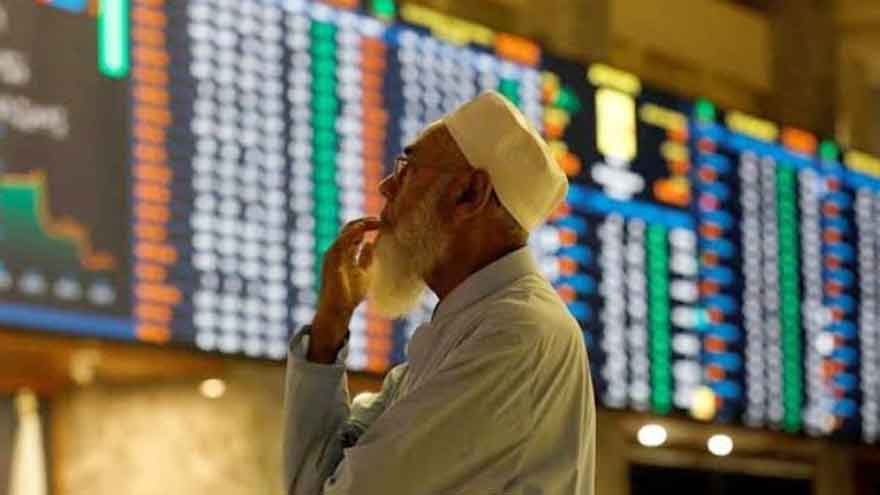
Pakistan Stock Exchange (PSX) opened in negative territory on the second trading day of the week, with the benchmark KSE-100 Index falling by more than 1,000 points in early trading.
The KSE-100 Index dropped to 180,076 points shortly after the start of trading, reflecting a sharp decline in market sentiment.
The stock market had also closed lower in the previous trading session. The KSE-100 Index ended the day at 181,310 points, down 119 points.
Meanwhile, Oil prices rose on Tuesday as negotiations between the United States and Iran over a peace deal and the reopening of the Strait of Hormuz hit an impasse, while Asian shares drifted on protracted uncertainty over the global inflation outlook.
U.S. President Donald Trump responded with his own demands on Monday to Iran’s conditions for a peace deal, calling for Iran to pay compensation for those killed in wars, attacks and protests, in a rhetorical escalation likely to complicate efforts to reopen the crucial waterway.
MSCI’s broadest index of Asia-Pacific shares outside Japan (.MISX00000PUS), opens new tab swung between losses and gains and was up 0.36%, while South Korea’s KOSPI (.KS11), opens new tab rose 1.3%, as the latest escalation in Gulf hostilities kept market sentiment fragile.
Nasdaq futures edged 0.34% higher while S&P 500 futures added 0.13% after Wall Street ended lower in Monday’s cash session.
EUROSTOXX 50 futures were flat, while FTSE futures fell 0.05% and DAX futures edged 0.07% higher. Pakistan Stock Exchange (PSX) opened in negative territory on the second trading day of the week, with the benchmark KSE-100 Index falling by more than 1,000 points in early trading.
The KSE-100 Index dropped to 180,076 points shortly after the start of trading, reflecting a sharp decline in market sentiment.
The stock market had also closed lower in the previous trading session. The KSE-100 Index ended the day at 181,310 points, down 119 points.
Meanwhile, Oil prices rose on Tuesday as negotiations between the United States and Iran over a peace deal and the reopening of the Strait of Hormuz hit an impasse, while Asian shares drifted on protracted uncertainty over the global inflation outlook.
U.S. President Donald Trump responded with his own demands on Monday to Iran’s conditions for a peace deal, calling for Iran to pay compensation for those killed in wars, attacks and protests, in a rhetorical escalation likely to complicate efforts to reopen the crucial waterway.
MSCI’s broadest index of Asia-Pacific shares outside Japan (.MISX00000PUS), opens new tab swung between losses and gains and was up 0.36%, while South Korea’s KOSPI (.KS11), opens new tab rose 1.3%, as the latest escalation in Gulf hostilities kept market sentiment fragile.
Nasdaq futures edged 0.34% higher while S&P 500 futures added 0.13% after Wall Street ended lower in Monday’s cash session.
EUROSTOXX 50 futures were flat, while FTSE futures fell 0.05% and DAX futures edged 0.07% higher.

Pakistani freelancers created a new record in the country’s digital economy by earning the most amount of foreign currencies in September 2026.
Figures indicate exports by freelancers hit a record $197 million last month, up 49 percent year-on-year and 11 percent month-on-month in September 2026.
Pakistani freelancers have exported services worth $550 million from July to September 2026, representing a substantial 46% growth in export profits in the first quarter of the current fiscal year.
Note that before, Pakistani freelancers earned foreign currencies of $1.76 billion in the fiscal year 2025-26.
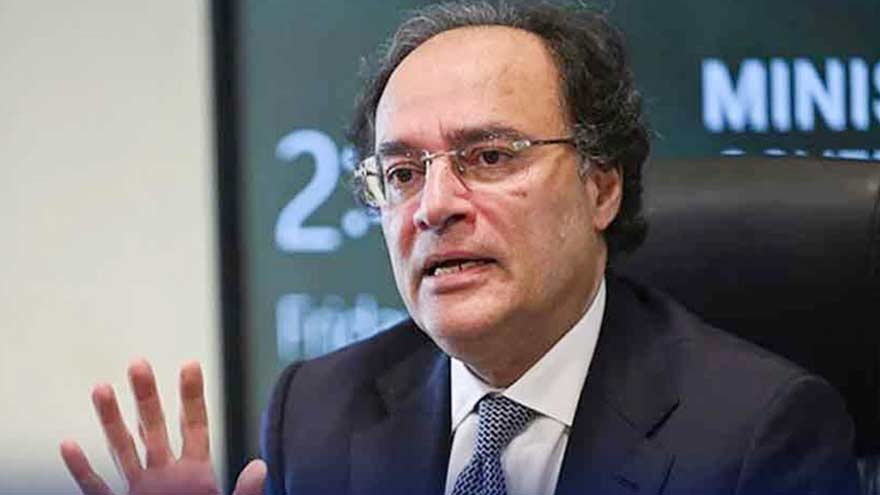
ISLAMABAD: Finance Minister Muhammad Aurangzeb said on Saturday Pakistan had so far been able to weather the shock from the soaring oil costs due to the Iran war but attacks on infrastructure in Saudi Arabia and other Gulf countries were “worrying” for the country’s longer-term economic prospects.
“We have enough energy supplies for November and we are preparing for the winter months when the demand of households goes up,” Aurangzeb told AFP on the sidelines of the IMF-World Bank Annual Meetings in Bangkok.“Pakistan has negotiated well the first order impact,” he remarked.”We have had no shortage, no queues at the gas stations and no law and order situation which at times we have seen in some of the countries,” he said.
“The government would not be procuring spot cargoes on the LNG front unless it saw an absolute dire need,” he said. These are often much more expensive than contracted cargoes.
Since the United States and ally Israel began the war on Iran in February, global energy prices have skyrocketed, with Tehran’s retaliatory action against Washington’s Gulf allies, and curbing supply of oil and gas.
And with Yemen’s civil conflict flaring up again, the Houthis there have frequently assaulted Saudi infrastructure like energy installations and airports in recent days.
“Damage to such sites will only prolong the restoration to economic normalcy,” Aurangzeb said. “I am alarmed about the escalation.“The scary part of it is when the energy infrastructure starts getting hit now,” he warned.To be very honest I don’t know where that would go. But one thing is very clear: if the infrastructure continues to get hammered, the return to normalcy, even if things subside, will be longer,” he said.Pushback
Pakistan is a regular customer of the International Monetary Fund (IMF), the lender of last resort to countries teetering on default.
Since independence in 1947, it is now in the middle of its 25th program with the Fund – at least 11 of which have been full-fledged bailouts.
The present program is worth about $7 billion over three years and the Fund agreed last month to disburse a $1.2 billion tranche.
The Fund urged on all economies, even those most vulnerable to the shock of the Iran conflict, to engage in fiscal consolidation at this year’s annual meetings to avoid a possible crisis given the high levels of global debt stocks. ““We have been on this fiscal consolidation path for a while, thankfully for us,” Aurangzeb added with rueful smile.
In recent years tax revenues of the country have expanded considerably and the finance minister indicated that the government was targeting the theft of taxes by private sector enterprises who collected sales tax from consumers but never paid it into government accounts.
The theft was in the billions of dollars, Aurangzeb said, adding that there was “room for improvement” in strengthening income tax collection.
He claimed industry, lobbying groups and vested interests had resisted the government’s reform agenda.“Every reform, every thing you try to do when you try to change the status quo, there is pushback,” he said.
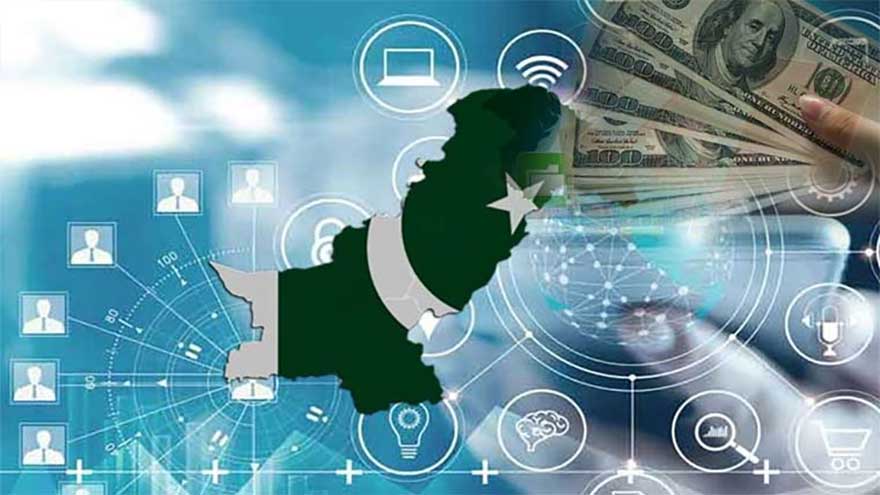
Pakistan’s information technology (IT) exports reached $435 million in September 2026, a 19% year-on-year increase and the largest in nine months, the State Bank of Pakistan (SBP) said.
IT export profits increased 10 percent in September from a month earlier, the central bank said, as the country’s technology services industry continued to thrive.
IT exports was at $1.25 billion in the first quarter of this fiscal year, July to September.
The SBP data also revealed that the country’s yearly IT export revenues climbed by 20 percent in the last year to $4.8 billion from $4 billion.
Govt targets $10 bn exports
The government has set a target to expand IT exports to $10 billion by the end of the fiscal year 2028-29 under its Uraan Pakistan strategy.
This aim can be achieved through ongoing expansion of Pakistan’s digital economy, improved foreign market access and sustained growth in technology services.

Trophy unveiled as Pakistan, Sri Lanka and England gear up for ODI tri-series

Indian students hold ‘stop vote theft’ protest against Modi govt in London

Canada reports deaths after ‘incident’ on military base in Alberta

ICC board meeting in India: Mohsin Naqvi gets invitation

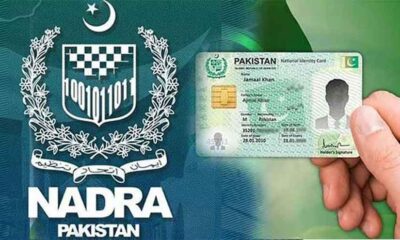
‘Self-Reliance in Digital ID’: NADRA launches locally produced QR code-based National Identity Card

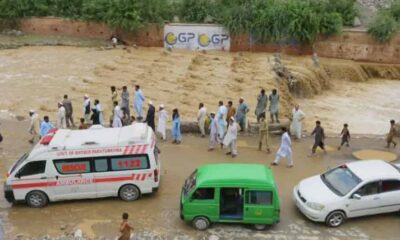
23 people have died during the monsoon as rain-related incidents plague Punjab and KP.
-
 Latest News5 months ago
ICC board meeting in India: Mohsin Naqvi gets invitation
-
 Latest News2 months ago
‘Self-Reliance in Digital ID’: NADRA launches locally produced QR code-based National Identity Card
-
 Latest News3 months ago
23 people have died during the monsoon as rain-related incidents plague Punjab and KP.
-
 Latest News2 months ago
Turkish FM, Dar discuss regional trends, bilateral connections
-
 Business3 months ago
Govt dedicated to resolving Balochistan issues: Dar
-
 Latest News3 months ago
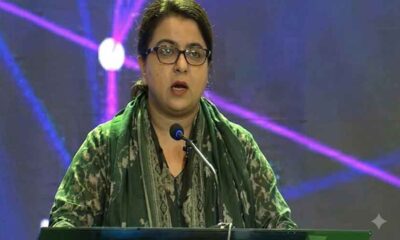
Pakistan making rapid progress in robotics, AI: Shaza Fatima
-

 Entertainment5 months ago
Interim bail given to YouTuber Rajab Butt in gambling app marketing case
-
 Latest News3 months ago
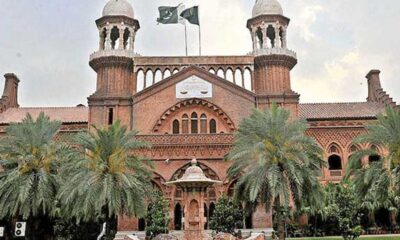
After a divorce, LHC decides that women who have been harmed by their spouses get their dower.