
Business
Minister calls for sensible taxation to boost rural economy in Pakistan

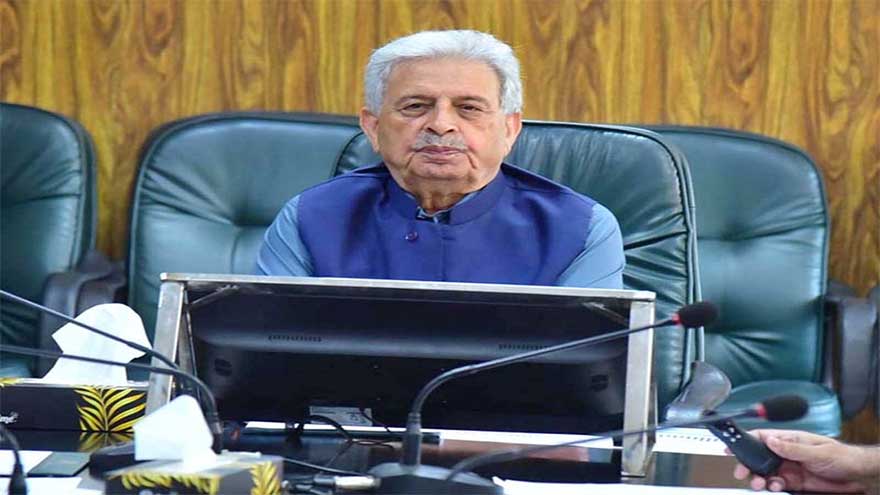
Rana Tanveer Hussain, the Minister for National Food Security and Research, stated on Tuesday that Pakistan required intelligent taxes in order to encourage innovation, rural economy, and nutrition.
The minister was speaking at a high-level consultation that was organised by the Sustainable Development Policy Institute (SDPI). The purpose of the consultation was to discuss the rationalisation of the Federal Excise Duty (FED) on beverages and juice products in Pakistan. The consultation was attended by key stakeholders from the government, academia, industry, and development partners.
The economic, nutritional, industrial, and agricultural aspects of the current tax structure were the primary topics of debate, as were the broader implications that this structure has for the food and beverage industry in the country.
The minister emphasised that taxation is not only a fiscal instrument but also a policy tool that impacts consumer patterns, public health outcomes, and industrial growth. He said this in a statement.
He made the observation that the existing universal FED regime does not effectively reflect the major disparities in sugar content, nutritional value, and economic benefit across the many categories of beverages. As a result, he advocates for a taxation strategy that is more nuanced and evidence-based.
In his speech, Rana Tanveer Hussain emphasised that Pakistan’s policy framework needs to carefully balance several objectives. These objectives include the protection of public health, the sustainability of domestic agriculture, the competitiveness of industry, and the stability of government revenues.
He pointed out that these objectives are not in conflict with one another and that they can be achieved simultaneously through the establishment of policies that are calibrated and sensible.
The minister emphasised the connection between the beverage industry and agriculture, pointing out that the formal juice industry plays a significant role in the strengthening of agro-based value chains. This is accomplished by the industry’s acquisition of substantial quantities of locally produced fruits, which in turn creates opportunities for income for farmers, transporters, processors, packaging suppliers, and rural workers.
Specifically, he emphasised the significance of maintaining policy stability in this sector in order to foster investment, value creation, and sustained economic expansion.
During the same time, he brought attention to the rising problem of undocumented and unregulated markets, and he cautioned that undue pressure on documented sectors can unintentionally drive consumers towards alternatives that are cheaper and of lesser quality.
According to him, such transitions give rise to significant concerns surrounding food safety, consumer protection, and revenue leakage, and as a result, they necessitate careful policy calibration.
Additionally, the minister brought attention to the worldwide movement towards differentiated pricing based on sugar content and nutritional composition. He stated that Pakistan ought to proceed in a similar direction by supporting healthier product formulations and innovation within the business.
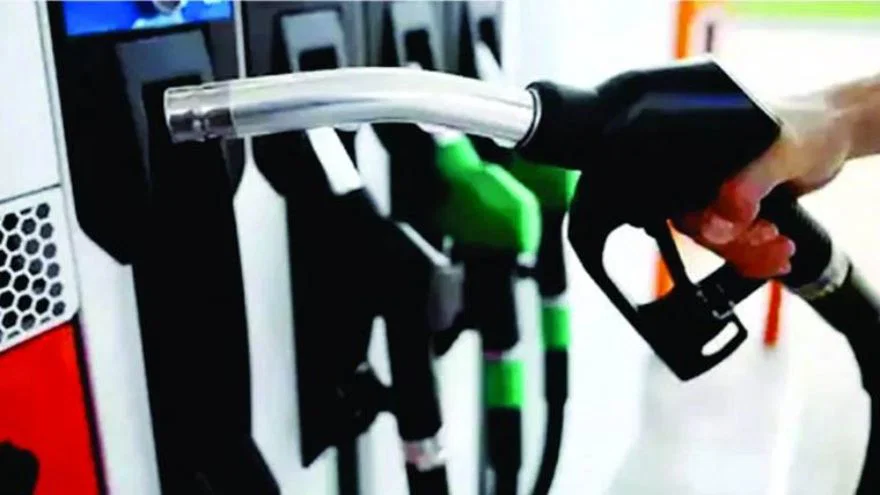
The federal government has cut petrol prices by Rs1 per liter while raising the rate of high-speed diesel (HSD) by Rs2, offering motorists a mixed fix as global oil markets remain volatile amid renewed tensions in the Middle East.
According to the revised oil prices announced on Friday, November 20, petrol will now cost Rs 322 per liter from Rs 323, while high-speed diesel has become more expensive by Rs 357 per liter from the previous rate of Rs 355. According to the announcement of the Oil and Gas Regulatory Authority (OGRA), the new prices will be valid until November 23.
The latest correction comes as Pakistan moves to a daily oil price mechanism, which allows international oil prices to be reflected more often in domestic fuel prices. The shift is designed to respond more quickly to volatility in global energy markets, especially as geopolitical developments continue to impact crude oil supply and prices.
Daily Fuel Price Review
OGRA has started publishing daily oil prices on its official website as part of the government’s efforts to increase transparency and make the domestic pricing system more sensitive to international market movements. The launch of the daily review marks the latest change in Pakistan’s fuel pricing system, which has been made several times in response to changing international market conditions.
Before the recent changes, oil prices were usually adjusted every two weeks. Following the outbreak of the Middle East conflict on February 28, the government moved to a weekly review mechanism to respond more quickly to uncertainty in global oil markets.
International oil prices have faced renewed uncertainty following escalating hostilities in the Middle East, with concerns over the security of energy supplies adding pressure to global markets.
The conflict began on February 28, when Israel and the United States attacked Iran, prompting Tehran to shut the Strait of Hormuz, a critical shipping route through which around one-fifth of the world’s energy supplies passed before the war.
The strategic waterway is particularly important for international oil and gas shipments, making any disruption a major concern for energy-importing countries, including Pakistan. Tensions continue after a fragile ceasefire between Tehran and Washington collapsed in June, reigniting fears of a wider confrontation and raising concerns about the flow of energy supplies through the strait.
For Pakistan, which is heavily dependent on imported petroleum products, fluctuations in international oil prices can directly affect the country’s import bills and domestic fuel costs.
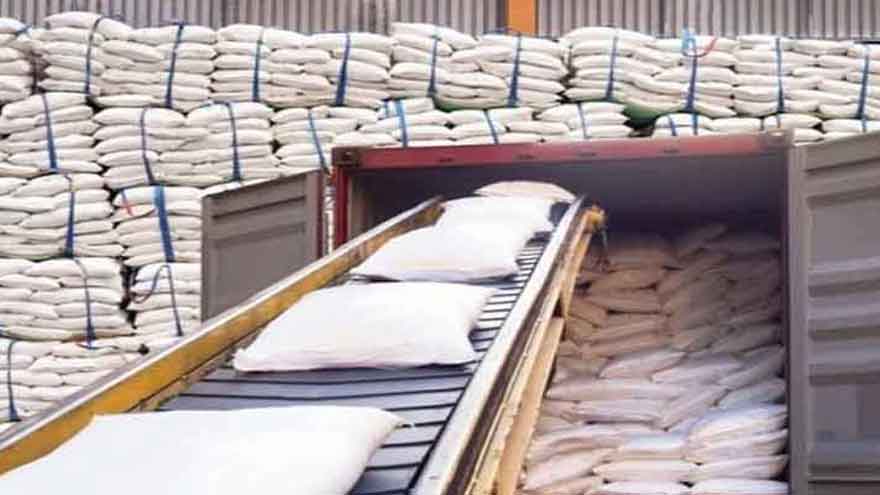
The Economic Coordination Committee (ECC) has approved the export of an additional 400,000 tons of sugar, so far the total amount approved for export reaches 600,000 tons.
According to sources in the Ministry of Finance, the government had previously authorized the export of 200,000 tons of sugar. Based on the request to export 800,000 tonnes, a further 400,000 tonnes have now been approved.
Sources said the government had allowed the export of sugar in the previous financial year as well. However, as exports increased, domestic sugar prices rose.
The government believes that the purpose of allowing the export of sugar is to protect the interests of farmers and ensure they receive an adequate price for their produce. Meanwhile, the Ministry of Finance did not mention either the decision on sugar export or the approved quantities in the official announcement.
We also tried to understand the position of ministry officials on this issue, but they refused to comment. No response had been received from them at the time of publication.

Pakistan Stock Exchange (PSX) continued its downward trend on Wednesday, with the benchmark KSE-100 index down 627.21 points or 0.35% to 176,890.52.
According to the latest market data, the index hit an intraday high of 177,719.05 points and a low of 176,596.41 points. The trading volume stood at 16.63 million shares.
The benchmark index had closed at 177,517.73 points in the previous trading session, after shedding 665.21 points, or 0.37 per cent, on Tuesday. During Tuesday’s session, the ready market recorded a trading volume of 839.224 million shares as compared to 1,339.586 million shares in the previous session.
The trading volume in the ready market stood at Rs 20.158 billion, up from Rs 32.584 billion recorded a day earlier.

NCCIA arrests suspect over alleged theft and sale of sensitive US government data

IHC schedules Imran Khan, Bushra Bibi’s appeals in 190mn pounds case for November 25

CDWP approves seven development projects worth Rs19.3 billion

ICC board meeting in India: Mohsin Naqvi gets invitation

‘Self-Reliance in Digital ID’: NADRA launches locally produced QR code-based National Identity Card

23 people have died during the monsoon as rain-related incidents plague Punjab and KP.
-
 Latest News6 months ago
ICC board meeting in India: Mohsin Naqvi gets invitation
-
 Latest News3 months ago
‘Self-Reliance in Digital ID’: NADRA launches locally produced QR code-based National Identity Card
-
 Latest News4 months ago
23 people have died during the monsoon as rain-related incidents plague Punjab and KP.
-

 Latest News3 months ago
Turkish FM, Dar discuss regional trends, bilateral connections
-
 Business4 months ago
Govt dedicated to resolving Balochistan issues: Dar
-
 Latest News4 months ago
Pakistan making rapid progress in robotics, AI: Shaza Fatima
-

 Entertainment6 months ago
Interim bail given to YouTuber Rajab Butt in gambling app marketing case
-
 Latest News4 months ago
After a divorce, LHC decides that women who have been harmed by their spouses get their dower.