
Latest News
Mohsin Naqvi says empowering youth remains government’s top priority

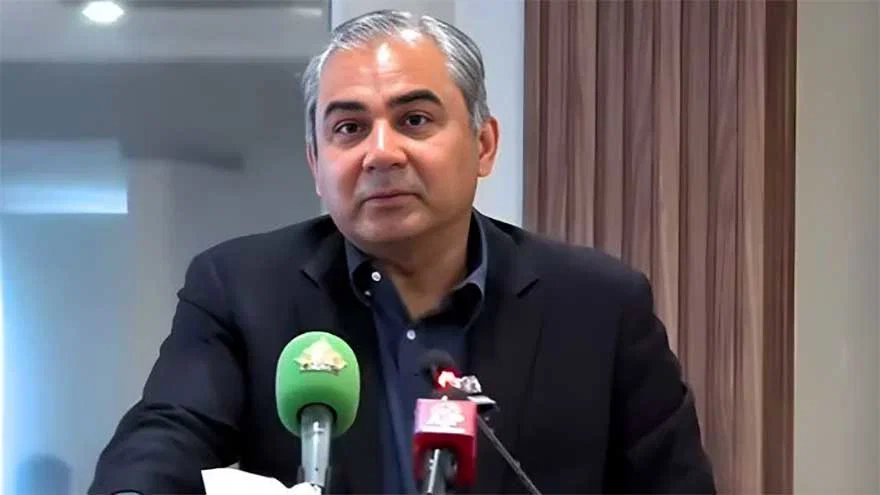
“The provision of opportunities to the youth remains the top priority of the government and the future development of the country depends on their active role,” said Interior Minister Mohsin Naqvi.
Speaking on the occasion of inaugural ceremony of Healthtrix American Center of Excellence in Lahore, Naqvi said it was a pleasure for him to participate in the event and stressed the need to create chances for young people and enterprises.
He said he had previously worked for an American corporation and recognised the hurdles involved with working in the sector, especially the difficulties of working nite shifts and staying awake during late hours.
“The government has been providing substantial support to the information technology sector,” said Naqvi adding that the government has the key responsibility to facilitate business and provide greater possibilities to the entrepreneurs.
He stressed that being a public official meant duty and accountability, because the decisions that officials make might effect the lives and livelihoods of thousands of people. “”Our highest priority is the young generation, and the government has the first responsibility to give opportunities to young people,” he stated.
The interior minister said young people would have to play a major role in pushing Pakistan ahead. The government had given support to the IT industry and the sector’s exports had also increased, he added.
He said he hoped Pakistani entrepreneurs and business leaders would learn a lesson from overseas investors by investing in the country and setting up new commercial enterprises.
Naqvi said more investment and new company ventures might generate possibilities for young people and contribute to economic progress.
Electricity consumers across Pakistan, including Karachi, may face additional financial burden in December as quarterly and monthly electricity tariff revisions are expected to increase electricity bills by a total of Rs 4.22 per kWh, sources said.
Sources said a key meeting on power prices was held in December under the leadership of Prime Minister Shebaz Sharif, where officials presented information on power prices and the additional financial burden that may be imposed on consumers. Electricity consumers across the country are currently paying Rs 2.89 per unit of electricity based on quarterly and monthly adjustments, sources said. However, the consolidated burden is expected to increase by another Rs 1.33 per unit in December over November, bringing the total adjustment to Rs 4.22 per unit. Sources said the prime minister was briefed on the details of electricity prices as the government worked to minimize the additional financial burden on consumers.
Meanwhile, power distribution companies have submitted an application to the National Electricity Regulatory Authority (NEPRA) for a hike in electricity prices by Rs 1.34 per unit in the July-September 2026 quarter review.
The requested increase is proposed to remain applicable for the next three months. NEPRA has already conducted a hearing on the quarterly adjustment application, but its decision is still awaited. Separately, the Central Power Purchase Agency (CPPA) has sought an increase of Rs 2.88 per unit under the monthly fuel price revision for October 2026.
The proposed monthly adjustment is expected to be introduced next month, increasing the financial burden on electricity consumers across the country.
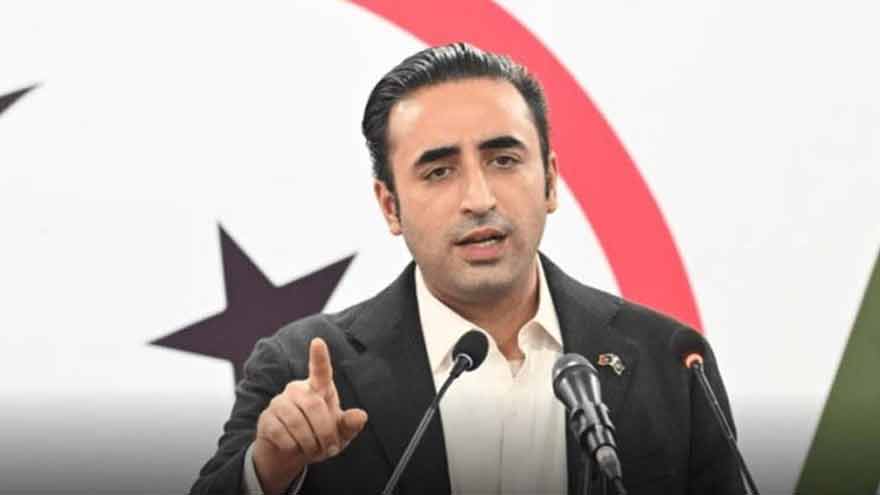
Pakistan Peoples Party (PPP) Chairman Bilawal Bhutto Zardari has stated that Prime Minister Shebaz Sharif has not been given an opportunity to focus on the issues facing the society.
Speaking at an event in Karachi on Friday, Bilawal said that all Pakistani citizens bear the financial burden of the conflict involving Iran. He emphasized that providing assistance to the society remains the top priority of the Pakistan People’s Party.
He pointed out that because of the conflict involving Iran, people around the world, including Pakistan, are struggling with inflation and economic hardship. “The financial burden of this conflict is borne by every Pakistani. The economic crisis has pushed up the prices of diesel and fertilizers, and societal hardship is likely to intensify until the conflict ends,” the PPP chairman said. He said that the PPP is fully aware of the economic crisis, inflation and unemployment plaguing the country.
PPP chairman emphasized that small farmers make up 90% of the agricultural sector and OPP has always supported them.
He stated that it has always been the Pakistan Peoples Party’s (PPP) approach to stand by the public during economic crises and to take practical measures to help them overcome their hardships.
He suggested that all political parties should adopt the PPP’s manifesto so that initiatives focused on public welfare and relief can be prioritized.
Latest News
SCO forum: Pakistan, India must strengthen cultural ties through dialogue, says Musadik Malik
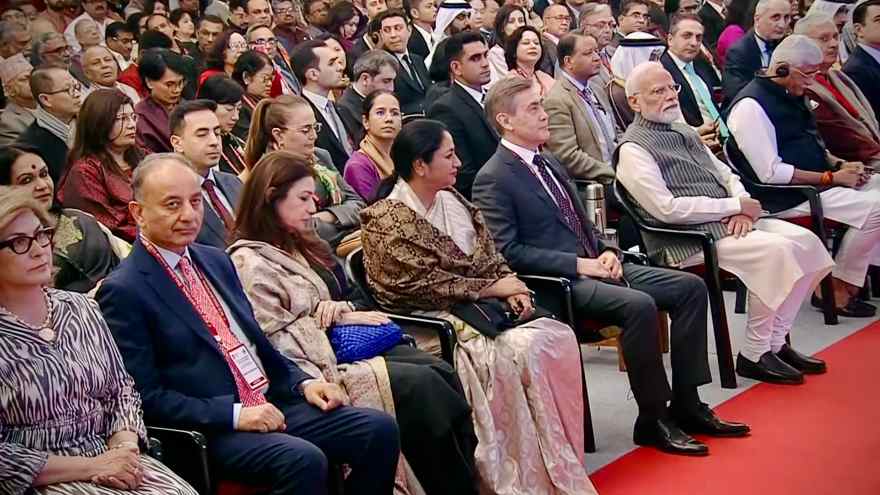
Pakistan has called for closer cultural ties and greater dialogue between countries in the region, where the Federal Minister for Climate Change, Dr. Musadiq Masood Malik at the Shanghai Cooperation Organization (SCO) forum in New Delhi emphasizes the importance of the civilization of Pakistan and India.
dr. Musadik Malik informally told the media during the SCO Forum on Dialogue among Civilizations that opportunities for multilateral discussions on culture and civilizations are particularly important, giving countries a platform to explore shared historical, geographical and cultural ties. Emphasizing that culture and civilization are not limited by national or geographical boundaries, he argued that dialogue between regional countries is essential to understanding their common heritage and appreciating their differences.
“Dialogue between civilizations is not unity, but diversity,” said the minister, emphasizing the importance of maintaining dialogue between countries with different cultural features and historical experiences. dr. Musadiq Malik said that promoting civilizational ties and dialogue between Pakistan and India and other countries in the region has become an important necessity.
Pakistani delegation visits India
According to the Indian Minister of Culture and Tourism, Dr. Musadiq Malik’s invitation to the Pakistani delegation to participate in the SCO Dialogue of Civilizations Forum held in New Delhi from November 20 to 22. The federal minister arrived in India to attend the event and was received by Pakistan’s charge d’affaires Saad Walaich.
A spokesman for Pakistan’s Ministry of Foreign Affairs said that the Pakistani delegation participated in the forum to demonstrate the country’s views on dialogue among civilizations and to emphasize its contribution to regional diplomacy. Pakistan also used the platform to showcase its diverse cultural and civilizational heritage and highlight its constructive role within the SCO framework.
The delegation will participate in thematic discussions and hold meetings with representatives of other SCO member states during the forum.
The discussions provide an opportunity for participating countries to exchange views on their historical connections, cultural identities and the importance of cooperation across geographical and political boundaries.
During his interaction with the media, Dr Musadik Malik highlighted the historical connections linking Pakistan, India, Russia, China and the Central Asian republics.
He said the countries shared centuries-old civilisational links, with archaeological discoveries and excavations across the region providing evidence of common cultural traditions and historical interactions.
The minister noted that these connections demonstrated how civilisations had developed through centuries of interaction, trade, cultural exchanges and the movement of people across territories that are now divided by modern national borders. He said the SCO forum is an important opportunity for countries to discuss these shared experiences and increase understanding of the region’s diverse cultural heritage.
Dr. Mousadiq Malik reiterated that cultural and civilizational exchanges should not be limited by geographical boundaries, adding that there is a need for dialogue between regional countries to recognize their commonalities and differences. His remarks placed special emphasis on Pakistan-India cultural engagement, suggesting that sustained dialogue could help preserve historical ties and encourage greater understanding between the neighboring countries.
Pakistan highlights Shanghai Spirit
The Foreign Ministry spokesman said Pakistan’s participation in the forum reflected its commitment to the principles of the Shanghai Spirit, which underpins cooperation among SCO member states. Islamabad is expected to host a series of SCO-related events ahead of next year’s summit, providing more opportunities for engagement among member states.
The Council of Heads of State is the organization’s highest decision-making body, and brings together leaders of member states to discuss important issues involving regional cooperation and the organization’s future development direction. The New Delhi Forum brought together representatives of SCO member states to discuss the role of cultural exchange, historical understanding and dialogue in strengthening regional relations.
For Pakistan, the event provides an opportunity to showcase its cultural heritage and diplomatic priorities, while communicating with the participating countries about the shared historical experience and the importance of cooperation between civilizations.

Electricity consumers may face Rs4.22 per unit adjustment burden in December

Bilawal says PM Shehbaz has not been given time to focus on public issues

SCO forum: Pakistan, India must strengthen cultural ties through dialogue, says Musadik Malik

ICC board meeting in India: Mohsin Naqvi gets invitation

‘Self-Reliance in Digital ID’: NADRA launches locally produced QR code-based National Identity Card

23 people have died during the monsoon as rain-related incidents plague Punjab and KP.
-
 Latest News6 months ago
ICC board meeting in India: Mohsin Naqvi gets invitation
-
 Latest News3 months ago
‘Self-Reliance in Digital ID’: NADRA launches locally produced QR code-based National Identity Card
-
 Latest News4 months ago
23 people have died during the monsoon as rain-related incidents plague Punjab and KP.
-
 Latest News3 months ago
Turkish FM, Dar discuss regional trends, bilateral connections
-
 Business4 months ago
Govt dedicated to resolving Balochistan issues: Dar
-
 Latest News4 months ago
Pakistan making rapid progress in robotics, AI: Shaza Fatima
-
 Entertainment6 months ago
Interim bail given to YouTuber Rajab Butt in gambling app marketing case
-
 Latest News4 months ago
After a divorce, LHC decides that women who have been harmed by their spouses get their dower.