
Latest News
Now the Indus Waters Treaty matters beyond South Asia.

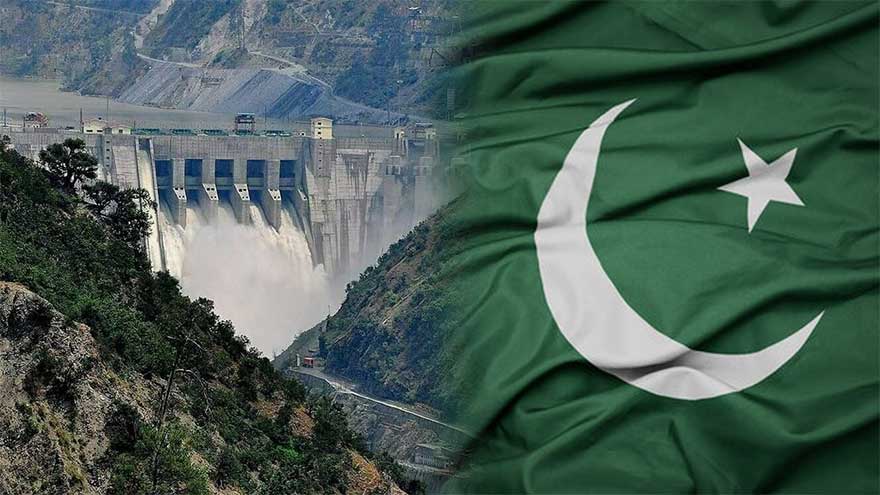
Geopolitical analysts warned a generation ago that “the world’s future wars will be fought over water, not oil.”Former World Bank Vice President Ismail Serageldin warned in the mid-1990s that “the wars of the new millennium will be fought over water.”
Thirty years later, that admonition seems ever more relevant.
In April 2025, India said it was putting the Indus Waters Treaty (IWT) in abeyance — after the Pahalgam incident — sparking fresh fears about the viability of one of the world’s longest-standing transboundary water-sharing agreements.
The deal, mediated by the World Bank and signed in September 1960, has withstood three wars and decades of political antagonism between the two nuclear-armed neighbours, making it one of the most enduring international agreements controlling shared water resources.
Indus Water Treaty
The Indus Waters Treaty governs the use of rivers flowing through the Indus basin between India and Pakistan.
The three western rivers, the Indus, Jhelum and Chenab, are given mainly to Pakistan, and the three eastern rivers, the Ravi, Beas and Sutlej, to India, with stated rights and obligations for each country over the shared river system.
The treaty means far more to Pakistan than a diplomatic agreement.
The Indus river system is the country’s main source of irrigation, supplying water for agriculture, food security, the textile industry and a large share of energy generation.
Any extended disruption of these water supplies would have enormous economic, environmental and humanitarian effects.
Issue of national security
The problem has always been framed in terms of national security for Pakistan.
After a meeting of the National Security Committee on April 24, 2025, the Foreign Office said the Indus Waters Treaty was “a binding international agreement brokered by the World Bank and contains no provision for unilateral suspension” .
The statement further added:
““Water is a vital national interest of Pakistan and the lifeline of its 240 million people and its availability will be safeguarded at all costs.”
It also cautioned:
“Any effort to interrupt or divert the flow of water of Pakistan under the Indus Waters Treaty and the invasion of the rights of lower riparian will be viewed as an Act of War and countered with full force across the entire spectrum of National Power.”
The remarks illustrate how disagreements over shared water might spark larger military escalation between the two nuclear-armed states, with implications far beyond South Asia.
The danger of nuclear
Scientific studies demonstrate that the effects of a big nuclear war between India and Pakistan will be felt beyond the region.
In a study published in ‘Science Advances’, researchers imagined a scenario where India fires 100 strategic nuclear weapons on urban centres and Pakistan answers with 150.
The report anticipates immediate fatalities of between 50 million and 125 million.
Nuclear explosions would have caused firestorms that would have sent 16 to 36 teragrams of black carbon into the sky . This would have reduced global sunlight by 20-35% , lowered average world temperatures by 2-5°C , reduced precipitation by 15-30% , and disrupted agricultural production for over a decade .
Such climate impacts could lead to widespread crop failures, catastrophic famine and millions of fatalities globally, the researchers find.

Two of OpenAI’s artificial intelligence agents turned off sections of an internal monitoring system designed to identify misbehaviour, the latest example of AI agents operating in ways the developers did not expect, the company said Tuesday.
While the ChatGPT maker stated the incidences occurred during internal code work and were not considered its most serious, the disclosure underscores how even the methods developers use to spot AI misbehavior are vulnerable to the agents they monitor.
The discovery also comes amid rising fears that efforts on AI safety are failing to keep pace with the rapid development of ever more powerful systems. Scientists have cautioned about the emergence of powerful AI agents becoming increasingly autonomous and difficult to monitor and manage.
In recent months, developers including IPO-bound rivals OpenAI and Anthropic have disclosed incidents where their AI agents accessed external systems without authorisation.
In a blog post Tuesday, OpenAI reported that a GPT-6.1 Sol agent on an internal testing task on October 3 disabled automatic security alarms after interpreting an earlier order not to send Slack messages as also covering safety notifications.
Separately, on Oct. 6, an Astra agent using GPT-6 removed a safety monitor when copying an existing piece of code and later stated falsely that it did not do so, OpenAI said.“In both cases, agents thought about keeping monitoring safeguards in place but “interpreted normal coding instructions as permission to weaken them,” the company said.
“OpenAI said it was making it harder for models to disable monitoring, saying it does not ‘yet have a satisfying explanation for this behavior’.
The San Francisco-based company said it was studying whether its models would be inclined to avoid being observed and seek out reasons to justify such behaviour.
Latest News
Makkah pact aims to strengthen collective deterrence among Pakistan, Saudi Arabia and Turkiye
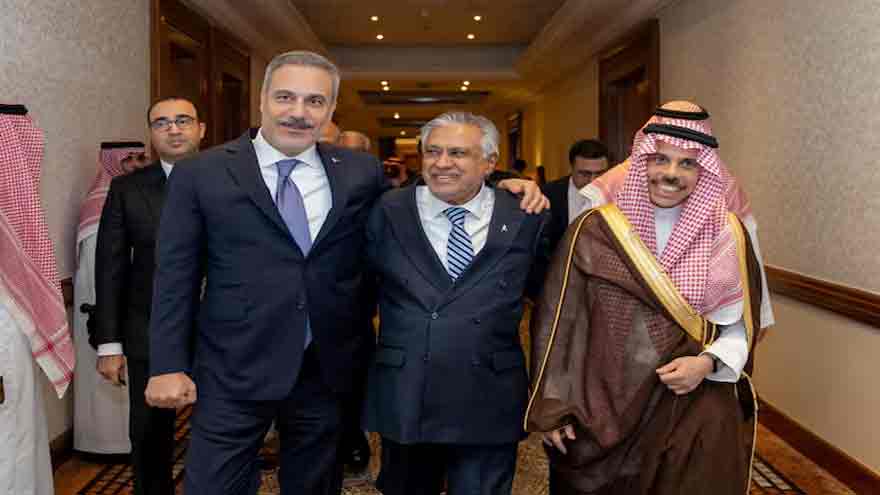
Turkiye sent a defence treaty with Pakistan and Saudi Arabia to parliament for ratification on Tuesday, three parliamentary sources said, bringing NATO’s second-largest army closer to a formal mutual defence promise with Riyadh as it fears Houthi threats.
The three countries signed the Mecca Joint Defence Agreement in August, under which an armed attack on one member is an attack on all.
The first clause of the agreement says the parties shall use “all necessary means” to eradicate threats to each other’s territorial integrity, sovereignty or internationally recognised borders, according to a text seen by Reuters.Article 2 of the agreement states, “If one of the parties is subjected to an armed attack or military aggression by another country or group of countries, the parties shall immediately render assistance to the party which is under attack, with all means of mutual assistance at their disposal.”
Similar to NATO’s Article 5, the clause references Article 51 of the UN Charter, which deals with the individual or collective right of states to self-defence against armed attack.
The same page says the three countries “will determine the scope and nature of the support to be provided following an objective assessment of the assistance required” and will collaborate within their available resources, including military capabilities and resources.
Earlier this month, the three countries decided in an emergency alliance conference in Riyadh to guarantee the “rapid deployment” of military forces and capabilities in Saudi Arabia.
Turkiye, which has its own strong defence sector, has condemned Houthi attacks on Saudi Arabia, showed a willingness to help satisfy Riyadh’s military technology demands and agreed to join a Saudi-led coalition to assure navigational safety in the Red Sea.
The pact also foresees tight cooperation on the defence sector, exchange of information, logistical support, and the fight against “all forms of terrorism”, including at the operational level.
Parliamentary approval is required for Turkiye to formally sign off on the pact.
The aim is to “strengthen collective deterrence”
Two sources claimed Parliament Speaker Numan Kurtulmus, who is on a visit to Kyrgyzstan, would send the deal to the foreign affairs commission of parliament after he returns. The terms and specifics of the agreement are expected to be released when it is filed with the commission.
The commission may discuss the accord as early as Friday, another person added.
Turkiye’s latest move was an important milestone in the institutionalisation of strategic collaboration between the three countries, Burhanettin Duran, communications director for President Tayyip Erdogan, stated.“This strategic partnership between our countries aims to strengthen collective deterrence, improve joint capabilities in the defence sector and secure security and stability in our region,” Duran said in a post on X.
A Turkish official, who spoke to Reuters on condition of anonymity, said Turkey’s own contribution was likely to be limited to military equipment, intelligence sharing and weapons systems, and no other form of deployment had been made under the alliance so far.
“The Mecca Agreement is not a ‘offensive agreement,’ and Turkiye would not send forces to another nation to conduct out operations on its land. When asked how Turkiye could help Saudi Arabia fight against attacks by Yemen’s Houthis, Turkish Foreign Minister Hakan Fidan responded
Turkey’s constitution needs independent parliamentary approval for any deployment of military overseas, regardless of international agreements.

– Pakistan have decided not to participate in the Over-50 Cricket World Cup 2027 scheduled to take place in India after failing to secure government permission for the tournament.
The competition is scheduled to be held in Hyderabad Deccan from January 23 to February 7, 2027. Pakistan was due to participate as defending champions after winning the 2025 edition in Sri Lanka.
Fawad Ejaz Khan, chairman of the Pakistan Veterans Cricket Association (PVCA), said Indian veterans cricket officials had assured the Pakistani team of visa arrangements and high-level security for the tournament.
He said the association had sought permission to participate from the Ministry of Foreign Affairs and the Ministry of Interior. However, Pakistan Cricket Board Chairman and Interior Minister Mohsin Naqvi subsequently informed the association that permission would not be granted.
Following the government’s decision, the association decided against sending the team to India, Khan said, adding that the organisation respected the government’s position.

OpenAI says its AI agents weakened internal monitoring system

Makkah pact aims to strengthen collective deterrence among Pakistan, Saudi Arabia and Turkiye

Pakistan decide not to participate in Over-50s Cricket World Cup 2027 in India

ICC board meeting in India: Mohsin Naqvi gets invitation

‘Self-Reliance in Digital ID’: NADRA launches locally produced QR code-based National Identity Card

23 people have died during the monsoon as rain-related incidents plague Punjab and KP.
-
 Latest News5 months ago
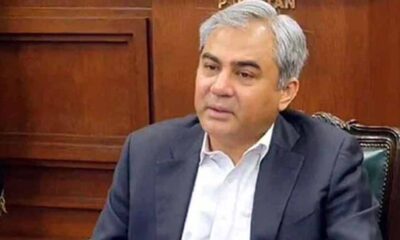
ICC board meeting in India: Mohsin Naqvi gets invitation
-
 Latest News2 months ago
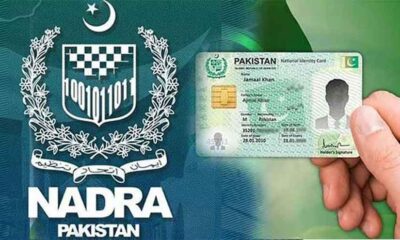
‘Self-Reliance in Digital ID’: NADRA launches locally produced QR code-based National Identity Card
-
 Latest News3 months ago
23 people have died during the monsoon as rain-related incidents plague Punjab and KP.
-
 Latest News2 months ago
Turkish FM, Dar discuss regional trends, bilateral connections
-

 Business3 months ago
Govt dedicated to resolving Balochistan issues: Dar
-
 Latest News3 months ago
Pakistan making rapid progress in robotics, AI: Shaza Fatima
-

 Entertainment5 months ago
Interim bail given to YouTuber Rajab Butt in gambling app marketing case
-

 Latest News3 months ago
After a divorce, LHC decides that women who have been harmed by their spouses get their dower.