
Business
Oil prices rise for second session on continued Middle East supply concern

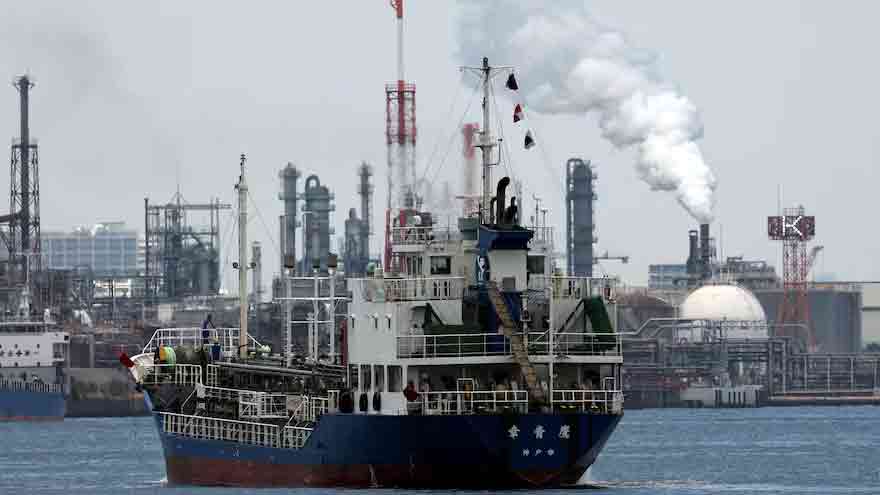
Oil prices increased for a second straight session on Tuesday as ongoing fears of Middle East supply disruption due to US-Iran tensions overshadowed signals of recovering crude supplies from the region.
Brent crude futures were up $1.49, or 1.4%, at $106.77 a barrel by 0326 GMT while US West Texas Intermediate crude was at $93.94, up $1.34, or 1.5%. Both benchmarks finished the last session with gains of around $1 a barrel.Higher volumes of oil exports are increasingly visible exiting the Gulf, but much of the growth still depends on workarounds such as ship-to-ship transfers. “The methods are less efficient, more costly than normal operations, which is why crude prices remain elevated,” KCM Trade chief analyst Tim Waterer said.
Crude exports from major Middle Eastern producers jumped to 12.8 million barrels a day in September, the highest since February, aided by higher shipments from Saudi Arabia and the United Arab Emirates, preliminary statistics from data source Kpler showed on Monday.
U.S. and Iranian officials separately spoke to mediators in a renewed effort to end seven months of hostilities, officials from both nations said. Further talks are widely expected to focus on a revised version of a seven-day proposal Iran submitted last week on the margins of the United Nations General Assembly.“The dominant risk remains the US-Iran standoff and its implications for energy prices and inflation expectations,” UOB analysts said in a client note.Iranian officials have allegedly been pessimistic about striking a compromise before the Strait of Hormuz crisis worsens further, keeping oil supply uncertainties elevated.”
The conflict that started in late February with US and Israeli strikes on Iran has turned the spotlight onto the Strait of Hormuz, a vital shipping path for oil and gas supplies that has been thrown into chaos and shaken up energy markets.
Meanwhile, the US is weighing regulatory relief to enable wider sales of red-dyed diesel to help decrease prices, a move that might allow some consumers to escape federal fuel tax, people familiar with discussions told Reuters. The proposal came after days of negotiations as a key alternative to a ban on fuel exports.

The Pakistan Stock Exchange (PSX) opened on a strong note on Tuesday, with benchmark KSE-100 Index gaining almost 500 points in early trading.
The index advanced 170,944 points, a big upside rise at the start of the second trading session of the week.
The current increase comes after a worse end in the previous session, when the KSE-100 Index dipped 339 points to conclude at 170,425 points.
Early session gains point to a return of buying interest in the market but trading conditions could change as the session wears on.
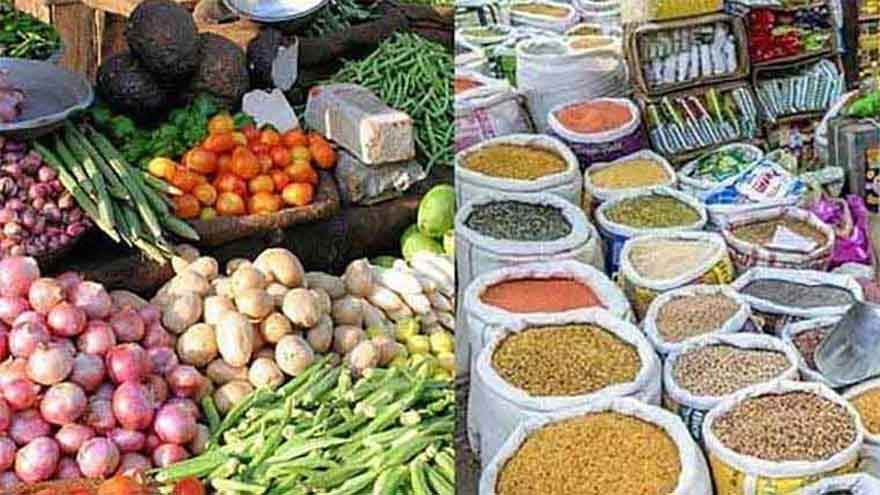
Consumers across Pakistan are facing higher food prices as the cost of vegetables, fruits, meat and flour has increased in several major cities, adding to pressure on household budgets.
In Lahore, vegetable prices remained above officially notified rates, with consumers complaining that market prices were higher despite government price lists. Onions, for instance, were officially priced at Rs195 per kilogram but were being sold for around Rs200 per kg in the market.
Tomatoes had an official rate of Rs150 per kg, while capsicum was being sold at Rs280, bitter gourd at Rs220 and cauliflower at Rs180 per kg, according to the reported market prices.
The situation was also reported in Faisalabad, where meat prices were significantly higher than the notified rates. Beef was being sold for around Rs1,500 per kg, compared with an official rate of Rs1,150.
Mutton prices saw an even larger difference, reaching approximately Rs3,000 per kg in the market against the notified price of Rs2,100 per kg.
The increase in meat prices has added to the financial burden on consumers, particularly households that have already been dealing with higher prices of essential food items.
In Peshawar, the price of flour also increased. The price of a 20-kilogram bag of fine flour reportedly rose by Rs100 to Rs3,150.
Consumers in Quetta also faced higher vegetable prices. Tomatoes reportedly became Rs40 per kg more expensive, while onion prices increased by Rs20 per kg. Okra prices rose by Rs30 per kg, while peas became Rs50 per kg more expensive.
The latest increases have renewed concerns among consumers about the gap between officially notified prices and actual retail market rates.
Official price lists are generally issued by district administrations and relevant authorities to regulate the prices of essential commodities. However, enforcement remains a challenge when retailers sell goods above notified rates.
For consumers, food inflation has a direct impact on household expenditure because vegetables, flour and meat form a significant part of daily food consumption. Higher prices can force families to reduce purchases, switch to cheaper alternatives or allocate a larger share of their income to food.
The price differences reported in different cities also reflect the varying supply and demand conditions in local markets. Transportation costs, availability of produce, seasonal changes and wholesale market prices can influence retail rates.
Authorities routinely conduct inspections and impose fines against retailers accused of overcharging, but consumers frequently complain that official rates are not consistently reflected in markets.
The latest rise in food prices comes as households continue to closely monitor the cost of essential commodities. Any sustained increase in food prices could further increase pressure on family budgets and household purchasing power.
Market conditions and government enforcement measures will determine whether the current price increases ease in the coming days.

The Pakistan Stock Exchange (PSX) began lower on Monday as selling pressure continued amidst heightened regional tensions.
The KSE-100 index closed at 170,357.55 after declining by 407.67 points, or 0.24 percent, from 170,765.22 at the last closing.
During early trade, the benchmark index achieved an intra-day high of 171,126.52 and low of 170,223.62.
Market statistics showed trading volume at 36,325,052 shares.
Asian share markets mainly fell on Monday as oil prices surged again with worries about whether the US and Iran can achieve a truce any time soon, leaving bonds under pressure ahead of a week full of economic headlines.
US President Donald Trump this weekend dismissed an Iranian offer to reopen the Strait of Hormuz, saying Tehran was desperate to reach a deal. Negotiations would continue this week but Iran shows no sign of softening its intentions, Trump said.
Brent prices jumped 2.7% to $107.16 a barrel with gains this month approaching 18%, while US crude futures were up 1.9% at $94.16 a barrel.

Pakistan to host international fixtures, match officials announced:

Iran denies role in bomb scare at British airbase

U.S. to let flights between Iran and Iraq’s Najaf under sanctions waiver: source

ICC board meeting in India: Mohsin Naqvi gets invitation

23 people have died during the monsoon as rain-related incidents plague Punjab and KP.

‘Self-Reliance in Digital ID’: NADRA launches locally produced QR code-based National Identity Card
-
 Latest News5 months ago
ICC board meeting in India: Mohsin Naqvi gets invitation
-
 Latest News2 months ago
23 people have died during the monsoon as rain-related incidents plague Punjab and KP.
-
 Latest News1 month ago
‘Self-Reliance in Digital ID’: NADRA launches locally produced QR code-based National Identity Card
-

 Business2 months ago
Govt dedicated to resolving Balochistan issues: Dar
-

 Latest News2 months ago
Pakistan making rapid progress in robotics, AI: Shaza Fatima
-

 Latest News2 months ago
After a divorce, LHC decides that women who have been harmed by their spouses get their dower.
-

 Entertainment4 months ago
Interim bail given to YouTuber Rajab Butt in gambling app marketing case
-

 Latest News1 month ago
Turkish FM, Dar discuss regional trends, bilateral connections