
Pakistan
Operation Shaaban: Five more terrorists are killed by security troops, bringing the total to 76.

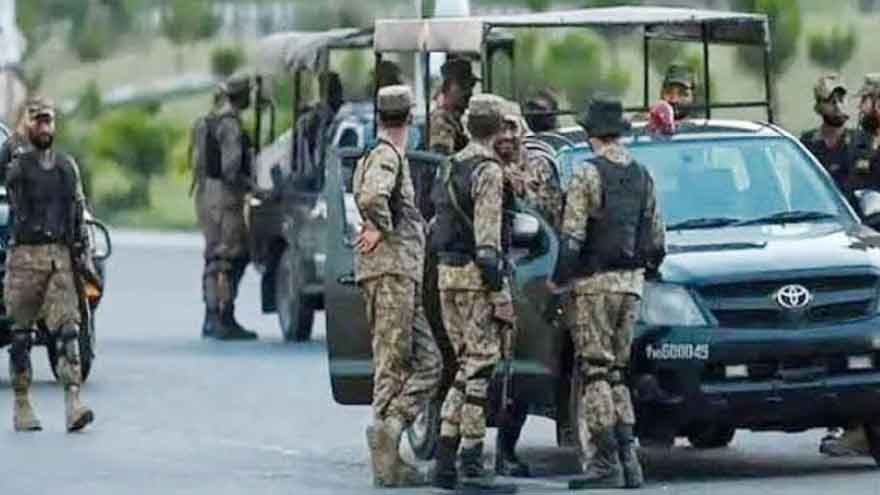
As part of Operation Shaaban, a coordinated counterterrorism campaign in Balochistan, security personnel have killed five more militants.
According to sources, both aerial and ground attacks killed the insurgents. Operation Shaaban has eliminated 76 terrorists in total.
Operation Shaaban and other IBOs have killed 114 terrorists since July 5.
In order to target militant hideouts and movements, the Pakistan Army, FC Balochistan, and law enforcement authorities coordinate their actions. Both ground soldiers and air support are utilized.
Security officials claim that from the militants killed in earlier operations, a sizable cache of guns and ammunition has been seized by the forces. M4 rifles, submachine guns (SMGs), rocket launchers, cell phones, and other equipment thought to have been utilized by the insurgent network were among the recovered items. The discovered weapons and materials will be evaluated as part of the ongoing investigation into extremist activity in the province, according to security sources.
Additionally, officials reaffirmed that security forces will maintain pressure through ongoing intelligence-based and coordinated operations throughout the province, and that Operation Shaaban will continue uninterrupted until all militant threats in Balochistan have been removed.

The Saudi-led coalition fighting Yemen’s Houthi rebels claimed Tuesday it intercepted and destroyed ballistic missiles and drones launched at two areas of the kingdom by the Iran-aligned group, as the battle between Saudi Arabia and the Houthis escalates.
The coalition reported the Houthis launched three ballistic missiles toward the Eastern Region of Saudi Arabia and four drones toward the Southern Region of the kingdom.
Saudi Civil Defence warned of a possible hostile threat in the Eastern Region and in the governorate of Kharj, and later said the risk has passed in both places.
Last month, the Houthis captured key strategic areas along Yemen’s Red Sea coast, moving closer to the Bab el-Mandeb Strait, a critical global shipping lane for Gulf oil producers across the Arabian Peninsula from the Strait of Hormuz. Since then, Saudi Arabia has stepped up its strikes against the Houthis.
The two sides have resumed fire, shattering a 2022 UN-brokered truce that had largely kept strikes at bay between the Saudi-led coalition, which backs Yemen’s internationally recognised government, and the Houthis who control the capital Sanaa.
The escalation also opens up a new front in the US-Israeli attack on Iran.
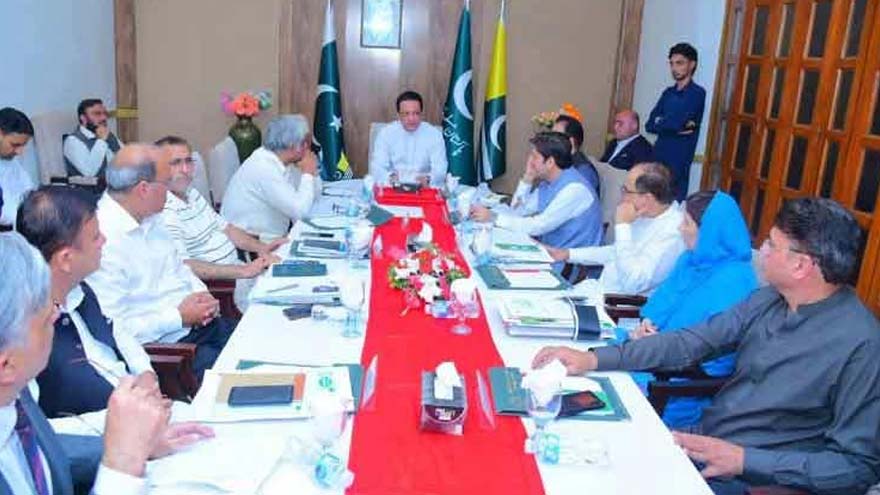
The Azad Jammu and Kashmir (AJK) cabinet in its second meeting considered 19 agenda items and majority of them were accepted.
Government officials said the cabinet approved the setting up of special courts for Kashmiris abroad and earmarking two per cent of the budget for promoting sports. It also okayed the establishment of centers of excellence for gemstones to develop the sector for precious stones.
The government’s 100-day agenda is to be unveiled soon. The scheme seeks to upgrade two basic health units and one rural health center in each district.
The proposal also includes constructing up catheterisation laboratories in Bhimber, Kotli and Rawalakot and two stroke centers across Azad Kashmir.
The cabinet also approved financial aid to clear pension-related concerns of the retired personnel of the local government agencies. It also approved unification of administrative structures of State Disaster Management Authority (SDMA) and State Earthquake Reconstruction and Rehabilitation Authority (SERRA).
The government ministers also added that initiatives like Dhee Rani Program, Suthra Kashmir Program, Himmat Card, Clinic on Wheels and IT digitalisation projects would also be launched shortly.
Special focus would be paid to the promotion of tourism and enhancement of the capability of government institutions, they said.
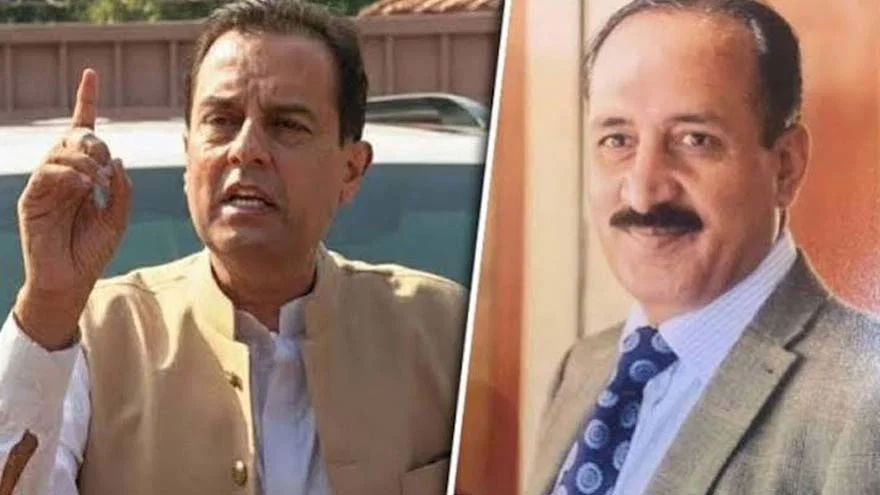
Judicial Commission member Ahsan Bhoon has moved a Rs5 billion defamation complaint against Captain (retd) Muhammad Safdar before Punjab Defamation Tribunal.
The tribunal concluded that the complaint was maintainable and issued a notice to Captain Safdar, summoning him on November 11, 2026.
Bhoon, in his appeal, said that Captain Safdar made defamatory statements about his degree in law and his professional ability to practise law in television interviews and social media.
The claim says Bhoon got his law degree from the University of the Punjab and the qualification has been certified by the necessary authorities.
The petitioner claimed that the purported words had harmed his professional reputation and ruined his decades-long legal career.
Bhoon has sought direction from the tribunal for Captain Safdar to pay Rs1 billion as general damages, Rs2 billion as special damages and Rs2 billion as punitive damages, aggregating to Rs5 billion.
He has also sought an order requiring Captain Safdar to withdraw the purported utterances, make an unreserved apologies and not make similar statements in future.

PSX opens on a positive note, gains over 1,300 points in early trading

Pakistan squad announced for ICC Women’s Emerging Nations Trophy

Saudi-led coalition says it intercepted Houthi missiles, drones attacking kingdom

ICC board meeting in India: Mohsin Naqvi gets invitation

‘Self-Reliance in Digital ID’: NADRA launches locally produced QR code-based National Identity Card

23 people have died during the monsoon as rain-related incidents plague Punjab and KP.
-
 Latest News5 months ago
ICC board meeting in India: Mohsin Naqvi gets invitation
-
 Latest News2 months ago
‘Self-Reliance in Digital ID’: NADRA launches locally produced QR code-based National Identity Card
-
 Latest News3 months ago
23 people have died during the monsoon as rain-related incidents plague Punjab and KP.
-

 Latest News2 months ago
Turkish FM, Dar discuss regional trends, bilateral connections
-
 Business3 months ago
Govt dedicated to resolving Balochistan issues: Dar
-
 Latest News3 months ago
Pakistan making rapid progress in robotics, AI: Shaza Fatima
-

 Entertainment5 months ago
Interim bail given to YouTuber Rajab Butt in gambling app marketing case
-

 Latest News3 months ago
After a divorce, LHC decides that women who have been harmed by their spouses get their dower.