
Business
Pakistan cuts diesel price by Rs7.76, petrol by Rs3.40 per litre

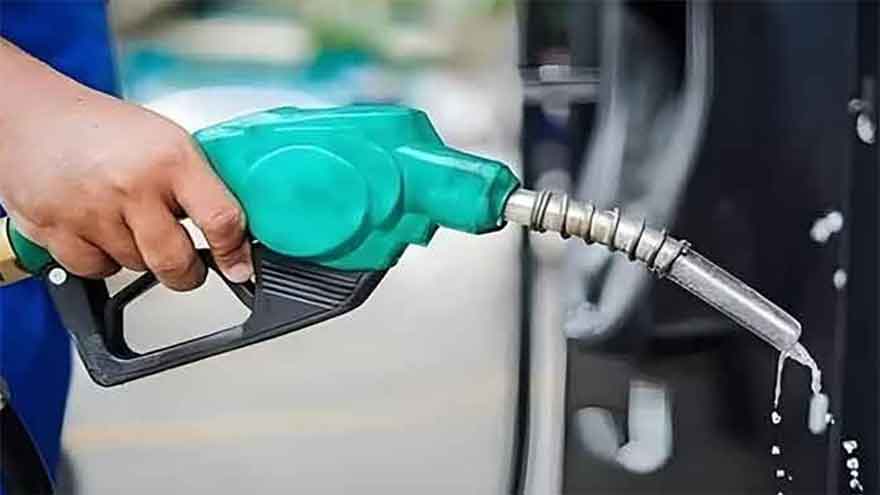
The federal government has reduced the price of petroleum, lowering the price of high-speed diesel by Rs7.76 per litre and petrol by Rs3.40 per litre, an official statement issued by the Petroleum Division said on Monday.
Petrol will now cost Rs374.51 per litre while high-speed diesel will be priced at Rs395.20 per litre after the cut.
The lowered prices are likely to bring some respite to petrol and diesel consumers, especially motorists and businesses that depend on petroleum goods.
In a notification, the Petroleum Division said the price adjustment will be effective for a day — November 3.
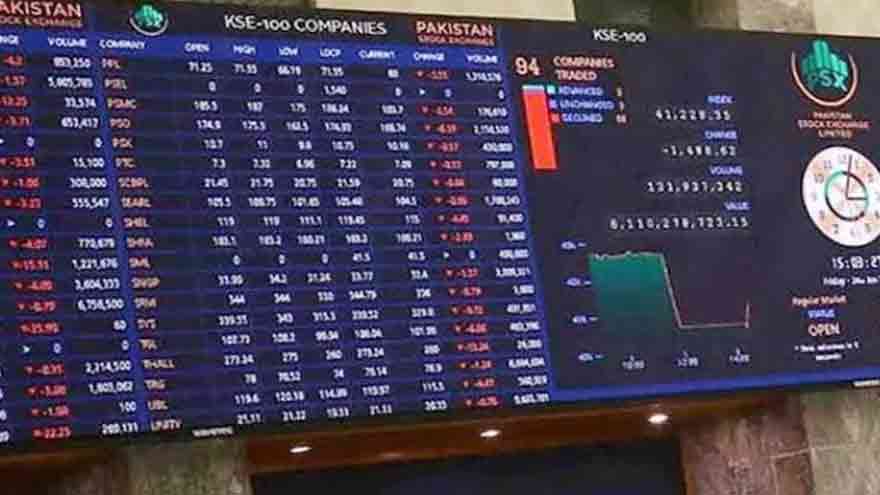
The Pakistan Stock Exchange (PSX) opened the new business week on a positive note amid a buying rally.
At the beginning of the session, active buying pushed up the benchmark KSE-100 index by more than 1,000 points, bringing it to the level of 178,470 points. The early rally builds on previous market gains as the benchmark index had ended the last trading session of the previous working week at 177,382 points.
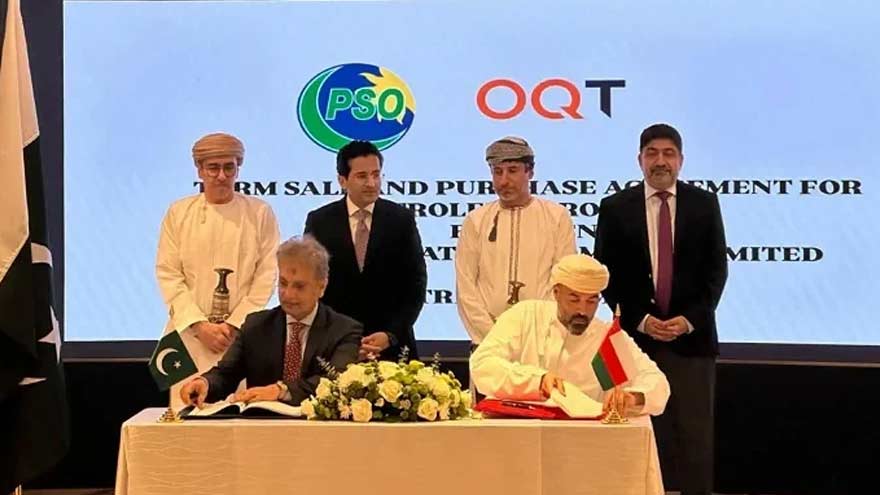
Pakistan has finalized a new energy supply agreement with Oman, securing a $200 million credit line from OQ Trading (OQT), Oman’s global commodities trading arm, to help Pakistan State Oil (PSO) finance the purchase of petroleum products.
TSO and OQT officially signed the Sale and Purchase Agreement (SPA) in Muscat on November 22 in the presence of Federal Minister of Petroleum Ali Pervaiz Malik and Omani Minister of Energy and Mines Eng. Salim Al Aufi.
Under the terms of the agreement, OQ Trading will provide TSO with a $200 million line of credit to finance the purchase of fuel. The agreement creates a formal commercial mechanism designed to improve Pakistan’s fuel procurement flexibility and protect supply chains from regional market turbulence. The deal, which was earlier approved by the Economic Coordination Committee (ECC) under an existing bilateral intergovernmental agreement, aims to expand Pakistan’s fuel import pipeline.
The new facility deepens an already active commercial partnership between the two state entities. Throughout 2026, OQ Trading has served as a primary gasoline supplier to PSO, shipping over one million tonnes to the country. In addition to automotive fuel, OQT is steadily expanding its operations in Pakistan’s LPG space, servicing public and private importers, and total LPG deliveries are expected to exceed 120,000 tonnes by the end of the year.
Prior to the signing ceremony, Minister Malik spoke with Omani Foreign Minister Eng. Salim Al Aufi, in Muscat to map out broader collaboration across the oil, gas, and mining industries. Both officials welcomed the formation of the Pakistan-Oman Joint Working Group on Oil and Gas, pledging to utilize the platform to unlock fresh investments across the energy and minerals value chain.
Both sides noted that operationalizing the supply agreement will translate historic diplomatic goodwill between Islamabad and Muscat into tangible economic and energy security gains.

Prime Minister Shehbaz Sharif will inaugurate the Mehfooz Dawa App in Islamabad on November 24, sources said.
The application is designed to help identify and curb the circulation of counterfeit medicines by enabling consumers to verify the authenticity of pharmaceutical products through the two-dimensional (2D) barcode printed on medicine packaging.
Using the application, consumers will be able to access verified information about a medicine’s authenticity, expiry date, usage instructions and retail price by scanning the barcode on its packaging.
The sources further said, the implementation of the Track and Trace System has been made mandatory for human and veterinary pharmaceutical companies, as well as medicine manufacturers and importers across the country.
Under the regulatory requirements, pharmaceutical products manufactured from October 9 onwards must carry a unique 2D data barcode and serial number.
Read more: Punjab orders recall of five medicines over quality, safety concerns
The import and sale of medicines without the prescribed 2D barcode have also been prohibited with effect from October 9.
However, medicine batches manufactured before October 9, as well as imported pharmaceutical products brought into the country before the specified date, have been exempted from the barcode requirement.
The Drug Regulatory Authority of Pakistan (DRAP) will be responsible for overseeing and ensuring the implementation of the Medicine Track and Trace System, sources added.
The initiative is aimed at improving pharmaceutical supply chain transparency, strengthening regulatory oversight and enabling consumers to verify the authenticity of medicines through digital technology.

Mohsin Naqvi, Chaudhry Shujaat discuss creation of new provinces, devolution of powers

Pakistan issues third International tender to import 800,000 metric tons of wheat

PSX opens week in bullish note as KSE-100 gains over 1,000 points

ICC board meeting in India: Mohsin Naqvi gets invitation

‘Self-Reliance in Digital ID’: NADRA launches locally produced QR code-based National Identity Card

23 people have died during the monsoon as rain-related incidents plague Punjab and KP.
-
 Latest News6 months ago
ICC board meeting in India: Mohsin Naqvi gets invitation
-
 Latest News3 months ago
‘Self-Reliance in Digital ID’: NADRA launches locally produced QR code-based National Identity Card
-
 Latest News4 months ago
23 people have died during the monsoon as rain-related incidents plague Punjab and KP.
-
 Latest News3 months ago
Turkish FM, Dar discuss regional trends, bilateral connections
-
 Business4 months ago
Govt dedicated to resolving Balochistan issues: Dar
-
 Latest News4 months ago
Pakistan making rapid progress in robotics, AI: Shaza Fatima
-

 Entertainment6 months ago
Interim bail given to YouTuber Rajab Butt in gambling app marketing case
-
 Latest News4 months ago
After a divorce, LHC decides that women who have been harmed by their spouses get their dower.