
Latest News
Pakistan suffer Lord’s defeat after 16 years as England seal Test series

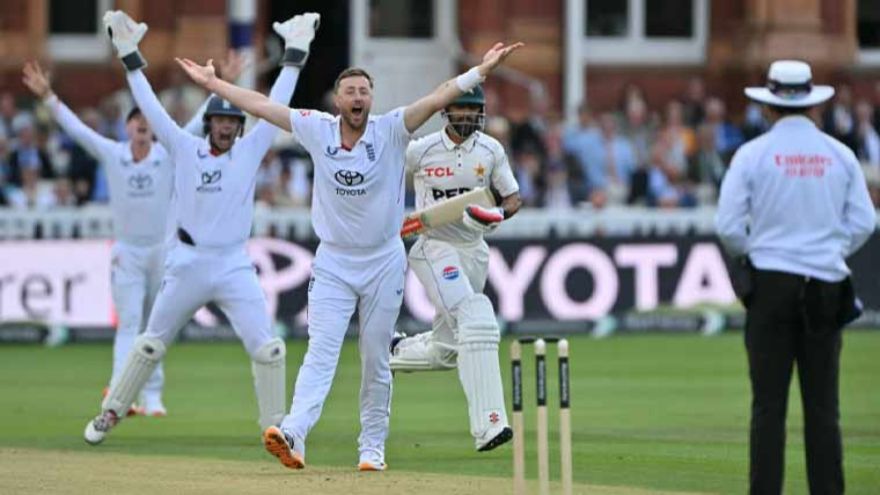
England beat Pakistan by 194 runs in the second Test at Lord’s on Sunday to go 2-0 up in the three-match series.
The hosts skittled out Pakistan for 194 in pursuit of 389 to seal another dominant victory after their innings and 103-run success at Headingley in the first Test. The result also ended Pakistan’s 16-year unbeaten record at Lord’s.
England were bowled out for 208 in their second innings on the fourth morning, setting Pakistan a difficult chase in the final innings. Mohammad Abbas provided the visitors a huge lift by taking five wickets for 57 and in doing so earned a position on the Lord’s honours board for the first time in his career.
But Pakistan’s frail batting line-up was swiftly exposed by England’s bowlers. Three early wickets reduced the visitors to 14, providing them with a mountain to climb on a tough surface.
Premature collapse
Ollie Robinson proved once again the biggest threat to Pakistan, striking twice in the opening stages of the innings. Azan Awais was taken out and then he sent a beautiful ball that beat the defence of Abdullah Shafique and the opener was gone for naught.
Then Jofra Archer struck another big blow by getting Pakistan skipper Babar Azam out. Babar tried to leave a short delivery but was caught in the slips, with Jordan Cox taking the catch.
Shan Masood and Saud Shakeel came in to steady the ship. The pair survived a tough period of bowling and brought Pakistan to lunch without additional harm but England continued to apply the pressure after the interval.
Robinson eventually broke the partnership when he had Masood caught behind for 26. Pakistan vice-captain had fought hard but failed to turn his resistance into a big score.
Next out was Mohammad Rizwan, who went leg before wicket to Robinson for one. England were in complete control with Pakistan five wickets down and Imam-ul-Haq missing through injury.
Shakeel fights back
Saud Shakeel was the only real resistance from Pakistan in the innings. The left-hander hit his half-century off 54 balls and continued to attack when the opportunity presented themselves.
Wickets fell around him, but he was hitting boundaries regularly and seemed determined to take the fight further. Shakeel and Ali Usman temporarily took England through their paces but the visitors’ hopes remained slim as the required runs kept mounting up.
Ali Usman ultimately went for 16, pushing a delivery from Archer onto his stumps. Shakeel replied by targeting Josh Tongue and hit two sixes as he sought to move toward a century.
His aggression, in time, was his undoing. Shakeel’s dismissal for 97, caught in the deep off Tongue, fell three runs short of a merited century.
England then promptly finished up the innings with his exit. Tongue’s final wicket was Mohammad Ali as Pakistan were bowled out for 194 to seal an emphatic England win.
Abbas makes history
Earlier, Mohammad Abbas delivered one of the individual performances of the match. The experienced seamer bagged five wickets, resuming on the fourth morning with three in England’s second innings, removing Dan Lawrence and Ollie Robinson to finish his five-wicket total.
Abbas completed with 5-57 from 22 overs and ended the match with 9-130. His five wickets saw him enter the hallowed Lord’s honours board, which acknowledges players who take five wickets in an innings or attain other significant individual milestones at the iconic venue.
England were 177 for seven at the close on Saturday after rain and poor light limited play. Abbas then dismissed Lawrence, who had come in undefeated on 50, after four more runs with a wonderful seaming delivery.
Abbas then got rid of Robinson, who edged one to Mohammad Rizwan behind the stumps. England had slipped from 186-8 to 187-9 before Josh Tongue hit a couple of boundaries off Mohammad Ali.
Tongue was run out by Babar Azam, who struck direct from the covers in superb fashion to conclude the innings. England were removed for 208, leaving Pakistan a target of 389.
England in control
England made 290 in their first innings, with Jamie Smith (61) and Jordan Cox (55) the leading scorers. Abbas was the pick of the bowlers for Pakistan with 4-73 while Mohammad Ali took three wickets.
Pakistan’s first innings was another significant letdown as they were knocked out for just 110. Top-scored Azan Awais with 46, Ollie Robinson took 4-11 and Jofra Archer 3-26.
England’s victory came on the back of their impressive win at Headingley in the first Test, winning by an innings and 103 runs. Thus the hosts have dominated both games and have clinched the series with one Test to spare.
The third and final Test starts at Edgbaston on September 9 and Pakistan will be attempting to avoid the whitewash while England will be looking to seal the series 3-0.
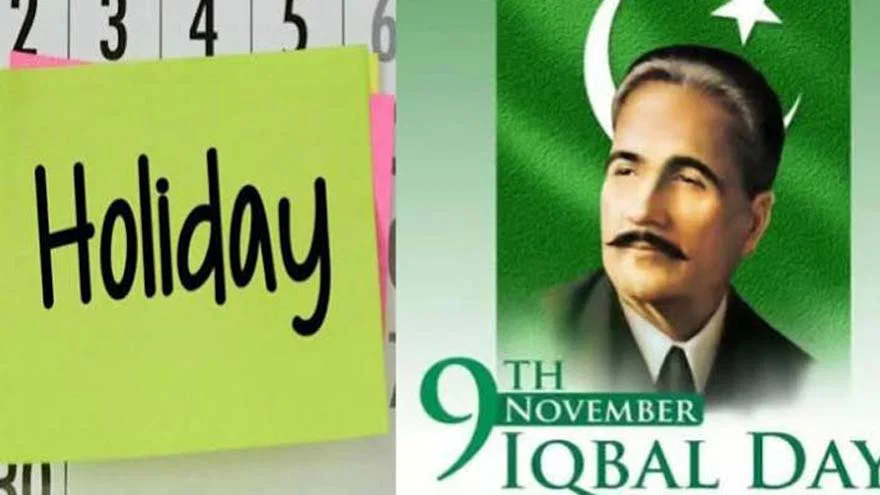
- The federal government has announced a public holiday on November 9, 2026, nationwide in connection with Iqbal Day.
The Cabinet Division has issued a notification announcing Monday, November 9, as a public holiday across the country to mark the birth anniversary of Allama Muhammad Iqbal.
The holiday has been declared through the annual holiday circular released by the Cabinet Division on January 19, 2026.
The ministries and government departments have been asked to guarantee execution of the notification.
Schools and public and commercial offices throughout the country will be closed on November 9.
Employees of offices and educational institutions observing a two-day weekend will have three straight days off from November 7 to 9. Normal activities will resume on Tuesday, November 10.
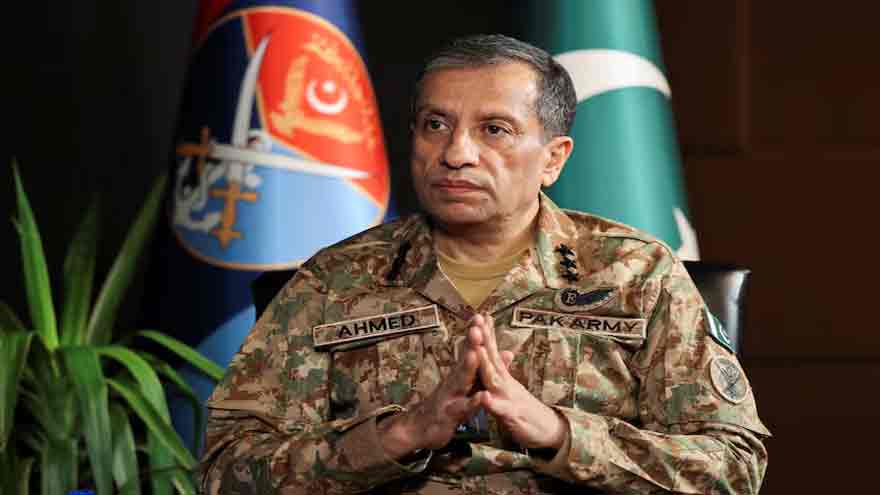
Pakistan is “cautiously optimistic” about its mediation between Iran and the United States, the army spokesperson said in his first interview since a high-level delegation visited Tehran last week.
Field Marshal Asim Munir, the army chief and Pakistan’s point man in efforts to de-escalate the now eight-month-old Iran war, has been to Tehran twice this month, most recently on Monday together with Saudi and Turkish officials.
‘Why would the Field Marshal be going twice if it is not for some positivity? “So yes, of course,” said spokesperson Lt Gen Ahmed Sharif Chaudhry when asked if the trips were a positive sign.
AGREEMENT NOT TO BLOCK NEW MEMBERS
“The word we would use is always cautiously optimistic,” said Chaudhry, Director General Inter-Services Public Relations (ISPR).
“But still there are powerful spoilers and detractors,” he added, without naming them, who think strife suits them.
Speaking in Rawalpindi, the garrison city where Pakistan’s armed forces are based, Chaudhry declined to specify what was discussed or whether the United States had supported the trip.
Saudi Defence Minister Prince Khalid bin Salman and Turkish intelligence chief Ibrahim Kalin were with Munir when he flew to Tehran on Monday. On August 7, their two countries inked a combined defence deal with Pakistan saying an assault on any signatory will be considered as an attack on all.
The Makkah Joint Defence Agreement has gained new importance since the Iran war has changed regional alignments and sparked worries of a broader Middle East confrontation.
The three signatories insist the deal is about collective deterrence and regional security, but observers view its development as intimately linked to efforts by regional countries to handle the fallout from the Iran-US rivalry.
Iran’s Supreme National Security Council secretary Mohsen Rezaei said after Monday’s talks that regional security should be guarantyd by regional countries without international meddling.
“The text of the pact does not exclude new members,” Chaudhry said Friday when asked if Iran might be a member.
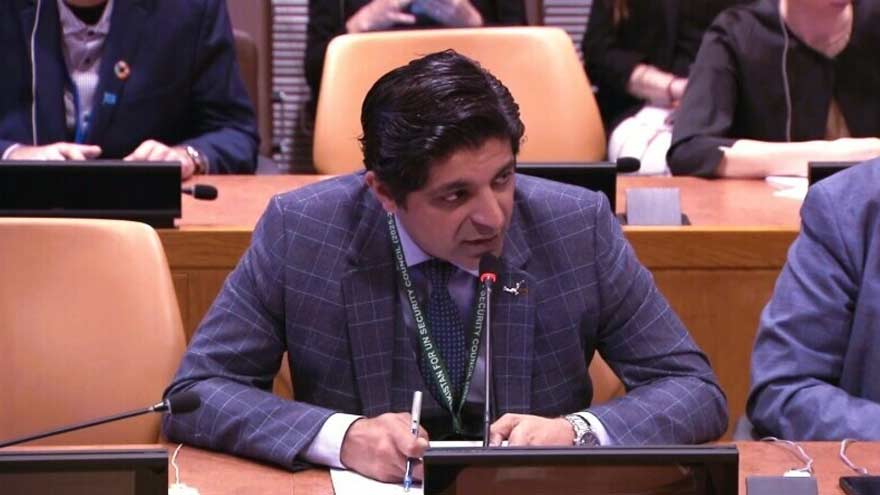
Pakistan has expressed its concerns over the presence of terrorist outfits in Afghanistan, warning that the Taliban leadership is allowing them to operate from its soil.
“More than 4,700 Pakistanis have lost their lives to terrorist attacks emanating from Afghanistan during the last three years,” Pakistan’s envoy Muhammad Jawad Ajmal said during the UN Human Rights Council’s interactive conversation on Afghanistan on Thursday.
Separately, UN Special Rapporteur Richard Bennett told the General Assembly that five years after coming to power, the Taliban had demonstrated no intention to ending systematic human rights atrocities. Instead, he added, limits on fundamental freedoms — especially for women and girls — have continued to tighten.
Ajmal said the degrading human rights situation was a sign of the Taliban’s “utter disregard” for their international duties. He pointed to the limits imposed on women and girls who, according to him, were denied of fundamental freedoms and dignity in a manner which was contrary to Islamic beliefs and values.
He also mentioned the ninth Ministerial Conference on Women, which was held in Islamabad in July and during which the Organization of Islamic Cooperation adopted the Islamabad Declaration. The declaration voiced worry over the Taliban’s limitations on women and girls, saying they are incongruous with Islamic beliefs.
Bennett urged UN member states not to normalise relations with the Taliban until the leadership rolls back its restrictive policies.
He said the Taliban’s new directives have further eroded women’s rights, enabled violence against them and severely curtailed their ability to exit abusive relationships. He also expressed alarm over the regime’s tolerance of child marriages.
Pakistan’s engagement also brought to the fore security issues relating to Afghanistan. Ajmal accused the Taliban of having strong links with terrorist outfits and said these groups were operating freely on Afghan soil with the patronage of external actors who wanted to target Pakistan and other surrounding nations.
He added the Taliban’s refusal to openly renounce the groups was evidence that they were involved and supported their activities.
Meanwhile, Bennett’s study chronicled major human rights abuses in Afghanistan, including arbitrary arrests and detention, torture, sexual violence, enforced disappearances and extrajudicial killings.
The report also expressed concern at restrictions on freedom of expression, exclusion of persons with disabilities, and discrimination and persecution of ethnic, religious, linguistic and other marginalised communities.

Federal government declares November 9 public holiday for Iqbal Day

Pakistan ‘cautiously optimistic’ on Iran-US mediation, says ISPR DG

Pakistan warns of Afghan-based terrorism as UN expert urges action against Taliban

ICC board meeting in India: Mohsin Naqvi gets invitation

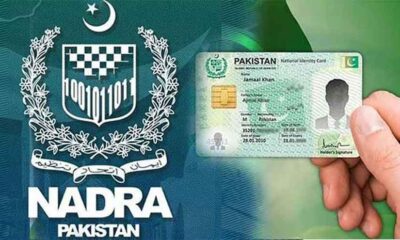
‘Self-Reliance in Digital ID’: NADRA launches locally produced QR code-based National Identity Card

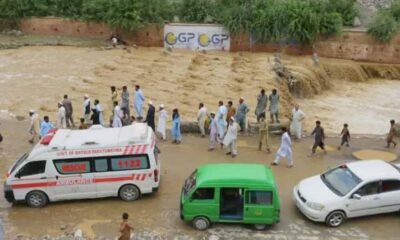
23 people have died during the monsoon as rain-related incidents plague Punjab and KP.
-
 Latest News6 months ago
ICC board meeting in India: Mohsin Naqvi gets invitation
-
 Latest News3 months ago
‘Self-Reliance in Digital ID’: NADRA launches locally produced QR code-based National Identity Card
-
 Latest News3 months ago
23 people have died during the monsoon as rain-related incidents plague Punjab and KP.
-
 Latest News2 months ago
Turkish FM, Dar discuss regional trends, bilateral connections
-
 Business3 months ago
Govt dedicated to resolving Balochistan issues: Dar
-
 Latest News3 months ago
Pakistan making rapid progress in robotics, AI: Shaza Fatima
-

 Entertainment5 months ago
Interim bail given to YouTuber Rajab Butt in gambling app marketing case
-
 Latest News3 months ago
After a divorce, LHC decides that women who have been harmed by their spouses get their dower.