
Latest News
Pakistan urges end to Gulf tensions as US, Iran exchange accusations at UN

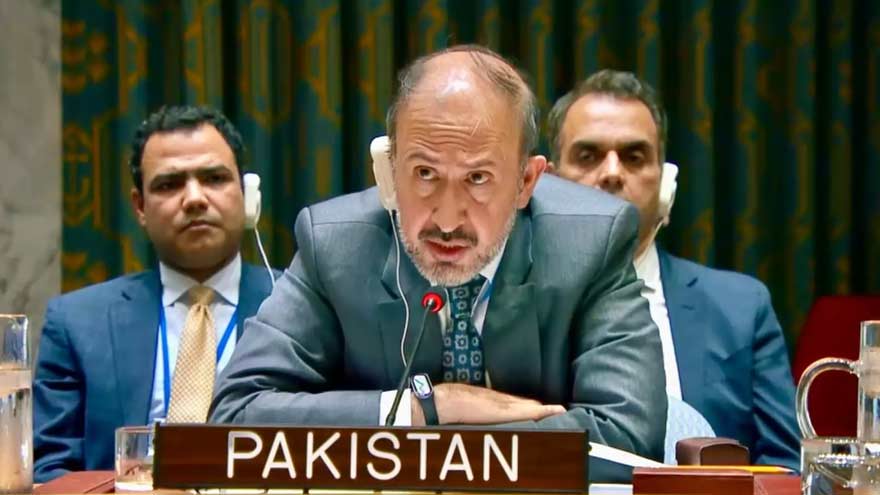
Pakistan has called for an immediate halt to military provocations in the Gulf and renewed diplomatic efforts as the United States, Iran and Gulf Cooperation Council (GCC) countries traded accusations at a UN Security Council meeting over attacks on shipping and threats to maritime security.
The discussions reflected growing international concerns that escalating tensions could disrupt global trade, energy supplies and food shipments, while increasing the risk of a wider regional conflict.
Addressing the Security Council, Pakistan’s Permanent Representative to the UN, Ambassador Syed Haider Shah, condemned attacks on Gulf countries and stressed the need to respect their sovereignty and territorial integrity, protect civilians and commercial vessels, and restore normal maritime traffic.
He particularly condemned attacks and threats by Houthi militants against Saudi Arabia, including strikes on civilian infrastructure and vessels involved in lawful trade. He reaffirmed Pakistan’s support for Saudi Arabia’s sovereignty, security and territorial integrity.
Highlighting the importance of the Strait of Hormuz and the Bab el-Mandab Strait to international trade, Shah warned that threats to maritime navigation endangered seafarers, disrupted commerce and aggravated energy and food insecurity, particularly in vulnerable economies.
He called for the protection of commercial ships and their crews, respect for freedom of navigation and safe passage for humanitarian supplies.
Shah said lasting peace required addressing the root causes of regional conflicts through a framework based on common security, peaceful coexistence and mutual prosperity. He urged all sides to stop attacks, maintain communication channels and support diplomatic initiatives, including the UN secretary-general’s good offices.
At the meeting, the United States and Iran presented sharply opposing positions, each accusing the other of contributing to regional instability and threatening maritime security.
Iranian Ambassador Gholamhossein Darzi accused Western countries of ignoring the origins of the conflict and attempting to portray Iran as responsible for the crisis.
He blamed US and Israeli military operations launched on June 13, 2025, and February 28, 2026, for the prevailing insecurity in the region.
Darzi said the attacks had violated international law and targeted Iran’s supreme leader, government officials, nuclear scientists and civilian infrastructure. He claimed that 5,000 people, including 254 children, had been killed, describing the strikes as war crimes and crimes against humanity.
He maintained that threats to security around the Strait of Hormuz were a direct consequence of those attacks.
While expressing Iran’s commitment to peace in the Persian Gulf, Darzi argued that the deployment of foreign military forces was itself a source of instability and a threat to safe maritime navigation.
He rejected Security Council Resolution 2817 (2026), calling it politically motivated and accusing it of overlooking the origins of the confrontation and denying Iran’s right to self-defence.
The Iranian envoy said Tehran remained open to diplomatic engagement but wanted Washington to end its military operations, offer guarantees against further attacks and lift what he described as unlawful coercive measures.
The US representative, Ambassador Jennifer Locetta, rejected Iran’s position and accused Tehran of aggression against neighbouring countries and threats to commercial shipping.
She said Iranian missiles, drones and alleged unlawful mines in the Strait of Hormuz, as well as attacks in the Bab el-Mandab Strait, endangered international shipping and global energy and food supplies.
Locetta cited Security Council Resolution 2817, which calls on Iran to stop attacks against neighbouring states and shipping and has attracted 136 co-sponsors. She accused Tehran of ignoring the Council and the wider international community.
She also alleged that the Houthis, backed by Iran, had attacked Saudi airports and energy facilities and imposed an illegal embargo on maritime traffic through the Bab el-Mandab Strait.
The GCC also raised concerns over attacks on its member states. Secretary-General Jasem Mohamed Albudaiwi said Gulf countries had been targeted by more than 7,000 Iranian missiles and drones since February 28.
He said the strikes had targeted airports, ports, oil and gas installations, power stations, desalination plants and residential areas, resulting in casualties, damage to infrastructure and environmental consequences across the Arabian Gulf.
Albudaiwi described the attacks as violations of the sovereignty and territorial integrity of GCC states and called for Security Council action to prevent their recurrence.
Earlier, Bahrain’s Ambassador Jamal Fares Alrowaiei, speaking on behalf of the GCC, welcomed mediation initiatives by Oman, Qatar and Pakistan. He reaffirmed the bloc’s support for diplomatic efforts and said Gulf states must be part of any negotiations concerning regional security.
The meeting underscored deep divisions among the parties over responsibility for the crisis, despite calls for a diplomatic settlement.
Participants highlighted the need to restore freedom of navigation, protect commercial vessels and civilian infrastructure, ensure the safety of seafarers and maintain access for humanitarian supplies.
They also stressed mediation efforts to facilitate US-Iran talks and resolve broader regional and nuclear-related disputes through negotiations.
Pakistan reaffirmed its commitment to working with Gulf states and international partners to reduce tensions, strengthen maritime security and promote lasting regional peace and stability.
Latest News
Re-polling begins at three polling stations in GB Assembly constituency GBA-16 Diamer-II
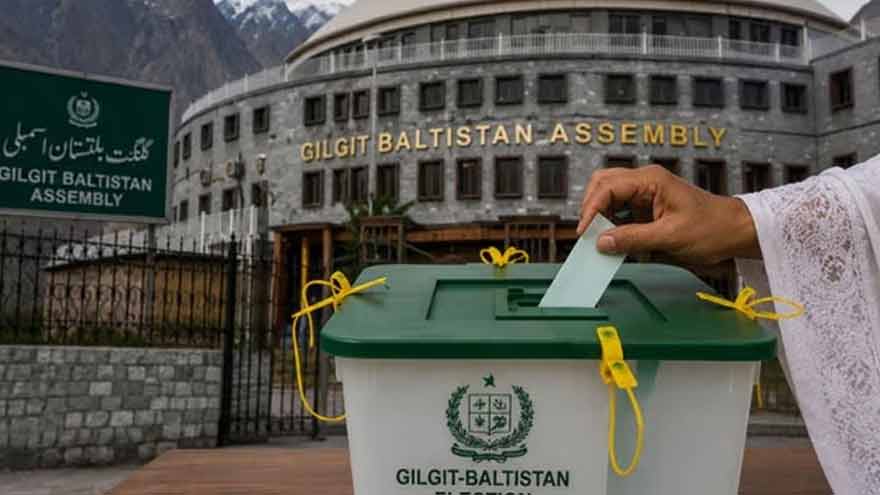
– Voting has begun in three polling stations in Gilgit-Baltistan Assembly Constituency GBA-16 Diamer-II and will continue till 5:00 p.m.
The Election Tribunal ordered a re-poll on a petition filed by Syed Imam Malik challenging alleged irregularities in three polling stations. Pakistan People’s Party (PPP) candidate Ataullah Shah was declared the winner after counting the postal votes with 6,618 votes.
Shah beats Syed Imam Malik by just 13 votes. However, the Election Tribunal on November 6 suspended his participation in the Gilgit-Baltistan Assembly and ordered re-election in three constituencies.
In total, 2,780 registered voters have the right to vote in three polling stations.
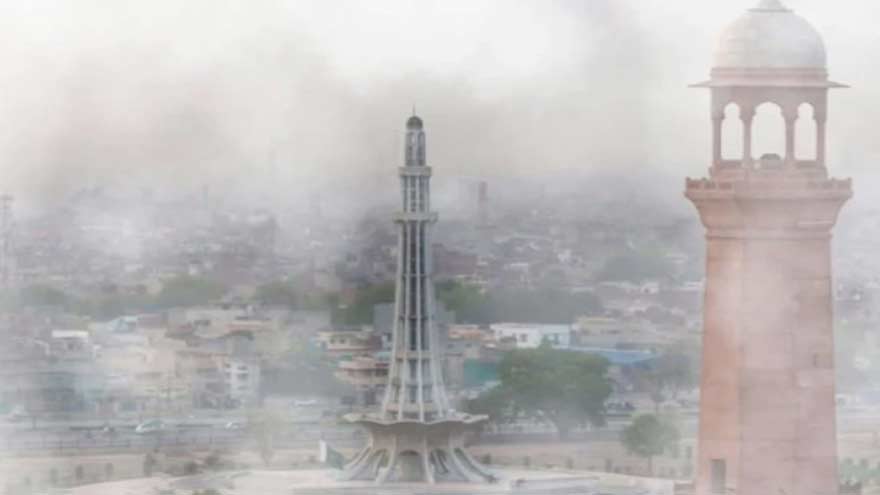
Air pollution continued to grip Lahore, with the city’s Air Quality Index (AQI) recorded at 269, indicating unhealthy air quality.
Wind speed in the city was recorded at 5 kilometres per hour, blowing from the northwest. Wind speeds are expected to reach 11 kilometers per hour in the afternoon, which could lead to some improvements in air quality.
Following the directives of Punjab Chief Minister Maryam Nawaz, an anti-smog operation is underway across the province as authorities step up efforts to curb local sources of pollution. In the last 24 hours, enforcement teams have targeted industrial units, brick kilns, plastic-related companies and commercial cooking plants for violating environmental regulations and imposed fines of millions of rupees.
Authorities inspected 272 industrial units in Punjab, sealed 11 industrial units and demolished two offending units. A fine of Rs 13.25 lakh was also imposed.
In this crackdown on brick kilns, a total of 513 brick kilns were inspected, 24 sealed, 6 demolished and 8 cases initiated. The total fine was 18,000,000 rubles.
As part of the fight against substandard plastic, officials inspected 183 locations and confiscated 294 kg of plastic and imposed an additional fine of 30,000 rubles. A total of 92 barbecue restaurants and commercial cooking establishments were tested to control oil fume emissions. Extractors are installed in 58 places, but three rooms are cordoned off. Wind speed, direction and air pollution levels are continuously monitored using scientific data from Climate Watch, while anti-smog measures are implemented in accordance with the prevailing weather conditions.
Senior Punjab Minister Marriyum Aurangzeb said weather conditions were beyond the government’s control but regulating local sources of pollution was its responsibility, adding that no leniency would be shown in enforcing environmental laws. She urged farmers not to burn crop residues and called on citizens to avoid activities that create smog and contribute to air pollution.

Sugarcane cultivation in Punjab has increased by 16 per cent this year compared to the previous year, according to official sources.
The Punjab government has issued a notification announcing the commencement of the sugarcane crushing season from today. According to the statement, all sugar mills in Punjab will purchase sugarcane from growers and mills will determine the price of sugarcane based on market mechanisms.
Sources said the area under sugarcane cultivation in Punjab this year stood at 2.452 million acres, a 16% increase over last year.

Re-polling begins at three polling stations in GB Assembly constituency GBA-16 Diamer-II

Lahore’s air quality remains unhealthy as AQI reaches 269

Sugarcane cultivation in Punjab increases by 16% this Year

ICC board meeting in India: Mohsin Naqvi gets invitation

‘Self-Reliance in Digital ID’: NADRA launches locally produced QR code-based National Identity Card

23 people have died during the monsoon as rain-related incidents plague Punjab and KP.
-
 Latest News6 months ago
ICC board meeting in India: Mohsin Naqvi gets invitation
-
 Latest News3 months ago
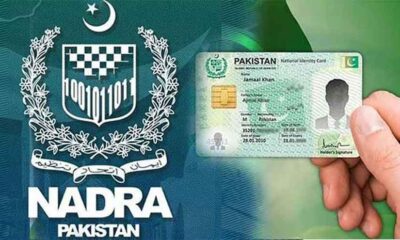
‘Self-Reliance in Digital ID’: NADRA launches locally produced QR code-based National Identity Card
-
 Latest News4 months ago
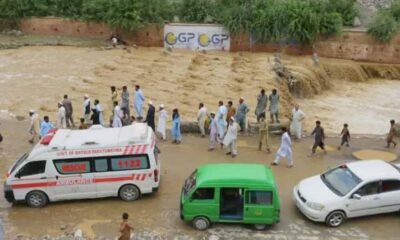
23 people have died during the monsoon as rain-related incidents plague Punjab and KP.
-

 Latest News3 months ago
Turkish FM, Dar discuss regional trends, bilateral connections
-
 Business4 months ago
Govt dedicated to resolving Balochistan issues: Dar
-
 Latest News4 months ago
Pakistan making rapid progress in robotics, AI: Shaza Fatima
-

 Entertainment6 months ago
Interim bail given to YouTuber Rajab Butt in gambling app marketing case
-
 Latest News4 months ago
After a divorce, LHC decides that women who have been harmed by their spouses get their dower.