
Latest News
Pakistani view on Afghan war presented to US commission by Field Marshall Munir

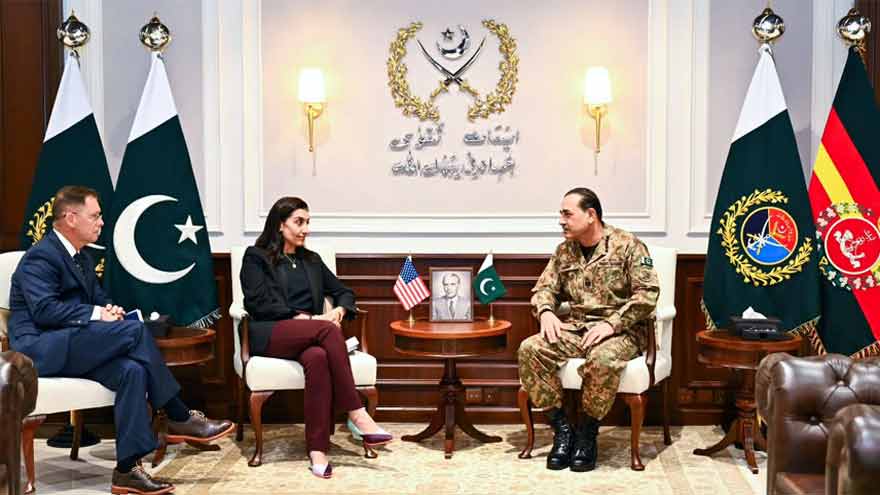
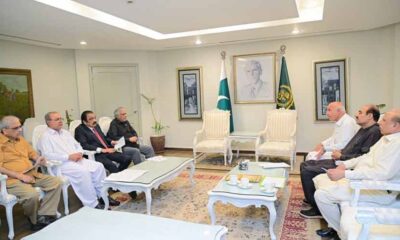
A team of the US Afghanistan War Commission (AWC), led by its Co-Chairs Ms Shamila N Chaudhary and Dr Colin F Jackson, called on Chief of Army Staff and Chief of Defense Forces Field Marshal Syed Asim Munir at General Headquarters, Rawalpindi, on Monday.
The delegation is reviewing the United States’ 20-year engagement in Afghanistan.
“The discussions revolved around issues of shared interest, such as Pakistan’s support, the regional security situation and developments in Afghanistan, particularly the perspectives relevant to the commission’s work.
The Field Marshal spoke on the security variables that influenced the conflict from the Pakistani perspective and on the problems faced by Pakistan throughout the lengthy struggle in Afghanistan.
He stressed the need to take into account the regional angle and Pakistan’s experience in evaluating the strategic, diplomatic and operational aspects of the conflict.
The team commended Pakistan’s long-standing role and sacrifices throughout the fighting in Afghanistan and appreciated its continued contribution to peace and stability in the region.
Latest News
30th meeting of ECO Council of Foreign Ministers to be held in Islamabad on Nov 15-16: FO
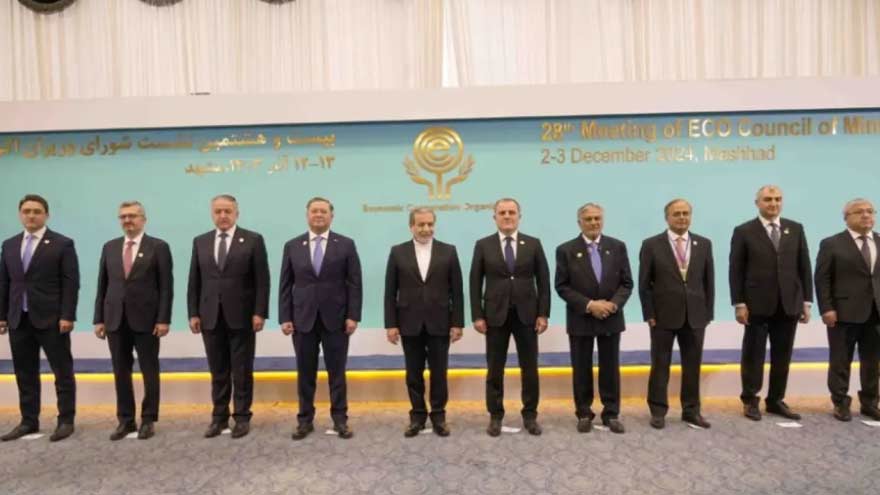
The 30th session of the Economic Cooperation Council of Foreign Ministers (ECO) will be held in Islamabad on November 15 and 16, the Ministry of Foreign Affairs announced on Saturday.
As informed by the press secretary of the Ministry of Foreign Affairs, Deputy Prime Minister and Minister of Foreign Affairs Ishak Dar will lead the meeting, which will be attended by foreign ministers and higher delegations from ECO member states. The meeting will review the organization’s activities, programs and achievements of its affiliates.
Pakistan 2026-2027 will lead the Economic Cooperation Organization, the theme of which will be the revival of regional cooperation and the creation of a stronger and more sustainable organization. The Ministry of External Affairs said that Pakistan’s presidency will focus on strengthening regional relations and economic integration while promoting partnerships and joint efforts to promote prosperity and sustainable development.
Efforts will also be made to strengthen the ECO as an effective platform for regional cooperation, dialogue and economic cooperation, it added. Pakistan will seek to position itself as a hub for regional connectivity and a key hub for trade, logistics and supply chains, while taking steps to promote regional trade and harness the economic potential of member states.
The spokesman said that one of the main priorities of Pakistan’s presidency will remain to ensure that the people of the ECO member states benefit from regional cooperation.
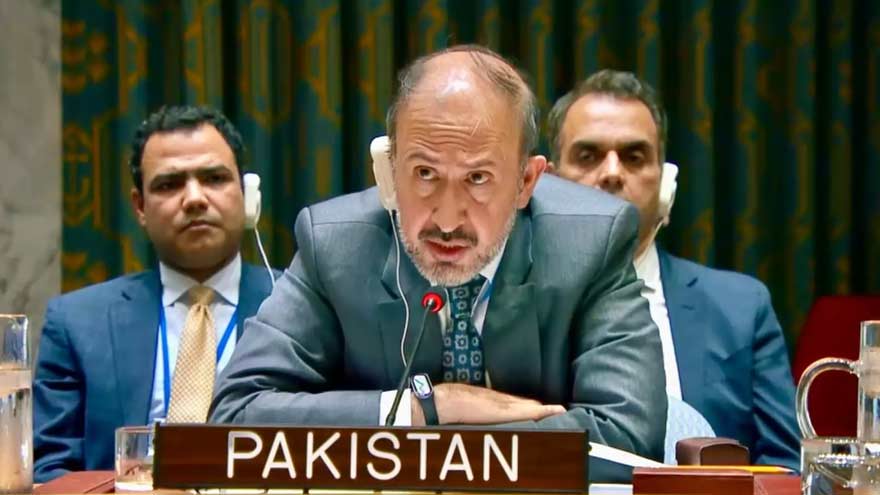
Pakistan has called for an immediate halt to military provocations in the Gulf and renewed diplomatic efforts as the United States, Iran and Gulf Cooperation Council (GCC) countries traded accusations at a UN Security Council meeting over attacks on shipping and threats to maritime security.
The discussions reflected growing international concerns that escalating tensions could disrupt global trade, energy supplies and food shipments, while increasing the risk of a wider regional conflict.
Addressing the Security Council, Pakistan’s Permanent Representative to the UN, Ambassador Syed Haider Shah, condemned attacks on Gulf countries and stressed the need to respect their sovereignty and territorial integrity, protect civilians and commercial vessels, and restore normal maritime traffic.
He particularly condemned attacks and threats by Houthi militants against Saudi Arabia, including strikes on civilian infrastructure and vessels involved in lawful trade. He reaffirmed Pakistan’s support for Saudi Arabia’s sovereignty, security and territorial integrity.
Highlighting the importance of the Strait of Hormuz and the Bab el-Mandab Strait to international trade, Shah warned that threats to maritime navigation endangered seafarers, disrupted commerce and aggravated energy and food insecurity, particularly in vulnerable economies.
He called for the protection of commercial ships and their crews, respect for freedom of navigation and safe passage for humanitarian supplies.
Shah said lasting peace required addressing the root causes of regional conflicts through a framework based on common security, peaceful coexistence and mutual prosperity. He urged all sides to stop attacks, maintain communication channels and support diplomatic initiatives, including the UN secretary-general’s good offices.
At the meeting, the United States and Iran presented sharply opposing positions, each accusing the other of contributing to regional instability and threatening maritime security.
Iranian Ambassador Gholamhossein Darzi accused Western countries of ignoring the origins of the conflict and attempting to portray Iran as responsible for the crisis.
He blamed US and Israeli military operations launched on June 13, 2025, and February 28, 2026, for the prevailing insecurity in the region.
Darzi said the attacks had violated international law and targeted Iran’s supreme leader, government officials, nuclear scientists and civilian infrastructure. He claimed that 5,000 people, including 254 children, had been killed, describing the strikes as war crimes and crimes against humanity.
He maintained that threats to security around the Strait of Hormuz were a direct consequence of those attacks.
While expressing Iran’s commitment to peace in the Persian Gulf, Darzi argued that the deployment of foreign military forces was itself a source of instability and a threat to safe maritime navigation.
He rejected Security Council Resolution 2817 (2026), calling it politically motivated and accusing it of overlooking the origins of the confrontation and denying Iran’s right to self-defence.
The Iranian envoy said Tehran remained open to diplomatic engagement but wanted Washington to end its military operations, offer guarantees against further attacks and lift what he described as unlawful coercive measures.
The US representative, Ambassador Jennifer Locetta, rejected Iran’s position and accused Tehran of aggression against neighbouring countries and threats to commercial shipping.
She said Iranian missiles, drones and alleged unlawful mines in the Strait of Hormuz, as well as attacks in the Bab el-Mandab Strait, endangered international shipping and global energy and food supplies.
Locetta cited Security Council Resolution 2817, which calls on Iran to stop attacks against neighbouring states and shipping and has attracted 136 co-sponsors. She accused Tehran of ignoring the Council and the wider international community.
She also alleged that the Houthis, backed by Iran, had attacked Saudi airports and energy facilities and imposed an illegal embargo on maritime traffic through the Bab el-Mandab Strait.
The GCC also raised concerns over attacks on its member states. Secretary-General Jasem Mohamed Albudaiwi said Gulf countries had been targeted by more than 7,000 Iranian missiles and drones since February 28.
He said the strikes had targeted airports, ports, oil and gas installations, power stations, desalination plants and residential areas, resulting in casualties, damage to infrastructure and environmental consequences across the Arabian Gulf.
Albudaiwi described the attacks as violations of the sovereignty and territorial integrity of GCC states and called for Security Council action to prevent their recurrence.
Earlier, Bahrain’s Ambassador Jamal Fares Alrowaiei, speaking on behalf of the GCC, welcomed mediation initiatives by Oman, Qatar and Pakistan. He reaffirmed the bloc’s support for diplomatic efforts and said Gulf states must be part of any negotiations concerning regional security.
The meeting underscored deep divisions among the parties over responsibility for the crisis, despite calls for a diplomatic settlement.
Participants highlighted the need to restore freedom of navigation, protect commercial vessels and civilian infrastructure, ensure the safety of seafarers and maintain access for humanitarian supplies.
They also stressed mediation efforts to facilitate US-Iran talks and resolve broader regional and nuclear-related disputes through negotiations.
Pakistan reaffirmed its commitment to working with Gulf states and international partners to reduce tensions, strengthen maritime security and promote lasting regional peace and stability.
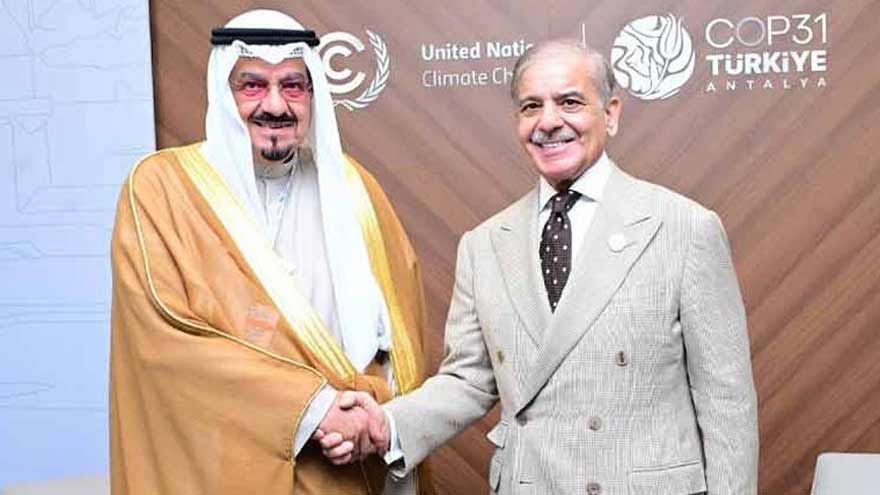
Pakistan and Kuwait have agreed to further strengthen their long-standing ties by expanding investment and economic cooperation in several sectors.
During the meeting between Prime Minister Shebaz Sharif and his Kuwaiti counterpart, the two leaders expressed their commitment to take the long-standing friendly relations between the two countries to new heights.
Separately, Pakistan State Oil (PSO) and Kuwait Petroleum Corporation (KPC) have decided to expand their 50-year-old partnership in the energy sector.
Under the agreement, the two entities will explore new opportunities in fuel supplies, refining and investment to support the development of Pakistan’s energy sector. They also promised to further promote mutual cooperation in this field.
The development is seen as a major step towards attracting investment in Pakistan’s energy, storage and infrastructure sectors.
The expanded economic partnership is expected to create new investment opportunities in Pakistan and further strengthen trade and economic relations between the two countries.

30th meeting of ECO Council of Foreign Ministers to be held in Islamabad on Nov 15-16: FO

Pakistan urges end to Gulf tensions as US, Iran exchange accusations at UN

Pakistan, Kuwait pledge to strengthen economic, energy cooperation

ICC board meeting in India: Mohsin Naqvi gets invitation

‘Self-Reliance in Digital ID’: NADRA launches locally produced QR code-based National Identity Card

23 people have died during the monsoon as rain-related incidents plague Punjab and KP.
-
 Latest News6 months ago
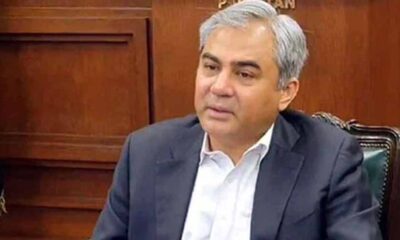
ICC board meeting in India: Mohsin Naqvi gets invitation
-
 Latest News3 months ago
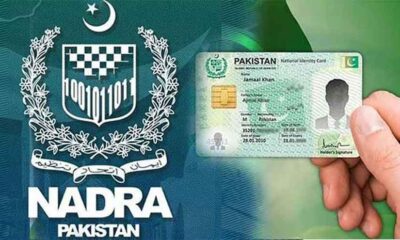
‘Self-Reliance in Digital ID’: NADRA launches locally produced QR code-based National Identity Card
-
 Latest News4 months ago
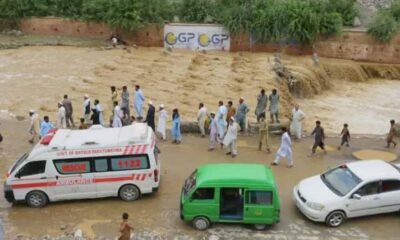
23 people have died during the monsoon as rain-related incidents plague Punjab and KP.
-
 Latest News3 months ago
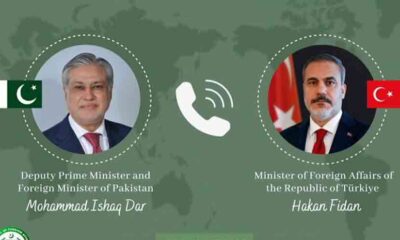
Turkish FM, Dar discuss regional trends, bilateral connections
-
 Business4 months ago
Govt dedicated to resolving Balochistan issues: Dar
-
 Latest News4 months ago
Pakistan making rapid progress in robotics, AI: Shaza Fatima
-

 Entertainment6 months ago
Interim bail given to YouTuber Rajab Butt in gambling app marketing case
-
 Latest News4 months ago
After a divorce, LHC decides that women who have been harmed by their spouses get their dower.