
Latest News
Policy report: Over 25 million Pakistani children are still out of school


More than 25 million children in Pakistan remain out of school more than two years after the federal government declared a national education emergency. A new policy report says progress is still being hampered by inadequate funding, weak governance and fragmented administrative structures.
Civil Services Academy has prepared a comparative policy review that highlighted deep-rooted structural challenges, persistent financial constraints, poor governance and uneven provincial capacity as reasons for the failure to deliver the desired results in enrolling over 25 million out-of-school children into the education system.
All provinces have produced education roadmaps under the National Education Action Plan (NEAP) 2026, but the key problem is not in policy formulation but in successful execution, the report noted.
The report said Pakistan’s education issue is the result of decades of underinvestment, poverty, fast population expansion and weak governance. As to data of Pakistan Institute of Education (PIE), these causes have continued to aggravate the situation of out-of-school children over the years.
The Academy of Educational Planning and Management (AEPAM) had tracked out-of-school children from the 1990s through the 2010s, but millions remained outside the education system as public education infrastructure failed to keep pace with population growth, leading to the expansion of low-cost private schools, it said.
The report, drafted by five Policy Analysis Groups at the Pakistan Administrative Service Campus, reviewed education policies in Punjab, Sindh, Khyber Pakhtunkhwa, Balochistan, Islamabad Capital Territory, Gilgit-Baltistan and Azad Jammu and Kashmir, and assessed them on effectiveness, efficiency, equity, ethics and feasibility.
It projected that 25.1 million to 26 million children in Pakistan are currently out of school, placing the country among countries carrying the world’s second-largest burden of educational deprivation despite the constitutional guarantee of free and compulsory education under Article 25-A.
The report indicated that the proclamation of a National Education Emergency on May 8, 2024, attracted major political attention, but observed that provinces have different structural issues, which means that a national strategy that fits all is not enough to deal with the situation.
According to the review, Punjab faces the biggest challenge of a large out-of-school population, Sindh faces post-primary education and climate-related disruptions, Khyber Pakhtunkhwa faces insecurity, difficult terrain and a shortage of female teachers, while Balochistan continues to struggle with weak institutions, vast distances and non-functional schools. It said that federal territories have substantially higher enrolment but nonetheless experience internal discrepancies.
The survey predicted that 9.6 million to 10.4 million children in the state are out of school. Punjab has the largest education load in the country, it added. Keeping pupils in school is as important an issue as getting them enrolled, says the 2026 baseline report of the Punjab School Education Department, which says 6.4 million children have never enrolled in school, and another 3.16 million dropped out.
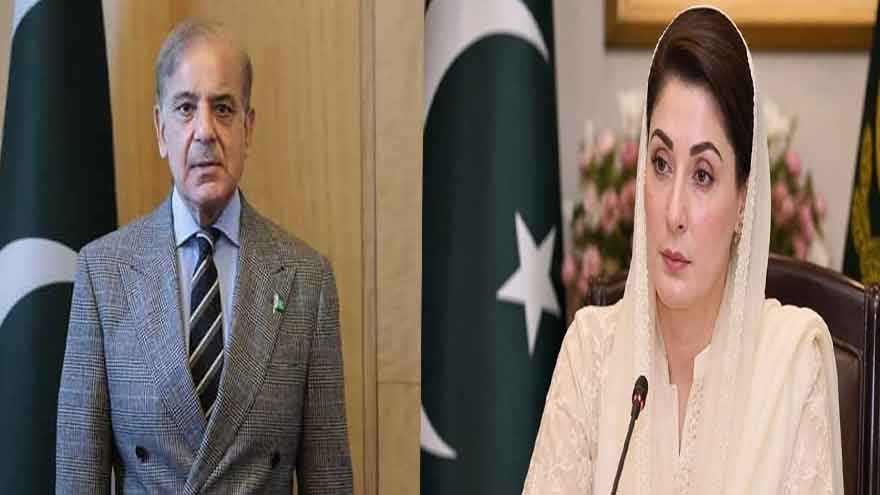
Prime Minister Shehbaz Sharif and Punjab Chief Minister Maryam Nawaz Sharif have emphasised the need for early screening, timely medical intervention and public awareness to address the rapidly increasing prevalence of diabetes in Pakistan.
In his message on World Diabetes Day, observed on November 14, 2026, the prime minister said the rapid spread of diabetes was becoming a serious public health challenge in the country. He stressed that timely screening and medical intervention were essential to prevent complications and save precious lives.
Shehbaz Sharif said Pakistan was joining the international community in highlighting the importance of effective measures and mutual cooperation to prevent diabetes. He noted that diabetes is a major public health problem worldwide, affecting millions of people. He added that expanding the coverage of early diagnosis and treatment facilities is essential to contain the spread of the disease in Pakistan. The Prime Minister said that the Prime Minister’s Diabetes Prevention and Control Program has been designed to combat the disease and the federal government has allocated Rs 680 crore for its implementation.
He said the plan aims to expand screening for early detection, improve primary health care facilities and increase public access to diagnosis and treatment.
Shehbaz Sharif added that promoting healthy lifestyles, raising public awareness and ensuring effective coordination between federal and provincial governments were also among the programme’s priorities.
He urged citizens to adopt healthy lifestyles, consume balanced and nutritious diets, make exercise part of their daily routines and undergo regular medical check-ups and screening. He also advised people to seek timely medical advice from qualified healthcare professionals.
Meanwhile, Punjab Chief Minister Maryam Nawaz Sharif, in her special message on World Diabetes Day, described diabetes as a silent enemy that could be controlled through precautionary measures, awareness and a disciplined lifestyle.
She said the rising prevalence of diabetes in Pakistan required more effective measures, adding that the rapid spread of the disease was a cause for concern but could be addressed through collective efforts.
Maryam Nawaz said health was a fundamental right of every citizen and the Punjab government was taking steps to ensure healthcare facilities reached people at their doorsteps. She said that for the first time in history, insulin kits are being delivered to the homes of children with type 1 diabetes.
The chief minister added that millions of medicine kits are also being sent home to patients suffering from diabetes and other diseases to ensure they have access to medical facilities at their doorsteps. She encouraged citizens to take responsibility for their own health and emphasized the importance of adopting a healthy lifestyle.
She said a balanced diet, regular exercise and continuous blood sugar monitoring are key to preventing and controlling diabetes. Maryam Nawaz believes that the fight against diabetes is not only the responsibility of the government but also the collective responsibility of society. She said raising public awareness and taking preventive measures can help slow the spread of the disease. She added that the theme of this year’s World Diabetes Day is “Diabetes and Health”, which emphasizes the importance of early screening and medical care to prevent complications.
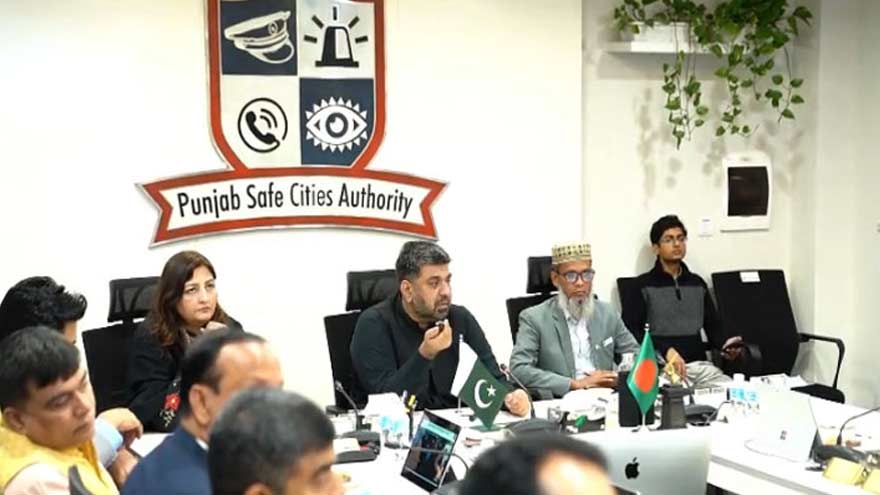
where it was briefed on advanced surveillance systems, artificial intelligence (AI), intelligent traffic management and technologies used to improve public safety.
The delegation included additional secretaries, joint secretaries, directors general and senior officials of various ministries. Chief Administrative Officer of Safe Cities, Kamran Hameed, welcomed the visiting officials and organized a tour of various departments.
During the visit, the delegation observed a surveillance system operating with Safe City cameras, as well as traffic management and emergency response mechanisms. Safe City Executive Director Mohammad Ahsan Yunas briefed the Bangladeshi officials in detail about the agency’s operations, technological infrastructure and smart safe city initiatives.
The delegation also learned about the Punjab Surveillance Network consisting of 43 smart and secure urban centers across the province. The briefing highlighted plans to expand the smart surveillance network to the tehsil level under the vision of the Punjab Chief Minister.
The visiting officials heard introductions on artificial intelligence surveillance, facial recognition technology and smart traffic management systems. Officials say the agency’s advanced artificial intelligence systems help identify criminals, detect suspicious activity and support police operations.
The delegation also heard presentations on artificial intelligence-based crime analysis, license plate recognition and advanced virtual patrolling systems. Learn more about the organization’s international ISO certifications related to artificial intelligence management and information security.
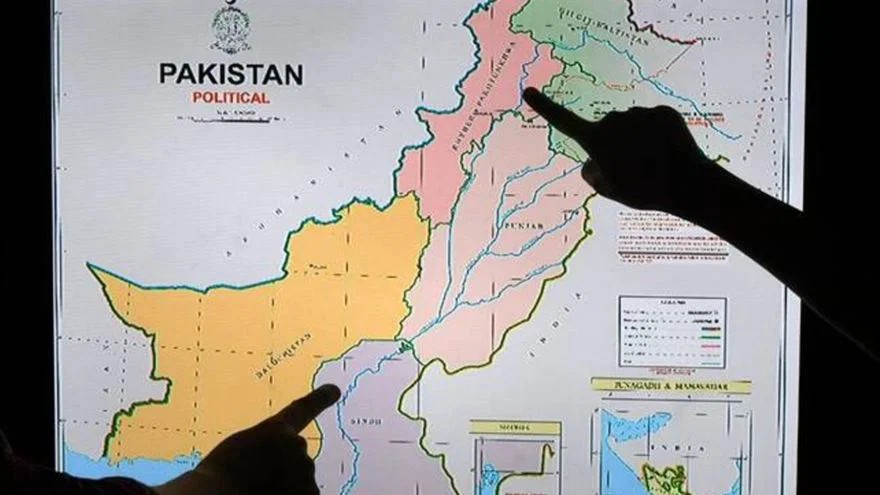
A growing number of Pakistanis want the country to have more provinces, and new poll results show growing public support for splitting up existing administrative units to improve governance, accelerate development and bring public services closer to citizens.
The demand is growing amid concerns that large provincial governments are struggling to meet the needs of remote areas and smaller communities. Meridian Analytics’ 2026 Meridian Country Barometer of 5,000 citizens found that 77% of respondents support annexation, a significant increase of 23 percentage points since November 2022. Support was 54% in 2022, rising to 66% in 2024 and finally reaching 77% in the latest poll.
Mian Amer proposes new provinces to improve governance, public services
The findings underline how the debate over new provinces is increasingly linked to everyday governance concerns rather than political boundaries alone, with citizens expecting smaller administrative units to improve the delivery of essential services and ensure more balanced regional development.
South Punjab, Bahawalpur in focus
The demand for new provinces has remained a prominent issue in Pakistan’s political landscape, particularly in Punjab, where calls for separate South Punjab and Bahawalpur provinces have repeatedly surfaced.
Supporters of a South Punjab province argue that a separate administrative structure would give the region greater attention in development planning, budget allocation and public service delivery. The region comprises several districts, including Multan, Bahawalpur, Dera Ghazi Khan, Rahim Yar Khan and Muzaffargarh.
Mohsin Naqvi calls for referendum on new provinces
The Bahawalpur province demand also has a distinct historical background, with advocates seeking restoration of the former Bahawalpur state’s provincial status. Both proposals have featured in political manifestos, parliamentary discussions and electoral campaigns, although disagreements over boundaries, administrative arrangements and political consensus have prevented their implementation. Hazaras and Potohars
Similar requests have emerged elsewhere. There are calls for a separate province in Khyber Pakhtunkhwa’s Hazara district, while proposals for a Karachi province regularly reignite the debate in Sindh. At the center of the administrative reorganization discussions are also proposals to create Potohar province to cover northern parts of Punjab.
Support from all over Pakistan
The Meridian survey found significant support in other of the four existing provinces, suggesting that demand is not limited to specific areas. The highest support was recorded in Sindh at 80%, followed by Punjab at 78%, Khyber Pakhtunkhwa at 75% and Balochistan at 72%. Karachi stood out with 92% support, one of the strongest numbers highlighted in the survey.

PM Shehbaz, Maryam Nawaz stress early screening to combat rising diabetes cases

35-member Bangladeshi delegation visits Punjab Safe Cities Authority

77pc of Pakistanis want new provinces, survey reveals

ICC board meeting in India: Mohsin Naqvi gets invitation

‘Self-Reliance in Digital ID’: NADRA launches locally produced QR code-based National Identity Card

23 people have died during the monsoon as rain-related incidents plague Punjab and KP.
-
 Latest News6 months ago
ICC board meeting in India: Mohsin Naqvi gets invitation
-
 Latest News3 months ago
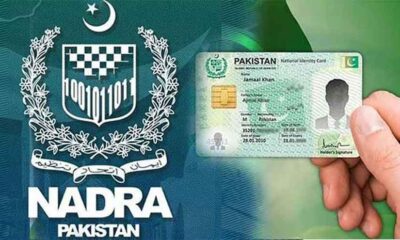
‘Self-Reliance in Digital ID’: NADRA launches locally produced QR code-based National Identity Card
-
 Latest News4 months ago
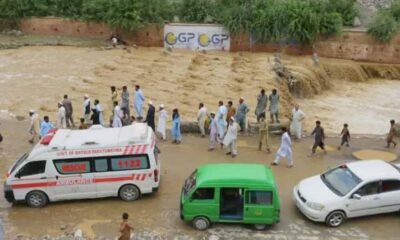
23 people have died during the monsoon as rain-related incidents plague Punjab and KP.
-
 Latest News3 months ago
Turkish FM, Dar discuss regional trends, bilateral connections
-
 Business4 months ago
Govt dedicated to resolving Balochistan issues: Dar
-
 Latest News4 months ago
Pakistan making rapid progress in robotics, AI: Shaza Fatima
-

 Entertainment6 months ago
Interim bail given to YouTuber Rajab Butt in gambling app marketing case
-
 Latest News4 months ago
After a divorce, LHC decides that women who have been harmed by their spouses get their dower.