
Business
Saudi Aramco profits surge 34.6% in third quarter

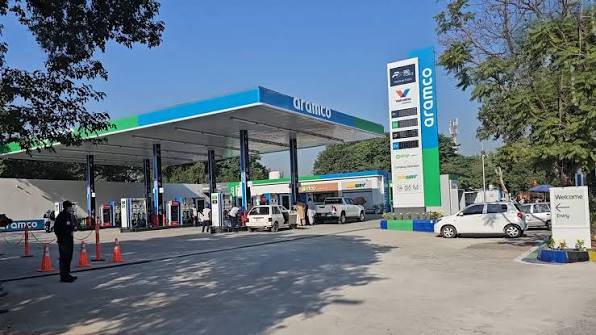
Saudi oil company Aramco said Tuesday its third-quarter net earnings soared 34.6 percent as the Middle East war has kept crude prices high and the kingdom’s energy infrastructure regularly struck.
Since hostilities erupted in July, Yemen’s Iran-aligned Houthis have routinely targeted Saudi tankers, pipelines, storage facilities and refineries but have stepped up their attacks in recent weeks.
The monarchy also has had to deal with the Houthis and Iran disrupting commerce in the straits of Bab al-Mandeb and Hormuz making exports more difficult.
But Aramco, Saudi Arabia’s economic engine and one of the world’s most valuable firms, posted soaring earnings in the third quarter, powered in large part by stubbornly high oil prices.
The company stated net profit in the third quarter was 135.9 billion riyals ($36.2 billion), compared with roughly 101 billion riyals in the same time a year earlier.
The results come as energy majors throughout the world have seen profits jump on the back of interruptions to oil and gas supplies in the Middle East pushing up refining margins and prices.
But the head of Aramco cautioned the dispute was still a major drag on energy security.”Geopolitical uncertainty and attacks on key energy facilities continued to amplify the global energy supply crisis in the third quarter of 2026, with serious implications for global energy security,” said president and CEO Amin H. Nasser in a statement.
Adjusted net income, excluding exceptional items, was 116.9 billion riyals.
An outside estimate based on 12 experts estimates puts the median analyst expectation for third-quarter adjusted net income at $30.66 billion.”The earning results are likely to be rosier (compared) to a year ago, when oil prices were much lower, but less promising compared to last quarter,” Robert Mogielnicki, a research fellow at the Arab Gulf States Institute, told AFP.
Aramco’s net profit rose 44 percent year-on-year to 122.6 billion riyals in the second quarter.
The Middle East war, which began on February 28 with Israeli and U.S. assaults on Iran, has disrupted global energy markets, triggered a global run on critical reserves, and fed inflation.
And as conflict continues to rage in the Gulf, Ukrainian drones have also struck Russian energy infrastructure, causing Moscow to block shipment of several items – particularly petrol and diesel.
The Houthis said last month they attacked Aramco’s headquarters, a sprawling complex of buildings and housing in the eastern part of the kingdom.
Saudi officials stated a structure was damaged in the region housing the operations center of Aramco, while two employees of the business, who spoke to AFP on condition of anonymity, said a tower in the headquarters was hit.
- A tight spot – With the Strait of Hormuz in dispute, US Navy naval escorts have been allowing millions of barrels of crude to flow through the vital waterway each day.
US Central Command said last month it had assisted Gulf nations export more than 1.5 billion barrels of crude oil through the strait since the summer, and enabled more than 3,000 commercial boats transit over the past six months.
But the rise in Gulf exports has done nothing to stop market volatility.
Oil prices dropped more than seven percent on Monday as signals that Tehran and Washington were resuming communication raised hopes for an end to the Middle East turmoil.
Back in the kingdom, months of uncertainty have compounded economic challenges.
Saudi Arabia has raised its estimated budget deficit for 2026 to 245 billion riyals, or 4.9 percent of gross domestic product, from an initial forecast of 165 billion riyals. Government receipts were higher than previously forecast.
Government spending will rise 9.3 percent more than previously predicted, but the finance ministry expects the Saudi economy would shrink 3.6 percent in 2026, as oil-related activity will fall 21.8 percent.
The kingdom aims to lower its deficit to 191 billion riyals in 2027, or 3.6 percent of GDP, while continuing to invest in economic diversification programs.
The IMF now expects Saudi Arabia’s GDP to shrink by 3.3% at the end of the year, five percentage points less than its previous prediction in July.
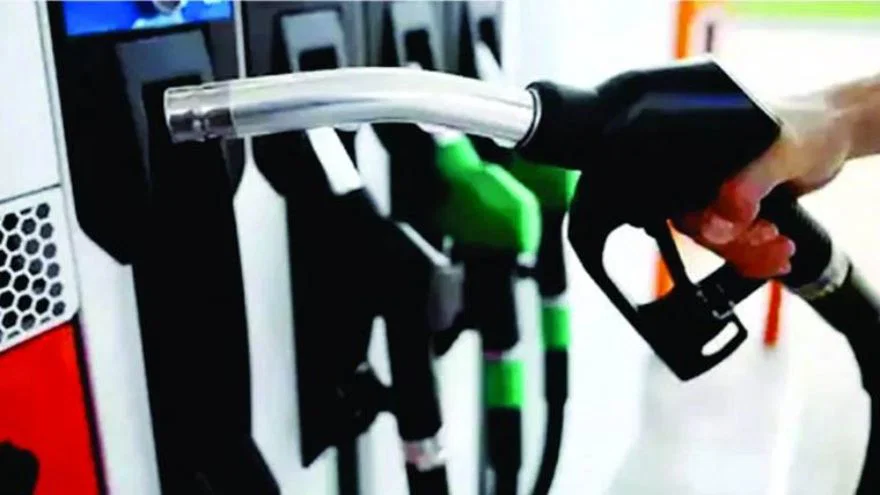
The federal government has cut petrol prices by Rs1 per liter while raising the rate of high-speed diesel (HSD) by Rs2, offering motorists a mixed fix as global oil markets remain volatile amid renewed tensions in the Middle East.
According to the revised oil prices announced on Friday, November 20, petrol will now cost Rs 322 per liter from Rs 323, while high-speed diesel has become more expensive by Rs 357 per liter from the previous rate of Rs 355. According to the announcement of the Oil and Gas Regulatory Authority (OGRA), the new prices will be valid until November 23.
The latest correction comes as Pakistan moves to a daily oil price mechanism, which allows international oil prices to be reflected more often in domestic fuel prices. The shift is designed to respond more quickly to volatility in global energy markets, especially as geopolitical developments continue to impact crude oil supply and prices.
Daily Fuel Price Review
OGRA has started publishing daily oil prices on its official website as part of the government’s efforts to increase transparency and make the domestic pricing system more sensitive to international market movements. The launch of the daily review marks the latest change in Pakistan’s fuel pricing system, which has been made several times in response to changing international market conditions.
Before the recent changes, oil prices were usually adjusted every two weeks. Following the outbreak of the Middle East conflict on February 28, the government moved to a weekly review mechanism to respond more quickly to uncertainty in global oil markets.
International oil prices have faced renewed uncertainty following escalating hostilities in the Middle East, with concerns over the security of energy supplies adding pressure to global markets.
The conflict began on February 28, when Israel and the United States attacked Iran, prompting Tehran to shut the Strait of Hormuz, a critical shipping route through which around one-fifth of the world’s energy supplies passed before the war.
The strategic waterway is particularly important for international oil and gas shipments, making any disruption a major concern for energy-importing countries, including Pakistan. Tensions continue after a fragile ceasefire between Tehran and Washington collapsed in June, reigniting fears of a wider confrontation and raising concerns about the flow of energy supplies through the strait.
For Pakistan, which is heavily dependent on imported petroleum products, fluctuations in international oil prices can directly affect the country’s import bills and domestic fuel costs.
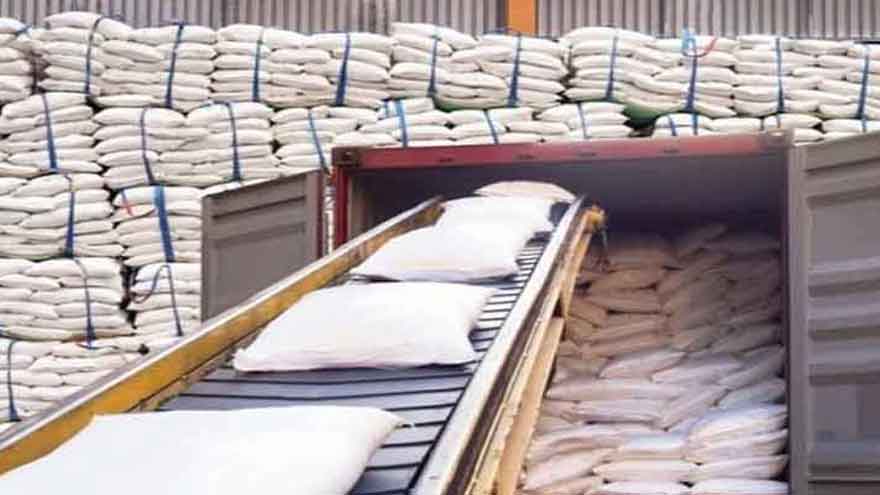
The Economic Coordination Committee (ECC) has approved the export of an additional 400,000 tons of sugar, so far the total amount approved for export reaches 600,000 tons.
According to sources in the Ministry of Finance, the government had previously authorized the export of 200,000 tons of sugar. Based on the request to export 800,000 tonnes, a further 400,000 tonnes have now been approved.
Sources said the government had allowed the export of sugar in the previous financial year as well. However, as exports increased, domestic sugar prices rose.
The government believes that the purpose of allowing the export of sugar is to protect the interests of farmers and ensure they receive an adequate price for their produce. Meanwhile, the Ministry of Finance did not mention either the decision on sugar export or the approved quantities in the official announcement.
We also tried to understand the position of ministry officials on this issue, but they refused to comment. No response had been received from them at the time of publication.
Pakistan Stock Exchange (PSX) continued its downward trend on Wednesday, with the benchmark KSE-100 index down 627.21 points or 0.35% to 176,890.52.
According to the latest market data, the index hit an intraday high of 177,719.05 points and a low of 176,596.41 points. The trading volume stood at 16.63 million shares.
The benchmark index had closed at 177,517.73 points in the previous trading session, after shedding 665.21 points, or 0.37 per cent, on Tuesday. During Tuesday’s session, the ready market recorded a trading volume of 839.224 million shares as compared to 1,339.586 million shares in the previous session.
The trading volume in the ready market stood at Rs 20.158 billion, up from Rs 32.584 billion recorded a day earlier.

NCCIA arrests suspect over alleged theft and sale of sensitive US government data

IHC schedules Imran Khan, Bushra Bibi’s appeals in 190mn pounds case for November 25

CDWP approves seven development projects worth Rs19.3 billion

ICC board meeting in India: Mohsin Naqvi gets invitation

‘Self-Reliance in Digital ID’: NADRA launches locally produced QR code-based National Identity Card

23 people have died during the monsoon as rain-related incidents plague Punjab and KP.
-
 Latest News6 months ago
ICC board meeting in India: Mohsin Naqvi gets invitation
-
 Latest News3 months ago
‘Self-Reliance in Digital ID’: NADRA launches locally produced QR code-based National Identity Card
-
 Latest News4 months ago
23 people have died during the monsoon as rain-related incidents plague Punjab and KP.
-

 Latest News3 months ago
Turkish FM, Dar discuss regional trends, bilateral connections
-

 Business4 months ago
Govt dedicated to resolving Balochistan issues: Dar
-

 Latest News4 months ago
Pakistan making rapid progress in robotics, AI: Shaza Fatima
-

 Entertainment6 months ago
Interim bail given to YouTuber Rajab Butt in gambling app marketing case
-

 Latest News4 months ago
After a divorce, LHC decides that women who have been harmed by their spouses get their dower.