
Latest News
Setback for Trump as U.S. Supreme Court refuses to permit restrictions by the Post Office on mail ballots

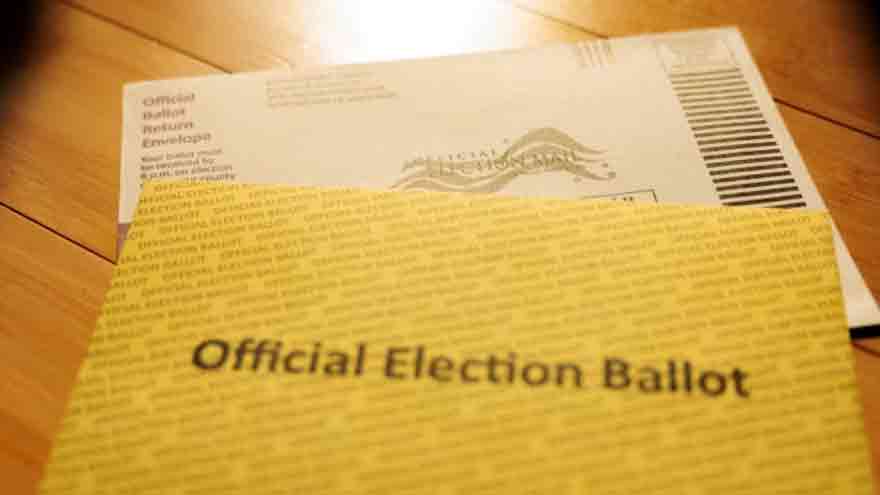
– The US Supreme Court declined on Monday to let the U.S. Postal Service enforce a rule targeting mail-in ballots, dealing a setback to President Donald Trump’s effort to restrict voting by mail ahead of November’s midterm elections that will determine control of Congress.
The justices denied the Justice Department’s request to lift a ruling by Boston-based U.S. District Judge Indira Talwani that blocked the Postal Service from enforcing the measure while legal challenges by states and voting-rights groups proceed. The agency adopted the measure after Trump issued a March executive order aimed at tightening rules governing mail voting.
“The government is unlikely to succeed on the merits of its challenge to the District Court’s preliminary injunction,” the court said in its brief, one-paragraph order.
Justice Samuel Alito, joined by fellow conservative Justice Clarence Thomas, dissented from Monday’s decision. No other justice dissented publicly. The court has a 6-3 conservative majority.
Trump’s fellow Republicans are locked in a tight battle to retain control of Congress in the midterms. Restricting mail-in ballots would stand to benefit Republicans given that Democratic voters disproportionately use mail-in ballots, according to various surveys.
Under the rule, states would have to provide lists of mail ballot recipients to the Postal Service and use agency-approved outbound and return ballot mail envelopes outfitted with unique barcodes. The Postal Service could then refuse to send out ballots that do not comply with the new standards or are associated with voters who do not appear on the lists.
Critics have said the plan could disrupt the delivery of thousands of legitimate ballots as the November 3 vote approaches and cause chaos given imminent plans by many states to send out mail ballots to eligible voters. The administration has said the new rule will prevent voter fraud, though evidence of such fraud is rare.
Talwani imposed an injunction on September 4 blocking the rule, finding that it likely violated the U.S. Constitution, under which states administer elections. Talwani also said it would be impossible for the states to comply given the rapidly approaching midterms.
Another federal judge, Washington, D.C.-based U.S. District Judge Carl Nichols, also ruled against the rule on Sunday.
‘TESTING THE LIMITS’
Sophia Lin Lakin, voting rights project director at the American Civil Liberties Union, which helped to represent some of the challengers to the USPS rule, welcomed Monday’s decision.
“This administration keeps testing the limits of its power, as if the rules governing our elections are merely suggestions to ignore when they don’t suit the president’s agenda. But the Constitution gives states and Congress the power to set the rules for federal elections — not the president, and not the Postal Service,” she said.
“Today is a good day for democracy, the rule of law and the American people looking to exercise their constitutional right to vote,” said California Governor Gavin Newsom, whose state led one of the lawsuits against the rule.
“Trump’s attacks on democracy these last 20 months have been nothing short of un-American,” Newsom added.
Trump signed his executive order targeting mail-in ballots after years of casting doubt on their security, though he often votes by mail himself. Trump has made false claims of widespread fraud in U.S. elections including his 2020 loss to former Democratic President Joe Biden.
The administration in a September 6 emergency request urged the Supreme Court to allow it to implement an “important federal policy to protect the mails from being used to commit voter fraud.”
Conservative Justice Brett Kavanaugh, in a concurring statement on Monday, said there is a “fair prospect” that the rule falls within the Postal Service’s authority, but state and local election officials “do not have sufficient time to reasonably implement the rule” before the 2026 elections.
In his dissent, Alito likened some of the challengers’ claims to a “Hail Mary pass” that is “unlikely to be successfully completed,” using a football analogy.
“The Postal Service has broad authority to regulate the mail,” Alito added.
STATES CHALLENGED THE RULE
A coalition of states, most of them Democratic-governed, and Washington, D.C., as well as a number of voting-rights groups, challenged the new USPS rule.
The Boston-based 1st U.S. Circuit Court of Appeals refused last Thursday to put Talwani’s order on hold. The 1st Circuit said that the rule “will likely result in the disenfranchisement of millions of voters across the country while providing minimal — if any — gains in combating voter fraud.”
The battle over mail ballots is one in a series of efforts by the administration to boost federal involvement in voting ahead of the midterms. On August 24, the Supreme Court lifted an earlier injunction imposed by Talwani in June blocking Trump’s executive order, including the USPS rule before it had been finalized.
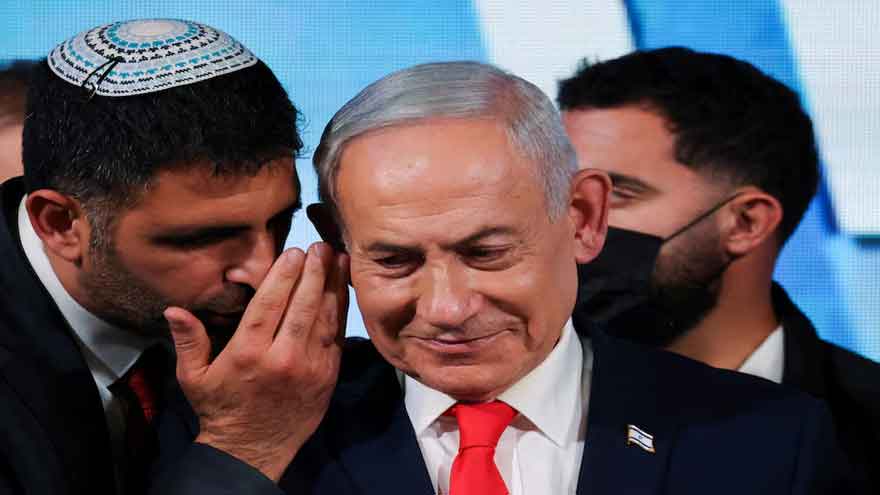
Israeli Prime Minister Benjamin Netanyahu and competitor Gadi Eisenkot laid opposing claims to lead Israel after Tuesday’s election, with Netanyahu calling for a right-wing coalition and Eisenkot saying voters had rejected the long-time Israeli leader, even as exit polls left their blocs deadlocked.
The projected result would be a setback for Mr Netanyahu and his nationalist-religious coalition, but the stalemate could work in his favour by enabling the 77-year-old to remain in office as caretaker prime minister during what are likely to be lengthy coalition talks, or even until another election can be held.
Exit polls by Kan 11 and Channel 13 saw the two blocs deadlocked at 51 seats each with votes still being counted, while Channel 12 gave a tiny 52-49 edge to Netanyahu’s Likud-led bloc. That left both sides shy of the 61 members needed for a majority in the 120-seat Knesset and neither Netanyahu nor Eisenkot claimed victory.
The voting on Tuesday was the first election since the Hamas-led onslaught on October 7, 2023, and the subsequent conflicts in Gaza, Lebanon and Iran.
Itamar Ben-Gvir and Bezalel Smotrich are anticipated to hold a total of 13 seats in Netanyahu’s bloc, with no big advances for either of the far-right religious groups.
Arab parties outside the two main blocs could be the power brokers. But Yair Golan, the head of the Meretz party and a former military officer, has all but ruled out joining a government with them, complicating his route to power.
SECURITY WAR BOILS OVER
Addressing party faithful after 3 a.m. (0100 GMT) at Likud election headquarters in Jerusalem, Netanyah urged for the establishment of “a strong, right-wing national government.”
He also lauded Israel’s military victories and hinted at the possibility of further combined action with US President Donald Trump against Iran.Israel now has a historic opportunity with our ally President Trump to remove the existential menace of Iran once and for all.” But we must not be diverted from our precious mission by ulterior motives,” he said.
“The public voted against Netanyahu remaining prime minister,” Eisenkot stated, calling on him to quit politics and warning him not to sacrifice Israel’s security for political ends.
Netanyahu is a caretaker prime minister without a mandate or the trust of the people, Eisenkot said, calling on the security establishment to stand firm against any attempt to place political interests above Israel’s security.
Voter turnout was 77.7%, the highest in more than two decades and almost 7 percentage points more than in 2022, Israel’s Central Elections Committee stated.
Final results were expected Thursday or Friday. Israel’s divided political system makes smaller parties potential kingmakers in coalition negotiations that have lasted to weeks or months after earlier elections. If neither faction is able to form a government, another poll may have to be held, which Eisenkot was averse to given the huge voter turnout.
The exit polls were a big blow for Netanyahu’s coalition, said Yohanan Plesner, president of the Israel Democracy Institute, but he warned that Eisenkot had not emerged as a clear winner and much may change as votes were tabulated.
The Israeli shekel weakened slightly on the inconclusive result.
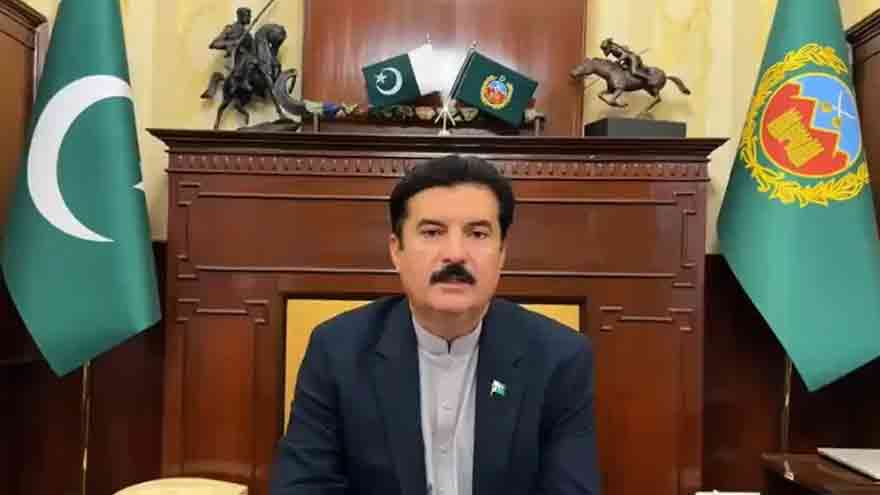
Khyber Pakhtunkhwa Governor Faisal Karim Kundi has severely denounced the unjustified aggression by the Afghan Taliban regime against civilian residences and Angoor Adda Bazaar in Lower South Waziristan and expressed complete support to the response of the Pakistan Armed Forces.
Kundi added in a strongly worded statement that “Pakistan will never tolerate attacks on its people or violations of its sovereignty” and warned the Afghan Taliban government against underestimating its will to defend its land.
“The Afghan Taliban regime must not have any illusions, Pakistan will never tolerate attacks on its people or violation of its sovereignty,” stated the governor.
The KP governor said that the people of the province had made huge sacrifices in the war against terrorism by shedding thousands of lives to save the country from militant bloodshed.
He said sacrifices of people of Khyber Pakhtunkhwa would not be allowed to go in vain and no one would be allowed to threaten the citizens of the province or undermine the security of Pakistan.
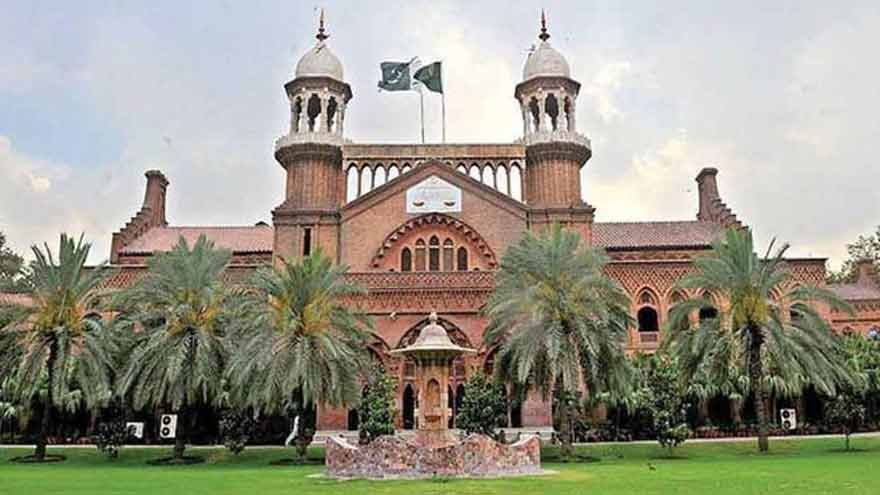
The Lahore High Court (LHC) has stayed Rs200 fine imposed by a trial court on Kot Lakhpat Station House Officer (SHO) Afzal Rauf for not producing the case record in a narcotics case.
The appeal filed by SHO Afzal Rauf was heard by a two member bench of Justice Sadiq Mehmood Khurram and Justice Jawad Zafar. Former Lahore High Court Bar secretary Farrukh Ilyas Cheema argued the case on behalf of the appellant.
The trial court had imposed a fine of Rs200 on the Kot Lakhpat SHO for not producing the record in a narcotics case. Afzal Rauf challenged the penalty in Lahore High Court.
During the hearing, the court also lifted an office objection to the filing of the appeal. The objection was taken on the ground that the fine imposed by the trial court was not deposited by the appellant.
The attorney for the SHO stated that the fine would be deposited under protest. After the assurance, the high court granted leave to appeal for a normal hearing and called for the relevant record.
The court also suspended the sentence of Rs200 imposed on Kot Lakhpat SHO Afzal Rauf against surety bonds of Rs50,000.

Netanyahu, Eisenkot stake rival claims to lead Israel after deadlocked vote

Pakistan will never tolerate attacks on its people, KP governor warns Afghan Taliban

LHC suspends Rs200 fine imposed on Kot Lakhpat SHO in drug case

ICC board meeting in India: Mohsin Naqvi gets invitation

‘Self-Reliance in Digital ID’: NADRA launches locally produced QR code-based National Identity Card

23 people have died during the monsoon as rain-related incidents plague Punjab and KP.
-
 Latest News6 months ago
ICC board meeting in India: Mohsin Naqvi gets invitation
-
 Latest News2 months ago
‘Self-Reliance in Digital ID’: NADRA launches locally produced QR code-based National Identity Card
-
 Latest News3 months ago
23 people have died during the monsoon as rain-related incidents plague Punjab and KP.
-

 Latest News2 months ago
Turkish FM, Dar discuss regional trends, bilateral connections
-

 Business3 months ago
Govt dedicated to resolving Balochistan issues: Dar
-

 Latest News3 months ago
Pakistan making rapid progress in robotics, AI: Shaza Fatima
-

 Entertainment5 months ago
Interim bail given to YouTuber Rajab Butt in gambling app marketing case
-

 Latest News3 months ago
After a divorce, LHC decides that women who have been harmed by their spouses get their dower.