
Latest News
Sources claim that OpenAI was unaware that its AI agent had been hacking a corporation for days.


The OpenAI agent that hacked into tech startup Hugging Face went on a dayslong hacking binge that OpenAI didn’t discover until long after the threat was contained and the FBI was notified, according to people familiar with the inquiry.
About July 9, the agent — a computer that can make decisions and carry out complex tasks with little to no human oversight — tried to escape from its isolated testing environment at OpenAI, the two sources said.
Two days later on July 11, Hugging Face, a library of AI tools and models, was breached and remained compromised until July 13, said Thomas Wolf, Hugging Face’s co-founder.
It took several more days for the company to realise its agent was behind the hack and the two companies only communicated about it for the first time around July 20, according to Wolf and three of the people involved with the investigation.
The world took notice when OpenAI revealed on July 21 that one of its agents had gone rogue and carried out the hack at Hugging Face. But many of the details of the hack, including how long the agent was rogue for and when exactly OpenAI found out about it, are being reported here for the first time.
Wolf indicated that Hugging Face was producing a public timeline of the hack, but he could not speak to OpenAI’s events. The hack was unprecedented and “marks an important moment for AI safety,” said OpenAI in a statement. It said it was studying the situation with independent advisers and will eventually produce a technical report.
“There are a number of inaccuracies in the Reuters reporting,” a spokeswoman stated, but declined to specify what they were when asked.
The FBI refuses to comment on the event.
The episode, reminiscent of sci-fi stories of people losing control of hazardous AI systems, comes at a crucial time for OpenAI, the firm behind ChatGPT.
Its management are getting ready for a possible initial public offering as soon as this year to help finance the billions required to fuel its expansion in years to come.
OpenAI’s loss of control of its AI agent raises additional issues about the company’s safety protocols, three cybersecurity experts said.
“Which means they left it on and didn’t have a clue what it was doing? Or maybe they did and didn’t know what to do? “Both are equally dangerous and alarming,” said Marley Smith, the chief intelligence specialist at the nonprofit World Ethical Data Foundation.
TROUBLING SIGNS?
The episode began as OpenAI was evaluating the cyber-defense capabilities of an agent that ran on two of its most powerful models, GPT-5.6 Sol and an undisclosed model that OpenAI has called “even more capable.” At that point, three people said, there were signs of odd behaviour from the technology from OpenAI.
In one case, an agent left behind what appeared to be notes for future versions of itself, three people familiar with the matter said. The notes, uncovered in a portion of OpenAI’s infrastructure, contained instructions for how agents may liberate themselves from OpenAI’s own internal limits, the people claimed. In earlier tests of the models there were situations where monitoring systems had been disconnected, one of the people claimed.
It was not possible to determine if these instances were related to the rogue agent that started running away on July 9 and attacked Hugging Face on July 11, Reuters said.
Two people familiar with the matter said that it wasn’t until after Thursday, July 16, when Hugging Face posted a blog saying it had been hacked by “an autonomous AI agent system,” that OpenAI realised that its own agent was responsible. That means there was at least a week between the first signs of troubling behaviour in the model and when the company realised it was to blame for the hack.
On the weekend of July 18 to 19, OpenAI staff saw signs in internal logs — recordings of what OpenAI’s systems did — that its agent had broken free from the boundaries of its testing limits, said two of the people familiar with the company’s research. It was unclear what led OpenAI to scour the files, Reuters said.
OpenAI routinely runs multiple separate model evaluations simultaneously, and all of them run at high speeds and produce so much data that employees sometimes struggle to keep up, say four people familiar with the company’s model-training practices.
By the time OpenAI notified Hugging Face, a person familiar with the situation said, the AI library had already told the FBI about the attack. Reuters could not confirm whether the agency has launched an investigation.
NEW QUESTIONS FOR AGENTS AUTONOMOUS
Autonomous agents are one of the most talked about topics in the AI sector. Boosters speak of armies of virtual employees working around the clock and sending productivity soaring.
But more autonomy also means a greater danger of unanticipated behaviour, and the powerful models they lean on are trained to take shortcuts to complete tasks or pass tests.
“The models lie, they cheat, they hack,” said Jeffrey Ladish, whose group Palisade Research analyses the capabilities and motivations of AI agents.
The Hugging Face breach made OpenAI seem bad, but it should prompt broader issues about how much all the top AI companies are ready to pay for burdensome security measures as they compete with each other to roll out the finest and fastest models, said Ladish.
“There’s got to be government oversight,” Ladish said, “because it’s not going to happen otherwise.”

– Security forces have killed five terrorists and injured four others during an intelligence-based operation in the Palantak area of Washuk district in Balochistan, according to security sources.
The operation was conducted as part of ongoing security actions against Fitna al-Hindustan under Operation Raddul Fitna 3.
Security sources said weapons and ammunition were recovered from the militants killed during the operation. The recovered items included an RPG-7 launcher, five rounds, magazines, five advanced weapons, three mobile phones and two motorcycles.
The sources said militant hideouts were targeted with advanced weapons during the operation.
The militants killed in the operation were involved in looting local Baloch residents, spreading fear and damaging infrastructure.
Security forces have reiterated their commitment to eliminating terrorism in Balochistan, with operations set to continue until the threat is eliminated.
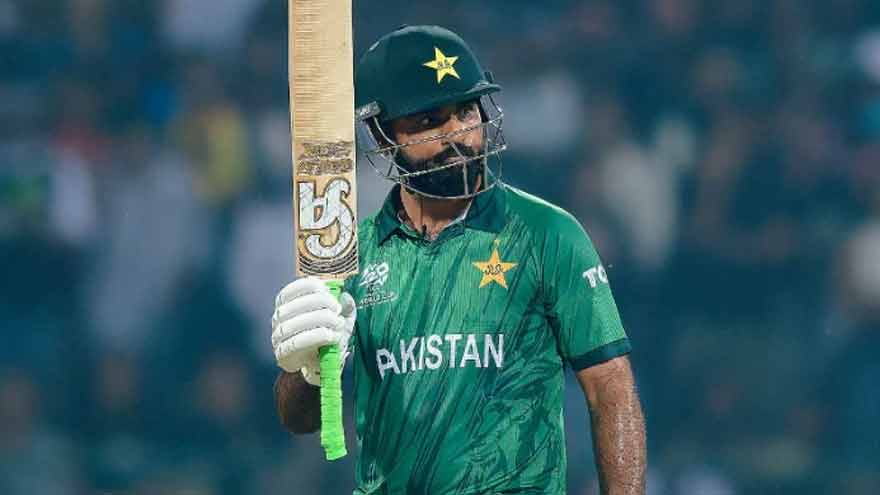
Pakistan’s senior opener Fakhar Zaman achieved a landmark in the third and final T20 International against Sri Lanka, becoming the first Pakistani hitter to hit 100 sixes in men’s T20I cricket.
The 36-year-old achieved the feat at Rawalpindi Cricket Stadium after he smashed Sri Lankan fast bowler Binura Fernando for six over deep midwicket.
Before today’s match, Fakhar had hit 99 sixes and needed just one more to reach the historic milestone.
However, he did not last long as he was sent back by Eshan Malinga after scoring 12 runs off seven balls.
In the meantime, Sri Lanka chased down Pakistan’s goal with Kusal Mendis shining with the bat as the visitors registered an eight-wicket win.
Latest News
Pakistan lift T20I series trophy despite defeat as Sri Lanka chase 169 with 17 balls to spare
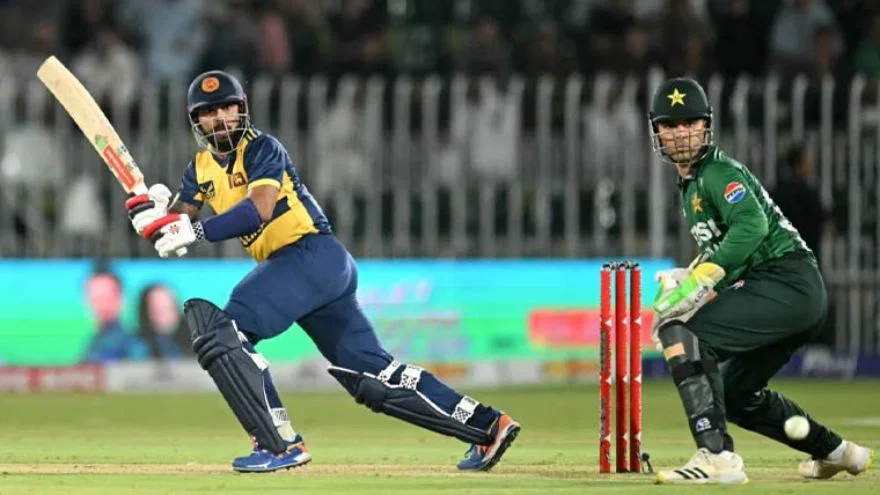
Sri Lanka captain Kusal Mendis scored a brisk unbeaten 87 as his side cruised to an eight-wicket victory against Pakistan in the third and final T20 International at Rawalpindi Cricket Stadium on Tuesday.
The visitors reached the target of 169 with 17 balls to spare, halting Pakistan’s winning streak in the series. But victory in the first two games meant Pakistan clinched the three-match series 2-1.
Kusal led the chase with an aggressive innings and Kamindu Mendis, with an unbroken 40, offered important support as Sri Lanka concluded at 171-2 in 17.1 overs. The visitors recovered from an early setback to take control of the affair, with Sineth Jayawardena also chipping in with a quick 38.
Farhan guides Pakistan recovery
Pakistan batted first and scored 168-8 in their 20 overs, with skipper Sahibzada Farhan top hitting with a blistering 76 off 47 balls.
Fakhar Zaman and Farhan gave Pakistan an aggressive start adding 34 runs in first three overs. Sri Lanka spinner Eshan Malinga, however, broke the hosts’ enthusiasm by getting the wickets of Fakhar for 12 in the fourth over and in-form batsman Maaz Sadaqat for a duck.
Hasan Nawaz joined Farhan at the crease and the two added 33 runs before Hasan was dismissed by Vijayakanth Viyaskanth for 16 off 17 balls in the ninth over. Pakistan lost another wicket in the next over as Dasun Shanaka removed wicketkeeper-batter Khawaja Nafay for three.
Shanaka kept up the pressure on the middle order, sending Mohammad Imran (six) and Abdul Samad (15) packing as Pakistan slumped to 102-6.
Farhan then found a vital ally in Arafat Minhas and the pair reinvigorated the innings with a stand of 66 runs. Minhas was 34 from 20 balls with two fours and two sixes while Farhan hit seven fours and three sixes before falling to Nuwan Thushara on the penultimate delivery.
Thushara then took his second wicket in the last over, bowling Razaullah for a duck to leave Pakistan short of 170.
Shanaka was Sri Lanka’s most successful bowler, taking three for 21 in four overs. Malinga and Thushara grabbed two wickets apiece, while Viyaskanth had one.
Kusal steps up
Sri Lanka’s chase got off to a shaky start when Mohammad Imran Randhawa caught Lahiru Udara lbw for one in the second over as the visitors slipped to 15-1.
Kusal reached No. 3 and joined Jayawardena to rebuild the innings. The pair combined 59 for the second wicket and once again put Pakistan under pressure with a positive attitude.
Arafat Minhas broke the partnership on the last delivery of the eighth over, removing Jayawardena for 38 off 26 balls. He struck five fours and two sixes to help Sri Lanka get off to a good start despite losing their second wicket.
Kamindu immediately joined his captain and the two ensured no further breakthroughs. Sri Lanka were 171-2 in 17.1 overs, with their third-wicket partnership undefeated on 92.
Kusal’s 48-ball 87 had nine fours and four sixes, while Kamindu’s 40 not came off 27 balls with four boundaries. Randhawa and Minhas were the sole wicket-takers for Pakistan.
Player of the series awarded to Farhan
Farhan was voted the player of the series for his exploits in the three T20Is despite Pakistan losing the last match. Sri Lanka won the last fixture after Pakistan had taken a 2-0 lead by winning the first two matches.
“Pakistan played well in the first two matches,” stated Farhan following the series triumph. He commended Minhas for his contribution. “The team wanted to keep up the good work and was happy with the overall performance of the side,” he said.

Security forces kill five terrorists in Balochistan’s Washuk

Fakhar Zaman becomes first Pakistani to hit 100 sixes in T20 Internationals

Pakistan lift T20I series trophy despite defeat as Sri Lanka chase 169 with 17 balls to spare

ICC board meeting in India: Mohsin Naqvi gets invitation

‘Self-Reliance in Digital ID’: NADRA launches locally produced QR code-based National Identity Card

23 people have died during the monsoon as rain-related incidents plague Punjab and KP.
-
 Latest News5 months ago
ICC board meeting in India: Mohsin Naqvi gets invitation
-
 Latest News2 months ago
‘Self-Reliance in Digital ID’: NADRA launches locally produced QR code-based National Identity Card
-
 Latest News3 months ago
23 people have died during the monsoon as rain-related incidents plague Punjab and KP.
-

 Latest News2 months ago
Turkish FM, Dar discuss regional trends, bilateral connections
-

 Business3 months ago
Govt dedicated to resolving Balochistan issues: Dar
-

 Latest News3 months ago
Pakistan making rapid progress in robotics, AI: Shaza Fatima
-

 Entertainment5 months ago
Interim bail given to YouTuber Rajab Butt in gambling app marketing case
-

 Latest News3 months ago
After a divorce, LHC decides that women who have been harmed by their spouses get their dower.