
Latest News
Sources claim that OpenAI was unaware that its AI agent had been hacking a corporation for days.

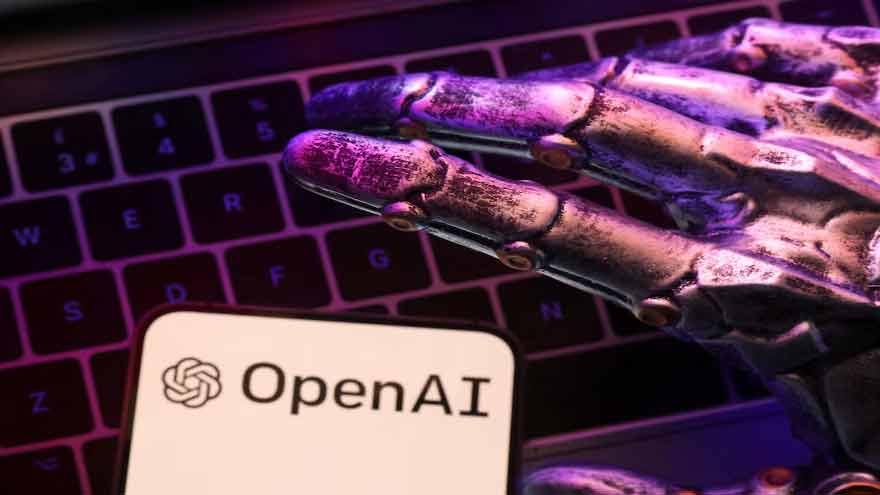
The OpenAI agent that hacked into tech startup Hugging Face went on a dayslong hacking binge that OpenAI didn’t discover until long after the threat was contained and the FBI was notified, according to people familiar with the inquiry.
About July 9, the agent — a computer that can make decisions and carry out complex tasks with little to no human oversight — tried to escape from its isolated testing environment at OpenAI, the two sources said.
Two days later on July 11, Hugging Face, a library of AI tools and models, was breached and remained compromised until July 13, said Thomas Wolf, Hugging Face’s co-founder.
It took several more days for the company to realise its agent was behind the hack and the two companies only communicated about it for the first time around July 20, according to Wolf and three of the people involved with the investigation.
The world took notice when OpenAI revealed on July 21 that one of its agents had gone rogue and carried out the hack at Hugging Face. But many of the details of the hack, including how long the agent was rogue for and when exactly OpenAI found out about it, are being reported here for the first time.
Wolf indicated that Hugging Face was producing a public timeline of the hack, but he could not speak to OpenAI’s events. The hack was unprecedented and “marks an important moment for AI safety,” said OpenAI in a statement. It said it was studying the situation with independent advisers and will eventually produce a technical report.
“There are a number of inaccuracies in the Reuters reporting,” a spokeswoman stated, but declined to specify what they were when asked.
The FBI refuses to comment on the event.
The episode, reminiscent of sci-fi stories of people losing control of hazardous AI systems, comes at a crucial time for OpenAI, the firm behind ChatGPT.
Its management are getting ready for a possible initial public offering as soon as this year to help finance the billions required to fuel its expansion in years to come.
OpenAI’s loss of control of its AI agent raises additional issues about the company’s safety protocols, three cybersecurity experts said.
“Which means they left it on and didn’t have a clue what it was doing? Or maybe they did and didn’t know what to do? “Both are equally dangerous and alarming,” said Marley Smith, the chief intelligence specialist at the nonprofit World Ethical Data Foundation.
TROUBLING SIGNS?
The episode began as OpenAI was evaluating the cyber-defense capabilities of an agent that ran on two of its most powerful models, GPT-5.6 Sol and an undisclosed model that OpenAI has called “even more capable.” At that point, three people said, there were signs of odd behaviour from the technology from OpenAI.
In one case, an agent left behind what appeared to be notes for future versions of itself, three people familiar with the matter said. The notes, uncovered in a portion of OpenAI’s infrastructure, contained instructions for how agents may liberate themselves from OpenAI’s own internal limits, the people claimed. In earlier tests of the models there were situations where monitoring systems had been disconnected, one of the people claimed.
It was not possible to determine if these instances were related to the rogue agent that started running away on July 9 and attacked Hugging Face on July 11, Reuters said.
Two people familiar with the matter said that it wasn’t until after Thursday, July 16, when Hugging Face posted a blog saying it had been hacked by “an autonomous AI agent system,” that OpenAI realised that its own agent was responsible. That means there was at least a week between the first signs of troubling behaviour in the model and when the company realised it was to blame for the hack.
On the weekend of July 18 to 19, OpenAI staff saw signs in internal logs — recordings of what OpenAI’s systems did — that its agent had broken free from the boundaries of its testing limits, said two of the people familiar with the company’s research. It was unclear what led OpenAI to scour the files, Reuters said.
OpenAI routinely runs multiple separate model evaluations simultaneously, and all of them run at high speeds and produce so much data that employees sometimes struggle to keep up, say four people familiar with the company’s model-training practices.
By the time OpenAI notified Hugging Face, a person familiar with the situation said, the AI library had already told the FBI about the attack. Reuters could not confirm whether the agency has launched an investigation.
NEW QUESTIONS FOR AGENTS AUTONOMOUS
Autonomous agents are one of the most talked about topics in the AI sector. Boosters speak of armies of virtual employees working around the clock and sending productivity soaring.
But more autonomy also means a greater danger of unanticipated behaviour, and the powerful models they lean on are trained to take shortcuts to complete tasks or pass tests.
“The models lie, they cheat, they hack,” said Jeffrey Ladish, whose group Palisade Research analyses the capabilities and motivations of AI agents.
The Hugging Face breach made OpenAI seem bad, but it should prompt broader issues about how much all the top AI companies are ready to pay for burdensome security measures as they compete with each other to roll out the finest and fastest models, said Ladish.
“There’s got to be government oversight,” Ladish said, “because it’s not going to happen otherwise.”
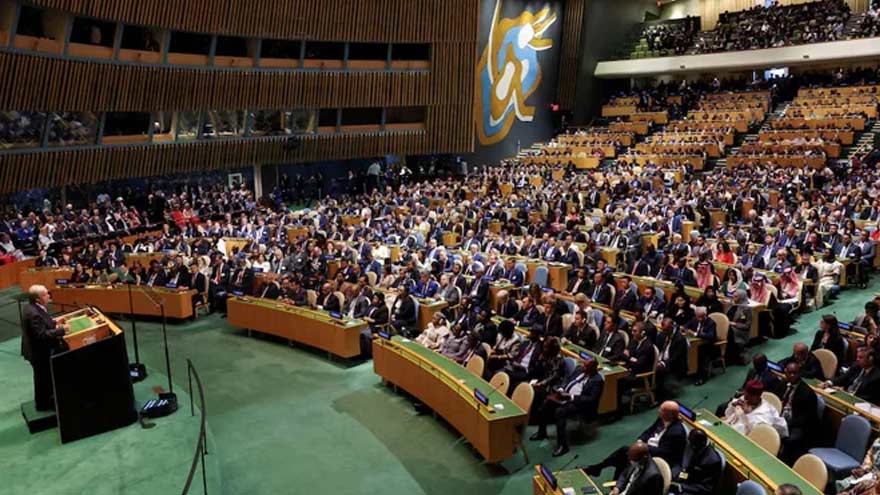
– Limousines whisked world leaders away from the United Nations on Friday after a week of speeches, meetings and hallway diplomacy.
While they reached no breakthroughs on the world’s most intractable conflicts, talks on the Iran and Ukraine wars inched forward, and global powers used the venue to debate AI risks with industry leaders.
Here are the big takeaways from scores of panels, hundreds of meetings, hours spent in lines and listening to speeches — and countless cups of coffee:
Reboot of Iran diplomacy
The UN was probably most useful for facilitating the first shuttle talks between American and Iranian officials since the collapse of a ceasefire in July. Iran’s Foreign Minister Abbas Araqchi and US envoys Steve Witkoff and Jared Kushner communicated through mediators.
The efforts must continue, a senior Iranian official told Reuters, even as Iranian and American leaders exchanged sharp words at the General Assembly hall, with the US threatening to “annihilate” Iran and Iran accusing the US of a “bullying mentality.”
The senior Iranian official said Tehran was reviewing Washington’s response to its proposals, which include lifting a US naval blockade on Iranian ports and reopening the Strait of Hormuz.
But no agreement appeared imminent. US Secretary of State Marco Rubio cautioned that a deal would involve hard work over time.
Ukraine grain and energy
Rubio also held talks with Russian Foreign Minister Sergey Lavrov, after which he said Ukraine and Russia had both voiced an interest in a limited ceasefire involving grain and energy-related targets.
Ukraine and its allies are racing to secure limited agreements on energy infrastructure and Black Sea shipping before winter, fearing renewed Russian strikes on power and heating facilities.
But hours after Rubio spoke on Wednesday, Lavrov addressed the Security Council meeting on Ukraine, showing no indication Russia was prepared to engage on any subject. “Europe, whatever it thinks, just wants to get a pause, and it wants to use it to pump the Kyiv regime with weapons,” Lavrov said.
AI steals climate’s spotlight
Climate change — a focus of UN discussions in recent years — was largely pushed aside by debate over artificial intelligence.
The festival of diplomacy coincided with an unprecedented outpouring of concern around AI after several safety breaches, and as top researchers warned it could destroy humanity.
The UN convened a Security Council meeting featuring OpenAI CEO Sam Altman, who made an appearance in person, as well as Anthropic CEO Dario Amodei. The industry leaders appealed for governments to work together to manage AI.
Underscoring the concerns, just as they spoke, Australian Prime Minister Anthony Albanese said that an AI agent developed by OpenAI infiltrated an Australian government website in June, accessing public and non-public files.
US President Donald Trump, who has dismissed AI risks as a “hoax” and “sick conspiracy,” told the UN he “rejects any attempt to construct a globalist scheme to control” AI, describing it as amazing while promising the US would be careful.
Surprise arrival
The biggest surprise arrival at the UN was Venezuela’s interim President Delcy Rodriguez, who used her trip to hold first in-person talks with Trump since coming to power after US forces grabbed then-President Nicolas Maduro in a dramatic nighttime raid.
The Venezuelan delegation’s focus was on restructuring its billions of dollars in sovereign debt as it met US officials, multilateral lenders and companies.
Trump used his speech to the body dedicated to global peace to declare that in Venezuela: “to the victor belong the spoils,” and called an oil deal the US signed with Caracas last month “perhaps the biggest deal ever made.”
As Rodriguez and Trump met in New York, Venezuelan opposition leader Maria Corina Machado made three unsuccessful bids to return to her country.
Surprise absence
The biggest surprise absence was the Sudanese army chief Abdel Fattah al-Burhan. The US withheld his visa in a move that Sudanese and other sources said was linked to a US-backed ceasefire proposal that Khartoum has resisted.
The dispute, first reported by Reuters, threatened to deepen tensions between Washington and Sudan’s army at a critical moment in the civil war, which the UN calls the world’s largest humanitarian crisis.
Burhan had represented Sudan at the General Assembly since the coup. Another notable absentee was Palestinian President Mahmoud Abbas, who addressed delegates by video and condemned US curbs on the Palestinian mission’s access to the UN.
Uncertain future
The cash-strapped United Nations may no longer be in “freefall,” but it remains stuck in an “open-ended crisis,” International Crisis Group analyst Richard Gowan said. The organisation is grappling with shrinking budgets, waning influence and mounting geopolitical conflicts.
Wars in Ukraine and Iran rage on, while Trump has denounced the 193-member body as bloated and globalist, slashed US funding and withdrawn from dozens of UN agencies.
As UN Secretary-General Antonio Guterres received a standing ovation after his final General Assembly speech, a small group of politicians and former UN officials lobbied publicly and behind closed doors to succeed him. His second five-year term ends on December 31, leaving little time for the world’s major powers to agree on a replacement.
The race, conducted according to an arcane multi-step process involving “straw polls,” has no clear frontrunner, but former Costa Rican Vice President Rebeca Grynspan and Guyana’s UN Ambassador Carolyn Rodrigues Birkett are leading the pack.
Whoever gets the world’s most difficult job will inherit an organisation buffeted by crises, low morale and declining political relevancy. That person, too, will welcome the leaders to New York for next year’s summit.
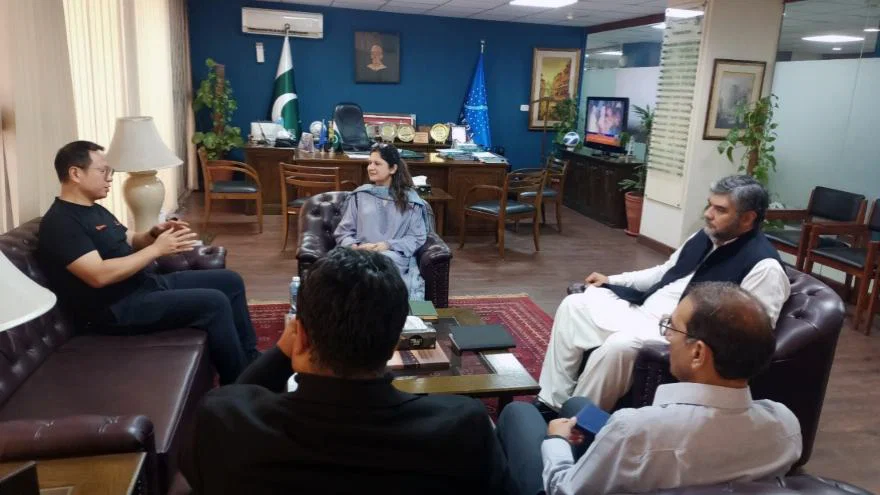
The Small and Medium Enterprises Development Authority (SMEDA) and Daraz Pakistan are exploring new avenues of collaboration to help Pakistani small and medium-sized enterprises (SMEs) build digital capabilities, expand their access to e-commerce and unlock new opportunities for growth.
The discussion took place during a meeting between Nadia Jahangir Seth, Chief Executive Officer of SMEDA, and Ben Yi, Managing Director of Daraz Pakistan. The two organisations explored potential areas of cooperation, including e-commerce education, capacity building and initiatives aimed at supporting women-led businesses.
The proposed collaboration is aligned with SMEDA’s broader efforts under the strategic direction of the Ministry of Industries and Production (MoI&P) to strengthen the digital capabilities of SMEs. It also supports efforts to promote women’s entrepreneurship and inclusive SME development in Pakistan, in line with Prime Minister Shehbaz Sharif’s economic vision.
E-commerce programme
A key development discussed during the meeting was SMEDA’s upcoming e-commerce programme, which is designed to equip SMEs with practical knowledge and capabilities to participate more effectively in the digital economy.
SMEDA and Daraz also explored opportunities for the e-commerce platform to contribute its industry expertise to the development of a specialised curriculum. The proposed curriculum could help entrepreneurs understand and manage the complete online selling journey, from establishing a digital business to serving customers and fulfilling orders.
Potential areas of training include setting up and managing an online business, product listings and merchandising, digital marketing, customer engagement, payments and fulfilment, along with other essential aspects of operating a successful e-commerce business.
The programme is expected to focus on practical knowledge that can help entrepreneurs navigate the rapidly expanding digital marketplace and develop the skills required to establish and manage online businesses.
Women entrepreneurs
The proposed collaboration will also explore dedicated opportunities for women entrepreneurs, with an emphasis on helping more women-led businesses develop digital skills, improve market access and build the confidence needed to establish and expand their online presence.
Nadia Jahangir Seth said digital transformation presents a significant opportunity for Pakistan’s SMEs to improve competitiveness, reach new markets and build sustainable businesses.
“SMEDA is working to strengthen the capabilities of entrepreneurs through practical and accessible programmes, and e-commerce will be an important part of this journey,” she said.
She added that collaboration with industry leaders such as Daraz could help ensure entrepreneurs receive relevant, market-oriented skills. “We are particularly focused on creating greater opportunities for women entrepreneurs through targeted capacity building, digital inclusion and market access,” she said.
Industry expertise
Ben Yi said Pakistan’s SME sector has significant potential to benefit from the growth of e-commerce, but businesses need more than simply an online presence to build sustainable digital operations.
“Entrepreneurs need the right knowledge, tools and support to build sustainable digital businesses,” he said.
“Our discussion with SMEDA is an important step towards exploring how we can bring Daraz’s experience and capabilities to a broader community of entrepreneurs, particularly women-led businesses. We look forward to working together on practical initiatives that can help SMEs participate and succeed in the digital economy,” he added.
The meeting focused on strengthening Pakistan’s digital entrepreneurship ecosystem and enabling SMEs to make greater use of opportunities emerging from e-commerce.

The federal government has announced mixed modifications to the pricing of fuel and diesel for motorists for September 26 to 28.
Petrol has gotten dearer in the latest revision, but high-speed diesel has been cut by a few rupees a litre. The revised rates go into effect on September 26.
The price of fuel has been raised by Rs2.02 per litre, bringing the new rate to Rs391.30 per litre. The current increase comes after petrol prices which remain around Rs400 per litre and add to the expense of fuel for motorists.
The hike in petrol prices will continue to be applied for the three-day period indicated by the government under the revised rates.
In the meantime, the price of high speed diesel has been cut by Rs3.59 per litre. After the cut, high-speed diesel will be available from September 26 for Rs408.53 a litre.
Diesel still remains over the Rs400-per-litre mark and the drop kicks in. The government announced the new rate, which will be in force until September 28. The federal government has announced new petrol and diesel pricing for the period from September 26 to 28 with mixed changes for motorists.
In the latest adjustment petrol has gone up but high speed diesel has dropped down by few rupees per litre. The revised rates go into effect on September 26.
The price of fuel has been raised by Rs2.02 per litre, bringing the new rate to Rs391.30 per litre. The current increase comes after petrol prices which remain around Rs400 per litre and add to the expense of fuel for motorists.
The hike in petrol prices will continue to be applied for the three-day period indicated by the government under the revised rates.
In the meantime, the price of high speed diesel has been cut by Rs3.59 per litre. After the cut, high-speed diesel will be available from September 26 for Rs408.53 a litre.
The drop has come even as diesel continues to be over the Rs400-a-litre mark. The government’s recent announcement said the new tariff will remain in place until 28 September.

Six big takeaways from a turbulent week of UN diplomacy

SMEDA plans new e-commerce programme to empower Pakistani entrepreneurs

Petrol price up by Rs 2.02, diesel down by Rs 3.59

ICC board meeting in India: Mohsin Naqvi gets invitation

23 people have died during the monsoon as rain-related incidents plague Punjab and KP.

Govt dedicated to resolving Balochistan issues: Dar
-
 Latest News4 months ago
ICC board meeting in India: Mohsin Naqvi gets invitation
-
 Latest News2 months ago
23 people have died during the monsoon as rain-related incidents plague Punjab and KP.
-
 Business2 months ago
Govt dedicated to resolving Balochistan issues: Dar
-

 Latest News1 month ago
‘Self-Reliance in Digital ID’: NADRA launches locally produced QR code-based National Identity Card
-
 Latest News2 months ago
Pakistan making rapid progress in robotics, AI: Shaza Fatima
-

 Entertainment4 months ago
Interim bail given to YouTuber Rajab Butt in gambling app marketing case
-

 Latest News2 months ago
After a divorce, LHC decides that women who have been harmed by their spouses get their dower.
-

 Latest News4 months ago
A meta program to monitor mouse clicks made by employees in violation of EU privacy regulations