
Latest News
The swift adoption of AI in China, its largest testing environment, may influence worldwide AI utilisation.

On a recent weekday, some 50 individuals congregated outside the headquarters of a Chinese mobile internet firm, seeking assistance with the installation of an artificial intelligence assistant.
The scenario in Beijing, the capital of China, recurred for several days at other events and was also observed in the southern technological hub of Shenzhen in March, when engineers assisted audiences in configuring the popular AI “agent” OpenClaw on their laptops.
“I am concerned about lagging in technological advancements,” stated Sun Lei, a 41-year-old human resources manager at the Cheetah event. She expressed her ambition that the tool may assist her in sourcing and screening resumes from many recruitment sources.
Over a year following the revelation of DeepSeek’s sophisticated AI model, China’s landscape has evolved into a proving ground for the widespread use of AI technologies. AI models developed in the United States continue to excel in computational capacity; nevertheless, Chinese individuals and enterprises have rapidly adopted the technology, enabling its rapid and extensive integration across nearly all sectors.
With the rapid global use of AI in businesses and daily life, ordinary Chinese individuals are utilising AI for various tasks, including travel booking and planning, meal ordering, and ride-hailing. As of December, over 600 million individuals from a population of 1.4 billion were utilising generative AI, reflecting a 142% rise from the previous year, according to a research by the government-controlled China Internet Network Information Center.
Jason Tong, a 64-year-old retiree in Shanghai and former IT engineer, has utilised AI chatbots like Doubao and Kimi for routine enquiries since their inception a few years ago.
He commenced a more vigilant focus on his health and, in early March, enrolled in a blood glucose monitoring program operated by a Shanghai-based company that employs an AI model to provide personalised health recommendations. He has found its customised, prompt responses beneficial.
Tong asserts that the extensive integration of AI applications into daily life is unavoidable, stating, “Just as carriages were ultimately supplanted by trains, this will inevitably occur.”
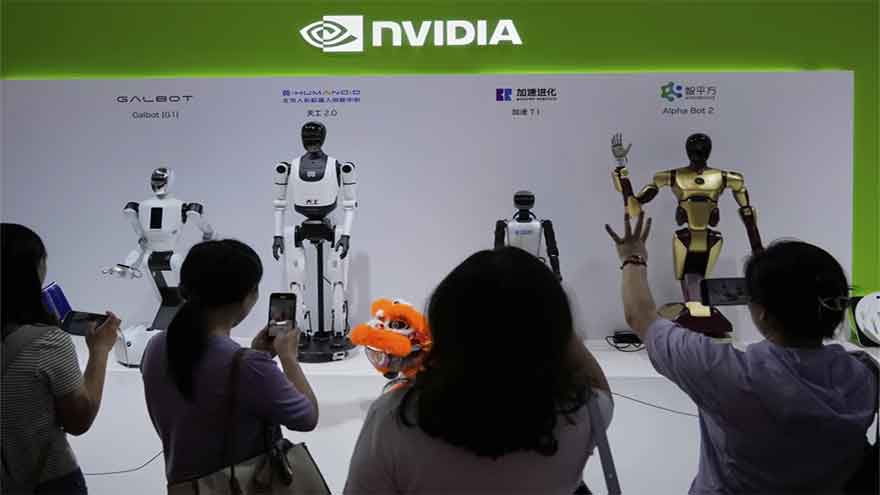
Chinese products utilising AI, including automobiles and robotics, are experiencing significant progress, ranging from humanoid robots with sophisticated cognitive capacities to AI systems that assist drivers with complex tasks such as restaurant reservations.
Lizzi Lee, a fellow at the Asia Society Policy Institute’s Center for China Analysis specialising in economics and technology, stated, “The competition in artificial intelligence is evidently transitioning from models to ecosystems.” “Chinese users are effectively functioning as large-scale real-time testers.”
Chinese technology firms such as Tencent, Alibaba, and Baidu are competing to commercialise artificial intelligence. Tencent included OpenClaw into WeChat, China’s proprietary “super-app,” which primarily functions as a messaging platform but also facilitates activities such as food ordering and payment processing. Alibaba is integrating “agentic” AI into its operational processes.
OpenClaw facilitates the broader adoption of artificial intelligence applications in China.
OpenClaw, developed by Austrian software engineer Peter Steinberger last year, gained rapid and fervent adoption due to its capacity to utilise diverse tools for executing complex tasks.
Zhao Yikang, a Chinese university student in Macao, utilises OpenClaw for both his academic pursuits and everyday activities.
He was impressed by its affordability and efficiency, utilising it to automatically produce promotional videos and oversee social media accounts during his internship at a real estate business in Zhuhai, a city in southern China.
Zhao stated, “AI can comprehend information instantaneously.” “You simply need to assume the role of a commander and instruct it accordingly.”
Zhao requested AI to create a corporate website in preparation for launching a picture services firm post-graduation. In about 10 minutes, it produced a fully operational website for less than 5 yuan (70 cents).
Chinese authorities issued multiple warnings regarding potential security hazards associated with OpenClaw AI “agents,” such as data breaches, despite the continued high interest and increased installations.
Janet Tang, a partner and managing director specialising in technology at consultancy AlixPartners, stated that Chinese organisations are progressively establishing internal objectives to enhance AI utilisation for efficiency improvement.
Wang Xiaogang, co-founder of the Chinese AI software firm SenseTime and chairman of ACE Robotics, stated that there are numerous application scenarios. The sector is advancing rapidly, and individuals are receptive and enthusiastic about experimenting with AI in various contexts.
U.S. export regulations simultaneously facilitate and obstruct the utilisation of AI in China.
China has endeavoured to gain an advantage by significantly spending in talent cultivation and securing access to ample, cost-effective electricity for its energy-intensive AI advancements and innovations.
Chinese leaders have committed to an annual average growth of at least 7% in national research and development expenditure within the country’s five-year plan until 2030 to attain technological advancements, particularly in AI. A national framework for “AI plus” delineates measures to incorporate AI across several sectors, including healthcare and education. Judges in Shenzhen adjudicated 50% more cases last year, according to a court, partially aided by an AI technology facilitating judicial procedures.
Nonetheless, restricted access to certain advanced computer chips due to U.S. regulations continues to impede China’s AI progress.
Samm Sacks, a senior scholar at New America specialising in Chinese technology policies, stated, “Export controls on tools have impeded China’s chipmaking capabilities and represent the Achilles’ heel of numerous AI laboratories reliant on advanced AI chips.”
However, the regulations have resulted in enhanced coordination of design, manufacturing, and implementation throughout China’s technology supply chain. Sacks stated, “Over time, this dynamic could enhance, rather than hinder, China’s ambitions.”
Last month, when China’s DeepSeek unveiled its highly anticipated V4 AI model preview, a significant alteration was the incorporation of computer processors produced by the Chinese technology conglomerate Huawei. This signifies less reliance on leading U.S. semiconductor manufacturers like Nvidia.
A recent analysis from Stanford University’s Institute for Human-Centered AI indicates that the performance disparity in leading AI models between the U.S. and China has “effectively closed.”
U.S. officials and leading AI companies, such as Anthropic and OpenAI, have alleged that Chinese AI startups are appropriating U.S. AI innovations. China asserts that these charges are unfounded.
Lian Jye Su, a lead analyst at the research and consultancy firm Omdia, posits that the AI disparity between the U.S. and China will persist in diminishing, notwithstanding U.S. export restrictions and China’s Great Firewall, the extensive internet filtration and censorship apparatus employed by the Chinese Communist Party.
Analysts, including Su, contend that obstacles like the Great Firewall will likely affect China’s AI utilisation in constrained manners, considering that the technology is already being tested, integrated, and scaled within China’s regulated internet framework.
“China will soon transition from being a fast follower to a parallel innovator,” he stated.


Pakistani actress Sarah Khan has addressed a question about whether she had hoped for a son during her second pregnancy, saying that she and her husband, singer Falak Shabir, only wished for a healthy child.
During a question-and-answer session on her Instagram account, a fan asked if she wanted a baby boy while expecting her second child.
Responding to the question, Sarah said, “We just wanted a child.”

The actress, who is the mother of two daughters, Alyana and Rania, also reflected on how motherhood has transformed her life.
When asked what she misses most about her life before marriage and children, Sarah replied that uninterrupted sleep is the only thing she misses after becoming a mother of two.
She also shared a light-hearted response when a follower asked whether she was watching the FIFA World Cup 2026.
“The only thing I’m watching these days is my daughters,” she joked.
Speaking about motherhood, Sarah described her daughters as the greatest blessing in her life.
“My life has become more beautiful. I am busier than ever. It’s the best time of my life, and I love my daughters. They are Allah’s greatest blessing upon me,” she said.
The actress added that her biggest goal as a mother is to raise kind and compassionate human beings and wished for all married women to be blessed with healthy children.
Sarah also revealed that she is “obsessed” with her husband, Falak Shabir, while joking that their daughters are even more attached to their father.
The actress recently earned praise for her performance in the drama Sher alongside Danish Taimoor and is set to appear in an upcoming Geo TV drama opposite Feroze Khan.
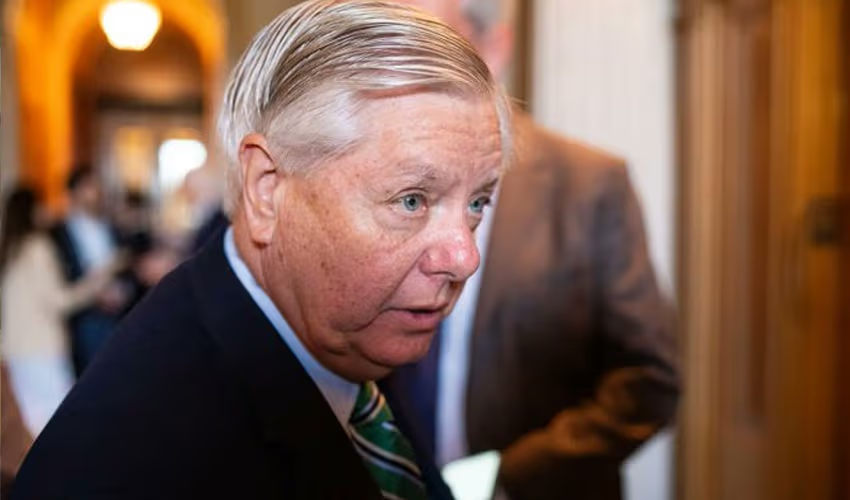
According to a statement sent by his office early on Sunday, Graham passed away on Saturday night.The statement read, “Senator Graham’s family requests privacy during this extremely trying time and appreciates prayers at this time.”
Among the first public figures to honor Graham was President Donald Trump, who described him as “one of the greatest people and Senators I have ever known.”
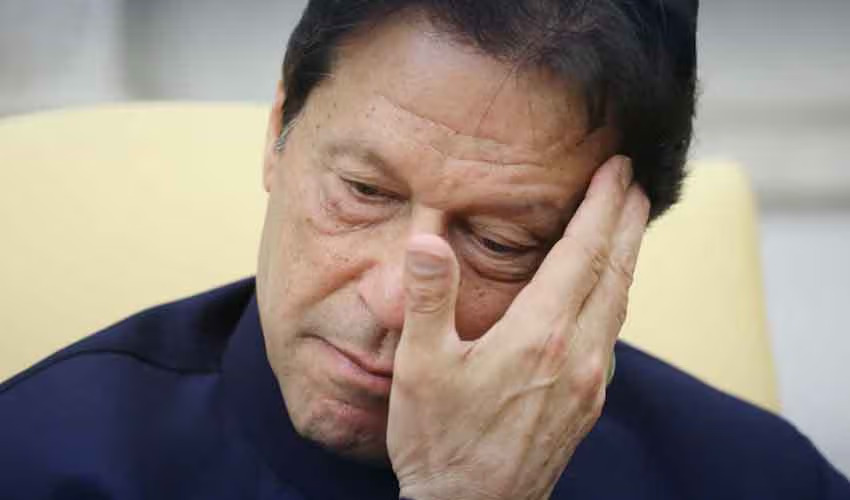
Imran Khan, the founder of Pakistan Tehreek-e-Insaf (PTI), had an eye exam at Rawalpindi’s Adiala jail.
Imran’s eye is thoroughly examined by medical professionals.
The inspection was conducted yesterday (Friday), according to information leaked on Saturday. Dr. Arif from PIMS and Dr. Nadeem Qureshi from Al-Shifa Trust were among the specialists who performed the examination.
Imran Khan’s eye was thoroughly examined by the physicians, according to sources.
Medication is prescribed by doctors as part of follow-up care.
Sources claim that as part of the follow-up treatment, the doctors recommended medication.

According to Sarah Khan, she never made a specific wish for a son.

US Senator Lindsey Graham passes away at age 71 following a brief illness

At Adiala jail, Imran Khan has his eyes examined.

ICC board meeting in India: Mohsin Naqvi gets invitation

The IMF mission has arrived in Pakistan for discussions regarding the budget.

Is the US-Iran standoff exposing deep fault lines in US intelligence coordination?
-
 Latest News2 months ago
ICC board meeting in India: Mohsin Naqvi gets invitation
-
 Business2 months ago
The IMF mission has arrived in Pakistan for discussions regarding the budget.
-
 Latest News1 month ago
Is the US-Iran standoff exposing deep fault lines in US intelligence coordination?
-

 Business2 months ago
Oil hits 2-week high following drone strike on UAE nuclear power facility
-
 Latest News1 month ago
Shehbaz, Zardari discuss key issues as PPP hints at budget support
-

 Latest News1 month ago
7.8 magnitude quake hits southern Philippines\
-
 Latest News2 months ago
To commemorate the anniversary of Marka-e-Haq, top civic and military leaders assemble at Pakistan Monument.
-

 Business2 months ago
In the open market, flour prices increase by Rs 700 per mound.