
Latest News
Turkey ready to support Saudi Arabia under defense pact: FM

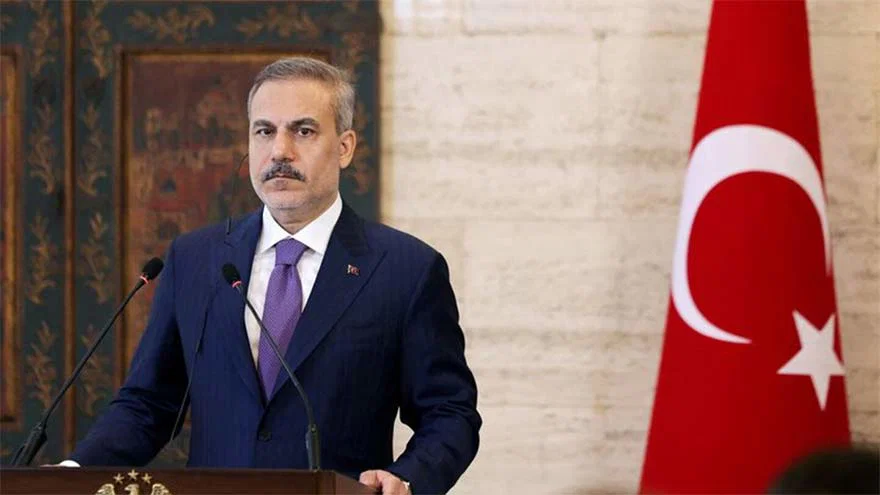
Turkey’s foreign minister Hakan Fidan said on Saturday Saudi Arabia may have military demands due to continuing strikes by Yemen’s Houthis and that Turkey was ready to help under a trilateral defense deal that also involves Pakistan.We see extremely significant threats on the territorial integrity, sovereignty of Saudi Arabia. We have an agreement of partnership in our pact. . . . real solidarity on this issue. . . They might have some military demands, especially regarding certain technical questions. “We would have no problem to meet these,” Fidan told a TV program.
The collective defense pact, named the “Makkah Joint Defense Agreement” and signed last month, states that an armed strike against any of the three nations will be considered an attack against all of them.
The Houthis, who hold the most populated sections of Yemen, have been attacking Saudi Arabia since establishing a naval blockade against Riyadh in July, a new front in the wider war that began with US and Israeli strikes on Iran in late February.
The strikes have hit Saudi cities, energy infrastructure and shipping, threatening world oil supplies and the primary alternative Red Sea route for Gulf exports as traffic via the Strait of Hormuz remains interrupted.
US President Donald Trump has rejected Saudi requests for military help to battle the Houthis, who reached a ceasefire with the US last year after Washington attacked the group for two months.
Saudi Arabia does not want to be dragged into the US-Iran war, it does not want to be a part of it, Fidan said. He said approaches had been made to all sides to cease the hostilities, without elaborating.There are many initiatives but they have to be accepted by the sides,” he remarked. There are new proposals, I hope they go with them. Otherwise, the crisis was accepted up to a certain extent, but the economic repercussions have started to go beyond the limit of being reasonable.
Turkey, which has NATO’s second-largest army, said its accord with nuclear-armed Pakistan and top oil exporter Saudi Arabia was open to expansion and was not looking to supplant any existing alliances.
The Houthis of Yemen announced earlier on Saturday they had targeted “sensitive” sites in the Saudi capital Riyadh with missiles and drones, hours after flames and a big plume of smoke were spotted near the city’s main airport.
Turkiye criticized the actions of Houthis and demanded them to be stopped immediately.
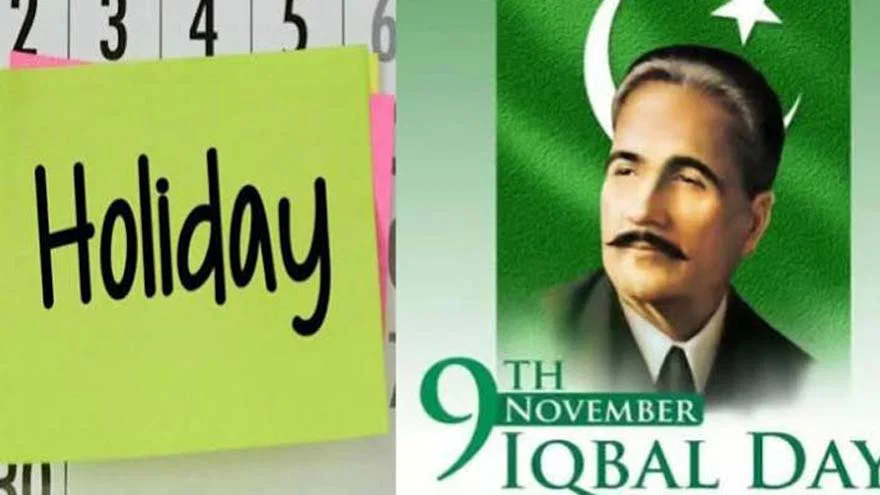
- The federal government has announced a public holiday on November 9, 2026, nationwide in connection with Iqbal Day.
The Cabinet Division has issued a notification announcing Monday, November 9, as a public holiday across the country to mark the birth anniversary of Allama Muhammad Iqbal.
The holiday has been declared through the annual holiday circular released by the Cabinet Division on January 19, 2026.
The ministries and government departments have been asked to guarantee execution of the notification.
Schools and public and commercial offices throughout the country will be closed on November 9.
Employees of offices and educational institutions observing a two-day weekend will have three straight days off from November 7 to 9. Normal activities will resume on Tuesday, November 10.
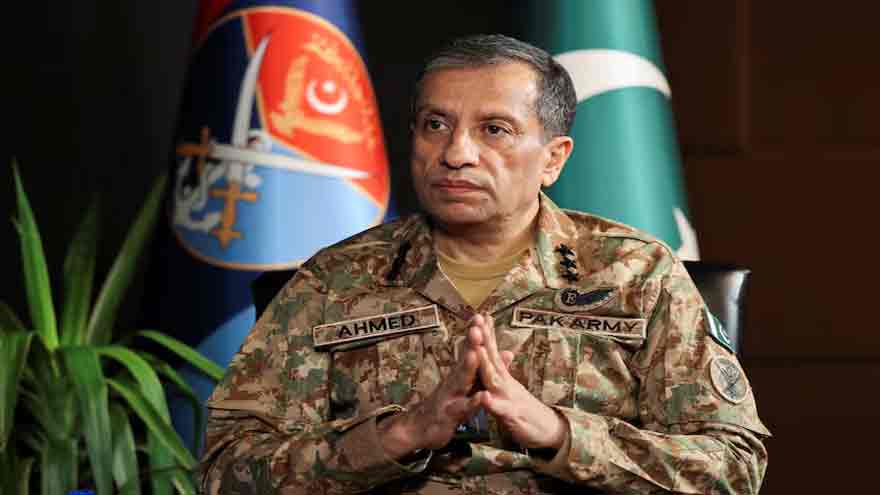
Pakistan is “cautiously optimistic” about its mediation between Iran and the United States, the army spokesperson said in his first interview since a high-level delegation visited Tehran last week.
Field Marshal Asim Munir, the army chief and Pakistan’s point man in efforts to de-escalate the now eight-month-old Iran war, has been to Tehran twice this month, most recently on Monday together with Saudi and Turkish officials.
‘Why would the Field Marshal be going twice if it is not for some positivity? “So yes, of course,” said spokesperson Lt Gen Ahmed Sharif Chaudhry when asked if the trips were a positive sign.
AGREEMENT NOT TO BLOCK NEW MEMBERS
“The word we would use is always cautiously optimistic,” said Chaudhry, Director General Inter-Services Public Relations (ISPR).
“But still there are powerful spoilers and detractors,” he added, without naming them, who think strife suits them.
Speaking in Rawalpindi, the garrison city where Pakistan’s armed forces are based, Chaudhry declined to specify what was discussed or whether the United States had supported the trip.
Saudi Defence Minister Prince Khalid bin Salman and Turkish intelligence chief Ibrahim Kalin were with Munir when he flew to Tehran on Monday. On August 7, their two countries inked a combined defence deal with Pakistan saying an assault on any signatory will be considered as an attack on all.
The Makkah Joint Defence Agreement has gained new importance since the Iran war has changed regional alignments and sparked worries of a broader Middle East confrontation.
The three signatories insist the deal is about collective deterrence and regional security, but observers view its development as intimately linked to efforts by regional countries to handle the fallout from the Iran-US rivalry.
Iran’s Supreme National Security Council secretary Mohsen Rezaei said after Monday’s talks that regional security should be guarantyd by regional countries without international meddling.
“The text of the pact does not exclude new members,” Chaudhry said Friday when asked if Iran might be a member.
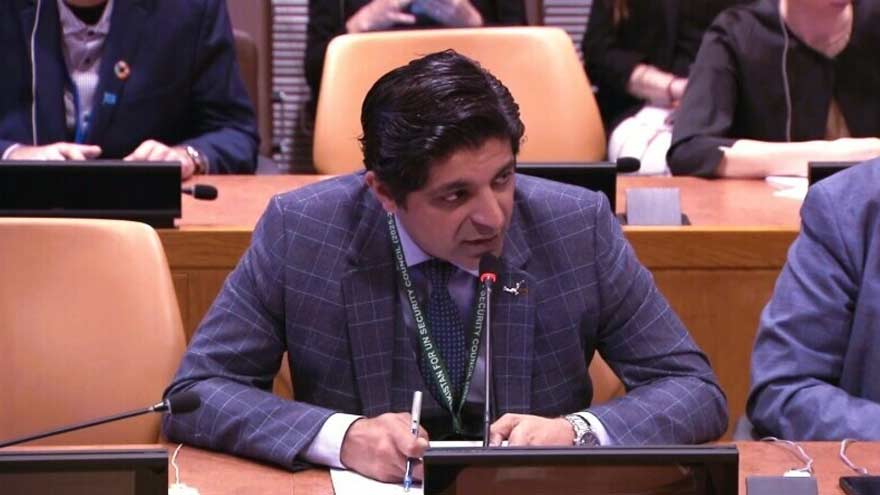
Pakistan has expressed its concerns over the presence of terrorist outfits in Afghanistan, warning that the Taliban leadership is allowing them to operate from its soil.
“More than 4,700 Pakistanis have lost their lives to terrorist attacks emanating from Afghanistan during the last three years,” Pakistan’s envoy Muhammad Jawad Ajmal said during the UN Human Rights Council’s interactive conversation on Afghanistan on Thursday.
Separately, UN Special Rapporteur Richard Bennett told the General Assembly that five years after coming to power, the Taliban had demonstrated no intention to ending systematic human rights atrocities. Instead, he added, limits on fundamental freedoms — especially for women and girls — have continued to tighten.
Ajmal said the degrading human rights situation was a sign of the Taliban’s “utter disregard” for their international duties. He pointed to the limits imposed on women and girls who, according to him, were denied of fundamental freedoms and dignity in a manner which was contrary to Islamic beliefs and values.
He also mentioned the ninth Ministerial Conference on Women, which was held in Islamabad in July and during which the Organization of Islamic Cooperation adopted the Islamabad Declaration. The declaration voiced worry over the Taliban’s limitations on women and girls, saying they are incongruous with Islamic beliefs.
Bennett urged UN member states not to normalise relations with the Taliban until the leadership rolls back its restrictive policies.
He said the Taliban’s new directives have further eroded women’s rights, enabled violence against them and severely curtailed their ability to exit abusive relationships. He also expressed alarm over the regime’s tolerance of child marriages.
Pakistan’s engagement also brought to the fore security issues relating to Afghanistan. Ajmal accused the Taliban of having strong links with terrorist outfits and said these groups were operating freely on Afghan soil with the patronage of external actors who wanted to target Pakistan and other surrounding nations.
He added the Taliban’s refusal to openly renounce the groups was evidence that they were involved and supported their activities.
Meanwhile, Bennett’s study chronicled major human rights abuses in Afghanistan, including arbitrary arrests and detention, torture, sexual violence, enforced disappearances and extrajudicial killings.
The report also expressed concern at restrictions on freedom of expression, exclusion of persons with disabilities, and discrimination and persecution of ethnic, religious, linguistic and other marginalised communities.

Federal government declares November 9 public holiday for Iqbal Day

Pakistan ‘cautiously optimistic’ on Iran-US mediation, says ISPR DG

Pakistan warns of Afghan-based terrorism as UN expert urges action against Taliban

ICC board meeting in India: Mohsin Naqvi gets invitation

‘Self-Reliance in Digital ID’: NADRA launches locally produced QR code-based National Identity Card

23 people have died during the monsoon as rain-related incidents plague Punjab and KP.
-
 Latest News6 months ago
ICC board meeting in India: Mohsin Naqvi gets invitation
-
 Latest News3 months ago
‘Self-Reliance in Digital ID’: NADRA launches locally produced QR code-based National Identity Card
-
 Latest News3 months ago
23 people have died during the monsoon as rain-related incidents plague Punjab and KP.
-
 Latest News2 months ago
Turkish FM, Dar discuss regional trends, bilateral connections
-
 Business3 months ago
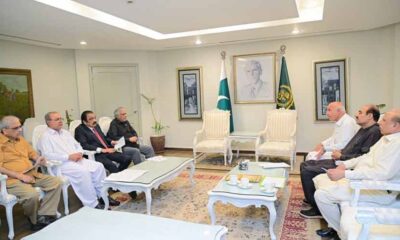
Govt dedicated to resolving Balochistan issues: Dar
-
 Latest News3 months ago
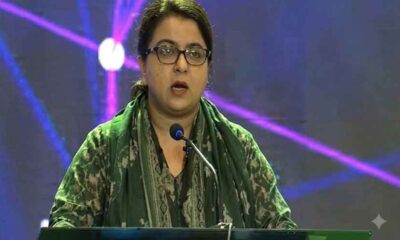
Pakistan making rapid progress in robotics, AI: Shaza Fatima
-
 Entertainment5 months ago
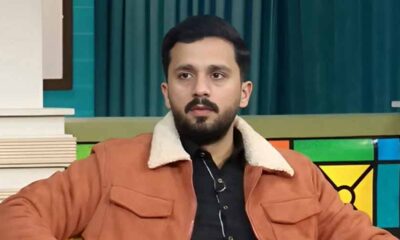
Interim bail given to YouTuber Rajab Butt in gambling app marketing case
-
 Latest News3 months ago
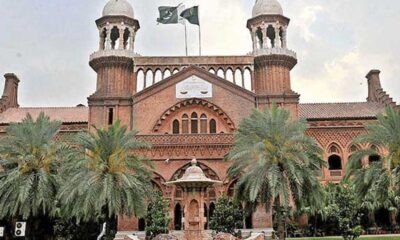
After a divorce, LHC decides that women who have been harmed by their spouses get their dower.