
Latest News
Uncertainty over exports through Hormuz causes oil to rise.

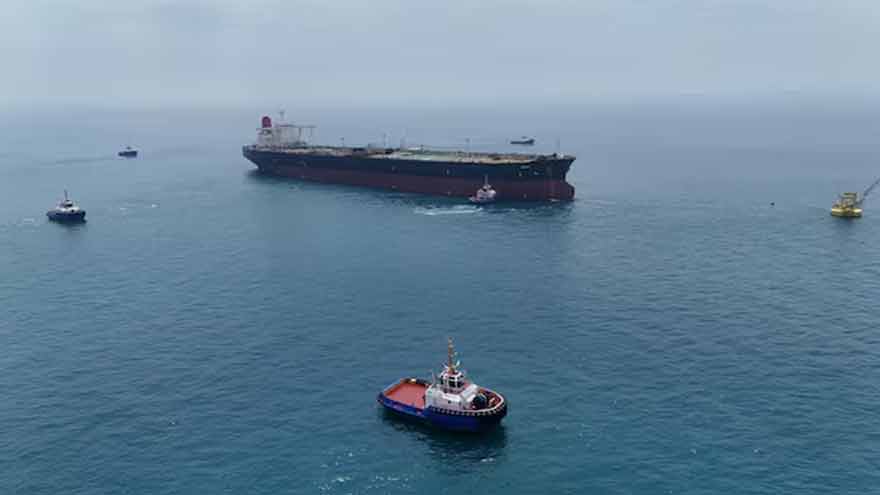
Oil prices ticked higher in early trade on Wednesday, climbing for a fourth straight day on supply uncertainty as investors weighed conflicting messages from Tehran and Washington on whether the Strait of Hormuz is open to ships.
Brent crude futures climbed 26 cents, or 0.29%, to $91.28 by 0004 GMT, while U.S. West Texas Intermediate crude futures were up 37 cents to $85.31 a barrel.
Both contracts closed on Tuesday at their highest since July 24 as hopes of peace between the U.S. and Iran faded.
U.S. President Donald Trump said on Tuesday no talks were taking place with Iran and insisted the Strait of Hormuz was open, contradicting Iran’s assertion that the critical waterway remained shut to shipping.
A temporary ceasefire agreement expired on Monday and a senior Iranian official told Reuters that his country was moving to due to the diplomatic stalemate, though there were no reports of fresh strikes by either side on Tuesday.
To avoid the Strait of Hormuz, Iraq’s cabinet approved mechanisms for exporting Iraqi crude through specialized international and local companies and via multiple export outlets, the government said on Tuesday.
The contracts under the new mechanism will run for three months starting September 1, according to a statement issued after the cabinet meeting.
Meanwhile, two Chinese shipping giants have stopped sending oil tankers through Hormuz and the Bab al-Mandeb strait amid the conflict in the Middle East and are instead collecting oil cargoes outside the Gulf, according to three industry executives, tanker trackers and a ship broker.
In the U.S., crude oil and distillate inventories fell, while gasoline stocks rose last week, market sources said on Tuesday, citing data from the American Petroleum Institute.
Official inventory numbers from the U.S. Energy Information Administration are due at 10:30 a.m. ET (1430 GMT), with analysts polled by Reuters expecting crude stocks fell by about 600,000 barrels in the week ended August 14.

The International Monetary Fund (IMF) has reiterated its call for Pakistan to phase out its fuel subsidy program, stressing that any future government support to deal with rising oil prices must be limited, temporary and within the framework of the current fiscal year’s budget.
An IMF spokesman told Arab News that existing fuel subsidy programs should be phased out because of their broad reach. If international oil prices unexpectedly rise, any further assistance should be directed to deserving groups through established social security programs and kept within the fiscal year 2027 budget, the spokesman said.
Pakistan launched a fuel subsidy program in September to protect low-income motorists from rising oil prices amid the US-Iran war. Under the program, motorcycle and rickshaw users get weekly petrol vouchers worth Rs 500 ($1.80), while owners of vehicles with an engine capacity of up to 800 cc get a discount of Rs 100 ($0.36) per liter, subject to a limit of 10 liters every 10 days.
The IMF had also called for an immediate end to the program in a statement last month, citing its high costs and wide coverage. Pakistan is trying to transition from economic stability to growth under the International Monetary Fund’s $7 billion Enhanced Funds Program (EFF). The spokesman said that under the plan, Pakistani authorities are committed to bringing domestic oil prices in line with international oil prices, while protecting the most vulnerable sections of society. Pakistan’s Finance Minister Mohammad Aurangzeb, Finance Minister Bilal Azhar Kayani and Finance Adviser Khurram Shehzad did not respond to Arab News’ requests for comment on the IMF’s latest position.
Like several other countries, Pakistan raised oil prices after the US-Israeli war on Iran that began in February. Petrol prices hit a record high of Rs 458.41 per liter on April 3, but gradually eased to Rs 330 per liter as tensions eased in the region.
great economic pressure
A representative of the International Monetary Fund said that the current conflict in the Middle East is a major challenge for Pakistan, which depends on oil and gas imports from the Persian Gulf countries. Disruption of international shipping routes, especially in the strategically important Strait of Hormuz following Iran’s blockade, has raised concerns about economic growth in developing countries, including Pakistan.
International Monetary Fund officials said rising international oil prices have added to domestic inflationary pressures. The IMF said Pakistan’s policy priorities should focus on maintaining macroeconomic stability and implementing reforms to strengthen public finances, improve competition, increase productivity and competitiveness, and strengthen social protection and human capital.
It also emphasized the need for reforms in state-owned enterprises, improved public service delivery and greater viability of the energy sector. Last month, the IMF reached a staff-level agreement with Pakistan after talks with officials in Karachi and Islamabad. The contract must be approved by the fund’s management. Once approved, Pakistan is expected to receive approximately $1 billion from the EFF program and an additional $210 million through the Resilience and Sustainability Fund (RSF), bringing the total expenditure of the two programs to approximately $5.7 billion.
An IMF spokesman said an executive meeting to review Pakistan’s EFF and RSF review and the 2026 Article IV consultation would be held in December, subject to program requirements.
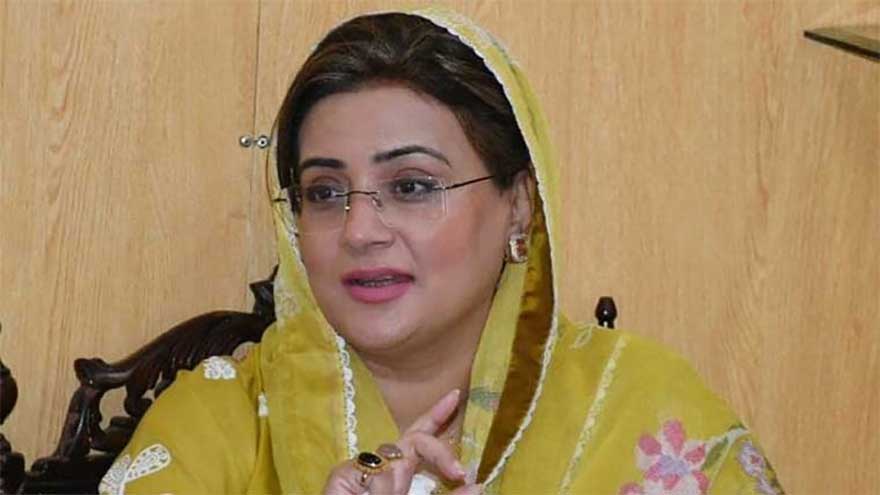
Punjab Information Minister Azma Bohari has said that empowering the youth and ensuring their financial independence is one of the top priorities of Chief Minister Maryam Nawaz.
In a statement issued here on Saturday, Azma Bokhari said the CMIT internship program reflects the Chief Minister’s vision to equip the youth with practical skills and create job opportunities in the information technology sector.
She said thousands of young people have already received IT training through the four-month internship programme, with each intern receiving a monthly stipend of Rs50,000 from the Punjab government.
The provincial information minister added that registration for the third phase of the programme is currently underway, providing more graduates with opportunities to acquire professional IT skills and establish sustainable careers. The minister added that the Maryam Nawaz-led government believes in practical results rather than talk.
She emphasized that empowering the youth and making them economically self-reliant is a key part of the vision of a prosperous and prosperous Punjab.
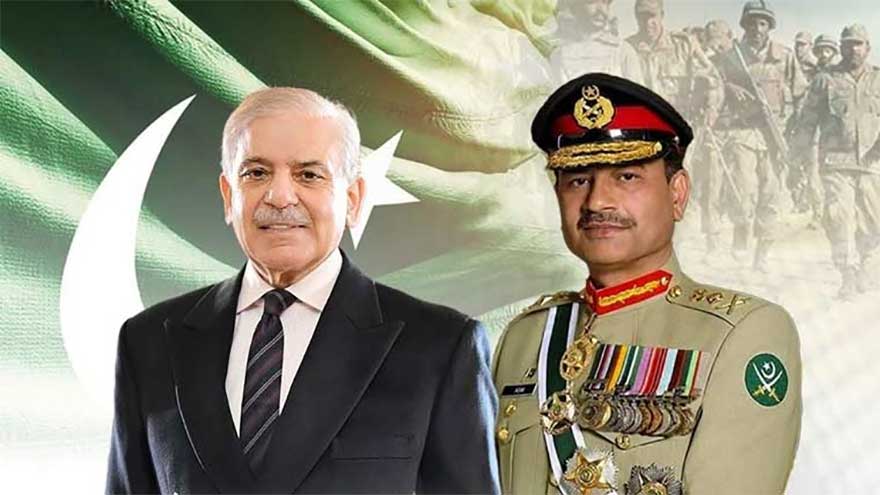
The Royal Islamic Center for Strategic Studies in Jordan has released a list of the 500 most influential people in the Muslim world, with Pakistan’s Prime Minister Shebaz Sharif and Chief of Defense Force Chief of Staff Marshal Asim Munir.
Saudi Arabia’s King Salman bin Abdulaziz and Crown Prince Mohammed bin Salman also top the current list. For the first time, five personalities have been jointly selected for the first position in the list.
Turkish President Recep Tayyip Erdogan is also among the five most influential figures in the Muslim world, while Iran’s Supreme Leader Ayatollah Mojtaba Khamenei is fourth on the list, Jordan’s King Abdullah II is fifth, and Qatar’s Emir Sheikh Tamim bin Hamad Al Thani is sixth. United Arab Emirates President Sheikh Mohamed bin Zayed, Malaysian Prime Minister Anwar Ibrahim and King Mohammed VI of Morocco were also included in the list of influential Muslim figures.
Indonesian President Prabowo Subianto, Egyptian President Abdel Fattah el-Sisi, Palestinian President Mahmoud Abbas and Syrian President Ahmed Salad were also on the list. Pakistan’s famous religious scholars Mufti Muhammad Taqi Usmani and Maulana Tariq Jameel are also among the 500 influential people. The list also named Dr Hosam Abu Safiya, the former director of Kamal Adwan Hospital in Gaza, as Person of the Year, and Fatima Zahra Shehbadi, a student who survived an attack on a school in Minab, Iran, as Woman of the Year.

IMF reiterates call for Pakistan to phase out fuel subsidy scheme

Punjab ensuring economic empowerment for youth: Azma Bukhari

PM Shehbaz, CDF Asim Munir most influential figures of Muslim world

ICC board meeting in India: Mohsin Naqvi gets invitation

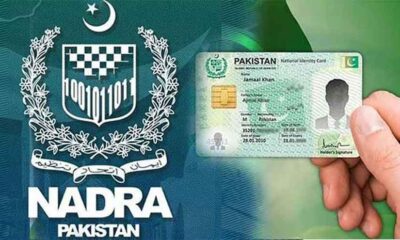
‘Self-Reliance in Digital ID’: NADRA launches locally produced QR code-based National Identity Card

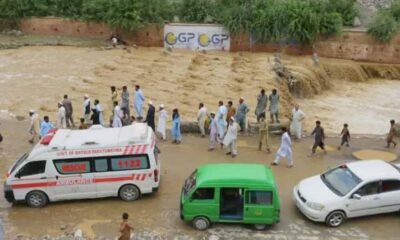
23 people have died during the monsoon as rain-related incidents plague Punjab and KP.
-
 Latest News6 months ago
ICC board meeting in India: Mohsin Naqvi gets invitation
-
 Latest News3 months ago
‘Self-Reliance in Digital ID’: NADRA launches locally produced QR code-based National Identity Card
-
 Latest News4 months ago
23 people have died during the monsoon as rain-related incidents plague Punjab and KP.
-
 Latest News3 months ago
Turkish FM, Dar discuss regional trends, bilateral connections
-
 Business4 months ago
Govt dedicated to resolving Balochistan issues: Dar
-
 Latest News4 months ago
Pakistan making rapid progress in robotics, AI: Shaza Fatima
-

 Entertainment6 months ago
Interim bail given to YouTuber Rajab Butt in gambling app marketing case
-
 Latest News4 months ago
After a divorce, LHC decides that women who have been harmed by their spouses get their dower.